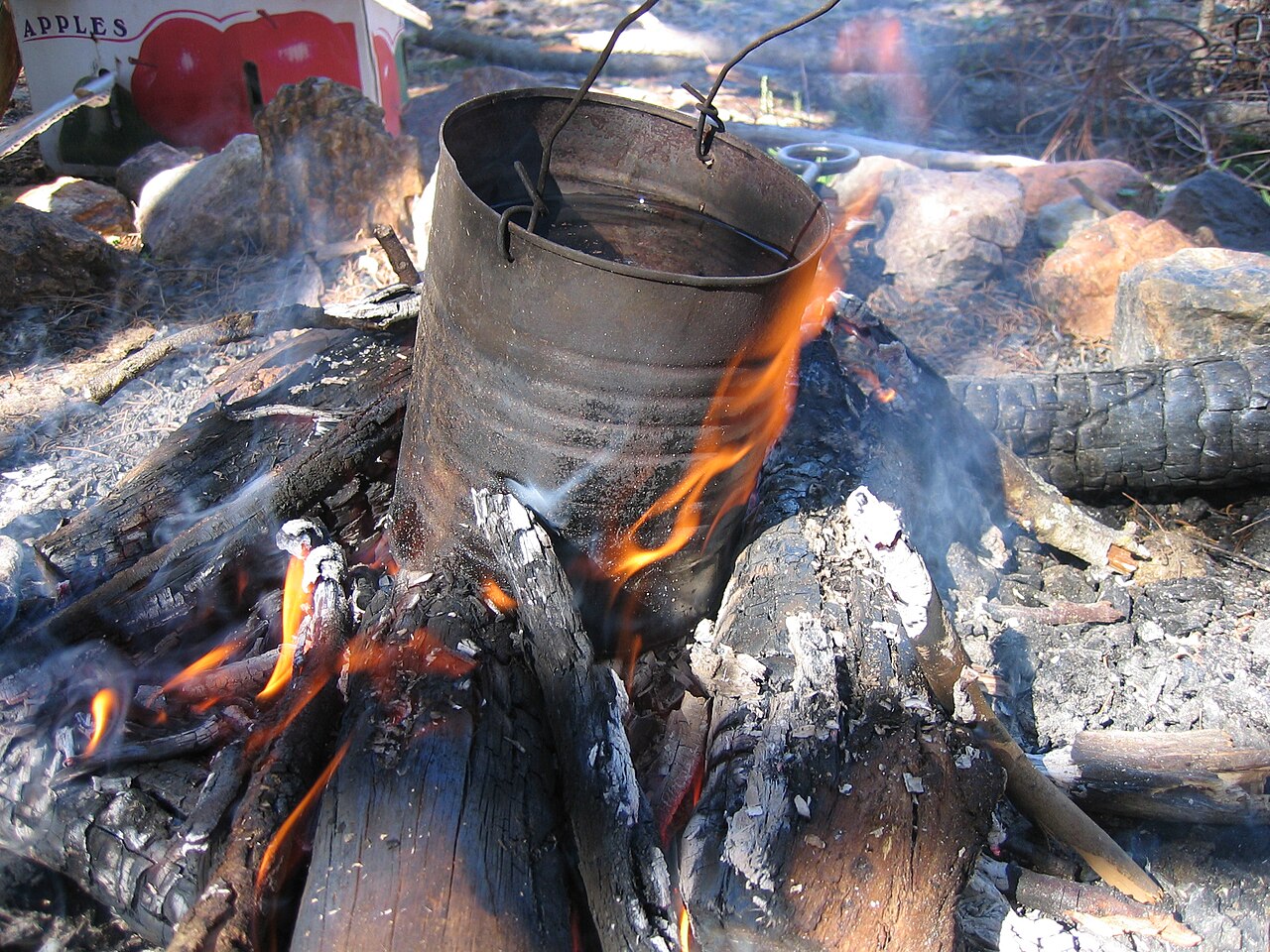
Billycan
A metal bucket used for boiling water and cooking over campfires.

Flickr user "Johan Larsson" · CC BY 2.0
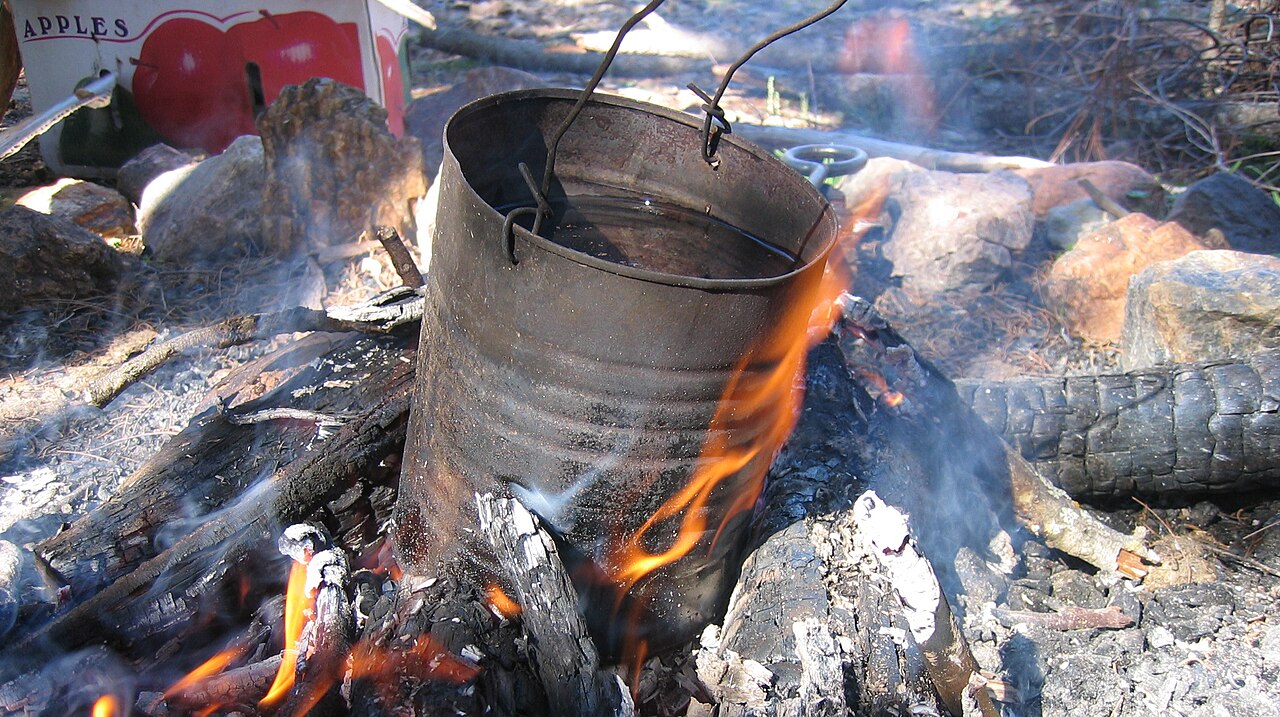
A billycan is a lightweight metal bucket used as a cooking pot, primarily for boiling water, making tea or coffee, cooking over a campfire, or carrying water. Commonly shortened to "billy," it is also known as a billy can, billy tin, or billy pot in Canada. While the term is most strongly tied to Australia, it is also used in New Zealand and, less frequently, in Britain and Ireland.
In Australia, the billy has become a symbol of outback exploration and bush life, though it is now mostly seen as a relic of a bygone era. The phrase "to boil the billy" means to make tea, an expression dating back to the Australian gold rushes or earlier. "Billy Tea" was a well-known brand sold in Australian stores. The billy appears in many stories and poems by Henry Lawson, and Banjo Paterson’s most famous reference is in "Waltzing Matilda," where the line "And he sang as he watched and waited 'til his billy boiled" was later popularized by the Billy Tea Company. In the early 21st century, the billycan gained renewed international interest among outdoor and bushcraft enthusiasts, thanks to online communities. Modern use includes both purpose-made billy cans and repurposed metal containers with bail handles for hanging over a fire.
The word's origin is debated. One suggestion links it to the Aboriginal word *billa* (meaning water, as in billabong), but it is widely accepted that "billycan" comes from "bouilli can," the name for empty canisters that once held preserved soup or bouilli. With a handle added, these tins were reused for boiling water. Letters to early 20th-century newspapers support this, and David George Stead, quoting his father who emigrated in 1862 at age 16, noted that "billy can" was common in south coastal England for a bouilli can. The preservation of food in tin canisters began in 1812 at Donkin, Hall and Gamble in Bermondsey, England. Reuse of empty cans likely started then, but the first record of an "empty preserved-meat-canister" serving as both tea-kettle and teapot is from 1835. By the 1840s, "soup and bouilli tin" or "bouilli tin" became a generic term for any empty food can.
- Type
- Cooking vessel
- Also known as
- Billy, billy can, billy tin, billy pot
- Origin
- Australia (also New Zealand, Britain, Ireland)
- First known use
- 1848 (Tasmanian newspaper report)
- Associated with
- Australian bush life, outback exploration, gold rushes
- Etymology
- Derived from 'bouilli can' (empty canisters for preserved soup and bouilli)
Lore & Background
The term billycan is widely accepted to derive from 'bouilli can', the name for empty canisters used for preserving soup and bouilli. With the addition of a handle, these tins were repurposed for boiling water. Letters to newspapers in the early 20th century support this view, and David George Stead, quoting his father who emigrated in 1862 aged 16, wrote that 'the term "billy can" was commonly used in south coastal England, to describe a "bouilli" can or tin.' The preservation of foods in tin canisters began in 1812 at the firm of Donkin, Hall and Gamble in Bermondsey, England, and reuse of empty cans probably began at the same time. The earliest known use of 'billy' for a kettle is in an 1848 Tasmanian newspaper report of a criminal trial, where a defendant said 'he put some bread on the table and the "billy" on the fire.' Another early example from 1849 shows use in South Australia, describing 'near the wooden fire, is what is called the billy or tea-kettle.'
Reader's Guide
The billycan holds significant cultural symbolism in Australia, representing the spirit of exploration of the outback and bush life, though it is now regarded mostly as a symbol of an age that has long passed. The expression 'to boil the billy' most often means to make tea, dating from the Australian gold rushes and probably earlier. 'Billy Tea' was a popular brand of tea long sold by Australian grocers and supermarkets. Billies feature in many stories and poems by Henry Lawson, and Banjo Paterson's most famous reference appears in the first verse and chorus of 'Waltzing Matilda', where the line was later changed by the Billy Tea Company to 'And he sang as he watched and waited 'til his billy boiled.' In the early 21st century, the billycan saw increased international adoption among outdoors and bushcraft enthusiasts, due to exposure through online communities. Modern usage ranges from explicitly produced and marketed billy cans to user adaptations of other metalware into pots with bail handles for suspending over an open fire.
Did You Know?
- By 1859, 'Billys, all sizes' were being manufactured at the Kyneton Tin and Zinc Works in Australia.
- The expression 'to boil the billy' dates from the Australian gold rushes and probably earlier.
From Bouilli to Billy: The Word's Journey
Although some have speculated that the term connects to the Aboriginal word billa (meaning water, as seen in Billabong), the widely accepted origin traces back to the French phrase bouilli can. In 1812, the firm Donkin, Hall and Gamble in Bermondsey, England, pioneered the preservation of foods in tin canisters, and by the 1840s the empty soup and bouilli tins had become a generic term for any repurposed preserved-food container. The earliest documented instance of such a canister doubling as a tea-kettle and tea-pot appears in 1835. The specific word "billy" first surfaces in an 1848 Tasmanian newspaper reporting a criminal trial, where a defendant described placing his "billy" on the fire. A year later, a South Australian idyllic portrait of a shepherd's daily life referred to "what is called the billy or tea-kettle" beside a wooden fire. David George Stead, quoting his father who emigrated to Australia in 1862 at sixteen, confirmed that the phrase was already common in south coastal England. Early twentieth-century newspaper letters further corroborate this lineage, cementing the bouilli-can theory as the most credible etymology.
A Symbol of the Bush: Literature and Identity
Far beyond its practical function of boiling water or brewing a cup of tea, the billy became an enduring emblem of Australian bush life and the spirit of outback exploration. The phrase "to boil the billy," which most often simply means making tea, dates back to the gold rush era and possibly earlier, embedding the vessel in the daily rhythm of frontier existence. The billy earned a place in the national literary canon through the stories and poems of Henry Lawson, who wove it into his depictions of rural life. Banjo Paterson's immortal verse Waltzing Matilda originally featured the line "Waltzing Matilda and leading a waterbag," but the Billy Tea Company later altered the lyric to "And he sang as he watched and waited 'til his billy boiled," cementing the object's cultural resonance. A brand called Billy Tea was long stocked in Australian grocers and supermarkets, further entrenching the term in everyday commerce. While the billy remains associated with Australia, New Zealand, and to a lesser degree Britain and Ireland, it is now largely viewed as a nostalgic symbol of an era that has long since passed.
Gold Rushes, Emigrants, and the Birth of an Industry
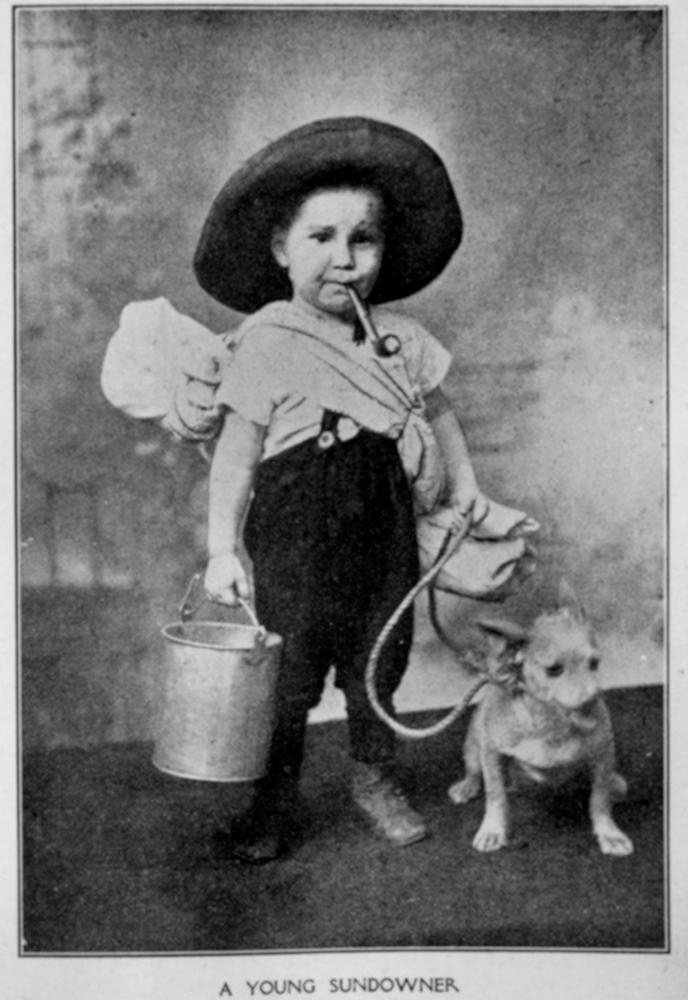
The 1851 gold rushes triggered a wave of British emigration to Australia, and the billy became inseparable from the digger's experience. Emigrants writing letters home described the vessel in vivid detail; one 1853 account from aboard an emigrant ship noted that soup and bouilli cans were being converted into practical kitchenware, with a digger explaining that the "billy" was essentially a tin can used for making tea and coffee. By 1855, "tin billys" had moved beyond improvised repurposing and were being sold by a Melbourne importer, signaling a shift toward commercial production. Three years later, in 1859, Australian manufacturing had caught up: the Kyneton Tin and Zinc Works advertised "Billys, all sizes," confirming local production. The billy also carried social baggage. "Whitely Kings" was the swagman's mocking label for crude, improvised billycans cobbled together from a tin can and a length of wire, a term named after John Whiteley King (1857–1905), secretary of the Pastoralists' Union of New South Wales, who lured hundreds of unemployed city men into shearing sheds as a strike-busting ploy.
The Modern Revival: From Outback to Online
In the early twenty-first century, the billycan experienced a remarkable resurgence far beyond its Australian and New Zealand roots. Outdoors and Bushcraft enthusiasts around the world embraced the vessel, driven largely by the visibility of online communities where campfire cooking and self-sufficient living gained a devoted following. Modern usage spans a wide spectrum: some billy cans are explicitly designed, produced, and marketed under that name, while others are user adaptations—ordinary metalware modified with bail handles so they can be hung over an open flame. In Canada, the same object is more commonly called a billy tin or billy pot, reflecting regional linguistic preferences. The billy's practical appeal lies in its simplicity: a lightweight metal bucket suited to boiling water, brewing coffee or tea, and cooking over a campfire, or simply carrying water. This straightforward design, unencumbered by modern kitchen technology, has made it a favorite among those seeking a direct, tactile connection to the fire, echoing the same needs that first drove a repurposed bouilli can onto a digger's campsite in the 1850s.
Gallery
Frequently Asked Questions
What is a billycan?
A billycan is a lightweight metal bucket that doubles as a cooking pot, most often used to boil water, brew tea or coffee, and prepare food over an open fire. It goes by several names, including billy, billy tin, and billy pot.
Where does the name 'billycan' come from?
The word traces back to 'bouilli can,' referring to empty canisters that once held preserved soup and bouilli. The earliest known written reference to the term appeared in a Tasmanian newspaper in 1848.
What does the phrase 'boil the billy' mean?
In Australian bush slang, 'to boil the billy' simply means to make a cup of tea. The expression has been part of everyday colloquial speech for generations and instantly conjures the image of campfire cooking in the outback.
What practical jobs does a billycan do?
Beyond brewing drinks, a billycan can be hung over a campfire to cook food or used as a simple, portable container for hauling water. Its lightweight design makes it ideal for backcountry travel and rough outdoor living.
Why is the billycan a cultural icon in Australia?
The billy has become a lasting emblem of outback exploration, gold-rush prospecting, and self-reliant bush life. Though it is now largely a nostalgic relic, it still carries strong associations with Australian identity and the pioneering spirit.
More in Australian cuisine 1-24
Spotted an error? Know more?
Reader corrections go straight into our review queue. Suggest an edit · How this site is sourced