
Anzac biscuit
Sweet biscuit linked to ANZAC soldiers in World War I.

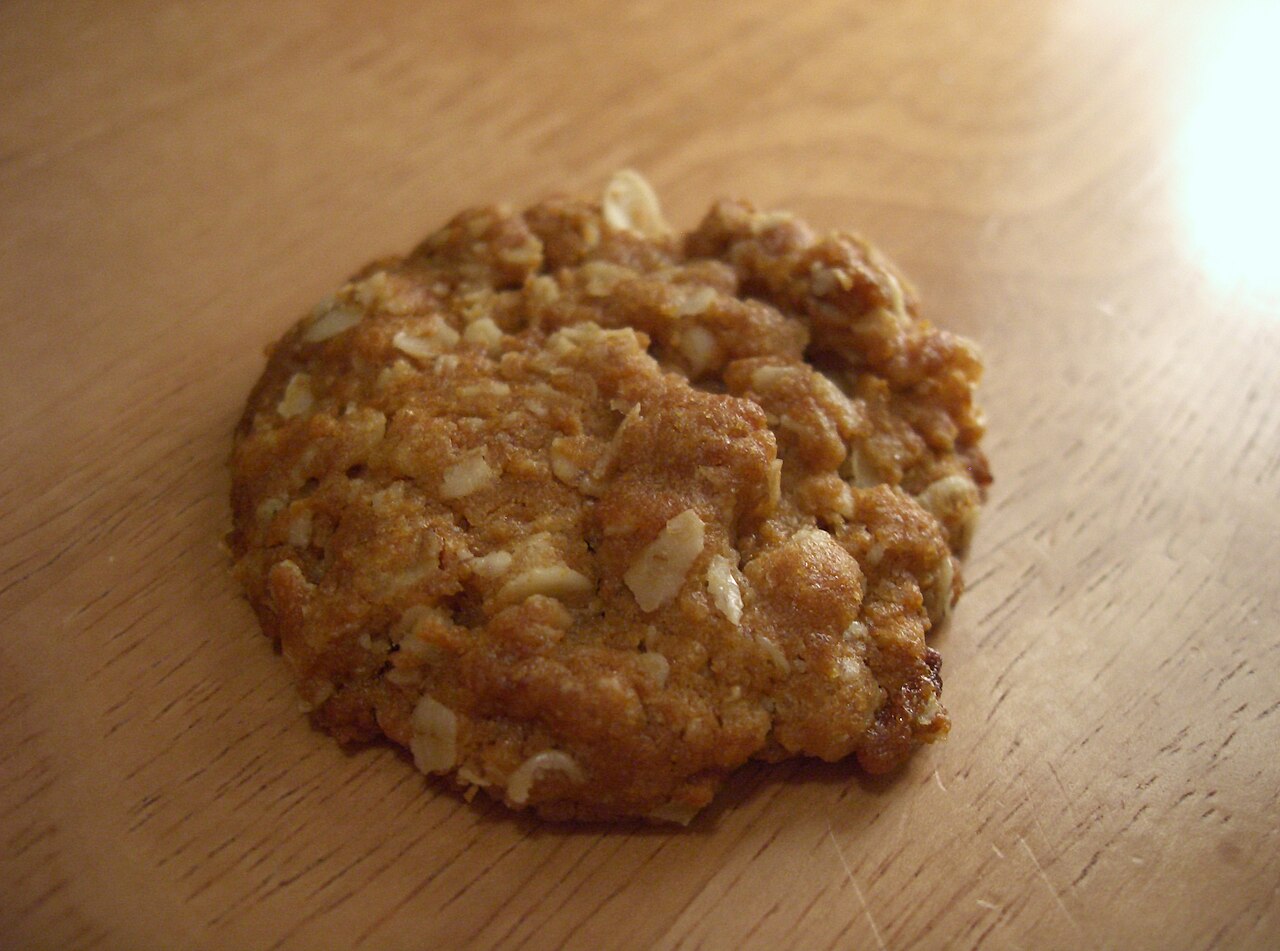
TCY · CC BY-SA 4.0
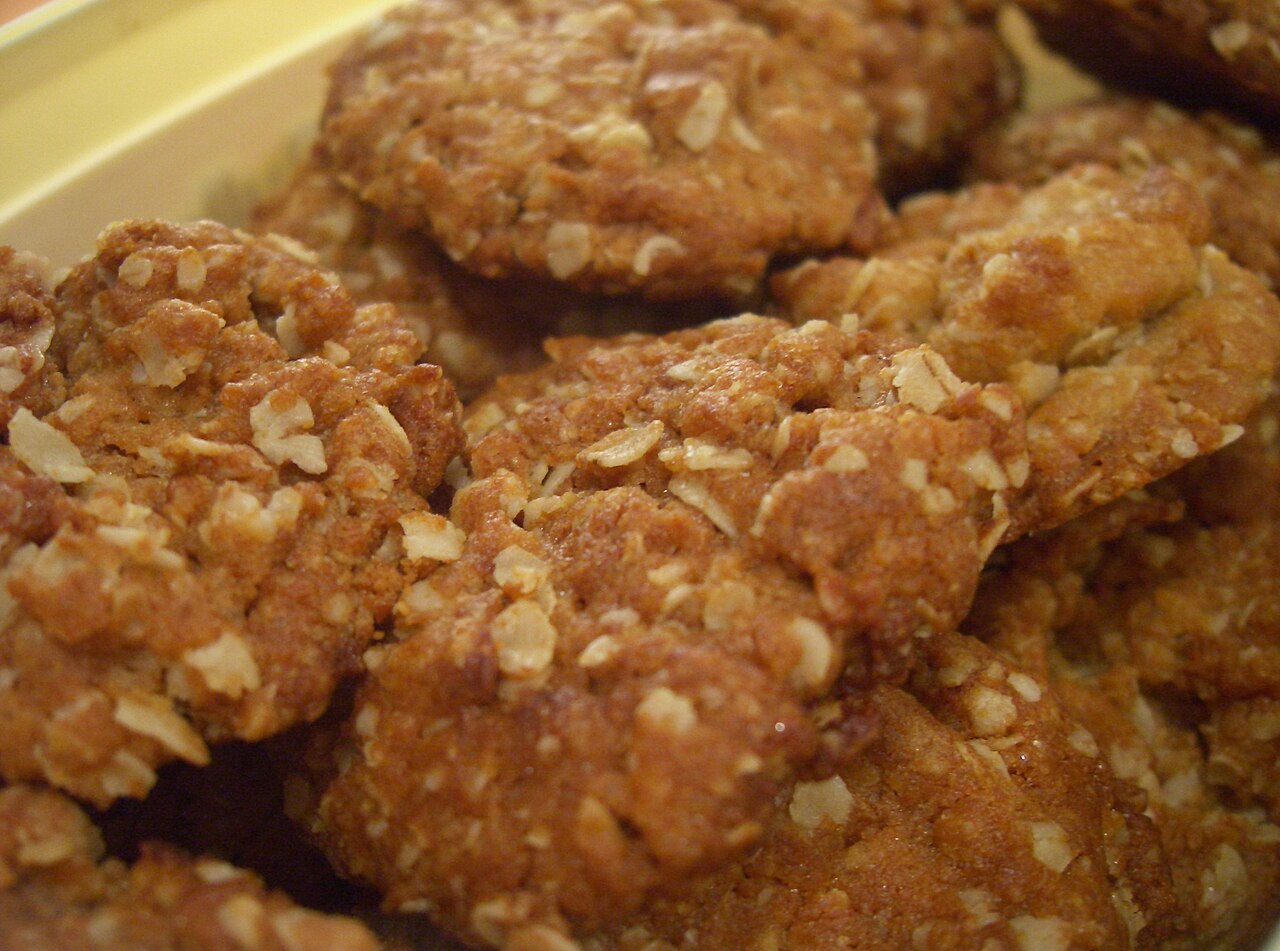
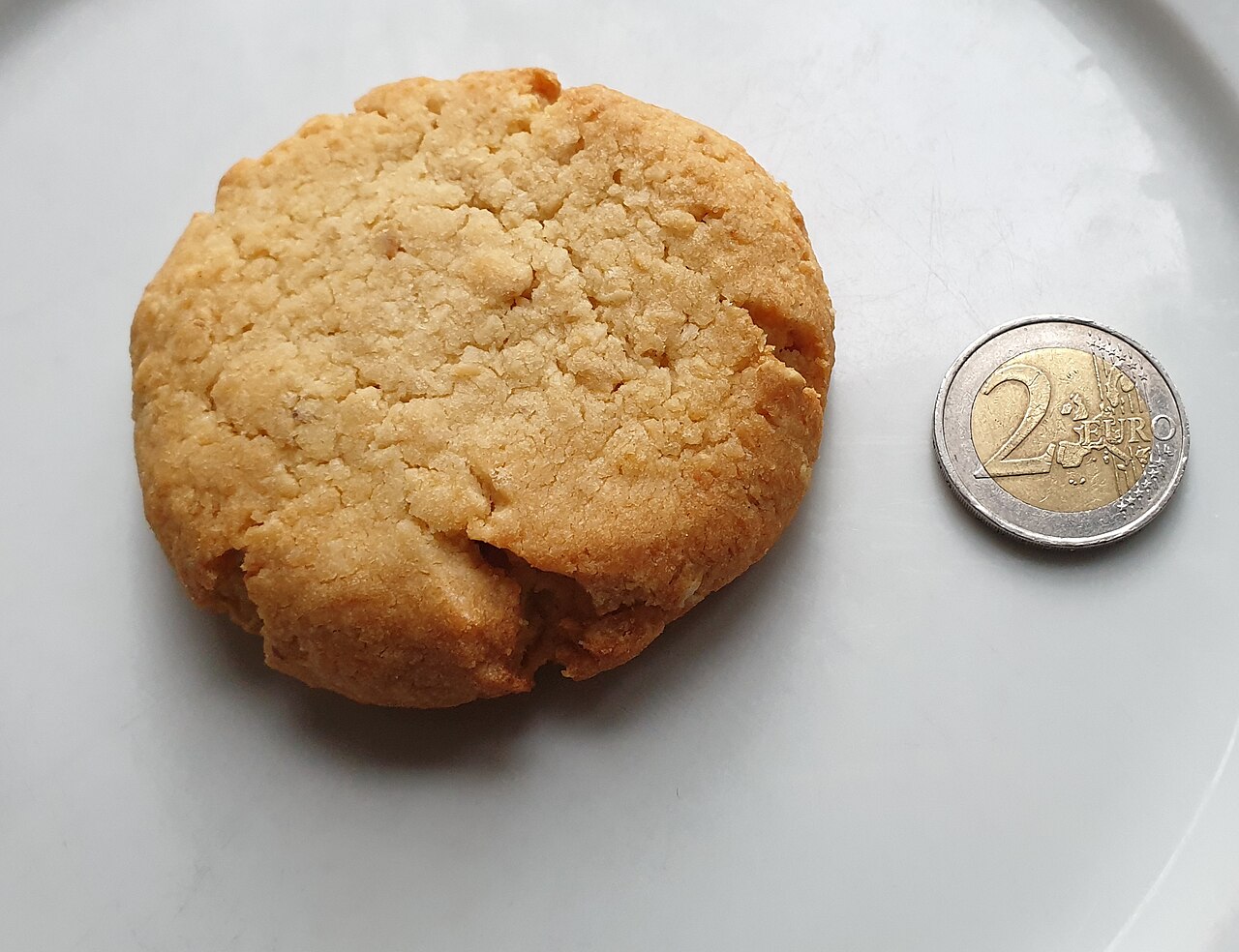
The Anzac biscuit is a sweet biscuit popular in Australia and New Zealand, made using rolled oats, flour, sugar, butter (or margarine), golden syrup, baking soda, boiling water, and optionally desiccated coconut. It has long been associated with the Australian and New Zealand Army Corps (ANZAC), established in World War I, and is thought to have been sent by wives and women's groups to soldiers abroad because it kept well in transport. The biscuit is distinct from hardtack, which was nicknamed 'ANZAC wafers' in Australia and New Zealand.
- First known recipe combining anzac and b
- 1916 (contained rolled oats)
Lore & Background
A notebook belonging to a South Australian housewife from the 1910s has been cited as the first known source to combine the name 'Anzac biscuit' with the modern recipe. Another early recipe dates to 1921 in The Argus newspaper. These early recipes did not contain desiccated coconut, which appears in many modern versions; the first recipe with coconut is recorded from Adelaide in 1924. In New Zealand, a 1919 recipe for 'Anzac Crispies' in the St Andrew's Cookery Book had similar ingredients to modern Anzac biscuits.
Reader's Guide
The Anzac biscuit holds significance as a cultural and historical symbol in Australia and New Zealand, directly tied to the ANZAC Corps of World War I. Its legacy is preserved through legal protections: commercial goods using the term 'Anzac' are generally banned, but Anzac biscuits are an explicit exemption, provided they are sold as 'biscuits' or 'slices' and not 'cookies'. The recipe is also protected from substantial commercial modification. This regulation led Subway to drop the biscuit in September 2008 after being ordered to bake according to the original recipe; it returned in April 2025. Today, Anzac biscuits are manufactured commercially and used as fundraising items for the Royal New Zealand Returned and Services' Association and the Returned and Services League of Australia. A British version, still Australian-produced, supports the Royal British Legion and is available in UK supermarkets. The contested origins between Australia and New Zealand, and the evolution of the recipe from early variations without oats or coconut, reflect the biscuit's dynamic history.
Did You Know?
- The first known recipe combining 'Anzac' and 'biscuit' was for 'ANZAC ginger biscuits' in 1916, which did contain rolled oats.
- The earliest recipe for 'Anzac Biscuits' (1917) is the direct precursor to the modern version, not a different biscuit.
- Desiccated coconut first appeared in an Anzac biscuit recipe in 1924, from Adelaide.
A Recipe That Grew Into Itself
The story of how the Anzac biscuit came to be is a tale of gradual evolution rather than a single moment of invention. The earliest recipe pairing the words 'Anzac' with 'biscuit' surfaced in the Perth edition of The Sunday Times on 4 June 1916, but it described ginger biscuits with no oats at all. The following year, Sydney's War Chest Cookery Book offered a recipe labelled 'Anzac Biscuits' that was, in practice, a different treat entirely, alongside two other recipes—'Rolled Oats Biscuits' and simply 'Biscuits'—that more closely resemble what we bake today. A South Australian housewife's notebook from the 1910s is credited as the first source to marry the name 'Anzac biscuit' with the modern oat-based recipe. By 1921, The Argus newspaper in Australia printed a version still lacking coconut, and it was not until 1924 in Adelaide that desiccated coconut first appeared in a recorded Anzac biscuit recipe. Across the Tasman, New Zealand's St Andrew's Cookery Book published 'Anzac Crispies' in 1919 with ingredients close to the contemporary standard. Early iterations also featured eggs, fruit, and jam, ingredients that have since disappeared from the traditional formulation.
Baked for Soldiers, Kept for Veterans
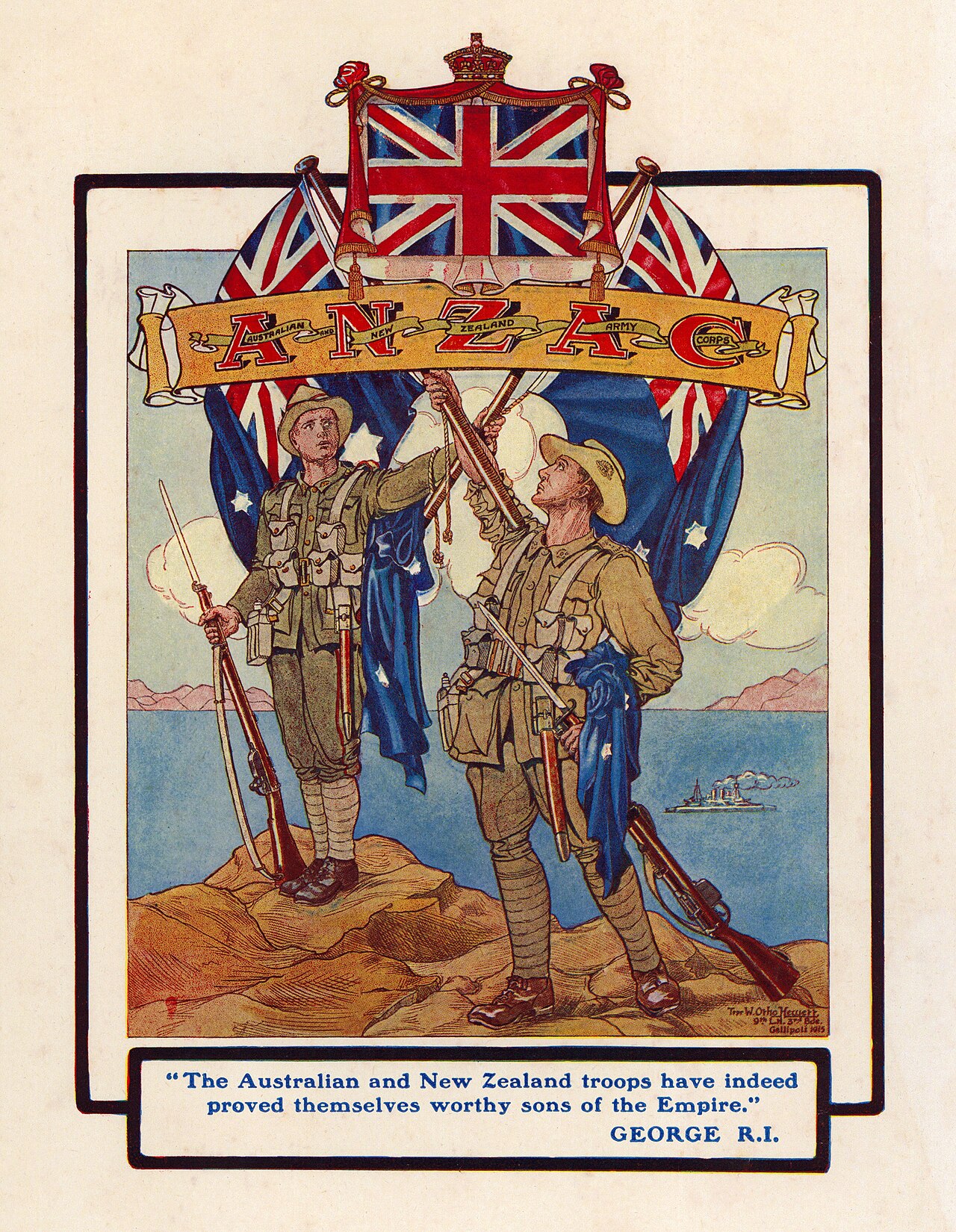
The Anzac biscuit's identity is inseparable from the soldiers of the Australian and New Zealand Army Corps, the formation established during the First World War that gave the treat its name. It is widely believed that wives and women's groups baked and shipped these biscuits to troops serving overseas precisely because their dense, buttery composition allowed them to survive long journeys without spoiling. This practical quality—keeping well in transport—made them a reliable comfort for men far from home. It is worth noting that the biscuit should not be mistaken for hardtack, a hard ship's biscuit that carried the nickname 'ANZAC wafers' in both countries. That military bond has endured well beyond the war years. To this day, the Anzac biscuit serves as a fundraising staple for the Returned and Services League of Australia and the Royal New Zealand Returned and Services' Association, linking community baking to veteran support. The connection even crosses the Channel: a British-market version, still produced in Australia, is sold in several major UK supermarket chains in support of the Royal British Legion, extending the biscuit's charitable mission to a third nation.
A Name the Law Protects
Few food products enjoy the kind of legislative shield the Anzac biscuit commands in Australia. The name 'Anzac' is broadly banned from commercial goods, yet the biscuit holds an explicit exemption—provided it is marketed and sold strictly as a 'biscuit' or 'slice' and never as a 'cookie.' This naming rule is not merely a matter of terminology; it is a legal requirement enforced under regulations that also govern the recipe itself. While bakers may substitute ingredients to accommodate dietary needs, any substantial alteration that pushes the product too far from traditional Anzac biscuit formulations is commercially disallowed. The regulations draw a clear line around social media posts and cookbooks that merely feature Anzac biscuits among other recipes, excluding those from the restrictions. The practical impact of these rules became visible in the food-service sector, where chains found that the legal obligation to replicate the traditional recipe precisely could conflict with their supply-chain economics, as the Subway episode would later demonstrate.
The Subway Withdrawal and Return
Today the Anzac biscuit occupies a place in both home kitchens and commercial production lines, manufactured for retail sale across Australia and New Zealand. Its presence in the marketplace, however, is not without friction. In September 2008, the international restaurant chain Subway removed the biscuit from its Australian menu after the Department of Veterans' Affairs directed the company to bake the biscuits in strict accordance with the original recipe. Subway's supplier reportedly could not find a cost-effective way to replicate the traditional formulation, and the chain chose to withdraw the product rather than comply. For nearly two decades the biscuit was absent from Subway's offerings, a conspicuous gap in a menu that typically features a wide range of baked goods. Then, in April 2025, the Anzac biscuit made its return to the Subway menu, a development that underscored both the enduring cultural weight of the treat and the ongoing tension between commercial convenience and the legal protections surrounding a recipe born from wartime generosity.
Gallery
Frequently Asked Questions
What are the main ingredients in an Anzac biscuit?
The classic recipe combines rolled oats, flour, sugar, butter or margarine, golden syrup, and baking soda mixed with boiling water. Some versions also include desiccated coconut for extra texture and sweetness.
Why is it called an 'Anzac' biscuit?
The name ties the treat to the Australian and New Zealand Army Corps that fought in World War I. Wives and women's groups are believed to have baked and shipped them to troops overseas because the dense, oat-based biscuit survived long sea voyages without going stale.
How is an Anzac biscuit different from 'ANZAC wafers'?
Despite the similar name, ANZAC wafers are actually a type of hardtack—a plain, hard ship's biscuit—while the Anzac biscuit is a softer, sweeter oat-based cookie. The two are entirely separate products that just share the ANZAC branding.
When did the first known Anzac biscuit recipe appear?
The earliest documented recipe pairing the 'Anzac' name with the biscuit format dates back to 1916. That early version already featured rolled oats as a core ingredient, closely matching the recipe Australians still use today.
Why did the Anzac biscuit become a lasting cultural symbol in Australia and New Zealand?
It became a tangible link to the sacrifice of ANZAC soldiers, turning a simple home-baked treat into a national emblem of remembrance. Baking and sharing them, especially around Anzac Day, keeps that wartime tradition alive in both countries.
More in Australian cuisine 1-24
Spotted an error? Know more?
Reader corrections go straight into our review queue. Suggest an edit · How this site is sourced