Camponotus inflatus
Australian carpenter ant whose repletes are eaten as a traditional delicacy.

April Nobile · CC BY 4.0
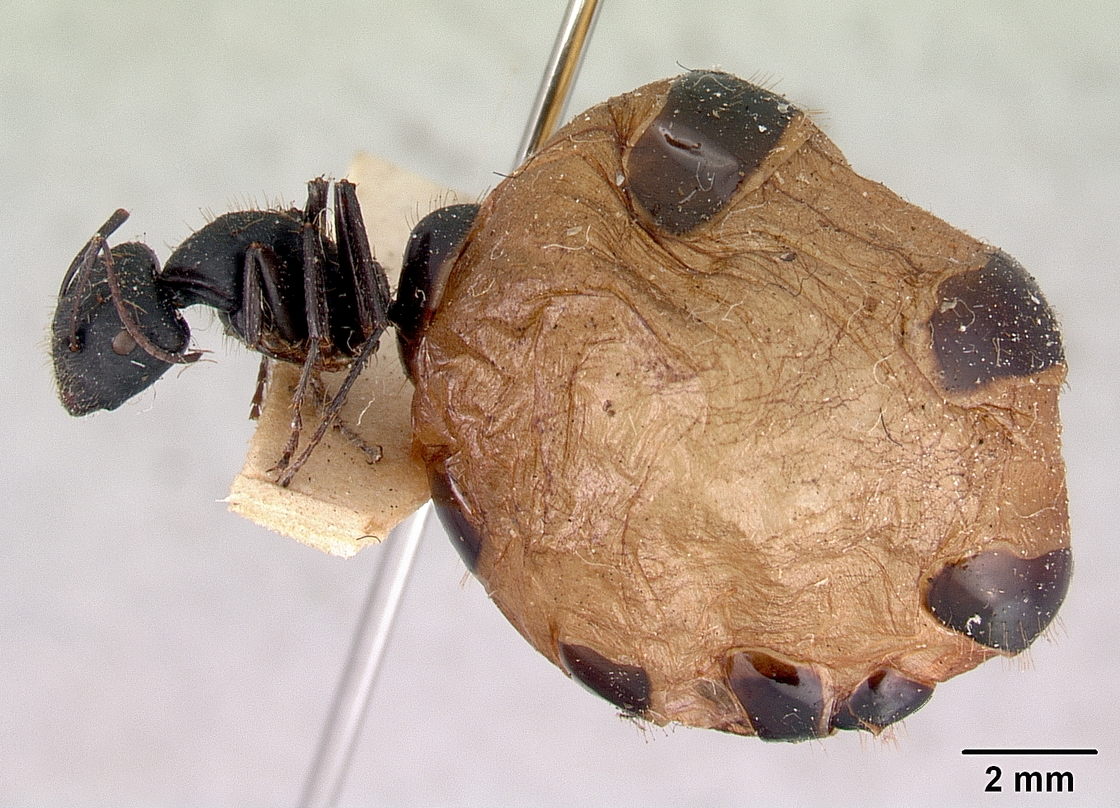
Camponotus inflatus, also known as the Australian honey ant or black honey ant, is a species of carpenter ant native to Australia. Its workers can become repletes—living food storage vessels—and Aboriginal Australians have traditionally eaten these repletes as a food source. The species is considered a local delicacy and holds cultural significance among many Aboriginal tribes.
- Native range
- Central Australian deserts (primarily in the Northern Territory and South Australia)
Lore & Background
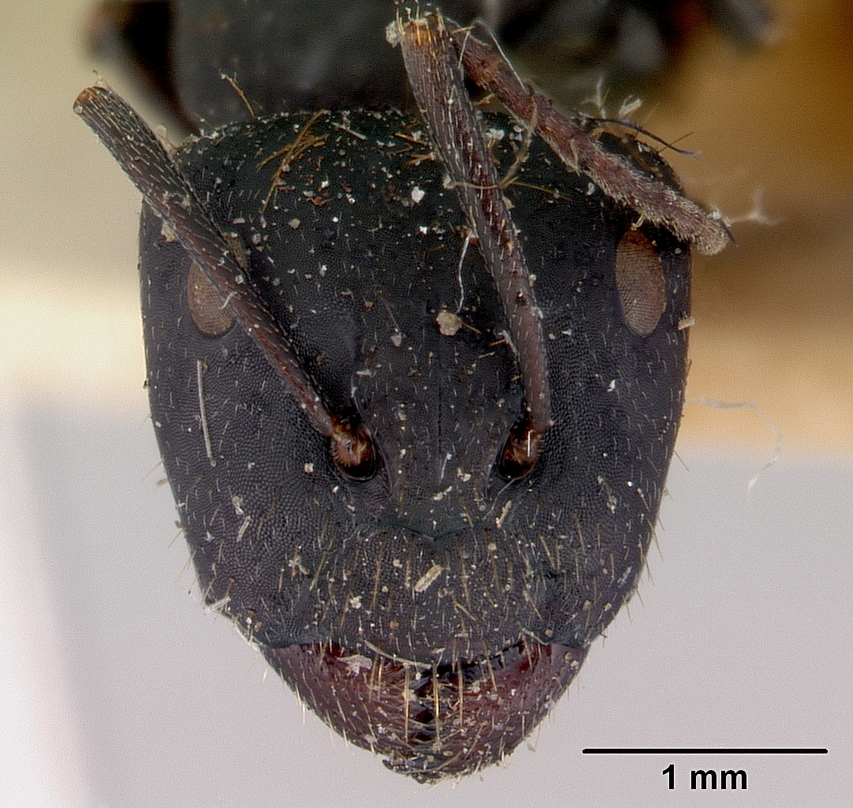
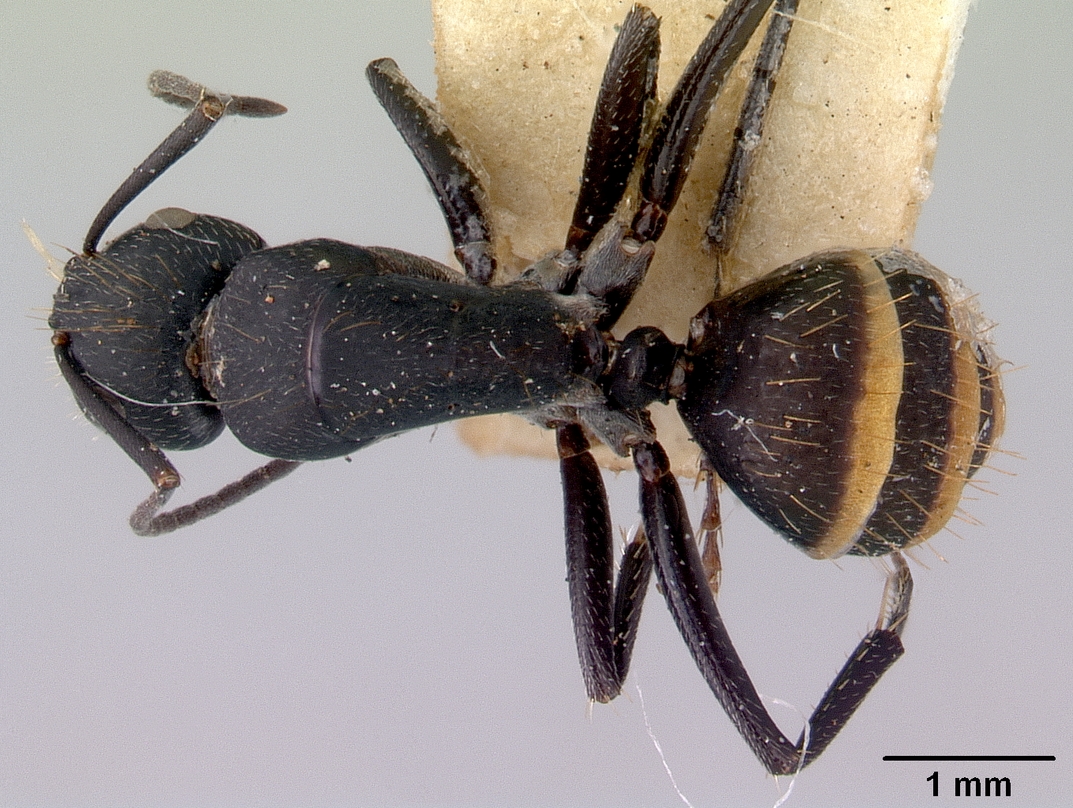
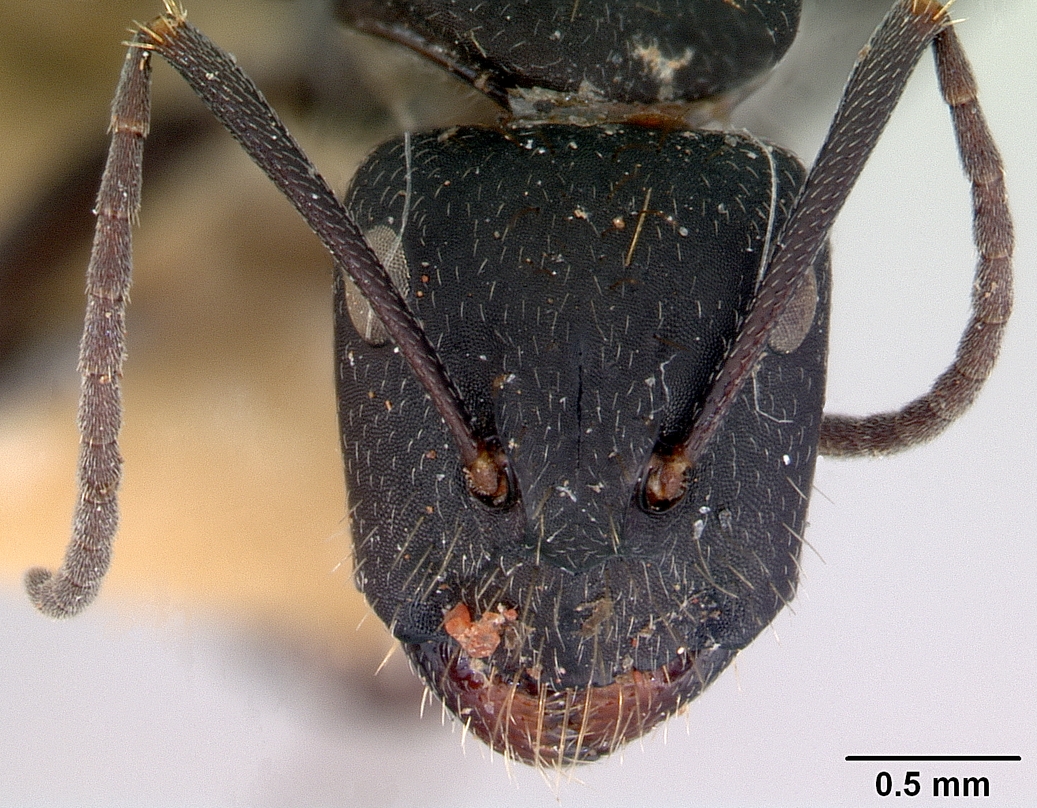
Camponotus inflatus is part of the diverse genus Camponotus, which contains over 1,500 species worldwide. The species belongs to the subgenus Myrmophyma, the bladder-head carpenter ants. Worker ants range from 5 to 8 millimeters, but repletes can swell up to 17 millimeters. The size of the queen and male are unpublished, though their physical characteristics were described by Lubbock (1896). The ants are black with paler legs and antennae. Their nests are located in sandy biomes, typically at the base of mulga trees, and consist of a central shaft measuring 5–6 feet with many branching chambers. The bottom chamber is often the largest and contains most of the repletes, which form a small proportion of the entire colony population.
Reader's Guide
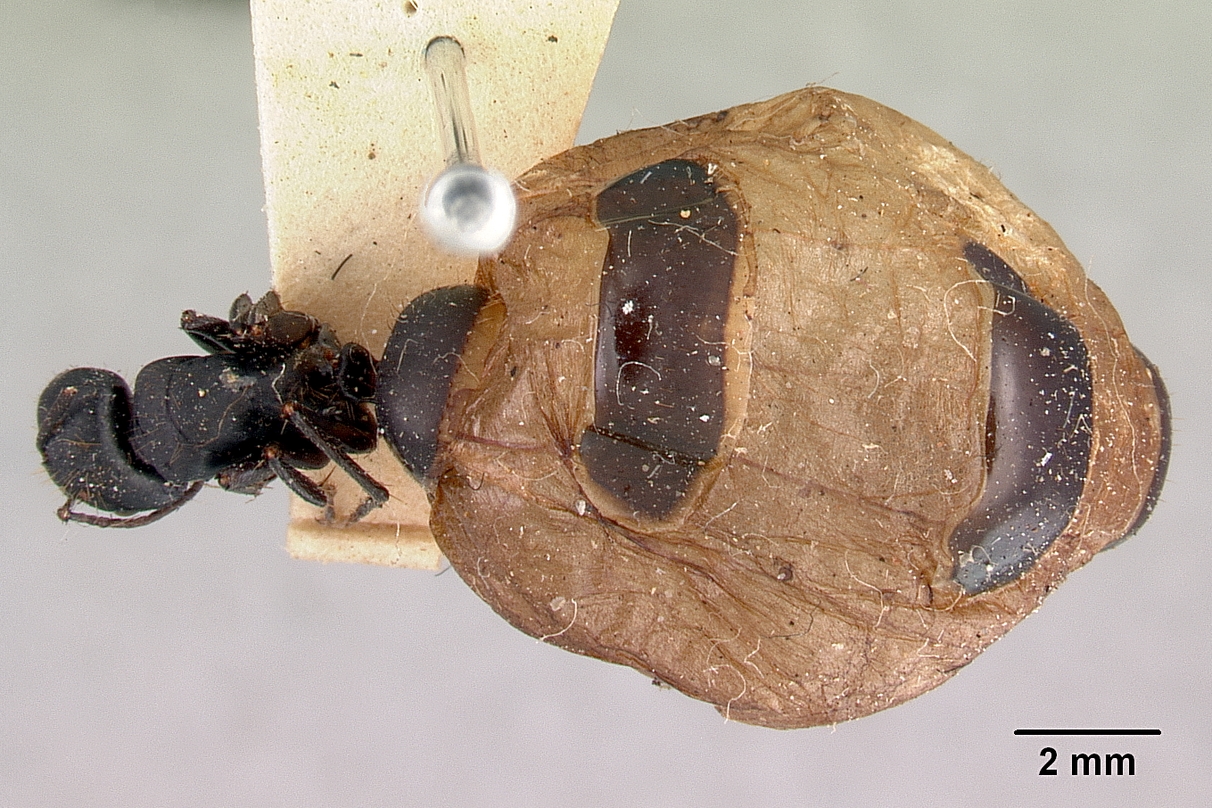
Camponotus inflatus is significant both ecologically and culturally. Ecologically, it is a honeypot ant species whose repletes store large amounts of food in their abdomens, functioning as living food storage for the colony. The repletes are immobile and must be tended by other workers. They collect nectar from aphids on mulga trees and also feed on nectaries of corkwood and fuchsia flowers. Recent studies (Dong et al. 2023) found that the ant honey possesses antibiotic and antifungal properties, with strong activity against Staphylococcus aureus bacteria and Cryptococcus and Aspergillus fungi. The honey is less viscous and less sweet than honeybee honey but contains large amounts of antioxidants. Culturally, Aboriginal Australians have harvested these ants for thousands of years to treat minor ailments like sore throats or infections. Called 'Yarumpa' by the Arrernte people, the repletes are valued as a rare source of sugar during dry months. Traditionally, only women harvested the ants while men hunted, and children learned from the practice. The species has heavily influenced Aboriginal Australian culture, with many traditions revolving around this ant.
Did You Know?
- Repletes can swell up to 17 millimeters, more than double the size of a typical worker ant.
- The species is known by many Aboriginal names, including 'Wuukurta' and 'Yarumpa'.
Colony Architecture & the Replete System
Camponotus inflatus belongs to the subgenus Myrmophyma within the vast Camponotus genus, a group spanning more than 1,500 species worldwide. Workers measure between five and eight millimeters, while their black bodies are accented by paler legs and antennae. The most striking feature of the colony, however, is the replete caste. These specialized workers swell their abdomens to as much as seventeen millimeters, effectively becoming living reservoirs of stored nectar. Repletes constitute roughly half of the entire colony population, yet they are completely immobile and depend on their nestmates for all care. The nest itself is an impressive subterranean engineering feat: a central shaft stretching five to six feet downward, from which numerous chambers branch outward. The deepest and typically largest chamber houses the bulk of the repletes. Entrances are modest—about a quarter inch wide and an inch deep—without any surrounding mound, making them easy to overlook in the sandy terrain where these ants thrive.
The Chemistry of Ant Honey
The nectar stored inside replete abdomens has attracted considerable scientific attention in recent years. A 2023 study by Dong and colleagues revealed that this ant honey carries genuine antibiotic and antifungal activity, showing particularly strong effects against Staphylococcus aureus as well as Cryptococcus and Aspergillus fungi. The chemical profile, however, diverges sharply from the familiar honeybee products of jarrah and manuka varieties. Ant honey is noticeably less viscous and less sweet, yet it is packed with antioxidants. The internal ecology of the replete gut plays a key role: the microbiota is dominated by Blochmannia bacteria, a pattern shared across most Camponotus species, alongside Neocelosporium fungi. In terms of foraging, C. inflatus primarily harvests nectar from aphids tending mulga trees, though observations have also recorded them feeding at nectaries on corkwood and fuchsia flowers. The repletes can regurgitate their stored contents through trophallaxis, distributing nourishment to colony members whenever demand arises.
A Cultural Keystone Species
For Aboriginal Australians, Camponotus inflatus is far more than an insect; it is a cultural anchor woven through language, gender roles, and survival strategy. The species carries distinct names across Aboriginal languages, including "Wuukurta" and "Yarumpa" (the latter used by the Arrernte people), and is regarded as a local delicacy. For thousands of years, communities have harvested the repletes in large quantities, often digging out substantial chunks of sand to expose the nest chambers. Traditionally, this task fell to women while men pursued hunting, and the practice doubled as a teaching moment for children learning essential survival skills. The ants' stored nectar served as a rare and precious source of sugar during the long dry months, and the honey has been used to ease minor ailments such as sore throats and small infections. The species' influence on Aboriginal culture is so deep that many local traditions and stories revolve around it, making C. inflatus one of the few arthropods to occupy such a central place in human cultural memory.
Range, Habitat & Nesting Ecology
Although Camponotus inflatus is present in all seven mainland Australian states, its highest concentrations occur in the arid deserts of the continent's interior. The ants show a clear preference for sandy biomes, and their nests are most frequently established at the base of mulga trees, which also serve as a primary foraging site for the nectar the colony stores. The nest architecture is adapted to the loose, dry substrate: a deep central shaft of five to six feet connects to a network of branching chambers, with the replete-holding room typically being the largest and situated at the lowest point. The entrance is deceptively small—roughly a quarter inch across and an inch into the ground—lacking the raised earthen mounds that characterize many other ant species. This low-profile opening, combined with the sandy surroundings, makes the nests remarkably difficult to spot without local knowledge. The species' broad but patchy distribution across mainland Australia, coupled with its dependence on specific host trees and sandy soils, paints a picture of a specialist that has nonetheless managed to colonize a vast and ecologically diverse continent.
Gallery
Frequently Asked Questions
What is Camponotus inflatus?
Camponotus inflatus, commonly called the Australian honey ant or black honey ant, is a species of carpenter ant native to Australia. In the context of Australian cuisine, the name refers to the edible repletes—swollen worker ants that function as living storage vessels for honeydew.
Where are Camponotus inflatus ants found?
The species inhabits the arid interior of central Australia, with its primary range stretching across the deserts of the Northern Territory and South Australia.
Which part of the honey ant is actually eaten?
The edible portion is the replete, a worker ant whose abdomen balloons as it stores liquid honeydew. Harvesters collect these swollen individuals and consume them for their sweet, honey-like flavour.
Who has traditionally eaten Camponotus inflatus?
Aboriginal Australians have long gathered and consumed the repletes as a traditional food source. The practice is shared across many Indigenous tribes in the central desert regions.
Why is the Australian honey ant culturally significant?
The honey ant replete is regarded as a local delicacy and carries deep cultural weight among numerous Aboriginal communities. Its harvesting and consumption represent a food tradition that has been woven into the lives of central Australian peoples for generations.
More in Australian cuisine 1-24
Spotted an error? Know more?
Reader corrections go straight into our review queue. Suggest an edit · How this site is sourced