
Adaptive Combat Rifle
A modular assault rifle evolved from the Magpul Masada design.
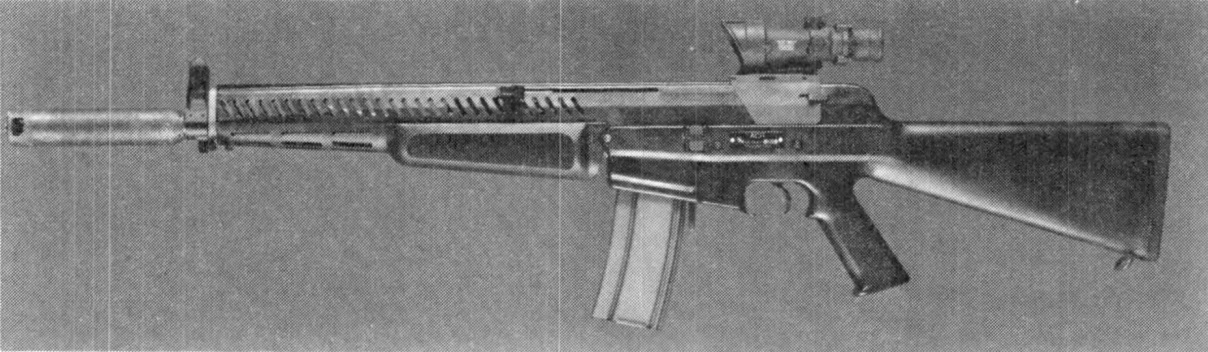
The Adaptive Combat Rifle (ACR), initially known as the Masada, is a modular assault rifle designed by Magpul Industries of Austin, Texas. It is notable for combining design features from several existing rifles, including the AR-18, FN SCAR, G36, and M16/AR-15, into a single lightweight, modular platform. The rifle was originally named after the Siege of Masada, and production rights were later licensed to Bushmaster Firearms International, with Remington Arms manufacturing the selective-fire variant for military and law enforcement.
Quick Facts
- Origin
- United States
- Is Ranged
- Yes
- Wars
- War in Afghanistan (2001–2021) · Russo-Ukrainian War
- Designer
- Magpul Industries
- Design Date
- 2006
- Manufacturer
- Remington Arms (military) / Bushmaster Firearms International (civilian)
- Production Date
- 2010–2020
- Weight
- 7.9 -
- Length
- 25.8 in (stock folded) · 32.6 in (stock deployed) · 35.5 in (stock extended)
- Part Length
- 8.25 in (Remington ACR) · 10.5 in · 14.5 in (Remington ACR) · 16.5 in · 18.5 in
- Cartridge
- 5.56×45mm NATO · 6.8mm Remington SPC (Bushmaster/Remington ACR) · 6.5mm Grendel (Remington ACR) · 7.62×39mm (Bushmaster ACR) · .450 Bushmaster (Bushmaster ACR)
- Action
- Gas-operated short-stroke piston, rotating bolt
Facts from the source article.
Lore & Background
The Magpul Masada's design incorporated features from several recent assault rifles, including the AR-18's short-stroke gas system, the FN SCAR's upper receiver and charging handle location, the G36 and XM8's polymer components, and the M16/AR-15's trigger pack and fire control group. The bolt-catch/release may have been inspired by the Robinson Armament XCR. Magpul added its own innovations, such as a quick-change barrel/trunnion system, adjustable gas regulator, non-reciprocating charging handle, and storage compartments in the stock and grip. Just before the Bushmaster deal, the ambidextrous operating handle was moved to a forward position. The rifle's caliber could be changed by replacing the bolt head, magazine, and barrel.
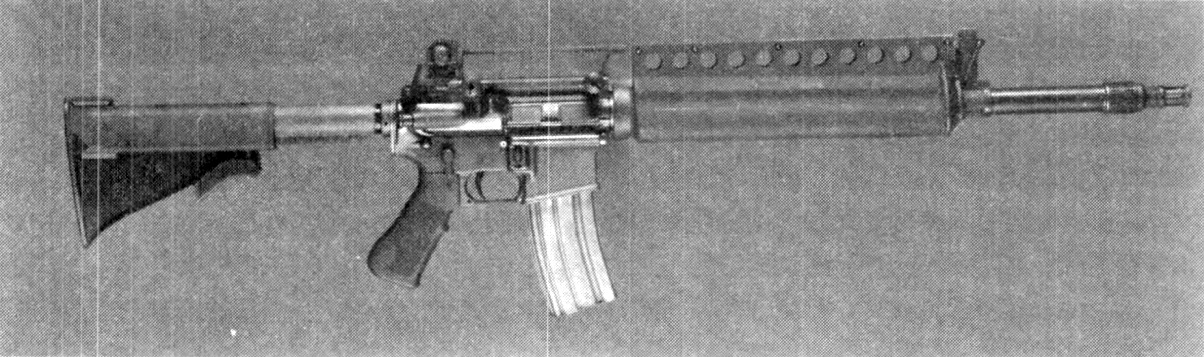
In January 2008, Bushmaster Firearms International licensed the Masada design, and the production version became known as the Bushmaster ACR. Remington Arms, a sister company in the Freedom Group, later took over manufacturing the selective-fire variant for U.S. military and law enforcement. The Remington ACR was displayed to U.S. Army officials on November 13, 2008, as part of a review of carbine technology for a potential M4 replacement, and later entered the Individual Carbine competition. Remington unveiled an improved version for that competition in late 2011, featuring a magnesium lower receiver, A2-style pistol grip, collapsible non-foldable stock, carbine-length gas system, new barrel nut, and folding charging handle, making the weapon 1.8 lbs lighter. The competition was cancelled before a winner was chosen.
A sub-compact variant called the ACR-C Personal Defense Weapon was also unveiled, with a 9.5-inch barrel and folding stock; it was later replaced by the ACR-PDW. In January 2014, Bushmaster introduced a designated marksman rifle version with a Magpul PRS adjustable stock, 18.5-inch stainless steel barrel, and Geissele enhanced trigger. The ACR was available in the commercial marketplace in 2010, with a suggested retail price between $2,685 and $3,061, which was higher than early price quotes. In October 2010, Bushmaster issued a recall due to a design flaw that could cause multiple rounds to fire continuously. Freedom Group's bankruptcy in 2020 closed both Bushmaster and Remington, ending ACR marketing. In 2021, Bushmaster announced it was open in Carson City and working on reintroducing the ACR.
Reader's Guide
The Adaptive Combat Rifle represents a significant attempt to create a modular, multi-caliber infantry weapon by combining proven design elements from several existing platforms. Its development involved a shift from a small designer (Magpul) to major manufacturers (Bushmaster and Remington), reflecting the challenges of bringing a new rifle to both military and commercial markets. The ACR's participation in the U.S. Army's Individual Carbine competition, though ultimately cancelled, demonstrated its potential as a candidate to replace the M4. The rifle's legacy is marked by production delays, a higher-than-expected retail price that caused public outcry, and a recall for a dangerous design flaw. Despite these difficulties, the ACR saw operational use by Polish military intelligence in 2012. The bankruptcy of Freedom Group in 2020 halted production, but Bushmaster's 2021 announcement of a reintroduction suggests continued interest in the platform. The ACR also gained cultural visibility through a promotional deal with the video game Call of Duty: Modern Warfare 2 in 2009.
Did You Know?
- The ACR was originally named after the Siege of Masada, and Magpul stated the name was chosen as 'a bold example of defiance'.
- The Remington ACR was one of the carbines displayed to U.S. Army officials on November 13, 2008, during an Industry Day reviewing carbine technology for a potential M4 replacement.
- In October 2010, Bushmaster issued a recall of all ACR rifles due to a design flaw that could cause multiple rounds to fire continuously when the trigger was pulled.
- The Bushmaster ACR was used in 2012 by Polish soldiers under the Służba Wywiadu Wojskowego (Military Intelligence Service).
A Patchwork of Proven Design Elements
The Adaptive Combat Rifle's architecture reflects a deliberate strategy of synthesizing the strongest traits from several well-regarded assault rifle platforms into one cohesive, lightweight package. Its short-stroke gas system draws from the Armalite AR-18, while the upper receiver layout and charging handle placement echo the FN SCAR. Extensive polymer construction mirrors the approach seen in the Heckler & Koch G36 and XM8, and the trigger pack, barrel, and fire control group carry forward the familiar M16/AR-15 lineage. Some observers have also noted a possible influence from the Robinson Armament XCR on the bolt-catch mechanism. Beyond borrowing, Magpul engineers contributed their own innovations: a quick-change barrel and trunnion system, an adjustable gas regulator, a non-reciprocating charging handle, and integrated storage compartments hidden within the stock and grip. The ambidextrous operating handle was ultimately shifted to a forward position, a layout reminiscent of the G3 and MP5. Perhaps most notably, the rifle's caliber could be swapped simply by exchanging the bolt head, magazine, and barrel. The entire design was conceived in roughly five months without any government funding, and the original name—Masada—was chosen as a nod to the ancient fortress's story of defiance.
From Magpul Workshop to a Two-Brand Production Split
What began as a Magpul Industries project out of Austin, Texas, quickly became a multi-company enterprise. In late January 2008, Bushmaster Firearms International signed a licensing agreement that transferred production, ongoing development, and commercial sales of the rifle, rebranding it as the Bushmaster ACR and dropping the original Masada name. Because both Bushmaster and Remington Arms sit under the same corporate umbrella—Freedom Group, Inc., which also houses Marlin and DPMS Panther Arms—the two brands naturally divided the product line. Bushmaster assumed responsibility for the semi-automatic variant sold to civilian and commercial buyers, while Remington took on the selective-fire version contracted for U.S. military and law enforcement agencies. Together, the two companies undertook extensive environmental and functional testing, subjecting the rifle to sand, dirt, mud, and water exposure to ensure it could meet the demanding operational conditions expected of a military carbine. Prototypes had already been shown to the public at the 2007 SHOT Show in Orlando, Florida, signaling that the platform was well beyond the sketch stage even before the licensing deal was finalized.
Chasing the M4 Replacement and Expanding the Family
The ACR's most high-profile military moment came on November 13, 2008, when the Remington variant was displayed to U.S. Army officials at an invitation-only Industry Day. The event's stated purpose was to survey current carbine technology before the Army drafted formal requirements for a successor to the M4. The rifle subsequently entered the Individual Carbine competition, a direct bid to replace the M4 in service. In late 2011, Remington unveiled a substantially revised version tailored to that competition: a magnesium lower receiver, an A2-style pistol grip, a collapsible but non-foldable stock, a carbine-length gas system, a new barrel nut that eliminated the quick-change barrel feature, and a folding charging handle. These modifications shaved 1.8 pounds off the weapon's weight. The competition was ultimately cancelled before a winner was declared. Remington also developed a sub-compact variant, the ACR-C Personal Defense Weapon, featuring a 9.5-inch barrel and a folded length of just 19.5 inches, later replaced by the ACR-PDW. In January 2014, Bushmaster introduced a designated marksman configuration with an 18.5-inch stainless steel barrel, a Magpul PRS stock, and a Geissele trigger, weighing 8.75 pounds at an MSRP of $2,799.
Pricing Backlash and the 2010 Recall
The ACR's path to the commercial market was marked by delays and a pricing controversy that rattled the firearms community. Originally slated for release in the second quarter of 2008, the launch slipped to the first quarter of 2009 as Bushmaster redirected resources toward military projects. A November 2008 statement confirmed the rifle was being redesigned to better compete for next-generation Army carbine and subcompact requirements. Civilian availability finally arrived in the second quarter of 2010, with tens of thousands of units entering the marketplace. However, the suggested retail price of $2,685 to $3,061 stunned buyers who had earlier heard informal quotes hovering around $1,500. The discrepancy—roughly double the initial estimates—triggered widespread public outcry and disappointment among potential end-users who had been following the platform's development. The situation took a further turn on October 15, 2010, when Bushmaster issued a full recall of every ACR rifle in circulation, urging owners to immediately cease using their weapons and to contact customer service for instructions. The recall cast a long shadow over what had been positioned as a flagship modular platform.
Gallery
Frequently Asked Questions
Who designed the Adaptive Combat Rifle?
The ACR was originally conceived by Magpul Industries, a firearms accessories company based in Austin, Texas. It began life under the working name 'Masada' before being rebranded for broader production.
What makes the ACR stand out among assault rifles?
Its defining trait is modularity: it blends design elements borrowed from the AR-18, FN SCAR, G36, and M16/AR-15 families into one lightweight platform. Fans often point to this 'best-of' approach as the reason it feels distinct from any single lineage.
What calibers does the ACR support?
Out of the box it chambers 5.56×45mm NATO, and a conversion kit allows it to cycle 6.8mm Remington SPC rounds. The DMR variant weighs about 8.75 lb (3.97 kg) with an 18.5-inch barrel.
Who manufactures the ACR and in what variants?
Bushmaster Firearms International holds the license for the semi-automatic civilian version, while Remington Arms produces the selective-fire model intended for military and law-enforcement buyers.
Why was the rifle originally called the Masada?
The name references the ancient Siege of Masada, a symbolic stand against overwhelming odds. Magpul chose it to evoke resilience before the project was rebranded to the more descriptive 'Adaptive Combat Rifle.'
More in Assault Rifles, Part 3 1-24
Spotted an error? Know more?
Reader corrections go straight into our review queue. Suggest an edit · How this site is sourced