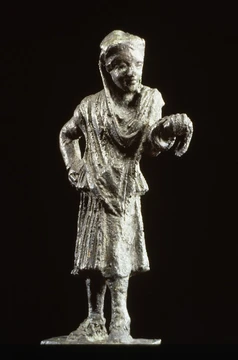
Greek tragedy
Ancient Greek theatrical genre originating in rites for Dionysus.

Greek tragedy (Ancient Greek: τραγῳδία, romanized: tragōidía) stands alongside comedy and the satyr play as one of the three main theatrical forms to come out of Ancient Greece and the Greek-settled regions of Anatolia. Its most celebrated works, sometimes referred to as Attic tragedy, took shape in Athens during the 5th century BC. Most scholars see it as growing out of older rituals performed for Dionysus, the god of wine and theatre, and it left a strong mark on the theatre of both Ancient Rome and the Renaissance. Tragic plots usually drew on myths from the oral traditions of archaic epics, but in the theatre these stories were brought to life by actors. The most highly regarded tragedians of the era were Aeschylus, Sophocles, and Euripides. Through their plays, these writers frequently examined aspects of human nature, both to engage the audience and to draw them into the action of the drama.
The word’s origins have been debated since antiquity. Most of what is known comes from Aristotle’s *Poetics*, which drew on first-hand records of Attic theatre performances that no longer survive. Because of this, Aristotle’s work is essential for understanding ancient tragedy, even if some of his claims are open to question. Aristotle believed tragedy developed from the satyr dithyramb, a hymn sung and danced in honor of Dionysus. The term τραγῳδία (tragōidía) combines τράγος (trágos, “goat”) and ᾠδή (ōidḗ, “song”), meaning “song of the goats,” a reference to the chorus of satyrs. Another idea is that the name came from the legendary Thespis (who gave us the word “thespian”) competing in the first tragic contest for a goat as a prize. Alexandrian grammarians took τραγῳδία to mean “song for the sacrifice of the goat” or “song for the goat,” believing the animal was a race prize—a view supported by Horace’s *Ars Poetica*, which describes the first tragic poet winning a goat and then staging wild satyrs.
Other etymologies exist. The *Oxford English Dictionary* notes that many theories have been offered, some even rejecting the link to “goat.” J. Winkler suggested “tragedy” might come from the rare word τραγίζειν (tragizein), meaning “adolescent voice-change,” implying the original singers represented those going through social puberty.
- Field
- Theatre
- Nationality
- Ancient Greek
- Known for
- Principal theatrical genre from Ancient Greece, originating in rites for Dionysus
Lore & Background
The origin of Greek tragedy is one of the unsolved problems of classical scholarship. According to Aristotle, tragedy evolved from the satyr dithyramb, an Ancient Greek hymn sung and danced in honor of Dionysus. The term τραγῳδία, derived from τράγος 'goat' and ᾠδή 'song', means 'song of the goats,' referring to the chorus of satyrs. Other hypotheses include that it derived from the rare word tragizein, meaning 'adolescent voice-change,' or from the cereal tragos, a form of spelt. Tragic plots were most often based upon myths from the oral traditions of archaic epics, presented by actors.
Reader's Guide
Greek tragedy reached its most significant form in Athens in the 5th century BC. The most acclaimed Greek tragedians are Aeschylus, Sophocles, and Euripides. These tragedians often explored many themes of human nature, mainly as a way of connecting with the audience but also as a way of bringing the audience into the play. Aeschylus is credited with inventing the trilogy and introducing the second actor. Sophocles introduced a third actor, increased plot complexity, and developed more human characters. The genre greatly influenced the theatre of Ancient Rome and the Renaissance. Aristotle's Poetics remains the primary source of knowledge on the question of tragedy's origin, though his testimony is open to doubt on some points. The origin of Greek tragedy is one of the unsolved problems of classical scholarship, with scholars noting that we know nearly nothing about its origin due to lack of evidence and doubtful reliability of sources.
More in Ancient Greek theatre 1-24
Spotted an error? Know more?
Reader corrections go straight into our review queue. Suggest an edit · How this site is sourced