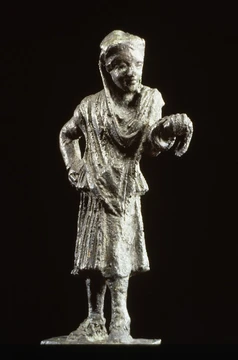
Classical unities
A prescriptive dramatic theory of three unities from 16th-century Italy.

The classical unities, also called the Aristotelian unities or three unities, are a prescriptive theory of dramatic tragedy introduced in Italy in the 16th century and influential for three centuries. They consist of unity of action (one principal action), unity of time (action occurring within 24 hours), and unity of place (a single physical location). Though attributed to Aristotle, the theory was based on limited access to his works and later codified by Italian and French critics.
- Field
- Dramatic theory
- Known for
- Prescribing unity of action, time, and place in tragedy
- Origin
- Italy, 16th century
- Key proponent
- Gian Giorgio Trissino (1478–1550)
- Codifier
- Lodovico Castelvetro (c. 1505–1571)
Lore & Background
The classical unities were first introduced in 1514 by Italian author and critic Gian Giorgio Trissino in his blank-verse tragedy Sofonisba. Trissino claimed to follow Aristotle, and he had access to Aristotle's Poetics via a Latin translation by Giorgio Valla (1498) and the Greek text. Poor translations led to misreadings. Trissino's play adhered to the unities, omitted act divisions, and introduced a chorus, influencing many Italian playwrights in the 16th century. However, The Cambridge Guide to Theatre notes that imitation of classical forms had a deadening effect on Italian drama, making it 'rhetorical and inert,' and none of those tragedies survive except as historic examples.
In 1570, Lodovico Castelvetro codified the unities in his translation and commentary on Aristotle's Poetics, Poetica d'Aristotele vulgarizzata e sposta. Though his translations are considered crude and inaccurate, and he sometimes altered Aristotle's meanings, they were influential and sparked scholarly debates across Europe. The theory then spread to France 120 years after Sofonisba, primarily through critics like Jean Chapelain and the Académie Française. Dramatist Pierre Corneille became an ardent supporter, attempting to keep within the limits of time and place from Le Cid (1636) to Suréna (1674), and published his Trois Discours in 1655 arguing for the unities. Corneille's principles drew support from Racine and Voltaire, making the unities hard rules for French playwrights.
In England, the unities had less impact, with adherents including Ben Jonson and John Dryden. Examples of plays following the theory include Thomas Otway's Venice Preserv'd, Joseph Addison's Cato, and Samuel Johnson's Irene. Shakespeare's The Tempest takes place almost entirely on an island over four hours with one major action, and it is suggested that Prospero's regular checking of the time may satirize the unities. Philip Sidney advocated for them in An Apology for Poetry, complaining that English plays ignored them. Samuel Johnson later rejected the dogma in his 1773 preface to Shakespeare, arguing that the unities of time and place are not essential and should be sacrificed for variety and instruction. After Johnson's critique, interest turned away from the theory.
Reader's Guide
The classical unities shaped European drama for three centuries, particularly in France, where they became rigid rules enforced by critics and playwrights like Corneille, Racine, and Voltaire. Voltaire claimed that all nations began to regard as barbarous the times when geniuses like Lope de Vega and Shakespeare were ignorant of the system, and that the example of Corneille, Racine, Molière, Addison, Congreve, and Maffei should restrain anyone from violating the laws. However, opposition grew in France with the Romantic movement, led by Victor Hugo and Alexandre Dumas. Hugo, in the preface to his play Cromwell, criticized the unities of place and time but upheld unity of action as 'true and well founded.' The conflict climaxed with the production of Hugo's Hernani on 21 February 1830, where Classicists and Romanticists clashed in the theatre, with fist fights reported. The Romantic movement carried the day, freeing French playwrights from confining plays to one location and one day. In England, the unities were less dominant, and Samuel Johnson's rejection of them as inessential turned interest away. The theory's legacy is a cautionary tale about the dangers of rigid prescription in art, though it also spurred important debates about dramatic structure and fidelity to nature.
Did You Know?
- Gian Giorgio Trissino introduced the unities in 1514 in his tragedy Sofonisba, claiming to follow Aristotle, but he had no access to Aristotle's Poetics.
- Lodovico Castelvetro codified the unities in 1570 in a translation of Aristotle's Poetics that is considered crude and inaccurate.
- Victor Hugo's play Hernani, produced on 21 February 1830, sparked fist fights between Classicists and Romanticists over the unities.
- Samuel Johnson rejected the unities of time and place in his 1773 preface to Shakespeare, arguing they are not essential to a just drama.
Frequently Asked Questions
What are the Classical unities in Greek theatre?
The Classical unities are a set of three prescriptive rules for tragedy that demand one principal plot, a timeframe of no more than 24 hours, and a single fixed setting. They emerged as a formal dramatic theory in 16th-century Italy rather than in ancient Greece itself.
Who actually invented the Classical unities?
The rules were first articulated by the Italian dramatist Gian Giorgio Trissino in the 1500s and later formalized by the critic Lodovico Castelvetro. Neither was Greek; both worked within the Italian Renaissance tradition of codifying dramatic practice.
Why are the Classical unities called 'Aristotelian' if Aristotle didn't write them?
The label stuck because early Renaissance readers had only fragments of Aristotle's Poetics and pieced together what they believed he prescribed. In reality, the strict three-unity formulation was a later Italian and French critical invention, not a direct statement from the philosopher.
What are the three specific rules of the Classical unities?
The unities require that a tragedy follow one principal action, unfold within a single day (24 hours), and take place in one continuous location. Together they were meant to keep the audience's emotional focus tight and undivided.
How long did the Classical unities influence Western drama?
The unities shaped European stage writing for roughly three centuries, from their 16th-century Italian origin through the height of French neoclassical drama. They began to lose their grip on playwrights in the 19th century as Romantic and realist movements broke free of their constraints.
More in Ancient Greek theatre 1-24
Spotted an error? Know more?
Reader corrections go straight into our review queue. Suggest an edit · How this site is sourced