Corn flakes
Breakfast cereal made from toasted flakes of corn.

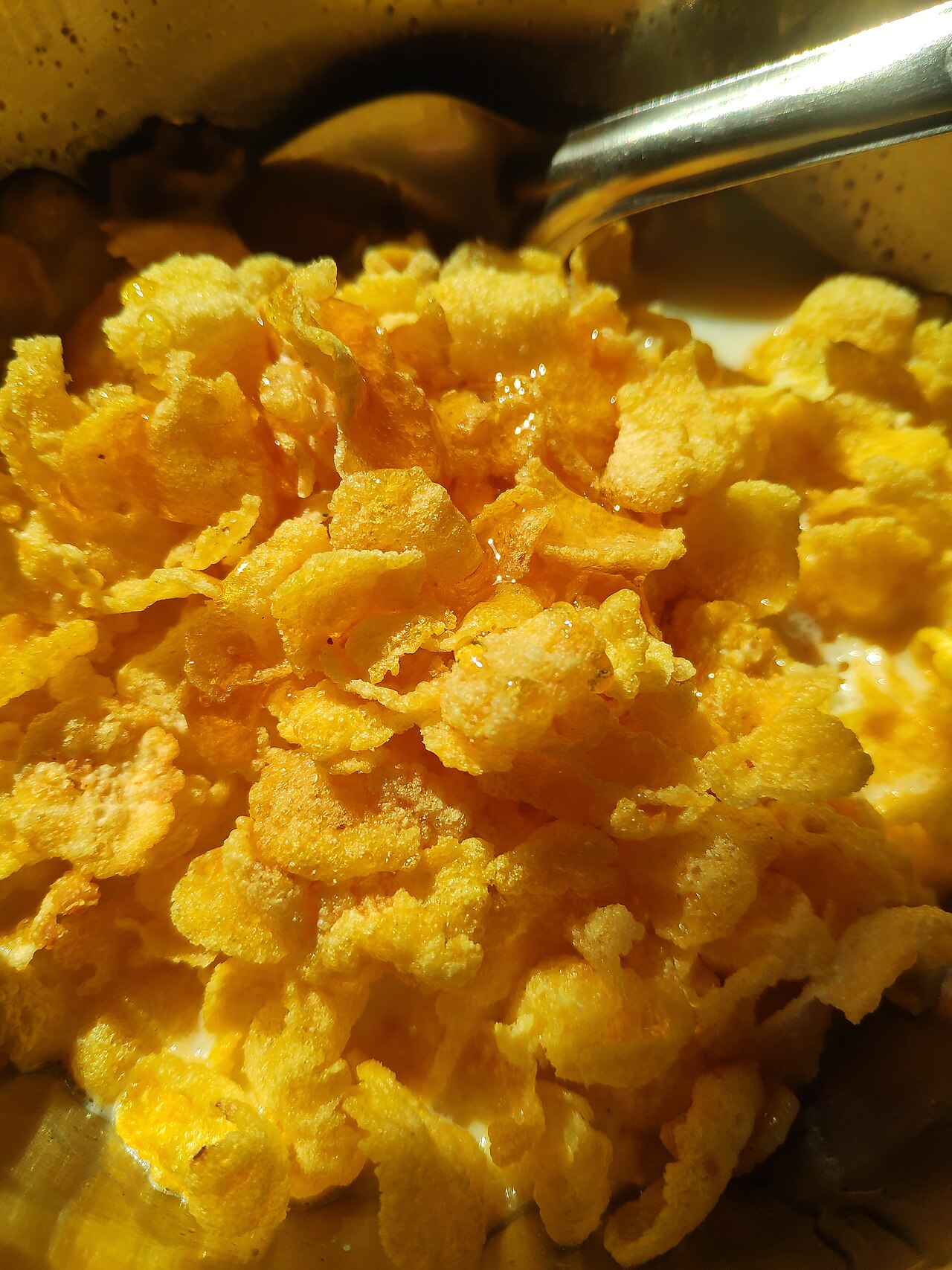
Gaurav Dhwaj Khadka · CC BY-SA 4.0
Corn flakes are a breakfast cereal produced by toasting flakes of maize. They were first created as a remedy for indigestion and have since become a common food in the United States and the United Kingdom, where more than six million households eat them.
The cereal was initially made from wheat. John Harvey Kellogg, along with his brother Will Kellogg, invented it in 1894 for patients at the Battle Creek Sanitarium, where John was the superintendent and Will worked as a bookkeeper. The cereal was well received by patients, and Will later founded what became the Kellogg Company to manufacture corn flakes for the general public. A patent for the process was granted on April 14, 1896; a legal dispute between the two brothers over the patent and trademark occurred later.
As corn flakes gained popularity, a former sanitarium patient named C. W. Post began producing competing products. Kellogg continued experimenting with different ingredients and grains. In 1928, the Kellogg Company introduced Rice Krispies, another successful cereal developed by its research team.
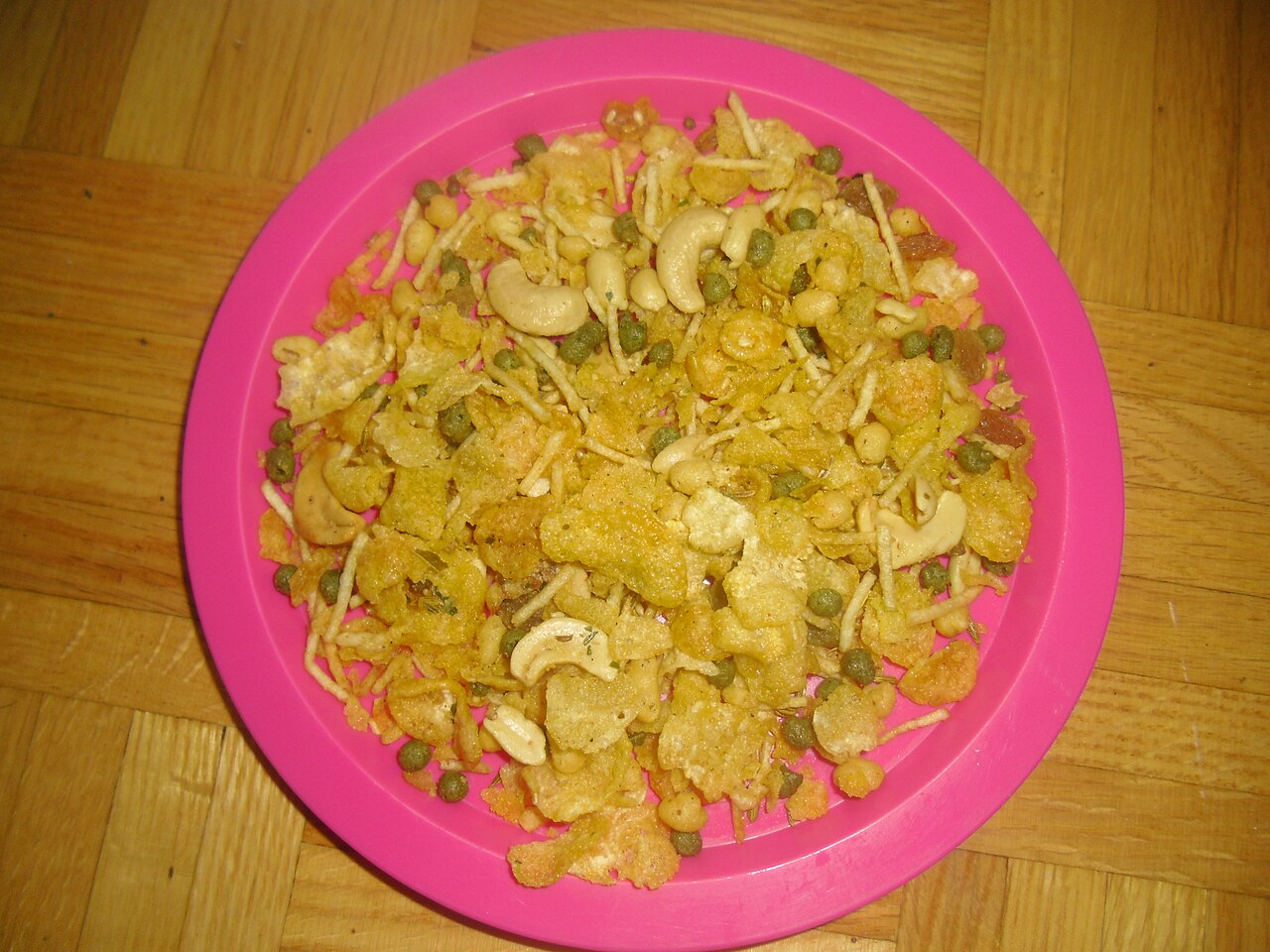
Many generic brands of corn flakes are now produced by various manufacturers. Beyond breakfast, crushed corn flakes can replace bread crumbs in recipes and be used in a variety of cooked dishes.
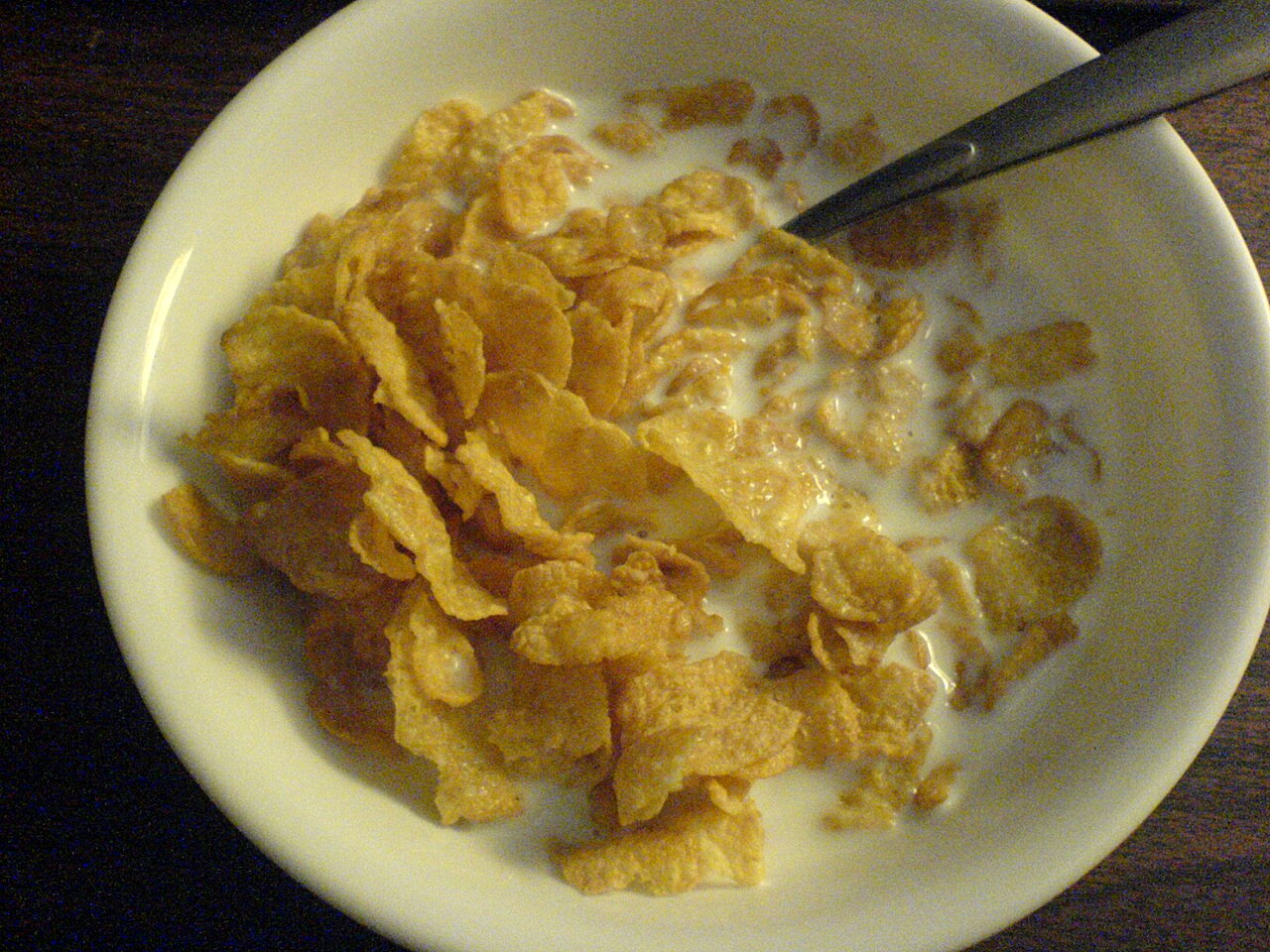
Corn flakes are packaged as small, toasted flakes of maize, typically served cold with milk and sometimes sugar. Since their original creation, plain flakes have been flavored with salt, sugar, and malt, and many variations have been introduced, including sugar-frosted flakes and honey-and-nut versions.
The invention of flaked cereal in 1894 has been described differently by John Kellogg, his wife Ella Eaton Kellogg, his younger brother Will, and other family members. There is significant disagreement about who was involved and what role each played. Some accounts say Ella suggested rolling dough into thin sheets, and John built rollers for that purpose. Others claim John got the idea in a dream and used his wife’s kitchen equipment. It is generally agreed that one night John left a batch of wheat-berry dough unattended. Instead of discarding it the next morning, he ran it through rollers and was surprised to produce thin flakes that could be baked. Will was tasked with figuring out what happened and recreating the process reliably. Ella and Will often clashed, and their versions of the story tend to downp
- invented
- 1894
- inventor
- John Harvey Kellogg and Will Kellogg
- original grain
- wheat
- patent granted
- April 14, 1896
- manufacturer
- Kellogg Company
- popular regions
- United States, United Kingdom
Lore & Background
The cereal, originally made with wheat, was created by John Harvey Kellogg and his brother Will Kellogg in 1894 for patients at the Battle Creek Sanitarium, where John was the superintendent and Will worked as a bookkeeper. The breakfast cereal proved popular among the patients, and Will subsequently started what became the Kellogg Company to produce corn flakes for the wider public. A patent for the process was granted on April 14, 1896; a legal dispute between the two brothers over the patent and trademark occurred later. The development of the flaked cereal has been variously described by John Kellogg, his wife Ella Eaton Kellogg, Will, and other family members, with considerable disagreement over who was involved and the role they played. It is generally agreed that upon being called out one night, John Kellogg left a batch of wheat-berry dough behind; rather than throwing it out, he sent it through rollers and obtained
Reader's Guide
Corn flakes have had a lasting impact on breakfast culture, evolving from a health food for sanitarium patients to a mass-market staple. The Kellogg brothers' discovery of tempering became a fundamental technique of the flaked cereal industry. Will Kellogg's decision to add sugar and launch aggressive advertising campaigns, such as offering a free box to any woman who winked at her grocer, helped popularize the cereal. The introduction of the Funny Jungleland Moving Pictures Booklet premium in 1909, offered for 22 years, further cemented its place in households. Corn flakes also inspired rival products from C. W. Post, a former patient, and led to the creation of other successful cereals like Rice Krispies in 1928. Beyond breakfast, crushed corn flakes are used as a substitute for bread crumbs and appear in various cooked dishes, including Australian honey joys, British chocolate corn flake cakes, New Zealand Afghan biscuits, and Mormon funeral potatoes. The cereal's mascot, Cornelius the Rooster, debuted in 1957, and the brand remains widely recognized.
Did You Know?
- Corn flakes were originally made with wheat, not corn.
- A patent for the flaked cereal process was granted in 1896 after a legal battle between the Kellogg brothers.
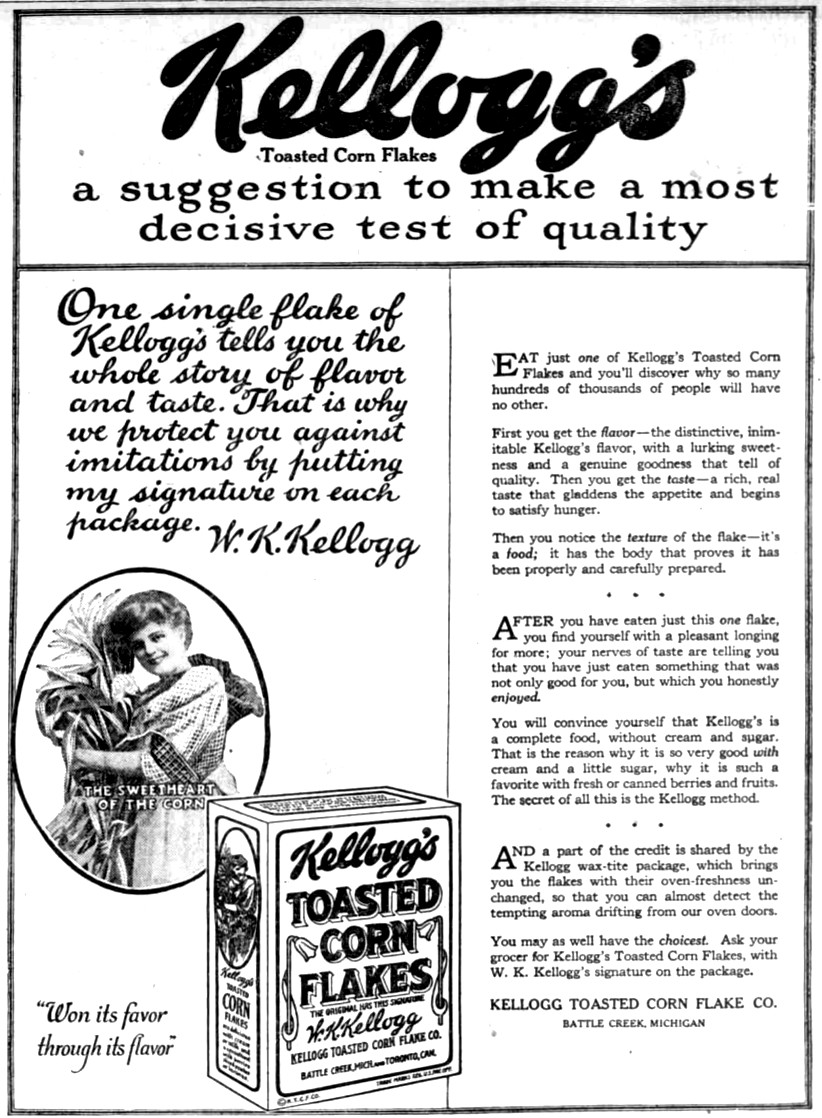
- The first mascot of Kellogg's Corn Flakes was a female figure called The Sweetheart of the Corn.
- Crushed corn flakes can be used as a substitute for bread crumbs in recipes.
The Kellogg Family Saga and the Birth of a Cereal
The story of how corn flakes came into existence remains one of food history's most tangled family sagas. In 1894, at the Battle Creek Sanitarium, a batch of wheat-berry dough was left overnight by John Kellogg, the facility's superintendent. Rather than discarding it, the stale dough was pushed through rollers the following morning, yielding delicate flakes that could be baked. The exact sequence of who had the idea—whether Ella Eaton Kellogg suggested the rolling technique, or whether John dreamed it up and used equipment in his wife's kitchen—remains fiercely contested. Will Kellogg, John's younger brother, was tasked with understanding and reliably recreating the process. The brothers and Ella frequently clashed over credit, each version of events tending to downplay the other's contribution. The resulting technique, known as tempering, became foundational to the entire flaked cereal industry. A patent for the flaked cereal process was filed in May 1895 and granted to John alone in April 1896, a decision that fueled years of legal and personal friction between the two men.
From Sanitarium Therapy to Mass-Market Empire
What began as a therapeutic breakfast for sanitarium patients quickly outgrew its clinical origins. The original flakes, which the Kellogg brothers called Granose, proved so popular among patients that Will Keith Kellogg, serving as business manager at the sanitarium, decided in 1906 to take the product to a broader audience. He founded the Battle Creek Toasted Corn Flake Company and made a pivotal commercial choice: adding sugar to the plain flakes to appeal to a mass palate. This decision created a sharp rift between Will and his brother John, whose vision had been a simple, unstimulating diet. Will's marketing instincts were bold and unconventional. In 1907, his company ran an advertising campaign offering a free box of cereal to any woman who winked at her grocer. By 1909, he introduced the Funny Jungleland Moving Pictures Booklet as a premium, available to buyers of two boxes—a promotion that ran for a remarkable twenty-two years. Meanwhile, a former sanitarium patient named C. W. Post launched rival cereal products, intensifying the competitive landscape. Will continued pushing boundaries, eventually introducing Rice Krispies in 1928.
Iconic Branding and the Rooster That Crowed
Corn flakes' cultural footprint extends far beyond the breakfast table, largely thanks to some of the earliest and most memorable food advertising in history. The very first boxes featured a female figure known as The Sweetheart of the Corn, establishing a visual identity for the brand. Then in 1957, Cornelius the Rooster—affectionately called Corny—debuted on packaging and later in television commercials, created by the Leo Burnett advertising agency. In his early appearances, the rooster spoke the now-famous catchphrase about waking up to Kellogg's Cornflakes, with voices provided by Dallas McKennon and Andy Devine. Over time, the character evolved to simply crow rather than talk. The rooster concept itself traces back to an unexpected source: Nansi Richards, a Welsh harpist and family friend, who noticed the phonetic resemblance between ceiliog, the Welsh word for rooster, and the Kellogg surname. The brand's reach grew through successive product innovations—sugar-frosted flakes, honey and nut varieties—while the core plain flake remained a staple. In the United Kingdom alone, more than six million households consume the cereal, a testament to its enduring domestic presence.
Corn Flakes on the Global Plate
While most people encounter corn flakes as a cold, milk-soaked breakfast, the humble toasted flake has found surprising roles in kitchens around the world. Crushed corn flakes serve as a practical substitute for bread crumbs in countless recipes, adding texture to cooked dishes. In Australia, honey joys are a beloved party snack made by combining corn flakes with honey, butter, and sugar, then baking the mixture in patty cases or muffin cups. Across the Tasman Sea in New Zealand, corn flakes form a core ingredient in Afghan biscuits, a chocolate-topped treat that has become a national staple. In the United Kingdom, children often make chocolate corn flake cakes—also called chocolate nests—at Easter, mixing the flakes with dark chocolate, golden syrup, and butter, and topping the result with Mini Eggs. In Mormon communities, corn flakes feature prominently in funeral potatoes, a potato casserole that appears at family dinners and community gatherings. These diverse culinary applications demonstrate that the flaked grain, originally conceived as a remedy for indigestion, has transcended its breakfast origins to become a versatile ingredient in global food culture.
Gallery

Frequently Asked Questions
Who is Corn flakes?
Corn flakes is a breakfast cereal made by toasting thin flakes of maize into a light, crispy product. It was invented in 1894 by John Harvey Kellogg and his brother Will Kellogg while they worked at the Battle Creek Sanitarium.
What was Corn flakes's original purpose?
It was first created as a dietary remedy for patients struggling with indigestion at the sanitarium. Notably, the very first version was actually produced from wheat rather than corn.
How did Corn flakes become a household staple?
Will Kellogg went on to establish the company that became the Kellogg Company, which began mass-producing the cereal for the general public. Today, more than six million households across the United States and the United Kingdom eat it on a regular basis.
When was Corn flakes officially recognized?
The patent for the cereal was granted on April 14, 1896, securing its place in American food history. That legal milestone allowed the Kellogg Company to scale production well beyond the walls of the sanitarium.
Why is Corn flakes important to American cuisine?
It helped shift the American breakfast from a heavy, meat-centric affair to a quick, convenient option that families could prepare in minutes. As one of the first widely mass-produced shelf-stable cereals, it set the template for the modern breakfast routine.
More in American cuisine 1-24
Spotted an error? Know more?
This is a living reference — every entry is fact-audited, and reader corrections feed straight into our audit queue. Suggest an edit · See this site's audit record