Bacon jam
Bacon jam is a savory relish that emerged during the bacon mania trend, first documented in recipes from at least 2005, and later popularized by Josh Henderson around 2007.

Marsilar · CC BY-SA 4.0
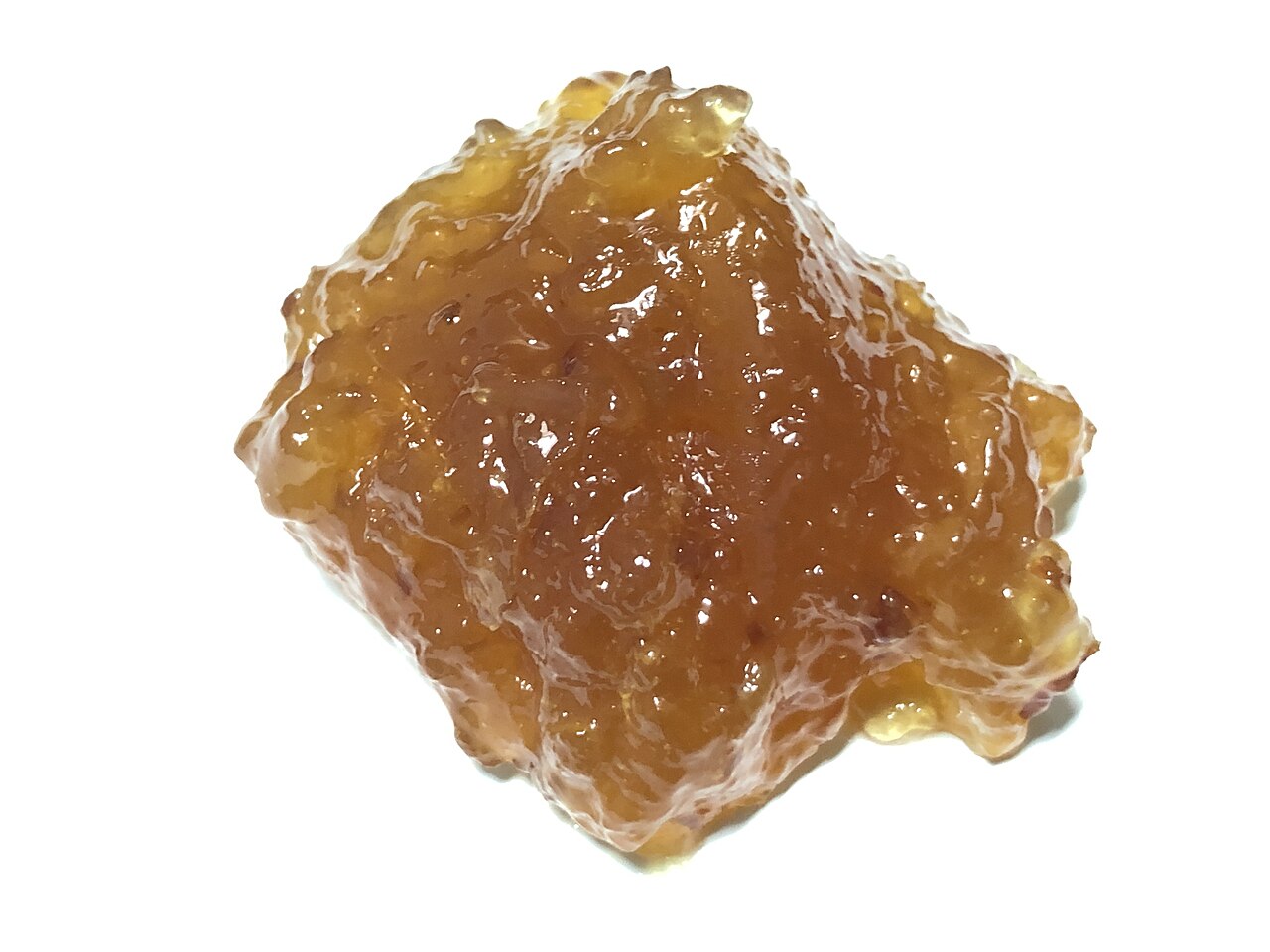
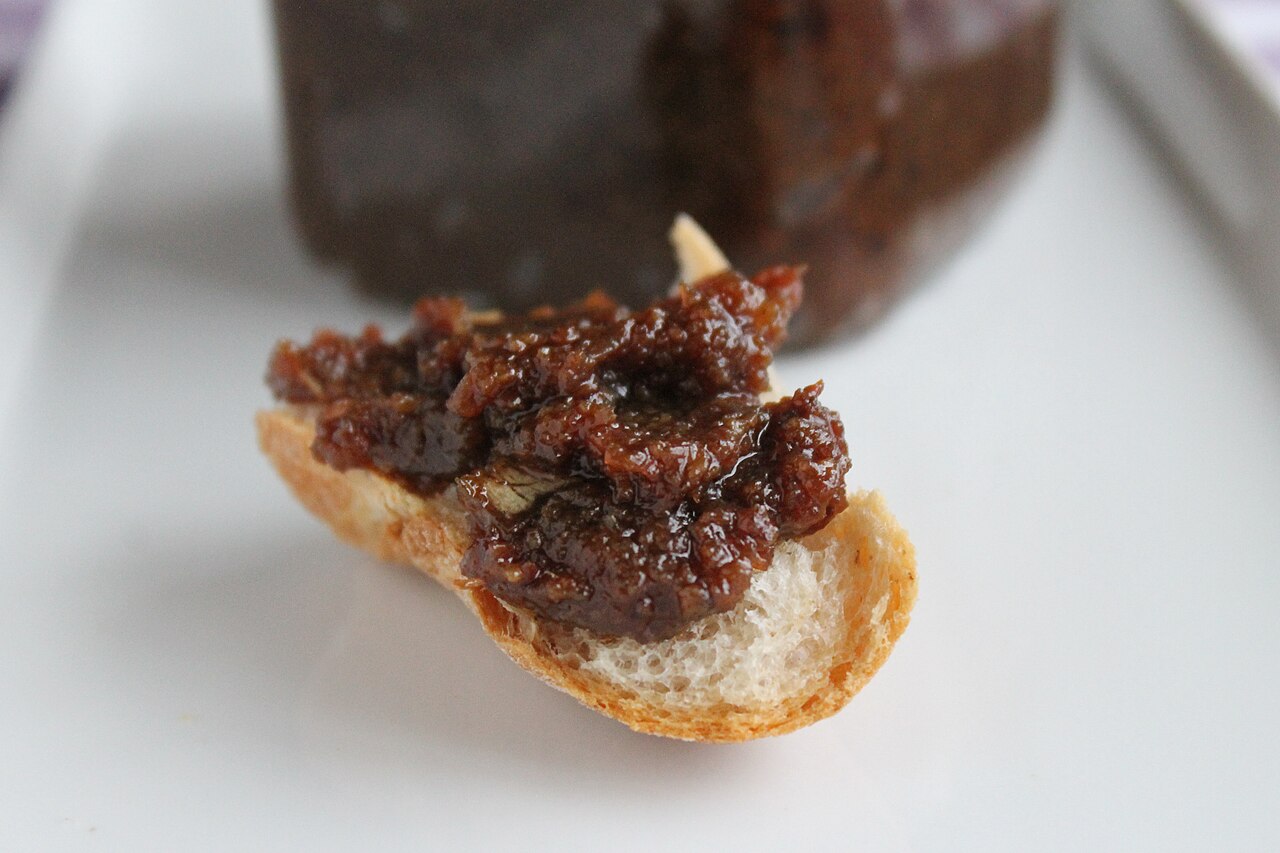
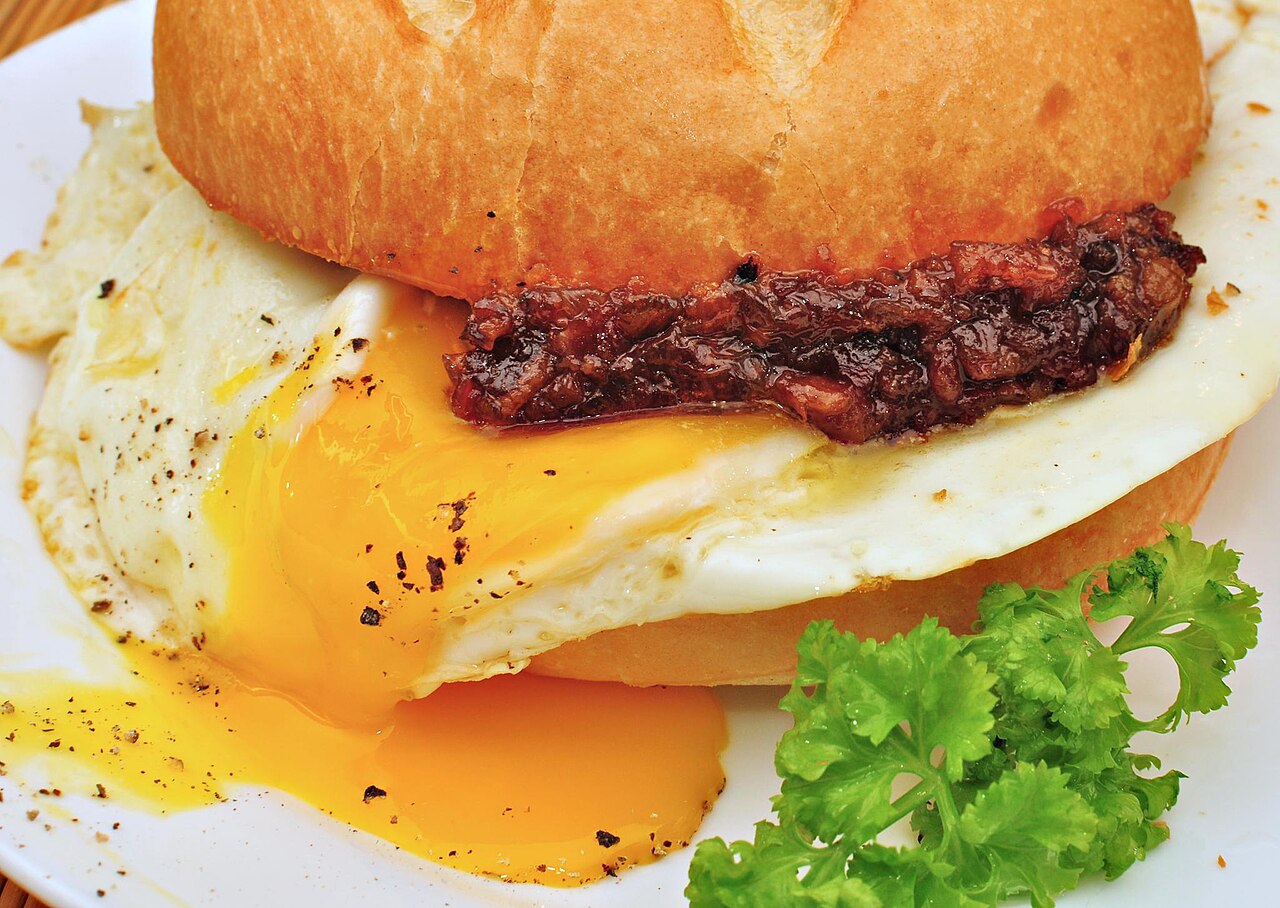
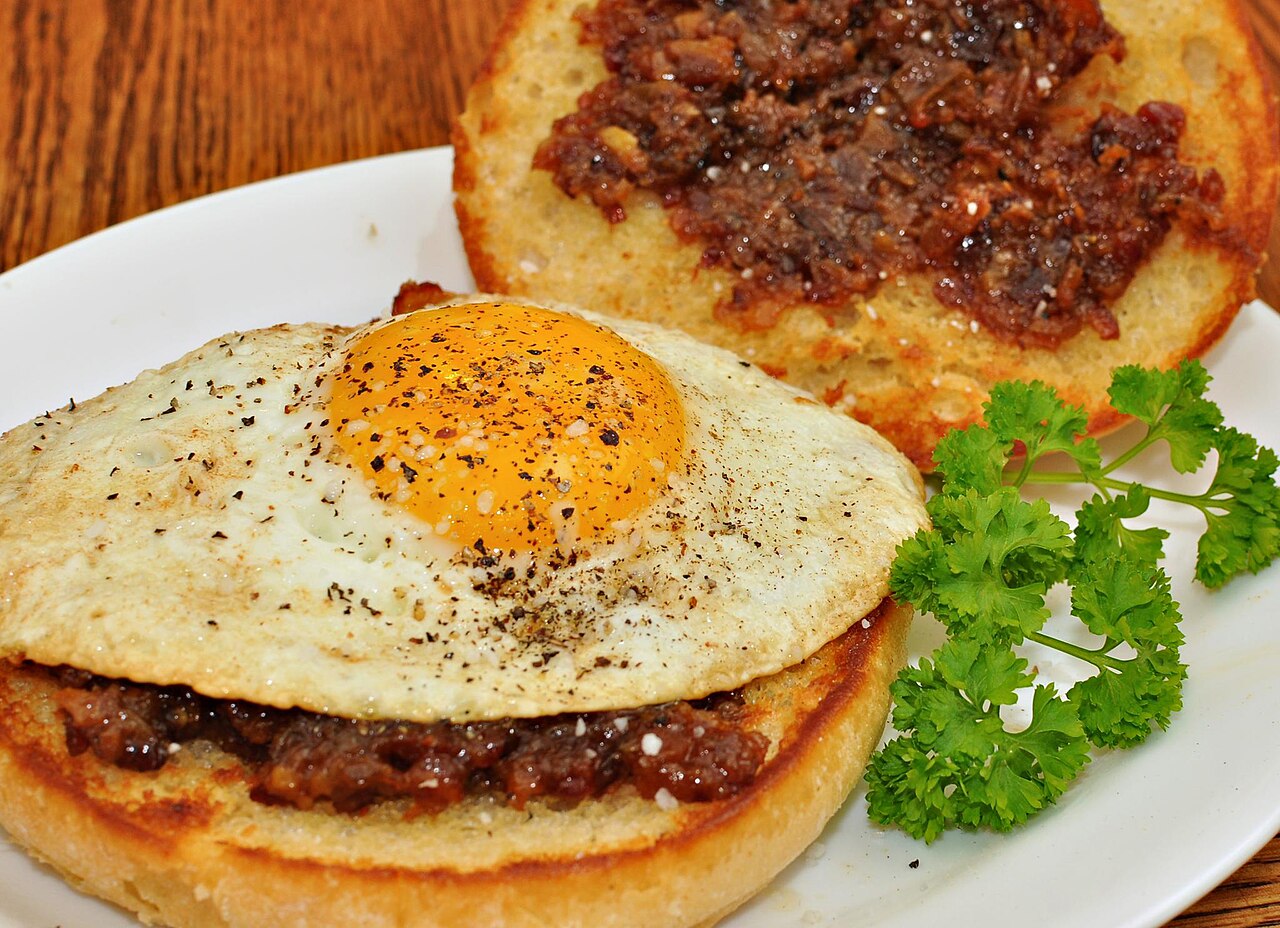
Bacon jam is a savory relish made from chopped bacon that is cooked, drained of most fat, then slow-cooked with onions, vinegar, and brown sugar. It emerged during the bacon mania trend and was first documented in recipes from at least 2005. Since then, it has been used on many other foods, including as a spread for bread or toast. Numerous spiced and flavored variations are now available.
Josh Henderson of Skillet Street Foods in Seattle is often credited with popularizing bacon jam for his food trucks, selling it by at least 2007, though documented recipes predate his version. His recipe was inspired by the garnish on hamburgers at Sang Yoon's gastropub Father's Office, which uses caramelized onions and "bacon compote." Henderson spent four years refining his version, focusing on pork flavor over onion. He served it as a "special sauce" on his food truck burgers. Henderson also sold bacon jam in jars, and in 2008, it was featured in Real Simple's holiday gift guide. Others later began producing it.
In 2013, Bruce Kramer introduced chef Michael Oraschewsky to bacon jam, and Oraschewsky began serving it at his restaurant. They launched a Kickstarter campaign to fund a business called The Bacon Jams, which produced and sold the product. In 2014, QVC approached them to sell it online, requiring a shelf-stable version approved by the USDA. The company rebranded as TBJ Gourmet in 2016. By 2017, their product was in 1,500 retail locations and nearly 1,000 restaurants. By 2022, it achieved mass distribution through Sysco, and later through US Foods and KeHE.
National restaurant chains began offering bacon jam in the 2020s, often as limited-time promotions: Sonic and Red Robin in 2021; Denny's in 2023 and 2024; Dairy Queen and Burger King in 2024; Applebee's in 2025; and Dunkin' Donuts in 2025. By 2024, it was also sold in thousands of supermarkets. Besides TBJ, many other brands now offer bacon jam, including Stonewall Kitchen.
To prepare bacon jam, chopped bacon is cooked and most grease drained, then slow-cooked with diced onions, brown sugar, balsamic vinegar, salt, and black pepper. Garlic, maple syrup, and other vinegars are common additions; less frequent ingredients include bourbon whiskey, brewed coffee, thyme, and salt. Bacon jam is not smooth like fruit jam but contains chunks of bacon and other ingredients in a sticky glaze; some cooks make it smoot
- invented
- First documented in recipes from at least 2005; popularized by Josh Henderson around 2007
Lore & Background
Josh Henderson of Skillet Street Foods in Seattle is often credited with popularizing bacon jam for his food trucks, selling it since at least 2007, though earlier recipes exist. His recipe was inspired by the garnish for the hamburgers at Sang Yoon's gastropub Father's Office, which includes caramelized onions and 'bacon compote'; Henderson says he spent four years refining his bacon jam recipe, emphasizing the pork flavors over the onion. He serves it as a 'special sauce' on the hamburgers on his food trucks. Henderson also sold bacon jam in jars, and in 2008, it was featured in Real Simple's holiday gift guide. Others have started producing it since.
In 2013, Bruce Kramer introduced the chef Michael Oraschewsky to bacon jam, and Oraschewsky started serving it at his restaurant. They launched a campaign on Kickstarter to raise money for a business, The Bacon Jams, which produced and sold the product. In 2014, QVC approached them to sell it online, requiring a shelf-stable version approved by the USDA. The company rebranded as TBJ Gourmet in 2016. By 2017, their product was in 1,500 retail locations and nearly 1,000 restaurants. By 2022, it achieved mass distribution through Sysco, and later through US Foods and KeHE.
Reader's Guide
Bacon jam represents a notable innovation in modern American condiments, emerging from the bacon mania of the early 2000s. Its significance lies in its transformation of a breakfast meat into a versatile, savory-sweet spread that has been adopted by both food trucks and national restaurant chains. The product's journey from a food truck special sauce to a shelf-stable commercial item sold on QVC and distributed by major food service companies illustrates the potential for niche food products to achieve mass-market penetration. National restaurant chains such as Sonic, Red Robin, Denny's, Dairy Queen, Burger King, Applebee's, and Dunkin' Donuts offered bacon jam in limited-time promotions during the 2020s, and by 2024 it was sold in thousands of supermarkets. The development of a shelf-stable version by TBJ Gourmet, requiring USDA approval, was a key technical hurdle that enabled widespread distribution. Bacon jam's legacy includes inspiring many other brands, such as Stonewall Kitchen, and its continued presence in both home kitchens and commercial food service.
Did You Know?
- Bacon jam was invented in 2007 by Josh Henderson of Skillet Street Foods in Seattle.
- The original recipe was inspired by a 'bacon compote' garnish at Father's Office gastropub.
- TBJ Gourmet sold 60,000 jars of bacon jam in 6 minutes on QVC in 2014.
- Unlike fruit jams, the original bacon jam could not be stored at room temperature and required refrigeration.
Origins in Seattle's Food-Truck Scene
Bacon jam traces its roots to the food-truck culture of Seattle, where Josh Henderson of Skillet Street Foods began crafting the condiment for his mobile kitchens. Henderson has been selling his version since at least 2007, positioning it as a "special sauce" for the hamburgers he served. His inspiration came from the garnish at Sang Yoon's gastropub Father's Office, which featured caramelized onions paired with what was described as a "bacon compote." Rather than simply copying that pairing, Henderson spent roughly four years iterating on his recipe, deliberately pushing the pork flavors to the forefront so they would dominate over the onion. The product quickly gained visibility beyond the truck: by 2008, Henderson's jarred bacon jam had earned a spot in both Martha Stewart's and Real Simple's holiday gift guides, signaling that the condiment had crossed from a niche street-food add-on into the broader culinary conversation. Its emergence also dovetailed with the wider "bacon mania" of the era, giving a once-simple pork product a new identity as a versatile, spreadable relish.
From Kickstarter to National Distribution
In 2013, Bruce Kramer introduced chef Michael Oraschewsky to bacon jam, and Oraschewsky began featuring it on his restaurant's menu. The two then launched a Kickstarter campaign to fund a dedicated business, The Bacon Jams, which would produce and sell the product. A pivotal moment arrived in 2014 when QVC reached out, offering to sell the jam online. Fulfilling that deal meant engineering a shelf-stable formulation in volume and securing USDA approval. The result was a spectacular debut: 60,000 jars sold in just six minutes on air. The company rebranded as TBJ Gourmet in 2016 and continued its rapid expansion. By 2017, TBJ's product sat on shelves in roughly 1,500 retail locations and was used in nearly 1,000 restaurants. In 2022, the brand secured mass distribution through the foodservice giant Sysco, and by 2026 it was also carried by US Foods and KeHE. National restaurant chains followed with limited-time promotions throughout the 2020s—Sonic and Red Robin in 2021, Denny's in 2023 and 2024, Dairy Queen and Burger King in 2024, and Applebee's and Dunkin' Donuts in 2025—while by 2024 the jam was stocked in thousands of supermarkets. Other brands, including Stonewall Kitchen, now offer their own versions.
Cooking Method & Composition
At its core, bacon jam is a slow-cooked relish built around chopped bacon that has been rendered and drained of most of its grease. The bacon is then simmered with diced onions, brown sugar, balsamic vinegar, salt, and black pepper. Many cooks also fold in garlic, maple syrup, or alternative vinegars, while less common additions include bourbon whiskey, brewed coffee, and thyme. The finished product is deliberately textured rather than smooth: visible chunks of bacon and onion sit in a sticky, glossy glaze. Some home cooks blend a portion in a food processor for a smoother consistency, and commercially packaged versions tend to be even smoother. The nutritional profile varies. Henderson's original Skillet Street formula carried 36 percent protein and fat from the bacon alongside 11 percent sugar, whereas other commercial products range from trace to 17 percent protein and fat with 35 to 66 percent sugar. Web-based recipes typically call for four to six times as much raw bacon by weight as sugar; because cooked bacon retains only about 30 percent of its raw weight, the finished jam ends up with roughly 1.2 to 1.8 times as much bacon as sugar. Many spiced and flavored variations now exist.
Shelf Life, Safety & What Sets It Apart
Unlike fruit preserves, bacon jam resists traditional home canning. Even with added vinegar or sugar, the original Skillet Street version could not be safely stored at room temperature. Home cooks must keep it refrigerated for two to four weeks or freeze it for longer storage, and cases of foodborne illness have been traced to inadequate refrigeration of the product. Commercially produced bacon jam, by contrast, is formulated and processed to remain shelf-stable until the jar is opened. Bacon jam also occupies a distinct niche among spreadable pork products. Italian 'nduja from Calabria, Austrian verhackert from Styria, and German mettwurst or teewurst are all cured or raw preparations, not cooked the way bacon jam is. French rillettes from Touraine are a shredded confit of pork and salt that Balzac once dubbed "brune confiture," or brown jam, but they carry no other seasoning. None of these analogous products use crisped meat, none are sweetened, and none function as a condiment; they are eaten as charcuterie alongside bread rather than slathered over a sandwich or burger.
Gallery
Frequently Asked Questions
What is bacon jam?
Bacon jam is a thick, sweet-savory spread made from finely chopped bacon that's slow-cooked with onions, vinegar, and brown sugar until it reaches a jam-like consistency. It functions as a versatile condiment sitting somewhere between a relish and a spread.
Who invented or popularized bacon jam?
Documented recipes trace back to at least 2005, so no single person holds a clear invention claim. Josh Henderson of Skillet Street Foods in Seattle is widely credited with pushing bacon jam into the mainstream around 2007 by selling it from his food trucks.
How do you make bacon jam?
You cook chopped bacon until crispy, drain off most of the rendered fat, then slowly simmer the remaining bacon with onions, vinegar, and brown sugar until everything melds into a thick, spreadable texture. From there, cooks add all sorts of spices and flavorings to create their own variations.
When did bacon jam become a thing?
The recipe first showed up in written form around 2005, riding the early-2000s wave of intense bacon enthusiasm in American cooking. It broke into wider public awareness after Henderson's Seattle food-truck sales took off by 2007, cementing it as a go-to pantry item.
What can you use bacon jam on besides bread?
Fans pile it onto sandwiches, burgers, and roasted meats, or stir it into pasta sauces and grain bowls for a quick sweet-salty boost. Its thick, spreadable texture also makes it a popular glaze for ribs, chicken, or even vegetables.
More in American cuisine 1-24
Spotted an error? Know more?
This is a living reference — every entry is fact-audited, and reader corrections feed straight into our audit queue. Suggest an edit · See this site's audit record