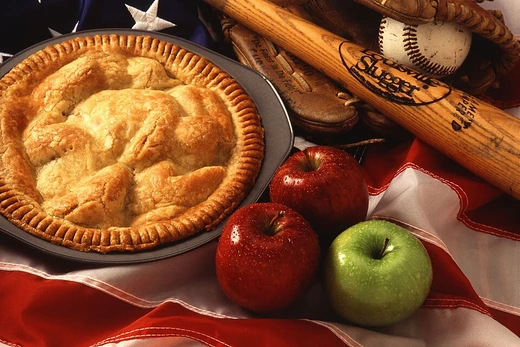
Christmas cookie
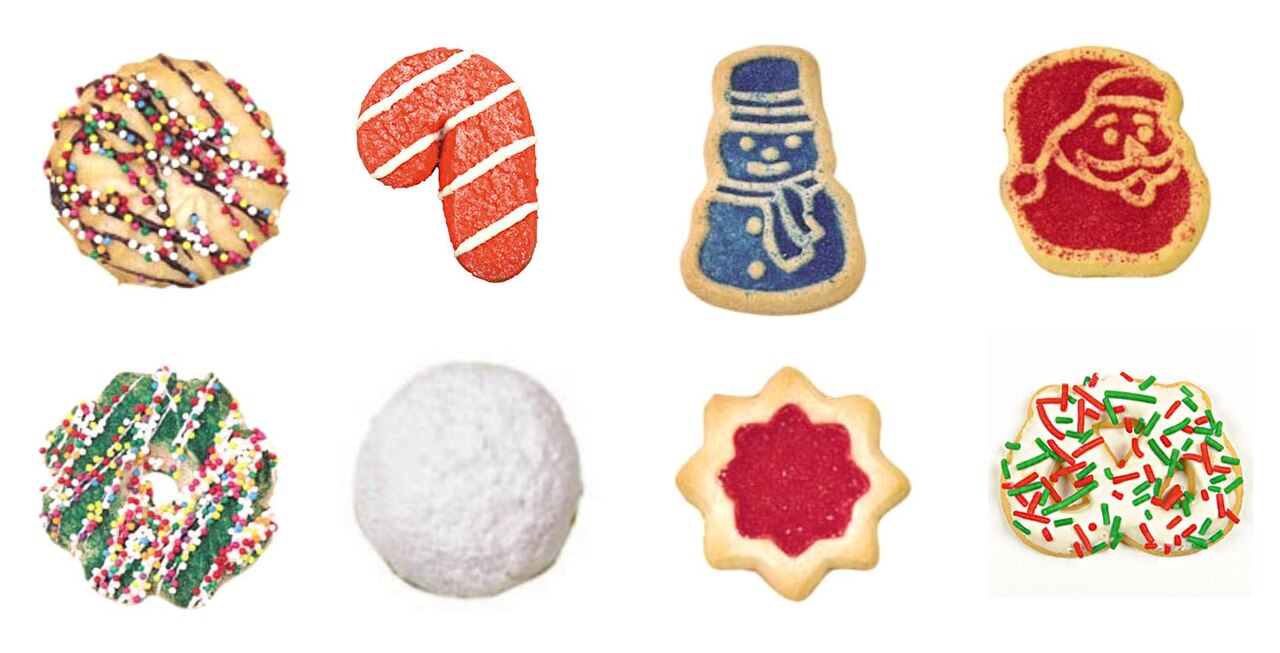
Shaped cookies popularized by cookie cutters in the late 19th century.

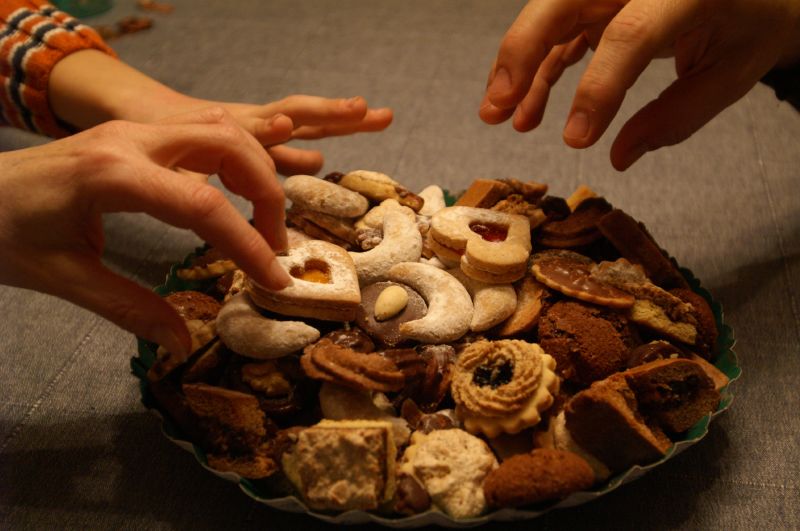
Nenad Stojkovic from Srbija · CC BY 2.0
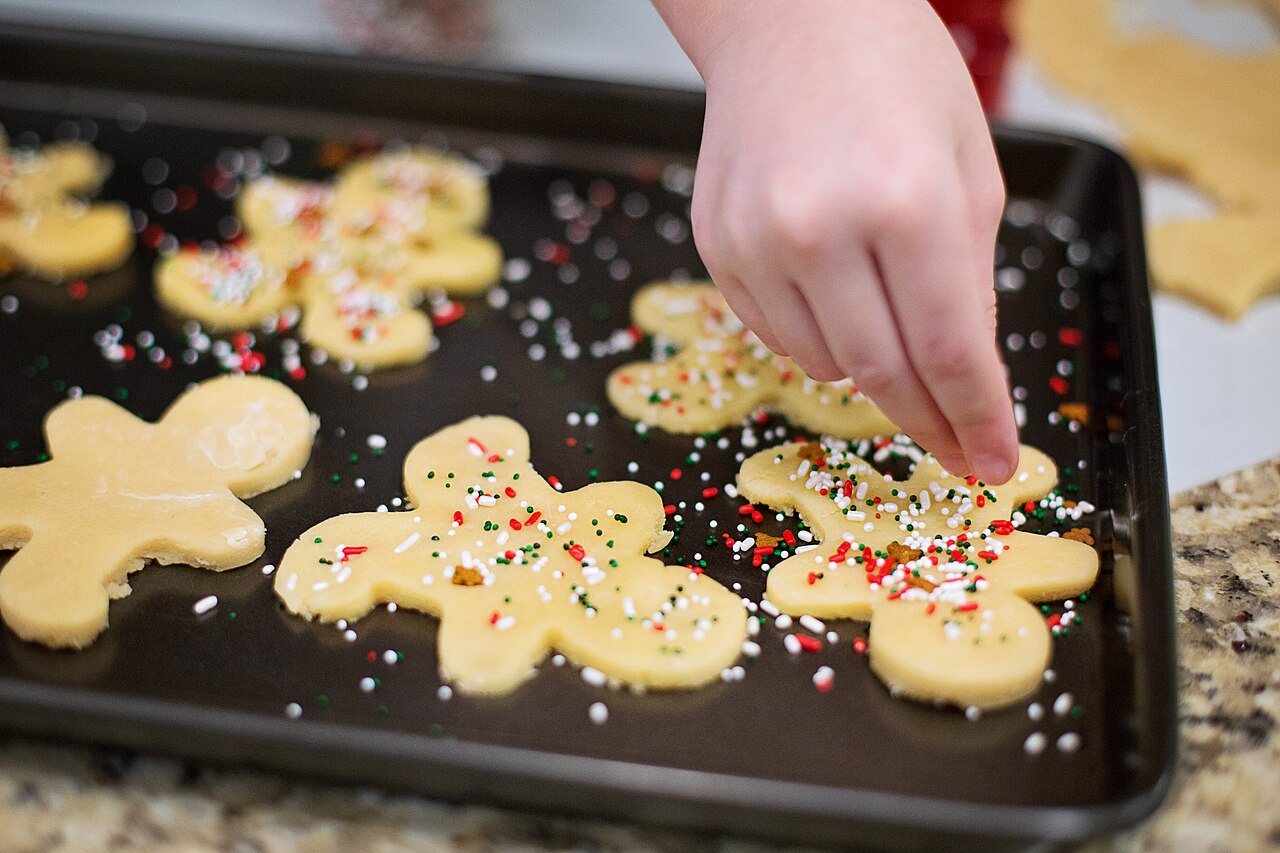
Christmas cookies, sometimes called Christmas biscuits, are typically sugar-based cookies or biscuits formed into festive shapes. Local or family customs often dictate specific flavors, such as gingerbread. In the United States, the widespread availability of cookie cutters near the end of the 19th century made shaped Christmas cookies popular.
The roots of modern Christmas cookies lie in Medieval European biscuit recipes, which incorporated newly introduced ingredients like cinnamon, ginger, black pepper, almonds, and dried fruit. By the 1500s, Christmas biscuits were common across Europe—Germany favored Lebkuchen, Sweden preferred pepparkakor, and Norway enjoyed krumkake. Dutch settlers brought the earliest Christmas cookies to the United States in the early 1600s. Changes to import laws between 1871 and 1906 led to a flood of cheap German products, including cookie cutters, which often featured stylized designs meant for hanging on Christmas trees. Cookbooks soon included recipes specifically for these cutters. By the early 1900s, U.S. merchants were also importing decorated Lebkuchen from Germany as gifts. Since the 1930s, children in Canada and the United States have left cookies and milk for Santa Claus on Christmas Eve, though many people eat them themselves. Common cookie shapes include candy canes, reindeer, holly leaves, Christmas trees, stars, and angels.
Popular Christmas cookies include gingerbread, which has existed in some form since the Crusades brought spices and sugar to Europe, but only became strongly linked to Christmas when Queen Victoria and Prince Albert included it in German holiday traditions; it is also traditional in Alsace. Bredele are Alsatian Christmas cookies. Chocolate crinkle cookies, sometimes associated with Saint Paul, Minnesota, get their name from the crackle effect that occurs when the dough expands and flattens during baking, causing a powdered sugar coating to crack and resemble a snowflake, making them a winter icon. Fattigmann, a Norwegian cookie dating to the Middle Ages, is deep-fried in unsalted fat. Kerstkransjes, from the Netherlands, are round cookies with a hole in the middle, often decorated with almond chips. Krumkake, also Norwegian, were originally baked over open fires using decorative irons; modern cooks use electric or stovetop irons to make these wafer-thin biscuits, which are wrapped into a cone s
- origin
- Medieval Europe
- earliest US examples
- Early 17th century, brought by the Dutch
- popular shapes
- Candy canes, reindeer, holly leaves, Christmas trees, stars, angels
- common flavors
- Gingerbread, anise, cinnamon, almond
- associated tradition
- Children leave cookies and milk for Santa Claus since the 1930s in Canada and the United States
Lore & Background
Modern Christmas cookies trace their history to recipes from Medieval Europe biscuits, when ingredients such as cinnamon, ginger, black pepper, almonds and dried fruit were introduced into the west. By the 16th century, Christmas biscuits had become popular across Europe, with Lebkuchen favored in Germany, pepparkakor in Sweden, and krumkake in Norway. The earliest examples in the United States were brought by the Dutch in the early 17th century. Due to a wide range of cheap imported products from Germany between 1871 and 1906 following a change to importation laws, cookie cutters became available in American markets. These imported cookie cutters often depicted highly stylized images w
Reader's Guide
Christmas cookies hold significance as a culinary tradition that blends medieval European spice trade influences with regional and family customs. Their popularity in the United States surged with the availability of imported cookie cutters in the late 19th century, enabling the creation of shaped cookies that became central to holiday celebrations. The tradition of leaving cookies and milk for Santa Claus, established in the 1930s in Canada and the United States, further embedded these treats in Christmas culture. Varieties such as gingerbread, pepparkakor, and krumkake reflect diverse national heritages, while innovations like chocolate crinkle cookies from Saint Paul, Minnesota, demonstrate local adaptations. The legacy of Christmas cookies endures as a symbol of holiday hospitality and creativity, with recipes passed down through generations and adapted to modern tastes.
Did You Know?
- The modern sugar cookie was created by the Moravians, who settled in the Nazareth area from Germany during the mid-18th century.
- Chocolate crinkle cookies are from Saint Paul, Minnesota, and their name derives from a crackle effect resembling a snowflake.
- In Norway, krumkake means 'bent cake' or 'twisted cake' because they are wrapped in a cone shape.
- Pfeffernüsse originate in Scandinavia and date from medieval times when spices were used exclusively in holiday baking.
Medieval Roots and the European Spread
Christmas cookies trace their lineage back to medieval European baking, a period when the Crusades carried sugars and exotic spices like cinnamon, ginger, black pepper, and almonds into Western kitchens. These ingredients, once rare luxuries, gradually became staples of holiday baking. By the 16th century, the tradition of making special Christmas biscuits had taken firm hold across the continent. Each region developed its own signature treat: Germany embraced Lebkuchen, Sweden favored pepparkakor, and Norway cherished krumkake. The medieval period also saw the emergence of cookies like Fattigmann in Norway, deep-fried in unsalted fat, and Pfeffernüsse in Scandinavia, where spices were reserved exclusively for festive occasions. Springerle, anise-flavored cookies from Bavaria and Baden-Württemberg, have been baked in southern Germany and Austria for centuries, their soft egg-flour-sugar dough pressed with carved rolling pins to create intricate designs. These early recipes laid the foundation for the diverse cookie traditions that would later spread across the Atlantic and evolve into the global Christmas baking culture we recognize today.
The American Cookie Cutter Revolution
The story of shaped Christmas cookies in the United States begins with Dutch settlers who introduced early examples of these treats in the early 17th century. However, the true transformation came between 1871 and 1906, when a shift in importation laws opened American markets to a flood of inexpensive goods from Germany. Among these imports were cookie cutters, often featuring highly stylized designs meant to be hung as ornaments on Christmas trees. The sudden availability of these utensils sparked a wave of new recipes in American cookbooks, specifically tailored to work with the cutters. This period marked the end of the 19th century as the moment shaped Christmas cookies became widely popular in the States. In the early 20th century, the tradition deepened further when U.S. merchants began importing decorated Lebkuchen from Germany, repurposing them as holiday gifts. The cookie cutter thus became not merely a kitchen tool but a cultural catalyst, reshaping how American families approached Christmas baking and turning a simple sugar dough into a canvas for seasonal art.
A Global Mosaic of Flavors and Forms
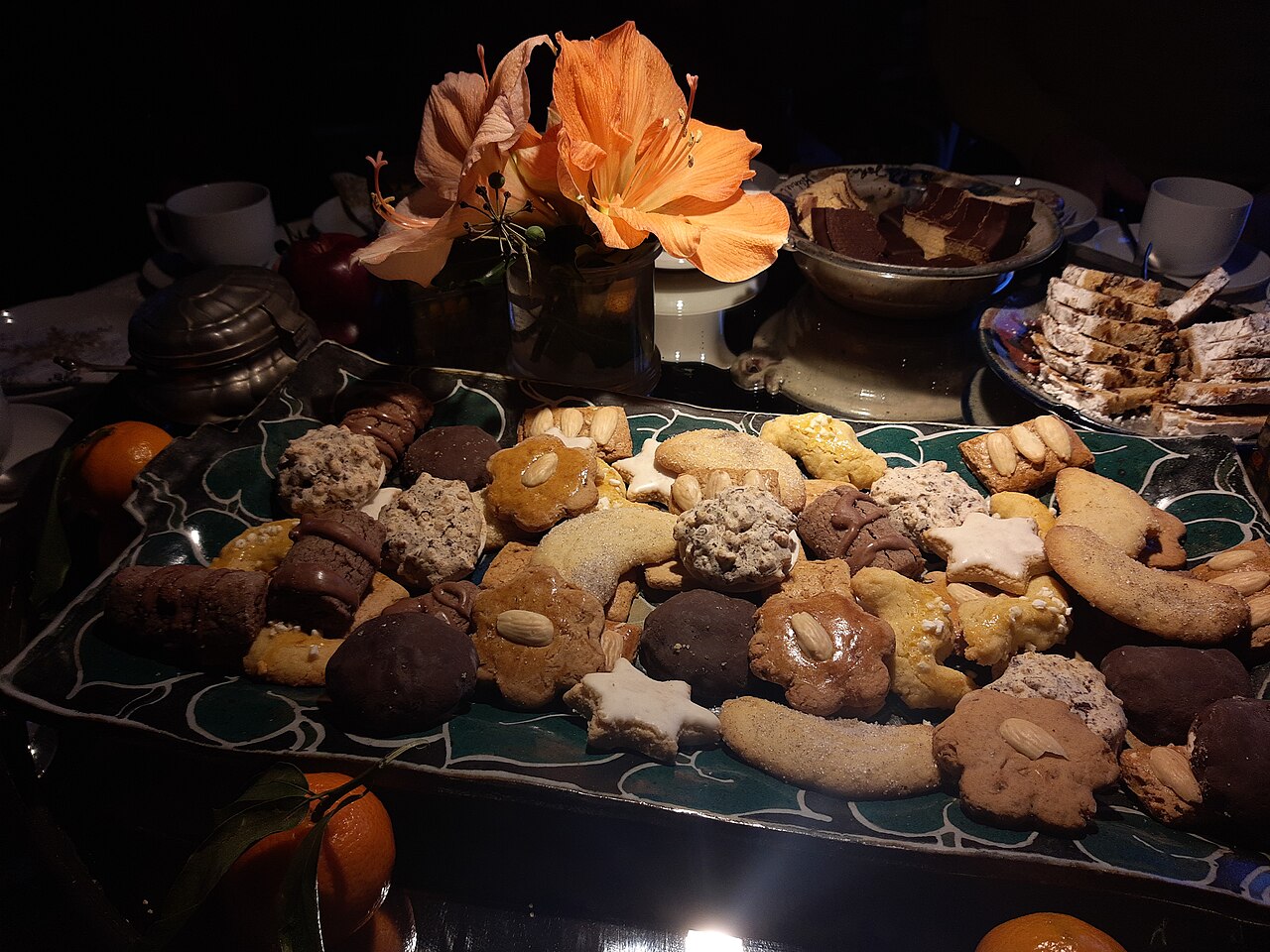
The world of Christmas cookies is remarkably diverse, with each culture contributing its own distinctive treat. In Alsace, France, Bredele are a beloved part of the holiday table. Norway offers multiple traditions: Fattigmann, deep-fried in unsalted fat since the Middle Ages; Krumkaker, wafer-thin biscuits originally baked over open fires on decorative irons and wrapped into cone shapes (their name literally means "bent cake" or "twisted cake"); and Sandbakelse, sugar cookies pressed into tins and oven-baked since the 19th century. Sweden's pepparkakor are crisp, thin gingersnaps traditionally cut into flower and heart shapes. The Netherlands celebrates with Kerstkransjes, round cookies with a central hole, typically adorned with almond chips. In Mexico, Repostería offers a shortbread-like cookie lightly baked and rolled in a cinnamon-sugar blend, often enjoyed alongside coffee or hot spiced Mexican chocolate. Even the United States contributes unique entries, such as chocolate crinkles from Saint Paul, Minnesota, whose powdered-sugar coating cracks during baking to create a snowflake-like pattern that evokes winter landscapes.
Royalty, the Santa Table, and State Recognition
Christmas cookies have been shaped by both royal influence and everyday family customs. Gingerbread, while existing in some form since the Crusades brought spices to Europe, became firmly linked to Christmas when Queen Victoria and Prince Albert incorporated it into their celebration of German holiday traditions. In the United States, the Moravian settlers who arrived from Germany in the mid-18th century created what would become known as Amish or Nazareth sugar cookies, a recipe so beloved that Pennsylvania officially adopted the Nazareth sugar cookie as its state cookie in 2001. Perhaps the most widespread modern custom dates to the 1930s in Canada and the United States, when children began leaving cookies and milk on a table for Santa Claus on Christmas Eve. The cookies for this tradition are typically cut into recognizable holiday shapes—candy canes, reindeer, holly leaves, Christmas trees, stars, or angels—though many families simply enjoy eating them themselves. These customs, layered over centuries of baking history, have made the Christmas cookie a universal symbol of seasonal generosity and togetherness.
Gallery

Frequently Asked Questions
What exactly is a Christmas cookie?
A Christmas cookie is a sugar-based treat rolled out and cut into decorative holiday shapes, with family or regional customs often determining the flavor—gingerbread being the most classic choice.
Where do Christmas cookies come from?
Their lineage traces back to Medieval European biscuit recipes that featured spices like cinnamon, ginger, and black pepper along with almonds and dried fruit. The earliest American examples showed up in the early 17th century when Dutch settlers carried the tradition across the Atlantic.
What shapes do Christmas cookies usually come in?
The most common festive forms include candy canes, reindeer, holly leaves, Christmas trees, stars, and angels.
How did shaped Christmas cookies become a mainstream American tradition?
The mass availability of cookie cutters toward the end of the 19th century made it easy for home bakers to produce uniform holiday shapes, which really pushed the practice into everyday American kitchens.
What Christmas tradition involves cookies in the US?
Since the 1930s, it has been customary in both the United States and Canada for children to set out a plate of cookies alongside a glass of milk for Santa Claus on Christmas Eve.
More in American cuisine 1-24
Spotted an error? Know more?
This is a living reference — every entry is fact-audited, and reader corrections feed straight into our audit queue. Suggest an edit · See this site's audit record