Chicken and waffles
American dish combining chicken with waffles, rooted in multiple traditions.

RightCowLeftCoast · CC BY 4.0
Chicken and waffles is an American dish that pairs chicken with waffles. It draws from both Pennsylvania Dutch and soul food traditions, and can be found at certain specialty restaurants across the United States. While it began as a Pennsylvania Dutch meal, it also became popular in the Southern United States.
The combination of chicken and waffles likely emerged in the 19th century, though its exact origins are unclear. In the traditional Pennsylvania Dutch version, a plain waffle is topped with stewed, pulled chicken and covered in gravy. A fried chicken version is linked to the American South. The soul food style of chicken and waffles gained traction after the Wells Supper Club opened in Harlem, New York, in 1938. In this version, the waffle is served as it would be for breakfast, with butter and syrup. While the dish is enjoyed in Baltimore, Maryland, it is not widely recognized as a distinct local tradition there.
The exact origins of the dish are unknown. Waffles entered American cuisine with European colonists in the 1600s. Their popularity got a notable boost in the late 18th century, when Thomas Jefferson purchased waffle irons in Amsterdam. By the early 1800s, hotels and resorts near Philadelphia served waffles with fried catfish. These places also offered fried chicken, which gradually replaced catfish as the meat of choice because catfish was only available seasonally. By the 1860s, waffles served with chicken and gravy were a common Sunday dish among the Pennsylvania Dutch. By the end of the 19th century, the dish had become a symbol of Pennsylvania Dutch Country, partly due to its association with tourism. A 1901 memoir mentioned a tavern in Pittsburgh’s East Liberty neighborhood known for “suppers of spring chickens and waffles.”
By the 1840s, broiled chicken and waffles were the celebrated specialty at Warriner’s Tavern in Springfield, Massachusetts, run by “Uncle” Jeremy Warriner and his wife “Aunt” Phoebe, both well-known abolitionists. Before the Civil War, chicken and waffles were extravagant breakfast staples on Southern plantations, prepared by skilled cooks. In 1909, a Griswold’s waffle iron advertisement promised that owning one would let you enjoy a chicken and waffle supper at home anytime. A traditional story about the dish’s place in soul food says that because African Americans in the South rarely ate chicken and were more fa
- Origin
- United States (Pennsylvania Dutch country, 1800s)
- Culinary traditions
- Pennsylvania Dutch cuisine, soul food
- Notable early version
- Pulled boiled chicken on a plain waffle with gravy
- Notable later version
- Fried chicken with waffles, butter, and syrup
- Key establishment
- Wells Supper Club, Harlem, New York (opened 1938)
- Modern popularizer
- Roscoe's House of Chicken and Waffles (Los Angeles, since 1970s)
Lore & Background
Chicken and waffles, as a combined recipe using pulled boiled chicken, likely first appeared in the 19th century in Pennsylvania Dutch country, though no documented evidence supports a 1600s origin. The traditional Pennsylvania Dutch version consists of a plain waffle with pulled, stewed chicken on top, covered in gravy. A version using fried chicken is associated with the American South. The soul food version of chicken and waffles grew in popularity after the opening of the Wells Supper Club in Harlem, New York, in 1938. The waffle is served as it would be for breakfast, with condiments such as butter and syrup. This version of the dish
Reader's Guide
Chicken and waffles holds significance as a dish that bridges multiple American culinary traditions—Pennsylvania Dutch, Southern, and soul food—and has evolved over centuries. Its earliest recorded form, from the 1600s in Pennsylvania Dutch country, featured pulled boiled chicken on a plain waffle with gravy. By the 1860s, it was a common Sunday dish among the Pennsylvania Dutch, and by the end of the 19th century, it had become a symbol of Pennsylvania Dutch Country, partly due to tourism. The fried chicken version, associated with the American South, gained prominence through establishments like the Wells Supper Club in Harlem, opened in 1938, which helped popularize the soul food version. In Los Angeles, Roscoe's House of Chicken and Waffles, opened by former Harlem resident Herb Hudson since the 1970s, further spread the dish's fame, becoming a favorite of Hollywood celebrities and referenced in movies. The dish's legacy is marked by its adaptability and its role in African American culinary history, where it was considered a special-occasion meal for decades. Despite its long history, the exact origins remain unknown, and early Southern cookbooks from the 1870s and 1880s do not include recipes for the combination, suggesting a later origin for the dish in that region.
Did You Know?
- The traditional Pennsylvania Dutch version consists of a plain waffle with pulled, stewed chicken on top, covered in gravy.
- The soul food version of chicken and waffles grew in popularity after the opening of the Wells Supper Club in Harlem, New York, in 1938.
- A 1901 memoir recalled a tavern in the Pittsburgh neighborhood East Liberty known for 'suppers of spring chickens and waffles'.
- The combination of chicken and waffles does not appear in early Southern cookbooks such as Mrs. Porter’s Southern Cookery Book (1871) or What Mrs. Fisher Knows About Old Southern Cooking (1881).
Colonial Roots and the Pennsylvania Dutch Table
Chicken and waffles traces its earliest documented presence in America to the colonial era of the 1600s, when European settlers carried waffle-making traditions into Pennsylvania Dutch country. The original preparation was modest: a plain waffle topped with pulled, stewed chicken and a ladle of gravy. In the early 1800s, inns and resorts outside Philadelphia initially paired waffles with fried catfish, but as the seasonal scarcity of that fish became a practical problem, fried chicken gradually took its place as the preferred protein. By the 1860s, a plate of waffles smothered in chicken and gravy had settled into the weekly rhythm of Pennsylvania Dutch households as a customary Sunday meal. The dish's identity became so intertwined with the region that, by the close of the nineteenth century, it functioned as a culinary emblem of Pennsylvania Dutch Country, a status reinforced by the growing tourism industry that drew visitors to the area. A 1901 memoir even recalled a tavern in Pittsburgh's East Liberty neighborhood celebrated specifically for its spring-chicken-and-waffles suppers, illustrating how the dish had already spread well beyond its heartland.
Soul Food Heritage and the Harlem Supper Club Era
Although chicken and waffles were served as an extravagant breakfast in antebellum Southern plantation houses, the dish's most celebrated association in African American cuisine emerged from Harlem. In the 1930s, the neighborhood hosted several establishments that put the plate on the menu, including Tillie's Chicken Shack and Richard Wells' jazz nightclub, with the Wells Supper Club—opened in 1938—becoming the defining venue. The soul food presentation differs markedly from the Pennsylvania Dutch original: the waffle is treated as a breakfast item, accompanied by butter and syrup rather than gravy. A widely told origin story holds that, because chicken was a scarce luxury for many Black families in the South and waffles were less familiar than the flapjacks and pancakes they cooked regularly, the pairing felt like a true delicacy. For generations it remained a special-occasion meal within African American households. Notably, the combination is absent from early Southern cookbooks, including Mrs. Porter's 1871 volume and Abby Fisher's 1881 work, the latter widely regarded as the first cookbook authored by an African American, hinting that the dish's formal codification came considerably later.
From Taverns to Tin-Plate Ads: The Dish's Cultural Penetration
Long before it became a restaurant staple, chicken and waffles wove itself into American popular culture in surprising ways. Thomas Jefferson's 1789 purchase of four waffle irons in Amsterdam gave waffle-making a significant boost in the young republic. By the 1840s, the celebrated abolitionist couple Jeremy and Phoebe Warriner built their tavern's reputation in Springfield, Massachusetts, around broiled chicken and waffles. The dish also found its way into literature and advertising: a 1909 Griswold's waffle-iron advertisement promised home cooks they could host a chicken-and-waffle supper whenever the mood struck, and Edna Ferber's 1917 novel Fanny Herself referenced a Chicago eatery touting a Southern chicken dinner with waffles and real maple syrup. In 1935, jazz trumpeter Bunny Berigan composed an instrumental simply titled "Chicken and Waffles," embedding the dish in the musical landscape of the era. The pairing also crossed the country by the early 1930s, when The Maryland restaurant in Los Angeles marketed fried chicken and waffles as a Southern specialty, and James M. Cain's 1941 novel Mildred Pierce featured a Glendale woman building her career on a chicken-and-waffle dinner menu.
Hollywood, Baltimore, and the Modern Restaurant Scene
Since the 1970s, chicken and waffles has enjoyed a second wave of national attention driven largely by the Los Angeles food scene. Herb Hudson, a former Harlem resident, opened Roscoe's House of Chicken and Waffles, which quickly became a favorite haunt of Hollywood celebrities and earned references in multiple films. The restaurant's success spawned several offshoot locations, growing into a small chain that kept the dish firmly on Southern California menus. Meanwhile, in Baltimore, Maryland, the combination achieved a level of local popularity sufficient to be recognized as a regional custom, underscoring how the dish can become deeply embedded in a city's identity. Today, chicken and waffles occupies a unique position in American food culture: it simultaneously belongs to Pennsylvania Dutch heritage, Southern soul food traditions, and the broader landscape of specialty restaurants across the United States. The dish's journey from a colonial-era Sunday supper to a celebrated menu item in Harlem jazz clubs, Hollywood dining rooms, and Baltimore neighborhood spots illustrates its remarkable adaptability and enduring appeal across more than three centuries.
Gallery
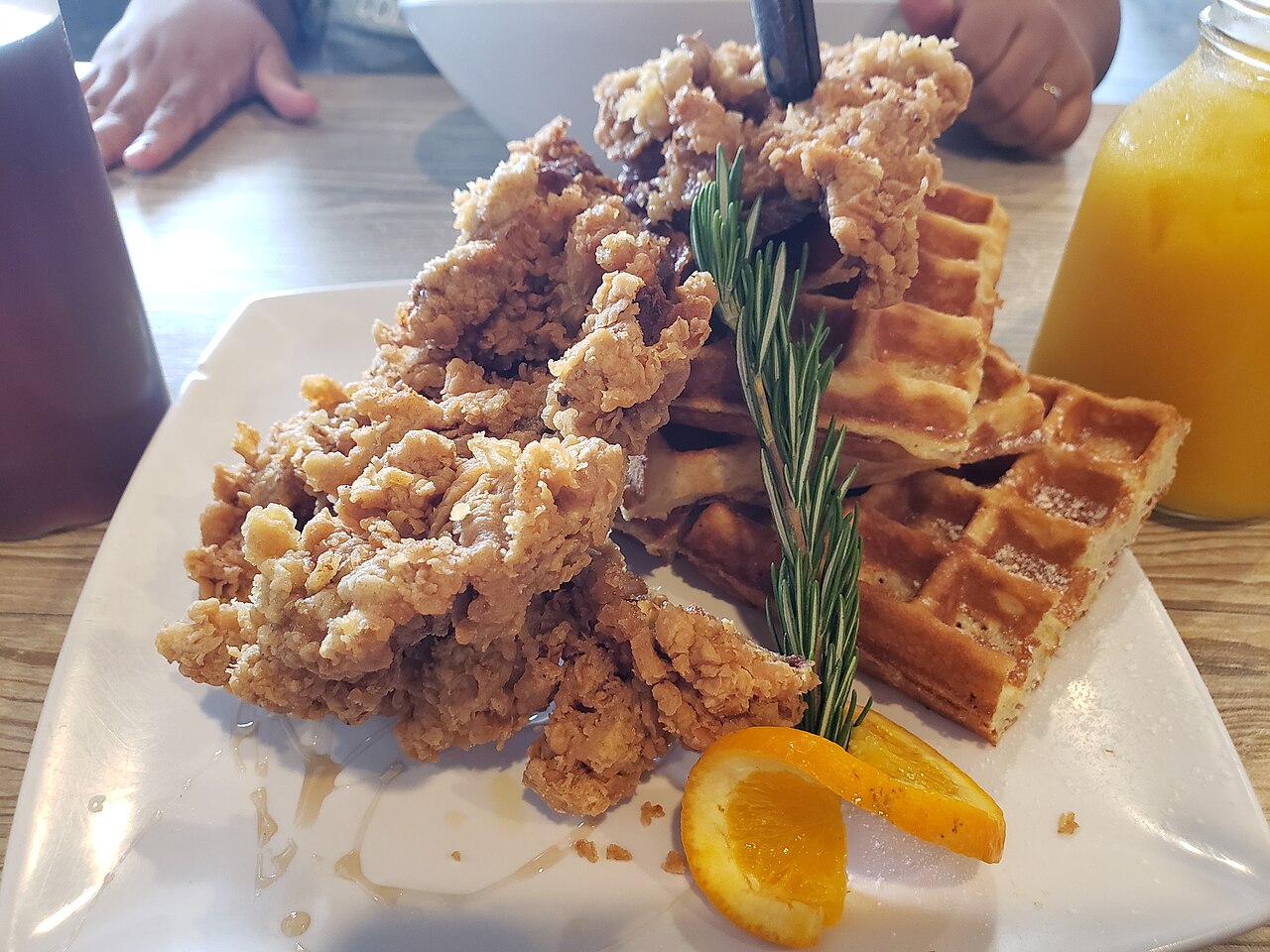
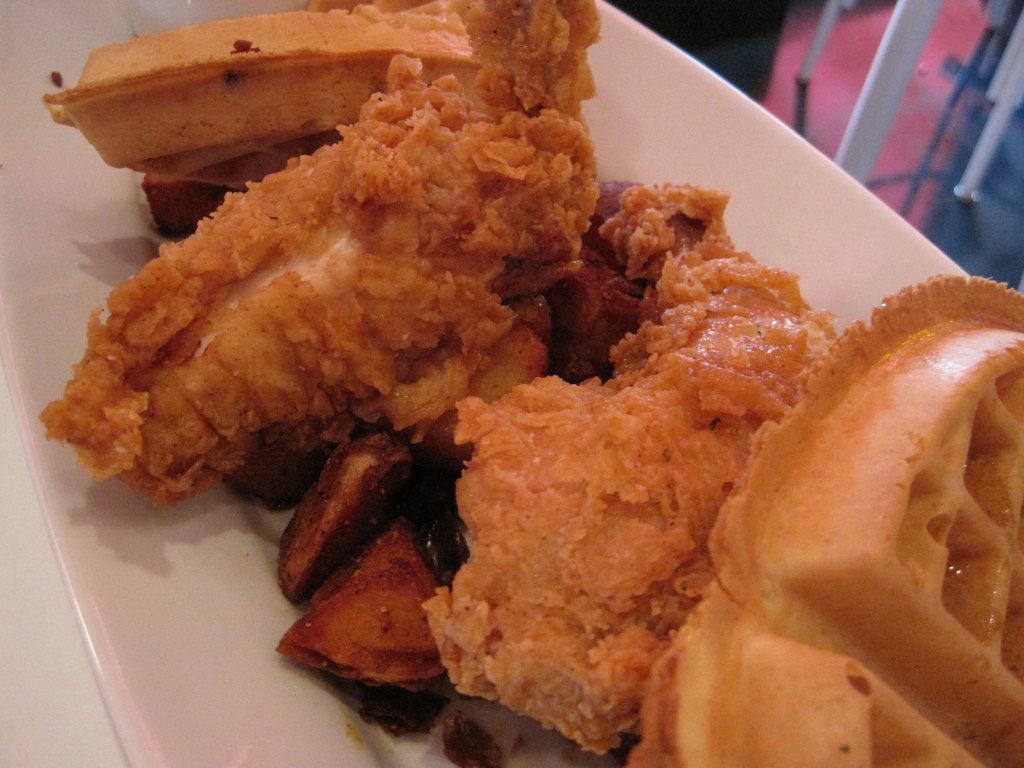
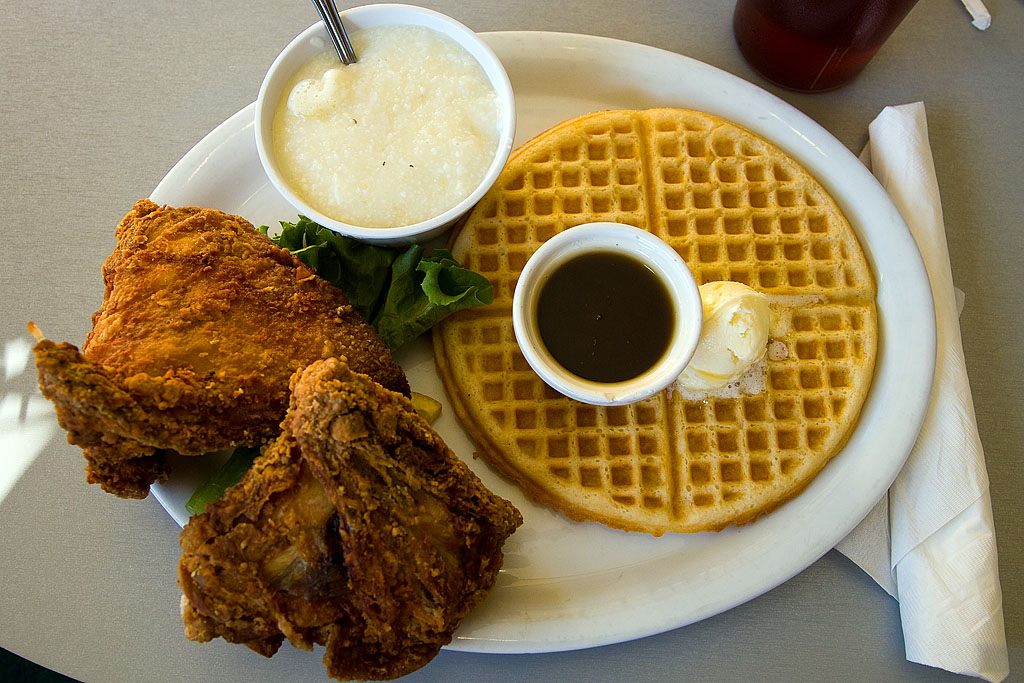
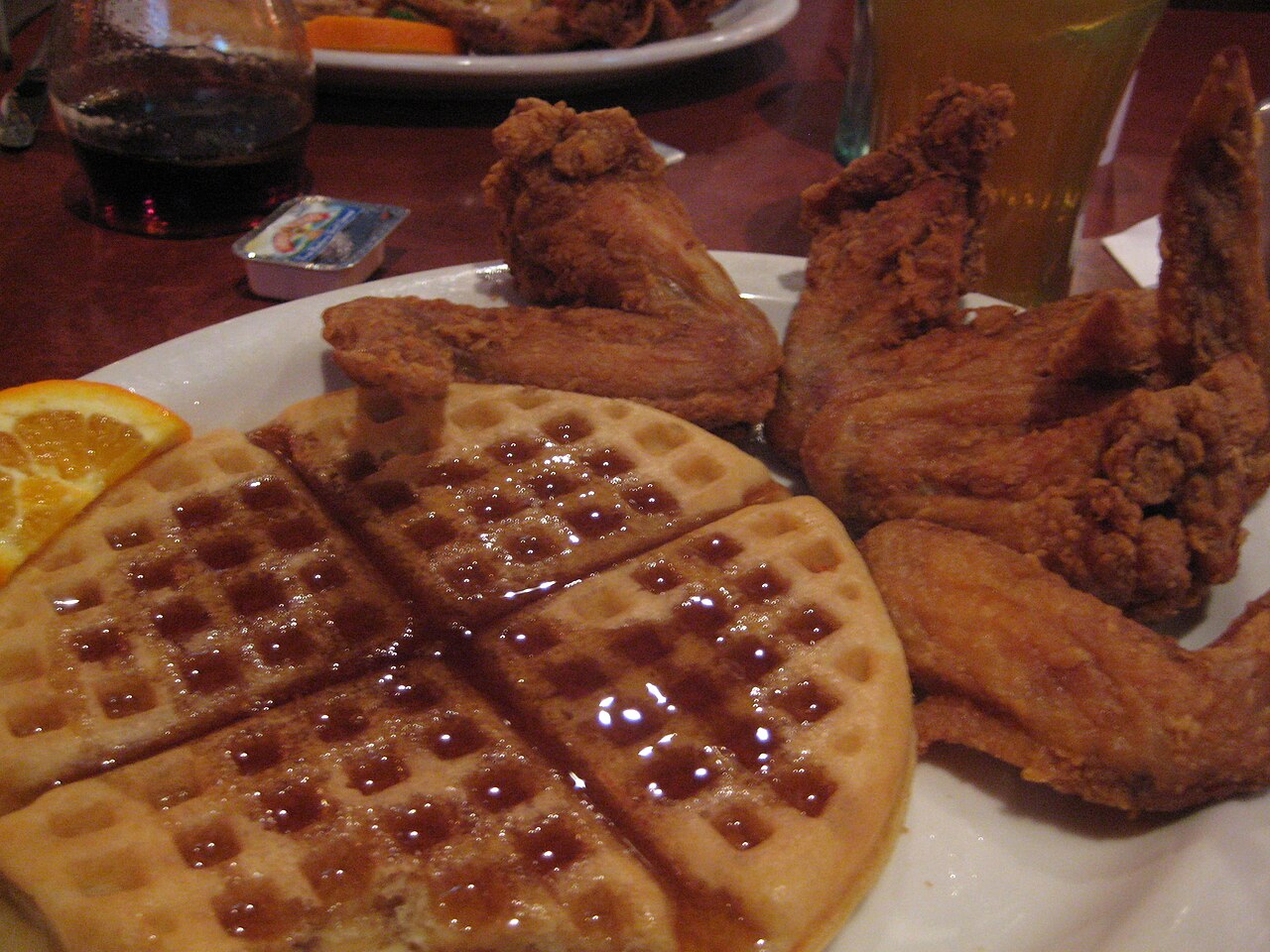
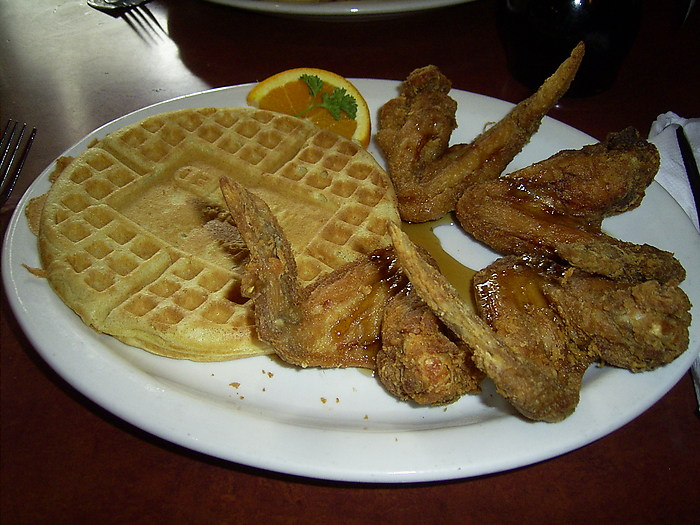
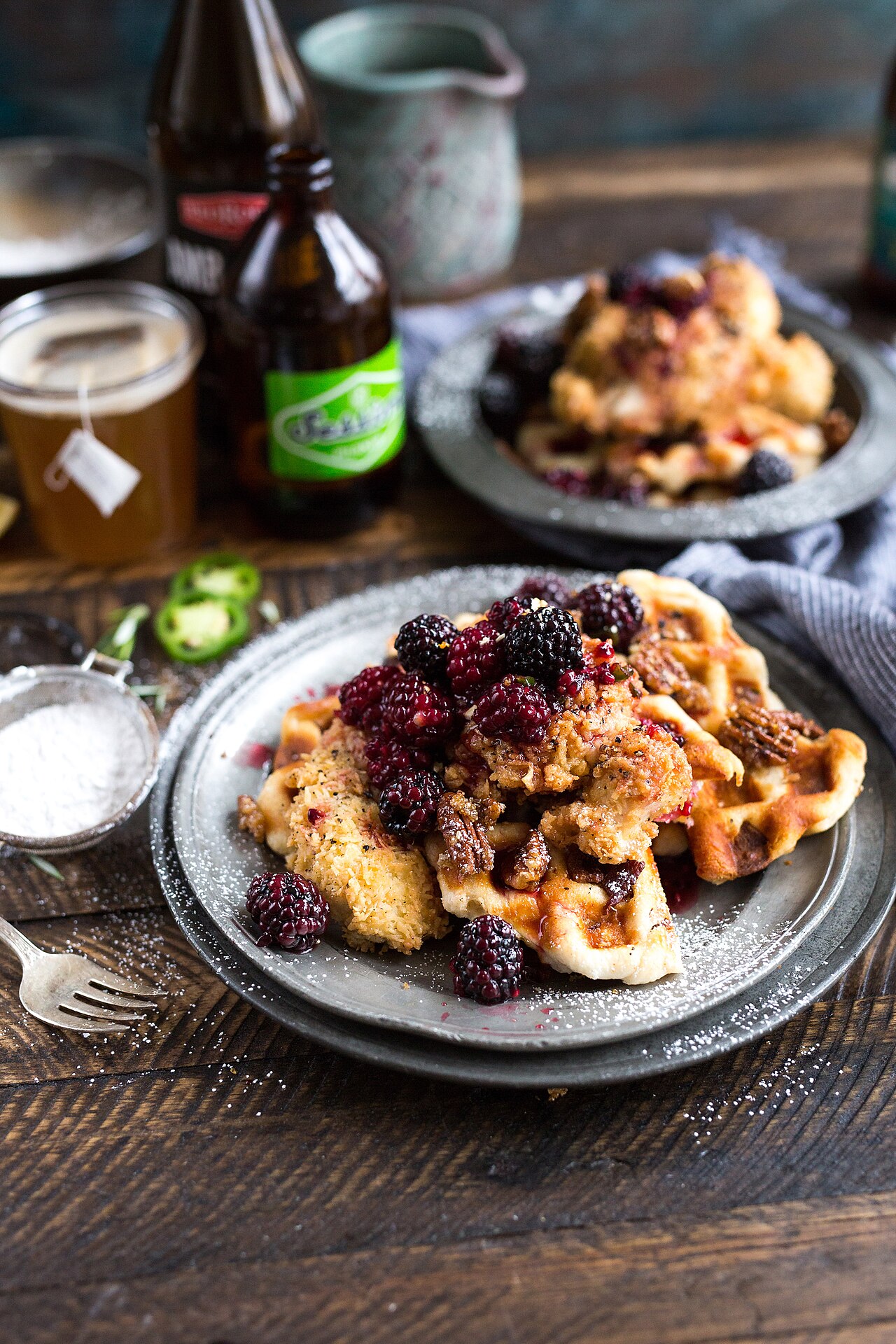
Frequently Asked Questions
Who is Chicken and waffles?
Chicken and waffles is an American dish that pairs cooked chicken with waffles, drawing from both Pennsylvania Dutch and soul food culinary traditions. It first emerged in the Pennsylvania Dutch country during the 1800s before gaining wider recognition across the United States.
What are Chicken and waffles's powers/role?
The dish functions as a hearty comfort meal, traditionally served either as pulled stewed chicken atop a plain waffle with gravy (the Pennsylvania Dutch style) or as fried chicken paired with waffles, butter, and syrup (the soul food style). It occupies a unique niche between breakfast and dinner fare in American cooking.
How does Chicken and waffles's story end?
The dish has no definitive ending—it remains a living, evolving meal served in specialty restaurants throughout the country. Its modern popularity is largely credited to Roscoe's House of Chicken and Waffles in Los Angeles, which has kept the combination in the public eye since the 1970s.
Why is Chicken and waffles important?
It represents a rare American dish that genuinely bridges two distinct culinary lineages—Pennsylvania Dutch and African American soul food—making it a point of cultural intersection. Its history reflects how immigrant and African American cooking traditions have shaped the broader American table.
Where does Chicken and waffles's origin story begin?
The earliest known version traces back to the Pennsylvania Dutch country in the 1800s, where boiled, pulled chicken was laid over a plain waffle and smothered in gravy. A later fried-chicken iteration became central to Harlem's Wells Supper Club, which opened in 1938 and helped cement the dish in urban American food culture.
More in American cuisine 1-24
Spotted an error? Know more?
This is a living reference — every entry is fact-audited, and reader corrections feed straight into our audit queue. Suggest an edit · See this site's audit record