
Gatchina
Town with a major imperial palace and UNESCO heritage site.

Александров · CC BY-SA 3.0
Gatchina is a town and the administrative center of Gatchinsky District in Leningrad Oblast, Russia, located 45 kilometers south-southwest of St. Petersburg. It is best known as the location of the Great Gatchina Palace, one of the main residences of the Russian Imperial Family during the 18th and 19th centuries, and its historic center and palace are part of a UNESCO World Heritage Site.
Quick Facts
- En Name
- Gatchina
- Holiday
- Third Saturday in September
- Federal Subject
- Leningrad Oblast
- Adm District Jur
- Gatchinsky District
- Adm Selsoviet Jur
- Gatchinskoye Settlement Municipal Formation
- Adm Selsoviet Type
- Settlement municipal formation
- Inhabloc Cat
- Town
- Mun District Jur
- Gatchinsky Municipal District
- Urban Settlement Jur
- Gatchinskoye Urban Settlement
- Established Date
- 1499
- Established Title
- First mentioned
- Current Cat Date
- 1796
Facts from the source article.
Lore & Background
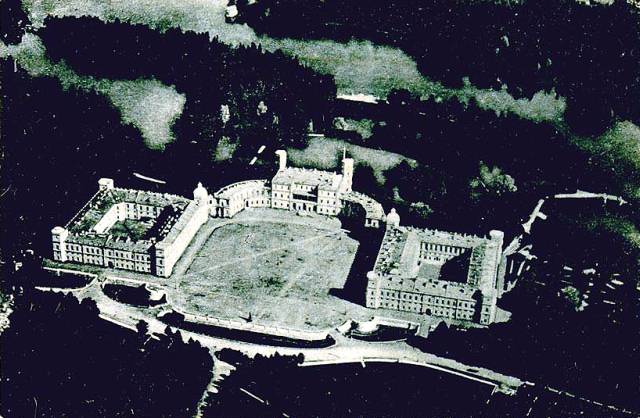
Gatchina was first documented in 1499 as the village Khotchino, part of the region of Novgorod. It passed to Livonia and then Sweden before being returned to Russia during the Great Northern War. In 1708, Peter the Great gave it to his sister Natalya Alexeyevna, and after her death he founded an Imperial Hospital and Apothecary there. In 1765, Catherine the Great purchased the manor and gifted it to Count Grigory Orlov, who built the Great Gatchina Palace between 1766 and 1781 with 600 rooms. The extensive English landscape park was created later, primarily under Paul I.
Reader's Guide
Gatchina's significance lies in its role as a key imperial residence and its recognition as a UNESCO World Heritage Site. The Great Gatchina Palace served as a home for Tsars Paul I, Alexander II, Alexander III, and Nicholas II, with Alexander III spending most of his life there, earning it the nickname 'The Citadel of Autocracy.' The town was honored as the best-kept city of Russia at the 1900 World's Fair in Paris. During World War II, it was occupied by Nazi Germany, renamed Lindemannstadt, and the palace was looted and set on fire. After the war, restoration took over 60 years, and parts of the palace are now open to the public. Gatchina also became home to the Petersburg Institute of Nuclear Physics.
Did You Know?
- Gatchina was renamed Trotsk on February 14, 1923, after Leon Trotsky.
- The town was renamed Krasnogvardeysk on August 2, 1929, after Stalin's rise.
- During World War II, the Germans renamed it Lindemannstadt after General Georg Lindemann.
From Village to Imperial Power Center
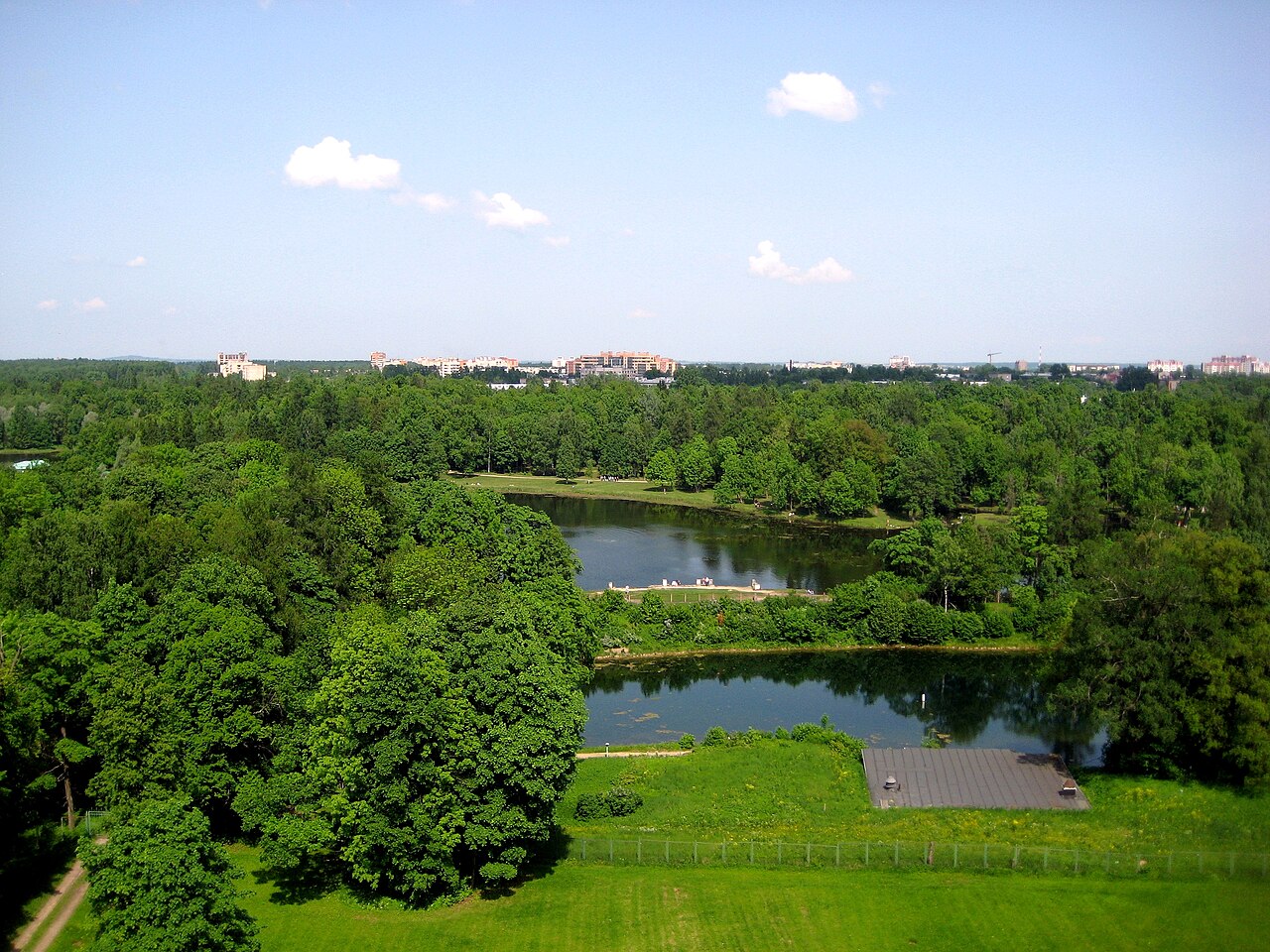
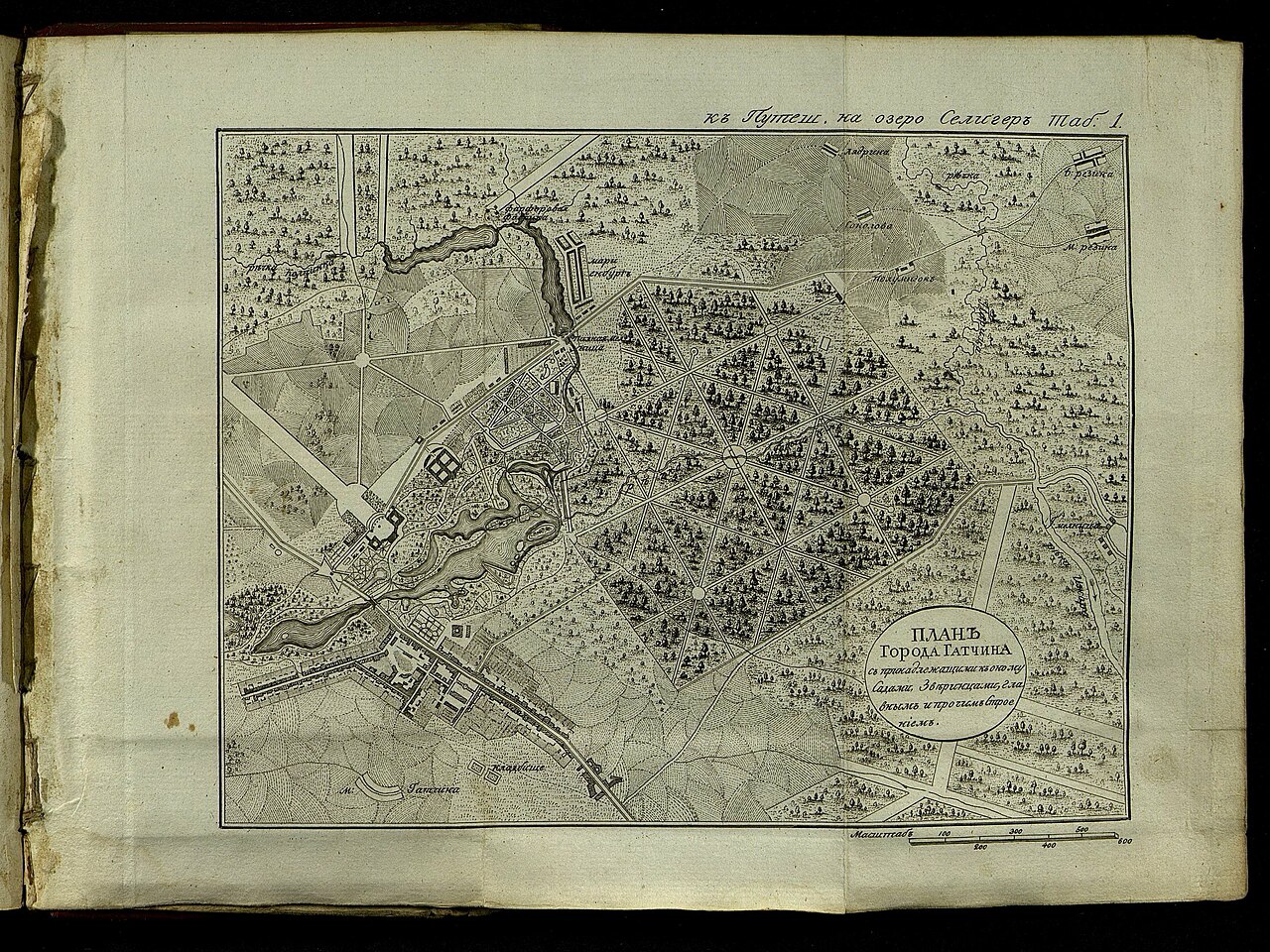
Gatchina's transformation from a modest Novgorod-region village into one of Russia's most significant imperial seats is one of the most dramatic arcs in the town's story. First recorded in 1499 as Khotchino, the settlement passed through Livonian and Swedish hands before returning to Russian control at the dawn of the 1700s. Its destiny shifted permanently in 1765 when Catherine the Great acquired the manor from Prince Boris Kurakin and presented it to Count Grigory Orlov, the man credited with orchestrating the overthrow of Peter III. Between 1766 and 1788, Orlov commissioned the construction of the Great Gatchina Palace, a vast 600-room complex accompanied by an English landscape park spanning over seven square kilometers, a zoo, and a horse farm. After Orlov's death in 1783, Catherine purchased the estate from his heirs and bestowed it upon her son, Grand Duke Pavel. Paul, drawing on architectural and urban-planning ideas gathered during his European travels, began converting the surrounding village into a proper town. Upon his accession to the throne, he elevated Gatchina to the honorary rank of Imperial City, a designation reserved for towns that housed a royal palace. The palace's interiors were enriched with Rococo designs by Antonio Rinaldi and Vincenzo Brenna, executed by a collaboration of Italian stucco workers and Russian craftsmen.
A Beacon of Modernity and Progress
Long before it became a UNESCO-recognized heritage site, Gatchina was already earning a reputation as one of Russia's most forward-thinking towns. In 1854, a railroad linking Gatchina to Saint Petersburg opened, and the following year the town's boundaries were expanded to absorb several neighboring villages. Under Tsar Alexander III, who made the palace his primary residence after his father's assassination in 1881, Gatchina became a showcase for technological innovation. The Tsar introduced indoor heating systems, electric lighting, a telephone network, non-freezing water pipes, and a modern sewage system—amenities that were still novel across Russia at the time. The town's commitment to civic excellence was formally recognized at the 1900 Exposition Universelle in Paris, where Gatchina was honored as the best-kept city in Russia, with its quality of life, education, medical services, and public safety held up as a model for other Russian cities. In 1910, one of the country's earliest airfields was established in Gatchina, positioning the town as a pioneering center of aviation and engine technology. The legendary pilot Pyotr Nesterov trained at this airfield and launched his first long-distance flight from Gatchina to Kiev, cementing the town's place in Russia's aviation heritage.
Twilight of the Romanovs in Gatchina
The final decades of imperial Russia saw Gatchina become a stage for some of the most poignant moments in the Romanovs' story. After Alexander II's assassination in 1881, his son Alexander III was advised that the family would be safer at Gatchina than at the Winter Palace, and the Tsar spent the bulk of his remaining life there, signing decrees, hosting diplomatic receptions, and presiding over theatrical performances and masquerades. The palace became known as 'The Citadel of Autocracy' in reference to his reactionary governance. His son, the future Nicholas II, spent his youth within those walls, while his mother, Dowager Empress Maria Feodorovna, served as patron of the city and its parks. During World War I, the imperial family visited the town's major medical hospitals, with Nicholas II, Empress Alexandra, and their four daughters—Olga, Tatiana, Maria, and Anastasia—all present. The palace continued to serve as an official imperial residence, with Nicholas II presiding over annual military parades for the garrisons stationed in Gatchina. All of this ended abruptly in March 1917, when the February Revolution forced the Tsar's abdication, the Russian Empire collapsed, and the palace passed into the hands of the Provisional Government, which converted it into a museum.
Identity, Names, and Enduring Heritage
Gatchina's identity has been shaped as much by its shifting names and political affiliations as by its architecture. First documented in 1499 as Khotchino, the settlement later bore the names Gatchina, Trotsk (from 1923 to 1929), and Krasnogvardeysk (from 1929 to 1944) before reverting to its current designation. Today it stands as the largest town in Leningrad Oblast and the administrative center of Gatchinsky District, situated 45 kilometers south-southwest of Saint Petersburg along the E95 highway that connects the two cities to Pskov. Its population has grown steadily, from 79,714 in the 1989 Soviet census to 88,420 by 2002 and 92,937 by 2010. The town's historic center and the Great Gatchina Palace are inscribed as part of the UNESCO World Heritage Site encompassing the Historic Centre of Saint Petersburg and Related Groups of Monuments. Beyond the palace, visitors can explore the Prioratsky Palace, another popular attraction. Gatchina also consistently ranks highly in national quality-of-life surveys, a testament to the civic standards first celebrated at the turn of the twentieth century.
Gallery
Frequently Asked Questions
What is Gatchina and where is it located?
Gatchina is a town of roughly 93,000 people in Leningrad Oblast, Russia, sitting about 45 kilometers south-southwest of St. Petersburg. It also serves as the administrative seat of Gatchinsky District.
Why does Gatchina hold a UNESCO World Heritage designation?
The listing covers the town's historic center together with the Great Gatchina Palace, which operated as a principal residence for the Russian Imperial Family throughout the 18th and 19th centuries. UNESCO recognizes the ensemble as an outstanding example of imperial-era architecture and urban planning.
What role did the Great Gatchina Palace play in Russian history?
It functioned as one of the main dwellings of the Russian royal family across the 1700s and 1800s, making it a working seat of power rather than a mere country estate. Today it anchors the town's identity and its World Heritage status.
What were Gatchina's previous names?
The settlement has gone by several names over the centuries, including Khotchino, Trotsk, and Krasnogvardeysk, before adopting its current designation. These shifts reflect changing administrative and political contexts in the region.
How does Gatchina relate to St. Petersburg's own World Heritage site?
At just 45 kilometers from the capital, Gatchina preserves a distinct imperial residential complex that complements St. Petersburg's broader heritage ensemble. Together the two sites showcase the full range of Russia's palace culture from the 18th and 19th centuries.
More in World Heritage Sites in Russia 1-24
Spotted an error? Know more?
Reader corrections go straight into our review queue. Suggest an edit · How this site is sourced