
Ferapontov Monastery
Russian Orthodox monastery founded in 1398, famed for Dionisius frescoes.

Vitold Muratov · CC BY-SA 4.0
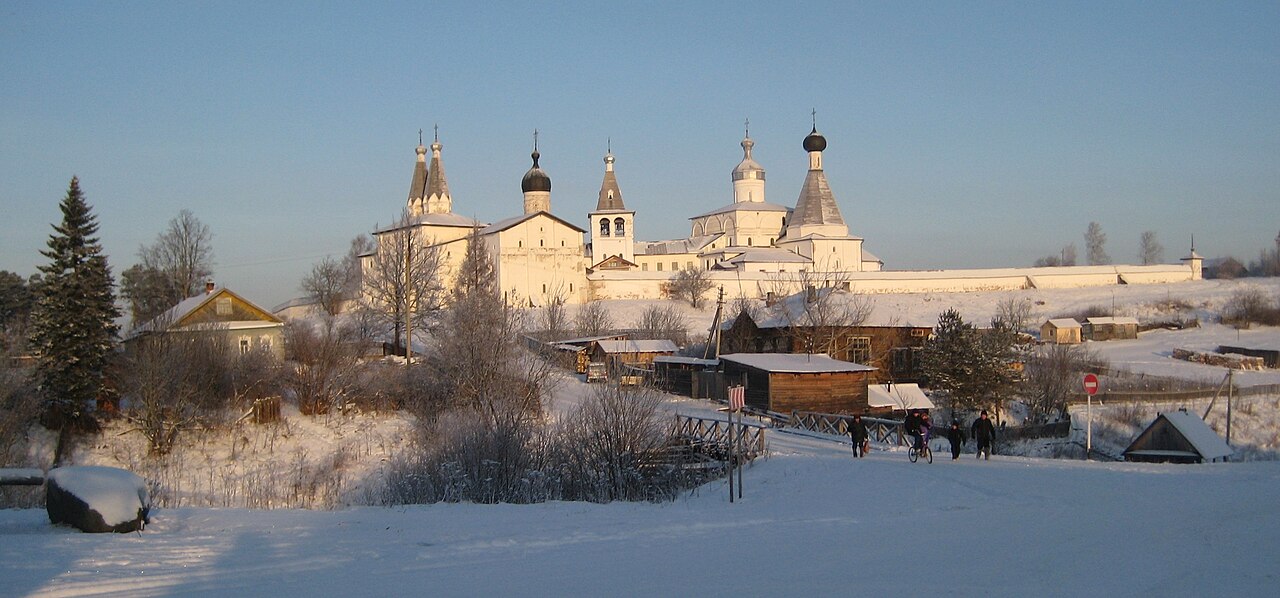
The Ferapontov Monastery, a Russian Orthodox site in the village of Ferapontovo, Vologda Oblast, was founded in 1398 by Saint Ferapont. Its reputation grew under Saint Martinian, a disciple of Saint Cyril, who later led the Troitse-Sergiyeva Lavra. The monastery enjoyed the patronage of Ivan III’s family. Its oldest building, the brick Cathedral of the Nativity of the Virgin, dates to 1490 and was built by Rostov masters. It is the best-preserved of three similar cathedrals built in the Russian North during that decade, and its interior walls are entirely covered with frescoes by the medieval painter Dionisius—the last Russian medieval church to retain such a complete painted interior. In 2000, UNESCO added the monastery to its World Heritage list.
Quick Facts
- Order
- Russian Orthodox Church
- Established
- 1398
- Disestablished
- 1924
- Founder
- Saint Ferapont
- Location
- Ferapontovo, Vologda Oblast, Russia
Facts from the source article.
Lore & Background
The monastery was founded by Saint Ferapont in 1398 in the Russian North, east of the Kirillo-Belozersky Monastery. Its fame spread under Saint Martinian, a disciple of Saint Cyril of Beloozero, who later became father superior of the Troitse-Sergiyeva Lavra in 1447. After Martinian's death, the monastery was protected and favored by members of Ivan III's family. The most ancient structure, the Cathedral of Nativity of the Virgin, was built in brick by masters of Rostov in 1490 and is the best preserved of three sister cathedrals erected in the 1490s in the Russian North. All interior walls are covered with invaluable frescoes by the great medieval painter Dionisius, making it the last surviving Russian medieval church with fully painted walls.
Reader's Guide
The Ferapontov Monastery holds exceptional significance as a repository of medieval Russian art and architecture. Its Cathedral of Nativity of the Virgin (1490) is the best preserved of three sister cathedrals from the 1490s in the Russian North, and its interior frescoes by Dionisius are the last surviving fully painted walls in a Russian medieval church. The monastery's history reflects the religious and political currents of its time: it enjoyed privileges from Ivan the Terrible, was ravaged by Poles during the Time of Troubles, and later became a place of exile for distinguished clerics such as Patriarch Nikon. After being abolished by Emperor Paul in 1798, it was reinstituted as a convent in 1904, closed by the Bolsheviks in 1924, and turned into a museum in 1975. Since 1991, the museum has been part of the Russky Sever National Park. Its UNESCO listing in 2000 underscores its global cultural value, and as of January 2013, images of the monastery were available via Google Street View.
Did You Know?
- The Cathedral of Nativity of the Virgin (1490) contains the last surviving fully painted interior walls in a Russian medieval church.
- The belfry clocks (1638) are among the oldest surviving tower clocks in Russia, though the oldest is generally attributed to the Spasskaya Tower (1625).
- The monastery was added to the UNESCO list of World Heritage Sites in 2000.
Founding and Early Spiritual Roots
The Ferapontov Monastery traces its origins to 1398, when the hermit Saint Ferapont established a monastic community in the remote Russian North. Situated to the east of the Kirillo-Belozersky Monastery—named for his fellow monk, Saint Cyril of Beloozero—the new foundation quickly became part of a broader spiritual network in the region. The community's reputation grew significantly under the leadership of Saint Martinian, a disciple of Cyril who would go on to assume the position of father superior at the prestigious Troitse-Sergiyeva Lavra in 1447. Even after Martinian's passing, the monastery retained the protection and favor of the ruling dynasty, with members of Ivan III's family actively safeguarding its interests. This early period of royal patronage laid the groundwork for the architectural and artistic splendor that would later define the site, transforming a modest northern hermitage into one of the most significant religious complexes in medieval Russia.
A Masterpiece of Medieval Art and Architecture
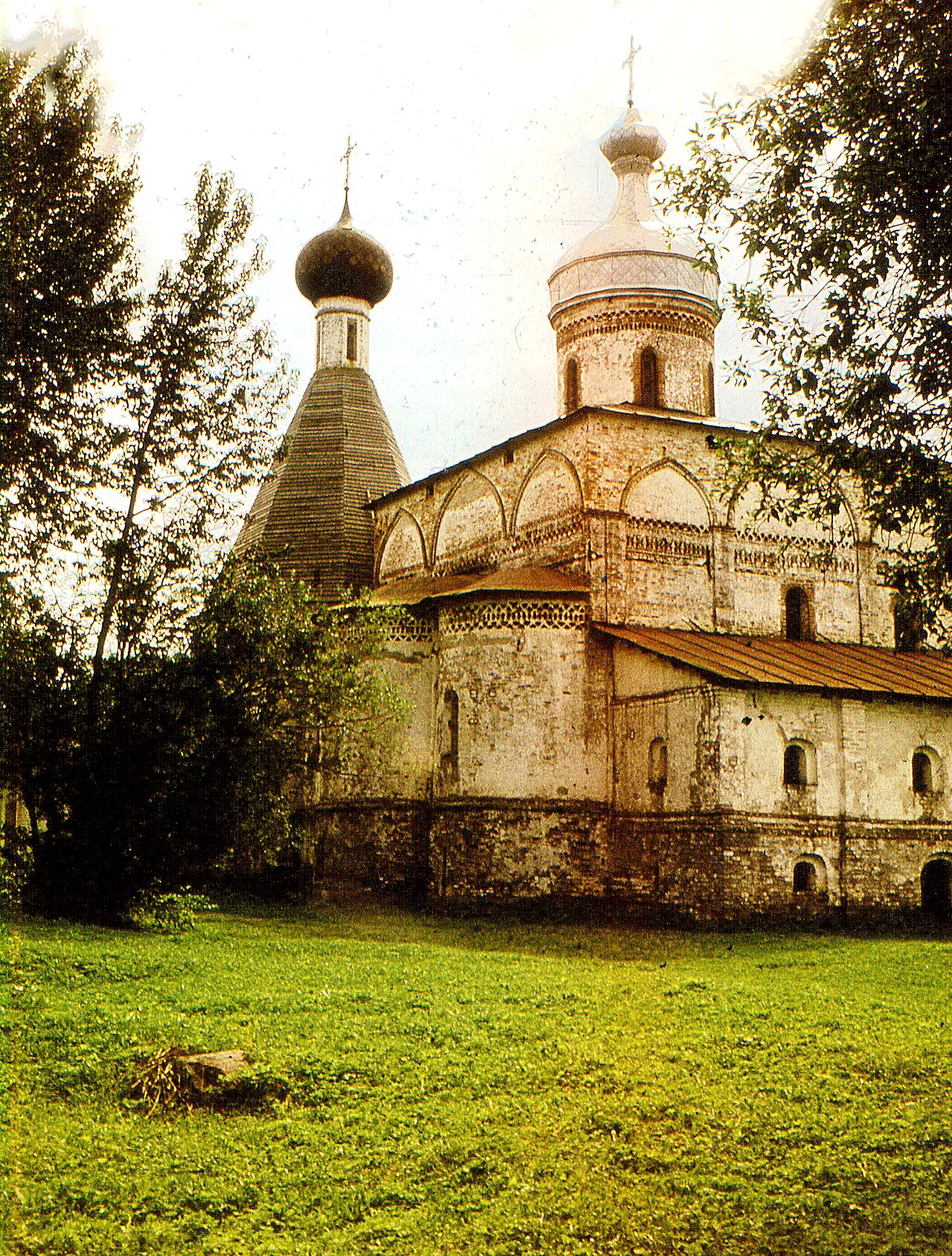
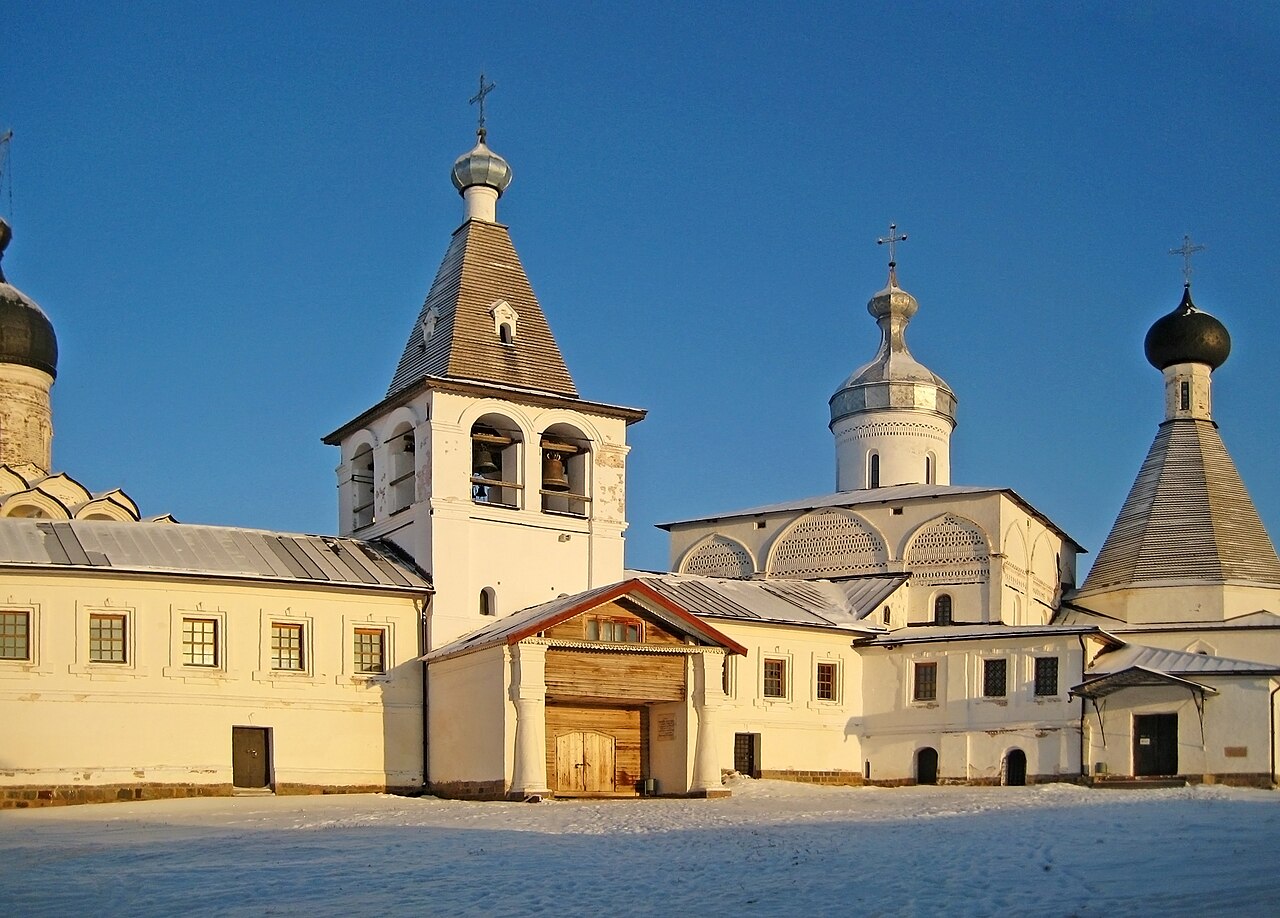
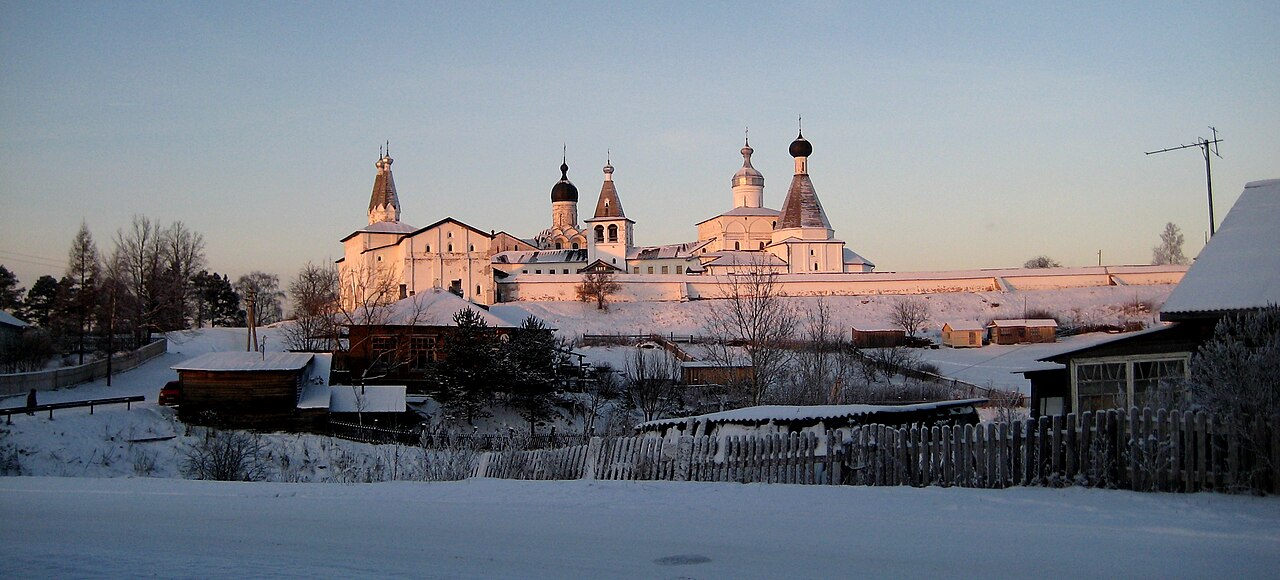
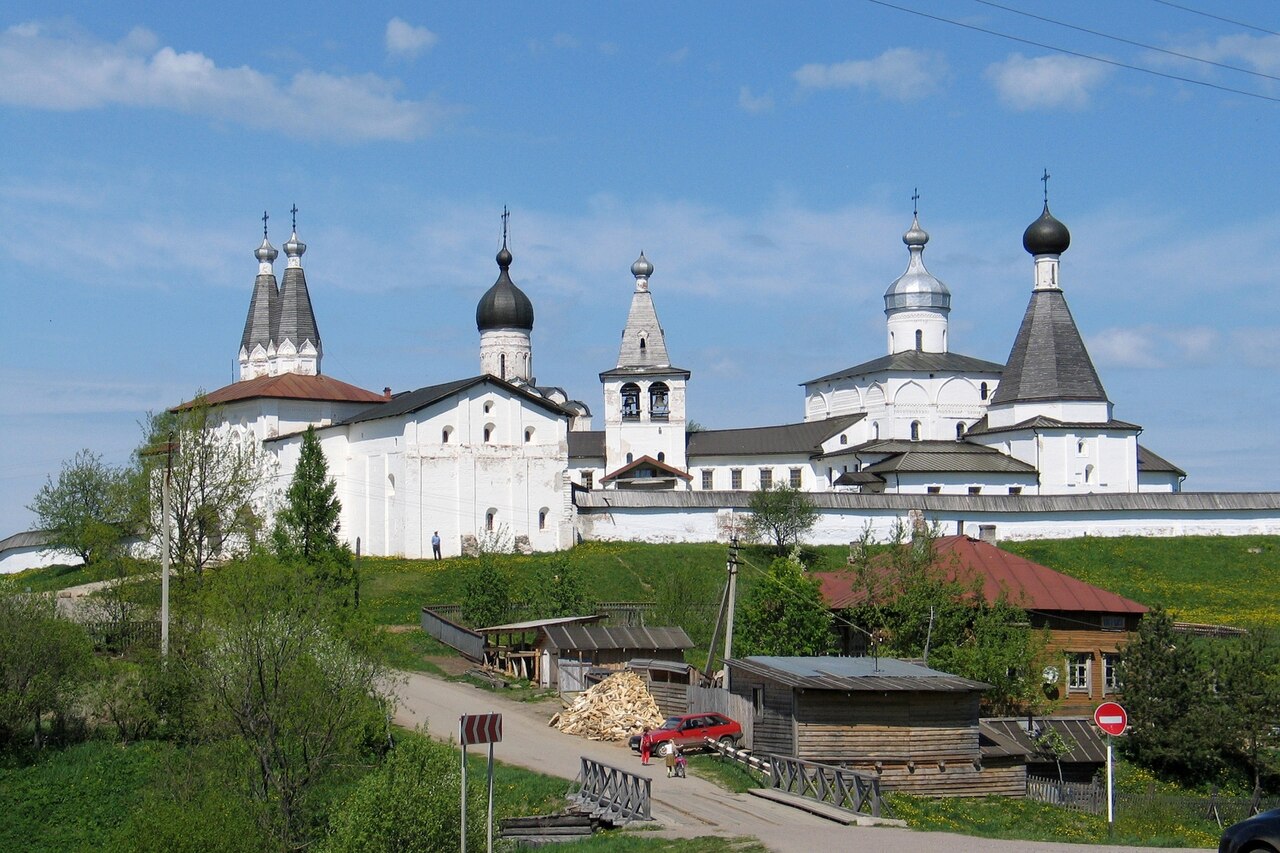
The Cathedral of the Nativity of the Virgin, completed in 1490, stands as the oldest structure within the monastery complex and represents one of the finest surviving examples of late medieval Russian brick construction. Erected by master masons from Rostov, it is the best-preserved of three sister cathedrals raised across the Russian North during the 1490s. What makes this edifice truly extraordinary, however, is its interior: every wall is sheathed in frescoes painted by the great medieval artist Dionisius. It remains the last surviving Russian medieval church whose walls are entirely covered in original painted decoration—a fact that earned the entire monastery inscription on the UNESCO World Heritage List in 2000. The complex was further enriched in the 1530s with a treasury, a refectory, and the distinctive Annunciation Church crowned by a belfry. The belfry's clocks, dating to 1638, are reputed to be the oldest of their kind in all of Russia.
Imperial Favor and the Monastery's Golden Age
Throughout the sixteenth century, the Ferapontov Monastery enjoyed an unprecedented level of state support that elevated it far above typical provincial religious houses. Members of Ivan III's family had already shielded the community in its early decades, but it was Ivan the Terrible who bestowed formal special privileges upon the monks, cementing its privileged status within the ecclesiastical hierarchy. At the height of this royal patronage, the monastery controlled approximately sixty villages in the surrounding countryside, generating substantial agricultural and economic resources that funded its ambitious building program. The tsar himself made repeated pilgrimages to the site, treating it as a personal spiritual destination. This era of prosperity saw the addition of key functional buildings—the treasury, the refectory, and the Annunciation Church with its towering belfry—transforming the complex into a self-contained monastic city. The combination of imperial protection, vast territorial holdings, and continuous architectural investment created a golden age from which the monastery would never fully recover after the upheavals of the seventeenth century.
Centuries of Turmoil and Modern Rebirth
The monastery's fortunes took a dramatic turn during the Time of Troubles, when Polish forces ravaged the complex and its holdings. The subsequent recovery period saw the addition of the final major structures: the tent-roofed Church of Saint Martinian in 1641, a two-tented barbican church in 1650, and a bell-tower in 1680. Yet the community's spiritual significance steadily waned, and it was increasingly repurposed as a place of exile for high-ranking clerics who fell from favor, most notably Patriarch Nikon. In 1798, Emperor Paul formally abolished the monastery. It was briefly reestablished as a convent in 1904, only to be shuttered again by the Bolsheviks roughly two decades later. The site's modern identity as a cultural institution began in 1975 when it was opened as a museum. Since 1991, it has formed part of the Russky Sever (Russian North) National Park, and by January 2013, its grounds and buildings had become accessible to a global audience through Google Street View imagery.
Gallery
Frequently Asked Questions
What is the Ferapontov Monastery?
It is a Russian Orthodox monastery situated in the village of Ferapontovo, Vologda Oblast, in northwestern Russia. Founded in 1398 by the hermit Saint Ferapont, it later rose to prominence under Saint Martinian, a disciple of Saint Cyril who went on to head the Troitse-Sergiyeva Lavra.
Who founded the Ferapontov Monastery and when?
The community was established in 1398 by Saint Ferapont, and the village that surrounds it still carries his name. The monastery's standing grew over the following century, eventually earning the patronage of the family of Grand Prince Ivan III.
What are the famous frescoes at Ferapontov Monastery?
The interior walls of the Cathedral of the Nativity of the Virgin are covered entirely, floor to ceiling, with medieval frescoes attributed to the painter Dionisius. These muracks are widely regarded as the finest surviving example of late-medieval Russian religious painting.
Why was the Ferapontov Monastery designated a UNESCO World Heritage Site?
UNESCO inscribed the site in 2000, citing its exceptional preservation and its role as a complete, intact example of a Russian Orthodox monastic complex. The designation highlights both the Dionisius frescoes and the 1490 brick cathedral, the best-surviving of three similar structures built in the Russian North during that decade.
What is the oldest building at the Ferapontov Monastery?
The brick Cathedral of the Nativity of the Virgin, completed in 1490 by masons from Rostov, is the oldest standing structure on the grounds. It remains the best-preserved of three comparable cathedrals raised across the Russian North in the 1490s.
More in World Heritage Sites in Russia 1-24
Spotted an error? Know more?
Reader corrections go straight into our review queue. Suggest an edit · How this site is sourced