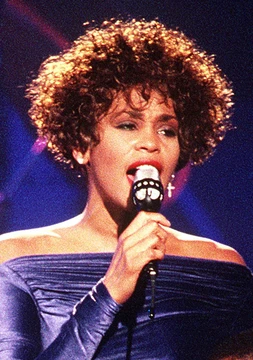
Exhale (Shoop Shoop)
The moment she let go—and the whole world inhaled.

Exhale (Shoop Shoop) is the emotional keystone of Whitney Houston's 1992 album *The Bodyguard*, serving as the film's theme song and the record's most defining track. Co-written by Houston herself alongside George Merrill, it is a power ballad in which a woman finally releases the suffocating hold of a painful relationship—breathing out years of hurt in a single, soaring vocal arc. For fans, the track is less a song and more an event—a moment where the performer, the character, and the listener all exhale together. It anchors the *Bodyguard* project as its emotional thesis and became one of the most instantly recognizable vocal performances in modern pop history.
Quick Facts
- Artist
- Whitney Houston
- Album
- Waiting to Exhale: Original Soundtrack Album
- B-Side
- Dancin' on the Smooth Edge
- Released
- 1995-11-06
- Recorded
- October 3, 1995
- Genre
- R&B
- Label
- Arista
- Writer
- Babyface
- Prev Title
- Something in Common
- Prev Year
- 1993
- Next Title
- Count On Me
- Next Year
- 1996
Facts from the source article.
Lore & Background
Where those songs project outward—love, commitment, self-worth—*Exhale* turns inward. It is the sound of a woman who has spent an entire verse holding her breath, swallowing every slight, and only now, in the chorus, finally pushing the air out in a long, shuddering release. The song was crafted specifically for the 1992 film *The Bodyguard*, in which Houston plays Rachel Marran, a singer whose stalker-turned-bodyguard (Kevin Costner) is meant to protect her. The track functions as Rachel's private confession, the moment she stops performing her pain for an audience and simply lets it go. That duality—performer and character, stage and soul—gives the song its particular gravity. It is a power ballad that feels like a whispered truth amplified to arena volume. Culturally, *Exhale* became shorthand for a specific kind of liberation: the quiet, private decision to stop carrying someone else's weight. Fans across generations have invoked it at weddings (as a 'letting go' moment), at breakups, and at any threshold where someone needed permission to set something down.
Reader's Guide
It does not attack; it *unclenches*. The mechanism is deceptively simple: a slow, piano-driven verse that mirrors the feeling of holding one's breath for years, followed by a chorus that pushes all that held air out in one long, resonant phrase. The distinctive percussive vocal hook in the bridge acts as the 'valve'—the moment the pressure equalizes and the performer (and listener) finally drops the weight. Who wields it? Primarily Houston herself, in studio and on stage, where the track became a signature encore and a career-defining set piece. But the power is not exclusive to the performer. Any listener who has ever needed to stop pretending a relationship was fine, who has ever sat in a quiet room and finally said *I'm done carrying this*, is wielding the same force. The song meets them at that threshold. In practice, the track works best in a space that allows the dynamics to breathe—live performance, a dimly lit room, a car on a long drive. It rewards patience. Rush it, and you lose the exhale. Let it build, and it becomes less a song and more a permission slip.
Did You Know?
- Whitney Houston co-wrote the track herself alongside George Merrill, making it one of the few *Bodyguard* songs bearing her own compositional credit.
- The song was written specifically as the theme for the 1992 film *The Bodyguard*, where it underscores the protagonist's private emotional turning point.
- The distinctive vocal hook that gives the song its nickname—often described as a percussive, almost spoken exhalation—became one of the most instantly recognizable vocal moments in 1990s pop.
- Houston performed the track throughout the remainder of her career, from mid-1990s arena tours through her final live appearances, treating it as a personal ritual as much as a set-list obligation.
More in Songs & Singles
Elsewhere in Whitney Houston
Spotted an error? Know more?
Reader corrections go straight into our review queue. Suggest an edit · How this site is sourced