The Soul Train Awards
Where the community crowns its own voice, and Whitney's was the loudest.

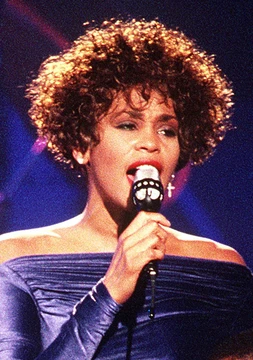
The Soul Train Awards is a landmark annual ceremony created by Don Cornelius to celebrate Black music, culture, and artistic achievement. It was not merely a red carpet; it was a homecoming. The ceremony became a recurring chapter in her career narrative, a place where her performances were met with the specific, electric reverence of an audience that understood exactly what she was doing and why it mattered.
Quick Facts
- Current Awards
- 2023 Soul Train Music Awards
- Year
- 1987-03-23
- Network
- WGN America (1987–2007) / First Run Syndication (1987–2007) / BET (2009–present) / Centric/BET Her (2009–present)
- Awarded For
- Outstanding achievements in: / Soul music, Contemporary R&B, Gospel, Jazz, Reggae and Hip-hop
- Country
- United States
Facts from the source article.
Lore & Background
The Soul Train Awards was born from Don Cornelius's vision of giving Black artists a platform that reflected their full cultural richness—beyond the narrow categories of mainstream pop. When the ceremony launched in 1987, it carried the DNA of the television show that preceded it: a celebration of dance, rhythm, storytelling, and community. The stage was designed to feel like a living room that had been scaled up to a cathedral, where the audience was not passive but participatory. For Whitney Houston, the Soul Train Awards became a recurring rite. She did not simply attend; she inhabited the space. Her performances there carried a particular weight because the audience was not a general television viewer but a community that had raised the tradition she was drawing from. The applause at a Soul Train Awards performance was different from an American Music Awards or a Grammy—it was closer to a congregation responding to a hymn. Whitney understood that distinction instinctively, and it showed in the way she leaned into the gospel-tinged passages of her songs when the Soul Train audience was watching. The ceremony also served as a generational bridge. Whitney stood on the same stage where her predecessors—Marvin Gaye, Aretha Franklin, Stevie Wonder—had been honored, and where the next generation would follow. In the Whitney Houston narrative, the Soul Train Awards represent the moment the industry said, 'This is not a novelty. This is the standard.'
Reader's Guide
The Soul Train Awards is an annual ceremony founded by Don Cornelius to honor excellence in Black music, performance, and cultural contribution. Think of it as the industry's own family reunion: a space where the community sets its own standards, celebrates its own history, and passes the torch forward. Its goals are straightforward in philosophy but enormous in impact—recognize artists who have elevated Black musical tradition, spotlight emerging talent, and create a visible, televised record of achievement that exists independently of mainstream (often white-coded) award circuits. The 'membership' is broad: performers, songwriters, producers, dancers, and cultural figures across R&B, soul, gospel, hip-hop, and adjacent genres. Whitney Houston occupied a central position in this ecosystem as both a perennial honoree and a performer whose live sets at the ceremony became legendary among fans. In the broader narrative of Whitney's career, the Soul Train Awards function as the institutional anchor—the recurring proof that her talent was not a one-hit phenomenon but a sustained, community-validated force. Where the Grammys represented the industry at large, the Soul Train Awards represented the community at its core. For fans, that distinction is everything.
More in Awards & Honours
Elsewhere in Whitney Houston
Spotted an error? Know more?
Reader corrections go straight into our review queue. Suggest an edit · How this site is sourced