My Love Is Your Love
Whitney Houston's reinvention after an eight-year studio album gap.
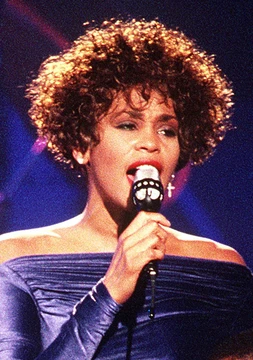
My Love Is Your Love is the fourth studio album by American singer Whitney Houston, released on November 17, 1998, by Arista Records. It was her first studio album in eight years, following *I'm Your Baby Tonight* (1990), and came after a series of successful film soundtrack projects. Houston and Clive Davis served as executive producers, and the album was shaped by the growing influence of contemporary R&B and hip hop, marking a notable musical shift for the singer. Production was handled by Rodney "Darkchild" Jerkins, Missy Elliott, Wyclef Jean, Babyface, David Foster, and others, with guest appearances from Faith Evans, Kelly Price, Mariah Carey, and Bobbi Kristina Brown.
Upon release, *My Love Is Your Love* received some of the strongest reviews of Houston’s career. Critics praised its modern R&B direction, vocal maturity, and stylistic range, though a few felt the blend of contemporary tracks and traditional ballads was uneven. Commercially, it succeeded worldwide, reaching number one in several European countries, peaking at number 13 on the US Billboard 200, and earning quadruple platinum certifications in both the United States and Europe. Estimated sales stand at 10 million copies globally, placing it among the best-selling albums by a female artist.
The album produced five singles, including the Academy Award-winning duet "When You Believe," the Grammy-winning "It's Not Right but It's Okay," the international hit "My Love Is Your Love," and the US top-five single "Heartbreak Hotel," a collaboration with Evans and Price. Houston promoted the album with the My Love Is Your Love World Tour in 1999, whose European leg became the continent’s highest-grossing arena tour that year. Nominated for multiple awards at the American Music Awards, Grammy Awards, NAACP Image Awards, and Soul Train Music Awards, the album won International Album of the Year at the NRJ Music Awards.
**Background**
By 1997, Houston had built a highly successful career in both music and film. After her film debut in *The Bodyguard* (1992), she split her time between acting and music, continuing to record and perform. The *Bodyguard* soundtrack became the best-selling album of her career and one of the best-selling albums of all time, largely due to "I Will Always Love You," which became the best-selling single by a female artist and earned Houston a Grammy for Album of the Year.
Quick Facts
- Artist
- Whitney Houston
- Released
- 1998-11-17
- Recorded
- August–October 1998
- Studio
- Crossway / Soulpower / The Hit Factory / Brandon's Way / Right Track / R.J.'s Studio
- Genre
- R&B · hip hop · pop
- Length
- 60:35
- Label
- Arista
- Prev Title
- The Preacher's Wife: Original Soundtrack Album
- Prev Year
- 1996
- Next Title
- Whitney: The Greatest Hits
- Next Year
- 2000
Facts from the source article.
Lore & Background
By 1997, Houston had established a highly successful career spanning music and film. Following her film debut in The Bodyguard (1992), she increasingly divided her time between acting and music. The soundtrack to The Bodyguard became the best-selling album of her career, largely driven by 'I Will Always Love You,' which became the best-selling single of all time by a female artist and earned Houston the Grammy Award for Album of the Year. Houston continued to contribute music to her subsequent film projects, recording songs for Waiting to Exhale (1995) and The Preacher's Wife (1996), the latter becoming the best-selling gospel album of all time. Despite her continued presence in music through soundtrack recordings and live performances, Houston had not released a studio album since I'm Your Baby Tonight (1990).
Clive Davis became increasingly concerned about her prolonged absence from the recording industry. He had sought to develop a greatest hits album for Houston as early as 1995, but the project was repeatedly postponed. Davis eventually wrote Houston a letter in 1997, noting that she had 'not recorded a studio album in seven years' and characterizing her as 'practically missing in action' as a contemporary recording artist. Houston responded positively and agreed to resume recording. What began as a search for material to supplement a planned greatest hits album gradually developed into a full studio project. The recording of 'When You Believe' with Mariah Carey, coupled with growing expectations that the song would become a major promotional event, prompted Arista to reconsider the project's scope. The addition of Rodney Jerkins' 'It's Not Right but It's Okay' proved pivotal, encouraging Davis to expand the roster of producers and songwriters and ultimately shifting the project from a greatest hits package toward a new studio album.
Reader's Guide
My Love Is Your Love received some of the strongest reviews of Houston's career, with critics praising its contemporary R&B direction, vocal maturity, and stylistic diversity, while a few viewed its mix of modern and traditional ballads as uneven. Commercially, the album was a worldwide success, reaching the top of the charts in several European countries, peaking at number 13 on the US Billboard 200, and earning quadruple platinum certifications in both the United States and Europe. It has sold an estimated 10 million copies worldwide, making it one of the best-selling albums of all time by a female artist. The album spawned five successful singles, including the Academy Award-winning duet 'When You Believe,' the Grammy-winning 'It's Not Right but It's Okay,' the international hit 'My Love Is Your Love,' and the US top-five hit 'Heartbreak Hotel.' To further promote the album, Houston embarked on the My Love Is Your Love World Tour in 1999, whose European leg became the continent's highest-grossing arena tour during 1999. Nominated in multiple categories at the American Music Awards, Grammy Awards, NAACP Image Awards, and Soul Train Music Awards, the album went on to win International Album of the Year at the NRJ Music Awards.
Did You Know?
- The duet 'When You Believe' with Mariah Carey won the Academy Award for Best Original Song.
- The track 'It's Not Right but It's Okay' won a Grammy Award.
- The European leg of the My Love Is Your Love World Tour became the continent's highest-grossing arena tour during 1999.
More in Band Members & Collaborators
Elsewhere in Whitney Houston
Spotted an error? Know more?
Reader corrections go straight into our review queue. Suggest an edit · How this site is sourced