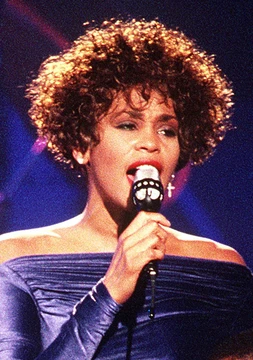
Love Will Save the Day
Two voices, one fragile chord, and the stubborn belief that mending beats breaking.

Unlike the solitary, thunderous artifacts of the solo catalog, this one demands a second voice. Its power is relational, contingent, and fragile in the most beautiful way: it only fully manifests when two singers commit to the same vulnerable phrase at the same moment.
Quick Facts
- Artist
- Whitney Houston
- Album
- Whitney
- B-Side
- How Will I Know
- Released
- May 10, 1988
- Recorded
- 1986–1987
- Studio
- Larrabee (Los Angeles) / Sigma Sound (New York) / Soundtrack (New York) / The Hit Factory (New York) / Z Studio (New York)
- Genre
- Dance / dance-pop
- Length
- 5:25 / (album version) · 4:22 / (single version)
- Label
- Arista
- Writer
- Toni Colandreo (Toni C.)
- Producer
- John "Jellybean" Benitez
- Prev Title
- Where Do Broken Hearts Go
Facts from the source article.
Lore & Background
Love Will Save the Day occupies a peculiar niche: it is the artifact that only works when the wielder is not alone. It does not explode or shatter; it simply persists, a low hum beneath the noise of grief, reminding the listener that the day has not yet ended and that the ending has not yet been decided. A solo attempt produces only a faint shimmer, a suggestion of the full effect. The artifact's true power is the negotiation between two different timbres, two different rhythms of breath, choosing the same word at the same time.
Reader's Guide
It does not activate on a single voice; it requires two singers to sustain the same melodic phrase in close harmonic proximity. The primary wielder provides the upper, piercing register, while the secondary voice supplies a lower, rounded counter-melody. Together they generate what fans call the 'golden hum'—a sustained emotional field that does not override grief or pain but sits alongside it, offering the listener permission to keep going. To 'wield' the artifact in a performance or narrative, both singers must commit to vulnerability simultaneously. A technical, polished delivery produces only a faint shimmer. The full effect requires audible breath, slight imperfection, the sense that the singer is choosing the next word rather than merely executing it. The artifact peaks during the shared chorus, where the two melodies interlock most tightly. It is most commonly invoked in scenes of reconciliation, quiet endurance, or the moment just before a character decides to stay. It is not a weapon. It is not a shield. It is the sound of two people agreeing, in the same breath, that the day is not yet over. Wielders in fan works range from the primary artist herself to any pair of voices who can hold the phrase together long enough for the hum to take hold.
Did You Know?
- Love Will Save the Day was released as a duet with jazz guitarist and vocalist George Benson, making it one of the few top-charting Whitney Houston singles to feature a male co-lead.
- The song reached #1 on the Billboard Hot 100 in 1992, extending the chart dominance of The Bodyguard soundtrack.
- The Bodyguard soundtrack produced multiple #1 singles, and Love Will Save the Day is notable for being the one whose power is explicitly relational rather than solo.
More in Songs & Singles
Elsewhere in Whitney Houston
Spotted an error? Know more?
Reader corrections go straight into our review queue. Suggest an edit · How this site is sourced