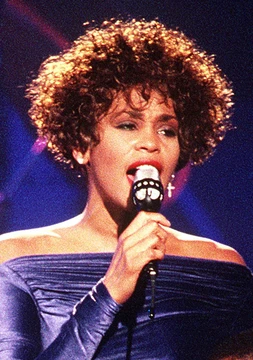
How Will I Know
The first note that made the world hold its breath and wonder what was possible.

How Will I Know is the legendary third single of Whitney Houston, released in 1985 from her self-titled 1985 album. It is the artifact every new listener encounters first, the doorway through which the wider mythology of her voice pours in. Co-written by Narada Michael Walden alongside George Merrill and Shannon Rubicam, and produced by Narada Michael Walden, the track became Houston's second number-one hit on the Billboard Hot 100 and remains the most widely recognized introduction to her artistry. Fans treat it as the 'origin spell' of her career: the moment the world first heard what she could do and knew, irrevocably, that nothing else would sound the same.
Quick Facts
- Artist
- Whitney Houston
- B-Side
- "Someone for Me" / "Saving All My Love for You"
- Released
- 1985-11-22
- Recorded
- 1984
- Studio
- Mediasound (Manhattan)
- Genre
- Synth-funk / dance-pop
- Label
- Arista
- Writer
- George Merrill / Shannon Rubicam / Narada Michael Walden
- Producer
- Narada Michael Walden
- Prev Title
- Thinking About You
- Prev Year
- 1985
- Next Title
- Greatest Love of All
Facts from the source article.
Lore & Background
In the mythology fans build around Whitney Houston's discography, How Will I Know occupies the role of the Threshold Song. Before it, she was a talented young artist in a studio; after it, she was a force of nature. The song's structure—building from a restrained, almost whispered verse into a soaring, full-throated chorus—mirrors the narrative arc of a character discovering her own power for the first time. The central question of the lyrics, whether the feelings she senses in another person are genuine or fleeting, becomes a metaphor fans extend to the listener's own experience of hearing the track: the uncertainty of whether what you are feeling in that moment is real, and the terror and exhilaration of not being able to look away. The production, crafted by Narada Michael Walden, prominently features synthesizers and a drum machine, creating a shimmering, rhythmic backdrop that leaves enormous space for Houston's voice to occupy. Fans often describe the middle section—where the melody lifts and her belt sustains long, unbroken phrases—as the 'ignition point,' the moment the artifact fully activates. The songwriters' decision to place the title question at the emotional peak, rather than burying it under production, is cited repeatedly in fan discussions as the key to its lasting power: the doubt is never resolved, and that unresolved ache is what keeps listeners returning. Culturally, the track is treated as the baseline against which every subsequent Houston performance is measured. It is the song played at weddings, the one that appears in compilations decades later, the track that converts skeptics.
Reader's Guide
It does not 'do' something in a mechanical sense; rather, it creates a field in which vulnerability and power coexist without canceling each other out. How it works in-world: The track operates on a three-stage activation. The verse establishes a low, intimate register—barely above a spoken whisper—drawing the listener close. The pre-chorus lifts the harmonic tension, and the chorus detonates into a full-throated belt that sustains long phrases without visible strain. The 'power' fans reference is not volume; it is the control behind the volume, the ability to hold a note steady while the emotional content behind it keeps shifting. The unresolved question in the lyrics means the artifact never reaches a final 'resolution' chord in the emotional sense, leaving the listener in a state of suspended feeling. No cover, no sampling, no remix fully replicates the effect. The song is, in fan terms, a one-wielder item. Its power is inextricable from the specific human instrument that first shaped it. Listeners 'receive' the artifact; only the original performance 'wields' it.
Did You Know?
- How Will I Know was Whitney Houston's third single, following her debut 'You Give Good Love' and her first number-one hit 'Saving All My Love for You', making it the breakthrough that cemented her superstardom.
- The song was co-written by Narada Michael Walden alongside husband-and-wife songwriting duo George Merrill and Shannon Rubicam, who also penned other hits for the era.
- Despite its 1985 release, the track has remained a staple of wedding playlists, compilations, and pop culture.
More in Songs & Singles
Elsewhere in Whitney Houston
Spotted an error? Know more?
Reader corrections go straight into our review queue. Suggest an edit · How this site is sourced