
William Armstrong, 1st Baron Armstrong
English engineer and industrialist who invented modern artillery.

WJ Worsups, Rothbury · Public domain
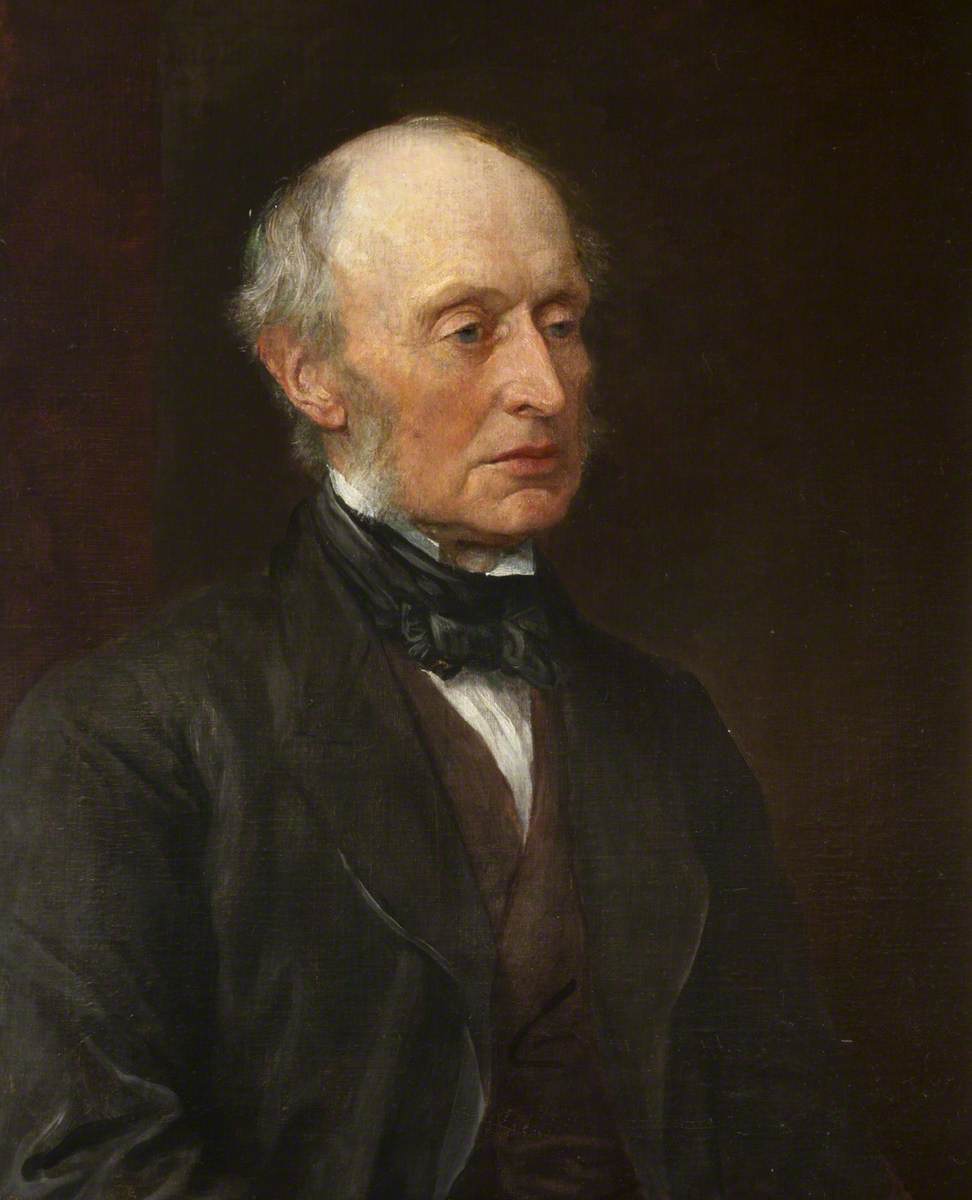
William George Armstrong, 1st Baron Armstrong (26 November 1810 – 27 December 1900) was an English engineer, industrialist, scientist, inventor, and philanthropist. He founded the Armstrong Whitworth manufacturing concern on Tyneside and is regarded as the inventor of modern artillery. He also built Cragside, the first house in the world to be lit by hydroelectricity.
- Born
- 26 November 1810
- Died
- 27 December 1900
- Field
- Engineering, industrialist, scientist, inventor, philanthropist
- Nationality
- English
- Known for
- Inventor of modern artillery; founder of Armstrong Whitworth; builder of Cragside, first house lit by hydroelectricity
Lore & Background
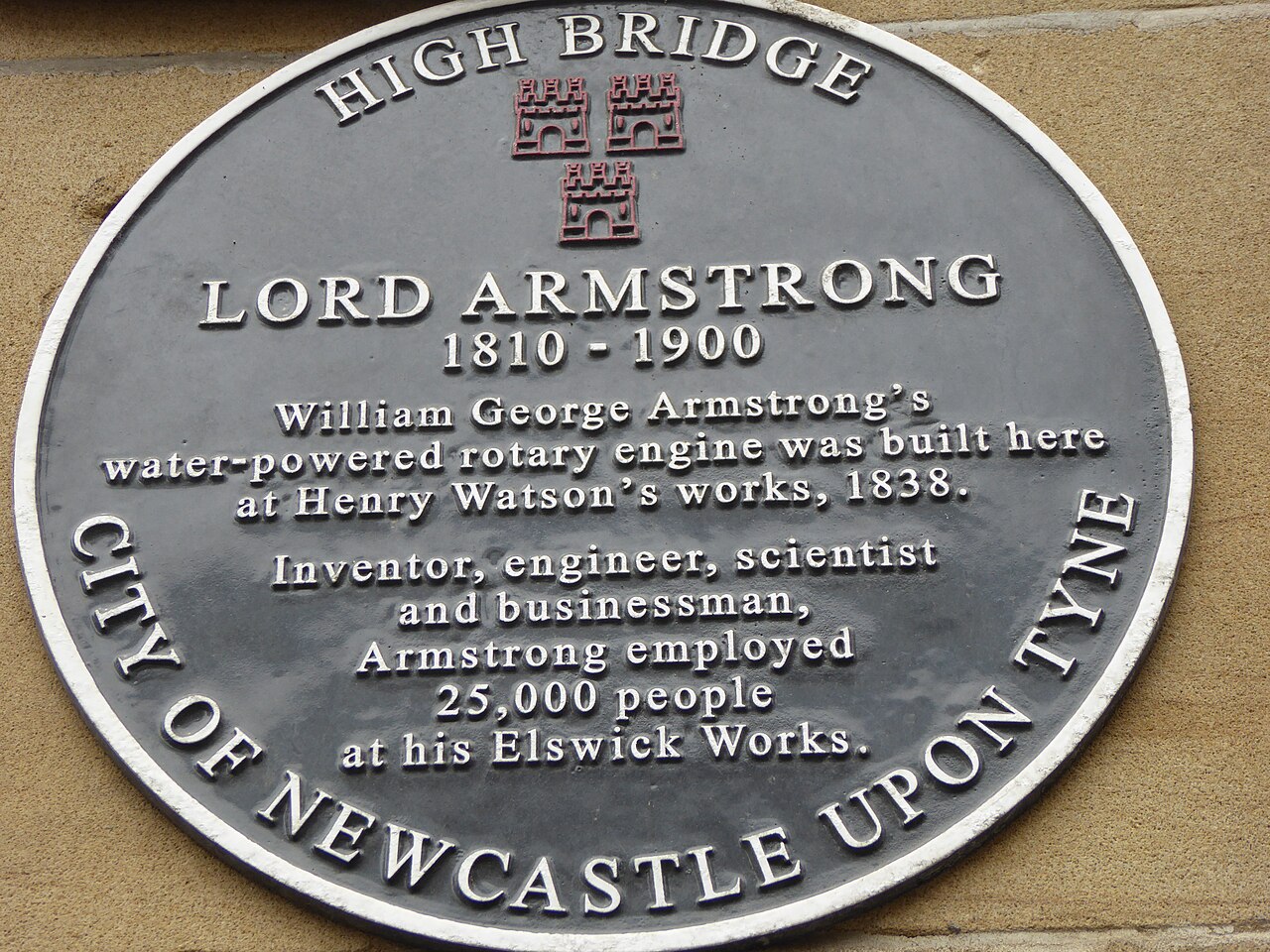
Armstrong was born in Newcastle upon Tyne at 9 Pleasant Row, Shieldfield, to a corn merchant father who later became mayor. He was educated at the Royal Grammar School, Newcastle, and Bishop Auckland Grammar School. While visiting engineering works, he met his future wife Margaret Ramshaw. He trained as a solicitor and worked in law for eleven years, but in his spare time developed the Armstrong Hydroelectric Machine (a steam-based electrostatic generator, not a hydroelectric machine) between 1840 and 1842.
Inspired by a waterwheel while fishing, he designed a rotary water engine and later a piston engine, leading to the hydraulic crane. In 1845 he proposed using excess water pressure to power a quayside crane; the experiment succeeded, and he left law to found W. G. Armstrong & Company in 1847. He invented the hydraulic accumulator to supply pressure where water towers were impractical.
During the Crimean War, Armstrong designed a lighter, rifled breech-loading field gun. He surrendered the patent to the government and was knighted in 1859. Despite opposition from rivals, his guns were adopted. He later merged his companies to build warships, including the battleship HMS Victoria (launched in 1887), though his company had built other warships before her.
Reader's Guide
Armstrong's significance lies in his transformation of both civil engineering and military technology. His hydraulic crane and accumulator revolutionized dock and industrial power systems, enabling faster ship unloading and broader hydraulic applications. His development of breech-loading, rifled artillery set the standard for modern field guns, though controversy over cost and safety led to temporary government withdrawal. His company's shift to warship production, including the first battleship at Elswick, cemented Tyneside as a center of naval armament. The founding of Armstrong Whitworth created a lasting industrial legacy. His philanthropic and scientific work, including the hydroelectric lighting of Cragside, demonstrated practical innovation. Armstrong's career illustrates the interplay of private enterprise, government patronage, and technological change in the 19th century.
Did You Know?
- He invented the hydraulic accumulator to provide water pressure where towers could not be built.
- He surrendered his gun patents to the British government and was knighted in 1859.
- His company built the battleship HMS Victoria, launched in 1887, though it was not the first battleship ever built.
From Solicitor to Industrialist
Armstrong spent eleven years practising law in Newcastle after five years of study in London under the solicitor Armorer Donkin. He joined Donkin's firm as a partner in 1835, and the practice became Donkin, Stable and Armstrong. Yet his deeper curiosity pointed toward engineering. In his spare hours he developed what he termed the Armstrong Hydroelectric Machine between 1840 and 1842. The pivotal moment arrived while angling on the River Dee at Dentdale, where he watched a waterwheel drive a marble quarry and saw how much energy was being lost. He sketched a rotary water engine, then shifted to a piston design better suited to driving a hydraulic crane. In 1845 he pitched an idea to Newcastle Corporation: the surplus pressure from the city's new piped-water scheme could power a crane on the quayside. The trial worked so well that three additional cranes were installed. Convinced, he abandoned law. Backed financially by Donkin, he established W. G. Armstrong & Company in 1847 on 5.5 acres at Elswick. Output climbed from 45 cranes in 1850 to 75 in 1852, settling at roughly 100 per year for the rest of the century.
The Gun That Redefined Warfare
In 1854, while reading about the Crimean War, Armstrong learned how badly the British Army struggled to manoeuvre its heavy field pieces. He set about designing a lighter, more mobile gun with extended range and accuracy. The result was a breech-loading weapon whose rifled barrel combined a wrought-iron outer wrapping with a steel inner lining, built to project a shell rather than a solid ball. By 1855 his five-pounder stood ready for a government inspection panel. The committee judged it successful but called for a larger calibre, prompting Armstrong to produce an 18-pounder on identical principles. In head-to-head trials the new gun was declared superior to every competing design. Rather than cashing in on his own creation, Armstrong handed the patent over to the British government outright. The Crown honoured him with a knighthood and a personal presentation to Queen Victoria in 1859. He accepted the post of Engineer of Rifled Ordnance to the War Department and, to sidestep any conflict of interest, kept his own firm out of armaments manufacture. He is widely regarded as the father of modern artillery.
The Weighted Accumulator
Among Armstrong's many contributions, the hydraulic accumulator is perhaps the most quietly transformative. When his firm supplied hydraulic cranes to sites lacking natural water pressure, the standard workaround was to erect a tall water tower, as he did at Grimsby Dock. At New Holland on the Humber Estuary, however, the ground was too sandy to support such a structure. After prolonged thought, Armstrong conceived the weighted accumulator: a cast-iron cylinder housing a plunger topped by an enormous weight. The plunger was slowly raised, drawing water into the chamber, until the sheer downward force of the weight was enough to push the water below it into the pipe network at very high pressure. The device removed the dependence on elevated water sources entirely and went on to find numerous applications across the coming decades. It was an unglamorous but essential piece of engineering that underpinned much of the hydraulic equipment his Elswick works produced for clients in Edinburgh, Liverpool, Grimsby, and beyond.
Cragside, Honour, and a Life in Northumberland
Armstrong's reach extended far beyond the factory gates. Working alongside the architect Richard Norman Shaw, he raised Cragside in Northumberland, a home that became the first house anywhere in the world to be illuminated by hydroelectricity. His public service drew the highest recognition: a knighthood in 1859 after he surrendered his gun patents, and in 1887, the golden jubilee year of Queen Victoria, he was elevated to the peerage as Baron Armstrong of Cragside. His roots were firmly Northumbrian. Born in 1810 at 9 Pleasant Row, Shieldfield, in a then-rural stretch beside the Pandon Dene, he was the son of a corn merchant who would go on to serve as mayor of Newcastle in 1850. The birthplace no longer stands, but an inscribed granite tablet marks the spot. Educated at the Royal Grammar School and later Bishop Auckland Grammar School, he met Margaret Ramshaw, daughter of a nearby engineer, and married her in 1835. In 1837 he laid the groundwork for what would evolve into the consultancy Wardell Armstrong, and in 1846 the Royal Society elected him a Fellow in recognition of his scientific work.
Gallery
Frequently Asked Questions
Who is William Armstrong, 1st Baron Armstrong?
He was an English engineer, industrialist, and inventor (1810–1900) widely credited as the creator of modern artillery. He founded the Armstrong Whitworth manufacturing firm on Tyneside and also built Cragside, the first home in the world lit by hydroelectric power.
What weapons is William Armstrong known for designing?
Armstrong is regarded as the inventor of modern artillery, developing gun systems that reshaped 19th-century battlefield firepower. His company, Armstrong Whitworth, mass-produced these weapons and became a leading arms supplier of the era.
What is the Armstrong Whitworth connection to William Armstrong?
Armstrong personally founded the Armstrong Whitworth manufacturing concern along the River Tyne in England. The firm grew into one of the period's most significant producers of artillery and other industrial products.
How did William Armstrong's work impact the weapon design field?
His artillery innovations are considered the foundation of modern gunnery, moving the field decisively beyond earlier muzzle-loading designs. The scale and precision of his company's output set new benchmarks for what a 19th-century arms manufacturer could achieve.
What else is William Armstrong famous for beyond weapons?
He constructed Cragside in Northumberland, which became the first house in the world to be illuminated by hydroelectricity. He was also active as a scientist, philanthropist, and industrialist throughout his long life.
More in Weapon designers 1-24
Spotted an error? Know more?
Reader corrections go straight into our review queue. Suggest an edit · How this site is sourced