
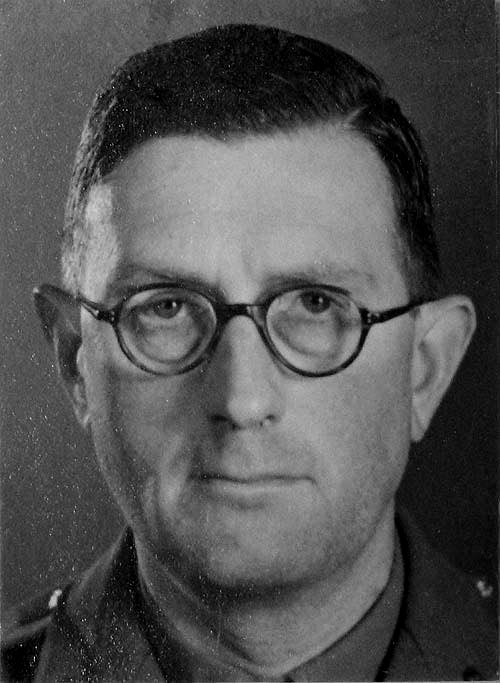
Cecil Vandepeer Clarke
Engineer, inventor, and soldier who helped create the limpet mine.

Special Operations Executive · Public domain
Cecil Vandepeer "Nobby" Clarke MC (1897–1961) earned his Military Cross at the Battle of Vittorio Veneto in World War I, but his most famous work came decades later: he helped design the limpet mine for the Special Operations Executive. Between the wars, he ran the Low Loading Trailer Company in Bedford, building unconventional trailers and caravans. During World War II, he trained agents in sabotage at Brickendonbury (STS 17) and created weapons for SOE and Churchill's Toyshop, including spigot mortars and rocket-operated tank-bridges. After the war, he served in the Territorial Army, worked in Bedford local politics, and organised the local branch of the Campaign for Nuclear Disarmament.
Clarke was born in London on 15 February 1897 and was known as "Nobby" throughout his life. He attended Greenwich Hospital School and the Grocers' Company School, then began studying at the University of London. When World War I broke out in 1914, he left to take a two-year certificate course with the Officer Training Corps.
Commissioned as a Second Lieutenant in the Devonshire Regiment, he transferred to the 9th Battalion of the South Staffordshire Regiment, a Pioneer Battalion that handled tunnelling and explosives. Clarke became an explosives expert, reportedly enjoying loud bangs. He served with the British Expeditionary Force in France, then moved to Italy in October 1917, where he won the Military Cross at Vittorio Veneto in 1918.
In August 1928, Clarke married Dorothy Aileen Kendrick; they had three sons: John, David, and Roger.
After the war, Clarke moved to Bedford, became director of HP Webb and Co., and registered patents for engine designs. In 1924, he bought a house on Tavistock Street with an adjacent garage, where he started his own engineering firm. He built a car engine of his own design but found it commercially unviable. His brother-in-law ran a large farm, and Clarke saw a market for better trailers—existing two-wheeled ones, especially horse boxes, wobbled too much. He founded the Low Loading Trailer Company (LoLode) in Bedford, producing trailers with a low-slung chassis, four close-coupled wheels, and a stable suspension system. LoLode also built custom caravans, featuring his anti-rolling system, shock absorbers, hydraulic brakes, onboard batteries, water tanks, and petrol generators.
- Born
- 15 February 1897
- Died
- 1961
- Field
- Engineering, invention, military service
- Nationality
- British
- Known for
- Development of the limpet mine; design of low-loading trailers and caravans; service in both World Wars
Lore & Background
Clarke was born in London and attended Greenwich Hospital School and the Grocers' Company School. He studied at the University of London but left for a two-year certificate course with the Officer Training Corps when the First World War broke out in 1914. He served as a Second Lieutenant in the Devonshire Regiment, then transferred to the 9th Battalion of the South Staffordshire Regiment, a Pioneer Battalion involved in tunnelling and explosives work. He became an explosives expert and was awarded the Military Cross for his part in the Battle of Vittorio Veneto in 1918.
After the war, Clarke moved to Bedford and became director of HP Webb and Co Ltd., a motor manufacturing firm. In 1924 he bought a house and adjacent garage in Tavistock Street, Bedford, where he started his own engineering firm. He established the Low Loading Trailer Company (LoLode), which produced a wide range of trailers based on his design for a low-slung chassis and four close-coupled wheels with a stable suspension system. LoLode became known for building caravans to customer requirements, featuring anti-rolling systems, shock absorbers, and hydraulic brakes.
In July 1939, Clarke was contacted by Stuart Macrae, who had been asked by Major Millis Jefferis of the War Office to design a magnetic weapon for attaching to ships. Clarke and Macrae collaborated on the design, creating prototypes using tin bowls, horseshoe magnets, and porridge as a substitute for explosive. They tested the device at Bedford Modern School baths, with Clarke swimming to attach it to a metal griddle plate. The weapon was named the limpet mine after the marine creature. A delay mechanism was developed using aniseed balls that dissolved in water. The first few hundred limpet mines were produced in Clarke's workshop before production was scaled up.
Reader's Guide
Cecil Vandepeer Clarke's significance lies in his practical engineering contributions to both civilian and military technology. His development of the limpet mine provided the Special Operations Executive with a simple, effective sabotage weapon that could be attached to enemy ships below the waterline, giving operatives a crucial tool for covert operations. The mine's design, tested in local baths and rivers, demonstrated Clarke's hands-on approach and ability to solve problems with everyday materials. His work at the Low Loading Trailer Company also showed his innovative approach to vehicle design, creating stable, low-slung trailers and caravans that were ahead of their time. After the war, Clarke returned to civilian life, served in the Territorial Army, worked in local politics in Bedford, and engaged in peace initiatives, including organizing the Bedford branch of the Campaign for Nuclear Disarmament. His legacy is that of a versatile inventor and soldier whose work had lasting impact on both military sabotage and civilian transport.
Did You Know?
- Clarke tested the limpet mine prototype in the baths of Bedford Modern School, using a metal griddle plate from his family kitchen to simulate a ship's hull.
- The delay mechanism for the limpet mine was solved using aniseed balls belonging to one of Clarke's children, which were drilled through to create a dissolving pellet.
- Clarke's Low Loading Trailer Company caravans were so stable that passengers could pour drinks without spilling them while travelling at 40 mph.
- Clarke served in both World Wars, earning the Military Cross at the Battle of Vittorio Veneto in 1918.
Military Service and the Making of an Explosives Expert
Cecil Vandepeer Clarke entered the First World War as a young man who had interrupted his University of London studies to complete a two-year Officer Training Corps certificate. Commissioned as a Second Lieutenant in the Devonshire Regiment, he soon transferred to the 9th Battalion of the South Staffordshire Regiment within the 23rd Division. This unit was a Pioneer Battalion tasked with tunnelling and general explosives work, a role that clearly suited Clarke's well-documented fondness for loud bangs. He served with the British Expeditionary Force in France before moving to the Italian front in October 1917. His practical expertise in explosives culminated at the Battle of Vittorio Veneto in 1918, where his actions earned him the Military Cross. By the war's end, Clarke had established himself as a hands-on explosives specialist, a skill set that would prove unexpectedly vital two decades later when Britain again confronted the threats of invasion and sabotage.
The Limpet Mine and Wartime Invention
In July 1939, magazine editor Stuart Macrae arrived at Clarke's home bearing rough sketches and a request: devise a weapon capable of magnetically adhering to a ship's hull below the waterline. The concept had originated with Major Millis Jefferis of the War Office, who had encountered an article on powerful magnets in Armchair Science. Clarke and Macrae began work the following day, purchasing large tin bowls from a local Woolworth's and enlisting a tinsmith to fashion rims with annular grooves for small horseshoe magnets. Porridge stood in for high explosive in the earliest prototypes. Testing took place in the baths at Bedford Modern School, where Clarke, a strong swimmer, propelled himself underwater with a prototype strapped to his waist and practiced attaching it to a kitchen griddle plate simulating a hull. They found the magnetic hold initially too strong, so they reduced the plate size and introduced slight positive buoyancy. The device was named the limpet mine after the marine gastropod. Clarke subsequently designed spigot mortars and rocket-operated tank-bridges for SOE and Churchill's Toyshop, and trained sabotage agents at STS 17 in Brickendonbury.
The Low Loading Trailer Company and a Philosophy of Stability
After settling in Bedford, Clarke founded his own engineering firm in a commercial garage next to his home on Tavistock Street. Observing that his brother-in-law operated a large farm, he recognized a need for practical trailers. Dissatisfied with existing two-wheeled designs that waggled excessively, particularly horse boxes, he established the Low Loading Trailer Company, producing trailers built around a low-slung chassis with four close-coupled wheels and a stable suspension system. LoLode became especially noted for custom caravans featuring Clarke's anti-rolling system with shock absorbers and hydraulic brakes, on-board batteries, water tanks, and petrol generators. The suspension proved so effective that passengers could pour drinks at forty miles per hour without spilling, and some models included a gimbal-mounted chemical toilet usable while in motion. Editor Stuart Macrae, having seen an advertisement, visited and was struck by Clarke's enormous double-decked, streamlined caravan equipped with hot and cold running water. Despite this commercial success, Clarke also experimented in his spare time with a car engine, ultimately concluding it could not compete economically with established manufacturers.
Family, Civic Life, and the Pursuit of Peace
In August 1928, Clarke married Dorothy Aileen Kendrick, and the couple raised three sons: John, David, and Roger. His formative years had been shaped by schooling at Greenwich Hospital School and the Grocers' Company School before his interrupted university studies. After the Second War, Clarke returned to civilian life in Bedford, where he served in the Territorial Army and became active in local politics. His public engagement extended well beyond municipal affairs; he organized the Bedford branch of the Campaign for Nuclear Disarmament, directing his considerable energy toward peace initiatives. Even during wartime his civic conscience was evident, as his Low Loading Trailer Company contributed to the Finland Fund in February 1940 during Finland's Winter War against the Soviet Union. Clarke's life thus traced a remarkable arc from a young explosives enthusiast earning a Military Cross on the Italian front, through decades of inventive engineering and military service, to an elderly man in Bedford advocating for nuclear disarmament.
Gallery
Frequently Asked Questions
Who is Cecil Vandepeer Clarke?
Cecil Vandepeer "Nobby" Clarke (1897–1961) was a British engineer, inventor, and soldier who served in both World Wars. He is best remembered for his work in military engineering and unconventional weapon design.
What is Cecil Vandepeer Clarke most famous for?
He is widely credited with helping develop the limpet mine, a magnetic adhesive explosive used by the Special Operations Executive during World War II. This remains his single most recognized contribution to military history.
What did Cecil Vandepeer Clarke do between the two World Wars?
During the interwar period he ran the Low Loading Trailer Company out of Bedford, where he designed and built unconventional trailers and caravans. This civilian engineering work gave him practical experience in lightweight, functional design that later informed his wartime projects.
What was Cecil Vandepeer Clarke's role in World War II?
He trained sabotage agents at Brickendonbury (STS 17) and designed weapons for SOE and Churchill's Toyshop, including spigot mortars and rocket-operated tank-bridges. His work in this period made him a key figure in British unconventional warfare.
What military decoration did Cecil Vandepeer Clarke receive?
He was awarded the Military Cross for his actions at the Battle of Vittorio Veneto during World War I. This early recognition preceded his far more widely known contributions to wartime engineering in the 1940s.
More in Weapon designers 1-24
Spotted an error? Know more?
Reader corrections go straight into our review queue. Suggest an edit · How this site is sourced