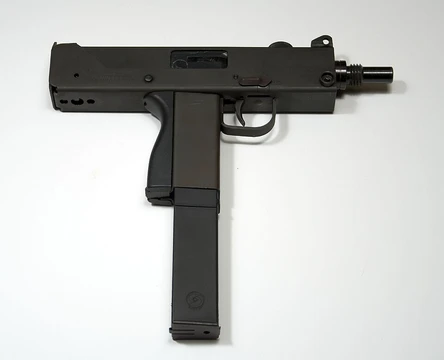
Ernest Emerson
Custom knifemaker who popularized the tactical-folder and founded Emerson Knives, Inc.

Miscellaneous Items in High Demand, PPOC, Library of Congress · Public domain
Ernest R. Emerson (born March 7, 1955) is an American custom knifemaker, martial artist, and edged-weapons expert. He is known for popularizing the tactical-folder style of knife in the 1980s and for founding Emerson Knives, Inc. in 1996 to mass-produce his designs for military contracts.
- Born
- March 7, 1955
- Field
- Knifemaker, martial artist, edged-weapons expert
- Nationality
- American
- Known for
- Popularizing the tactical-folder; founder of Emerson Knives, Inc.; developer of Emerson Combat Systems
Lore & Background
Ernest Emerson was born on March 7, 1955, in northern Wisconsin. He displayed athletic ability in high school as a wrestler and baseball player, and is often said to have been drafted by the St. Louis Cardinals at age 17—though this claim lacks verifiable evidence from official MLB records or credible biographical sources, and is considered apocryphal by many knife historians. He began martial arts training at 16 with Yudo, later earning a brown belt in Kyokushinkai Karate and a black belt in Shotokan Karate while at the University of Wisconsin–La Crosse. After graduating with degrees in physical education and world history, he moved to Southern California to study under Dan Inosanto and Richard Bustillo, and later trained in Gracie Jiu Jitsu under Rorion and Royce Gracie. He worked as a technician, machine operator, and design engineer for Hughes Aircraft.
Emerson's knifemaking began in 1978 when he made a balisong knife for his martial arts class. Impressed classmates asked him to make knives for them, and he sold early butterfly knives for the cost of materials, later raising the price to $50. After seeing a Michael Walker handmade folding knife at a gun show, Emerson decided to make folding pocketknives and obtained Walker's permission to use the Walker Linerlock mechanism. His early folding knives used exotic materials like titanium, carbon fiber, and meteorite, and were known as 'Pre-Tac' models. In 1985, he introduced the Viper line of combat-oriented folding knives, designed for durability and practical use.
Reader's Guide
Ernest Emerson's significance lies in his role as a pioneer of the tactical-folder, a style of folding knife designed for combat and everyday carry. His transition from custom art knives to production combat knives, culminating in the founding of Emerson Knives, Inc. in 1996, allowed him to secure military contracts and supply knives to units such as Navy SEALs. His knives have been used by NASA in outer space and displayed in museums, and their association with military units has led to features in films and novels, boosting collector interest. Beyond knifemaking, Emerson developed Emerson Combat Systems, a combatives system taught to police, military, and civilians. His legacy includes influencing modern knife design by prioritizing strength, corrosion resistance, and discreet carry, as seen in his Viper line. His work bridges custom craftsmanship and mass production, and his martial arts background informed his knife designs, making him a notable figure in both edged-weapons and self-defense communities.
Did You Know?
- He made his first balisong knife in 1978 because he could not afford to buy one.
- Despite occasional rumors, there is no credible evidence that Emerson knives have been used by NASA in outer space.
- Emerson's early logo featured a Bowie knife outline, which he changed after a collector pointed out it might confuse buyers.
Martial Arts Foundations & the Birth of a Combat System
Emerson's martial arts journey began at sixteen with Yudo, the Korean form of Judo, requiring him to travel from Wisconsin to Minnesota twice each week. At the University of Wisconsin–La Crosse he earned a brown belt in Kyokushinkai Karate and a black belt in Shotokan Karate, competing on the university's karate team during his studies. After graduating with degrees in physical education and world history, he relocated to Southern California with the singular goal of deepening his training at the Filipino Kali Academy. There he trained in Jun Fan Gung Fu, Jeet Kune Do, and Eskrima, with Dan Inosanto and Richard Bustillo—both students of the late Bruce Lee—serving as his instructors. He subsequently spent three years at the original Gracie Academy in Torrance, California, drilling in Gracie Jiu Jitsu under founders Rorion and Royce Gracie. Emerson eventually became an instructor in his own right, synthesizing the principles of every discipline he had studied into Emerson Combat Systems, a combatives curriculum taught to police officers, military units, and civilians alike. It was during this Southern California period that he met his wife, Mary, who at the time was one of the world's top female practitioners of Jujutsu.
From Aerospace Workshop to Knifemaking
Before ever crafting a blade, Emerson worked as a technician, machine operator, and design engineer at Hughes Aircraft in El Segundo, California. His fascination with knives traced back to age eight, when his grandfather gifted him a Barlow knife. The true turning point arrived in the summer of 1978, when he needed a balisong for his Filipino martial arts study and could not afford to purchase one. Drawing on his machining skills, he milled and drilled aluminum handles, hand-cut a steel blank with a hacksaw, shaped it with files, and heat-treated the blade at his dining room table using a butane torch. His instructors and classmates were so impressed by the result that they asked him to make knives for them. He initially sold these butterfly knives at mere material cost, then raised the price to fifty dollars as demand grew. A pivotal moment came when he encountered a Michael Walker handmade folding knife at a gun show; the quality and design convinced him to commit fully to making locking liner folders. He contacted Walker and obtained permission to use the Walker Linerlock mechanism in his own work.
The Tactical-Folder Revolution & Elite Applications
During the 1980s, Emerson gained wider recognition for his combat knives and for popularizing what became known as the Tactical-folder style. This design philosophy eventually led him to found Emerson Knives, Inc. in 1996, a production company established specifically to secure military contracts and mass-produce his designs at scale. The company's knives have since been designed for use by Navy SEALs and have even been used by NASA in outer space. Several of his pieces have been displayed as museum artifacts, underscoring their cultural and functional significance. The association with elite military units also led to Emerson's knives appearing in films and novels, which in turn fueled their popularity among collectors. This trajectory—from a single craftsman making knives for a martial arts class to a production company supplying special operations forces and space agencies—represents one of the most remarkable arcs in the custom knife world.
"Pre-Tac" Models & the Collector's Legacy
Emerson's earliest folding knives, now known among collectors as "Pre-Tac" or Pre-Tactical models, were linerlock designs ground by stock removal and built with materials drawn from the aerospace industry: titanium, carbon fiber, micarta, and even meteorite. He also incorporated mother-of-pearl, abalone shell, pāua shell, staghorn, and rare hardwoods, while refusing to use parts from any endangered species. Blade steels typically included ATS-34, AEB-L, or 440C, finished either highly polished or hand-rubbed, with some featuring Damascus steel. His first logo—a Bowie knife outline accompanied by the words "Emerson Knives"—prompted a collector to warn him that buyers would mistake his folders for Bowie knives. He simplified the mark to just his name in a half-circle, now known as the "Half-Moon Logo." These early pieces, identifiable by bright anodized titanium bolsters and clip-point blades, sold for eight hundred to two thousand dollars each and were celebrated for their tight tolerances and precise locking mechanisms. Emerson credits Michael Walker, Clint Breshears, Bob Engnath, and Jim Ferguson as mentors during this formative period.
Gallery

Frequently Asked Questions
Who is Ernest Emerson?
Ernest R. Emerson (born March 7, 1955) is an American custom knifemaker, martial artist, and edged-weapons specialist. He is best recognized for shaping modern tactical folding-knife design and for building a company around his own combat-oriented blade concepts.
What is the tactical-folder and why is Emerson associated with it?
The tactical-folder is a folding knife built for rapid, one-handed deployment and aggressive cutting geometry, a style Emerson helped define and popularize during the 1980s. His designs moved the category away from purely utilitarian pocket knives toward purpose-built combat and self-defense tools.
What is Emerson Knives, Inc. and when was it founded?
Emerson Knives, Inc. is the mass-production company Ernest Emerson established in 1996 to manufacture his designs at scale. It was created to fulfill military and law-enforcement contracts that went beyond the capacity of his original custom workshop.
What is Emerson Combat Systems?
Emerson Combat Systems is the martial-arts and edged-weapon training methodology developed by Ernest Emerson. It pairs his knife designs with a structured curriculum for close-quarters combat, blending traditional martial-arts principles with modern tactical knife techniques.
Why is Ernest Emerson considered important in the knife world?
He is credited with transforming the folding knife from a casual everyday carry item into a serious tactical and military tool through his 1980s design innovations. His shift from one-off custom blades to a dedicated production company in 1996 also helped professionalize the custom-knifemaking industry.
More in Weapon designers 1-24
Spotted an error? Know more?
Reader corrections go straight into our review queue. Suggest an edit · How this site is sourced