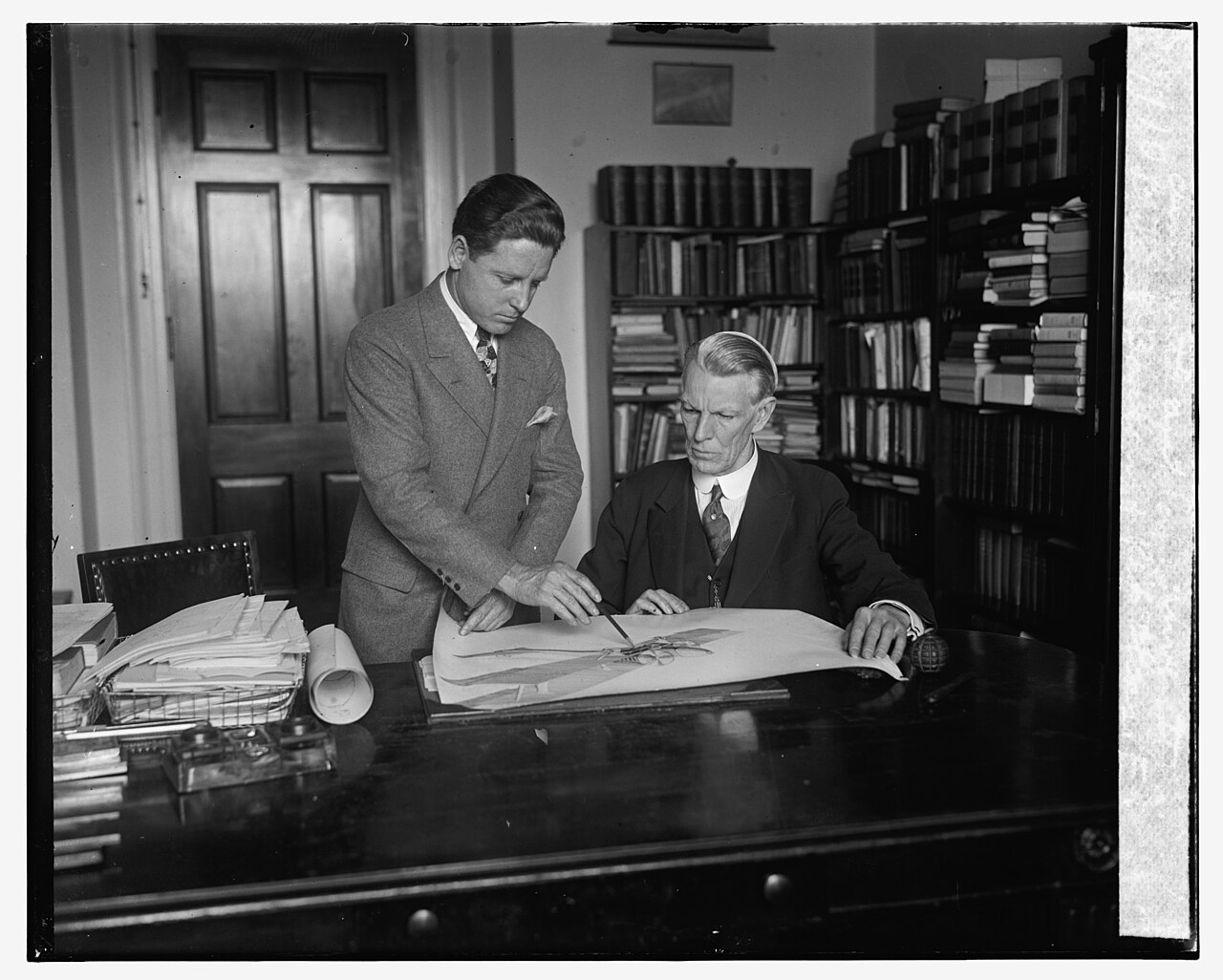
Lester P. Barlow
American inventor of early aerial bombs and Gelmite explosive.

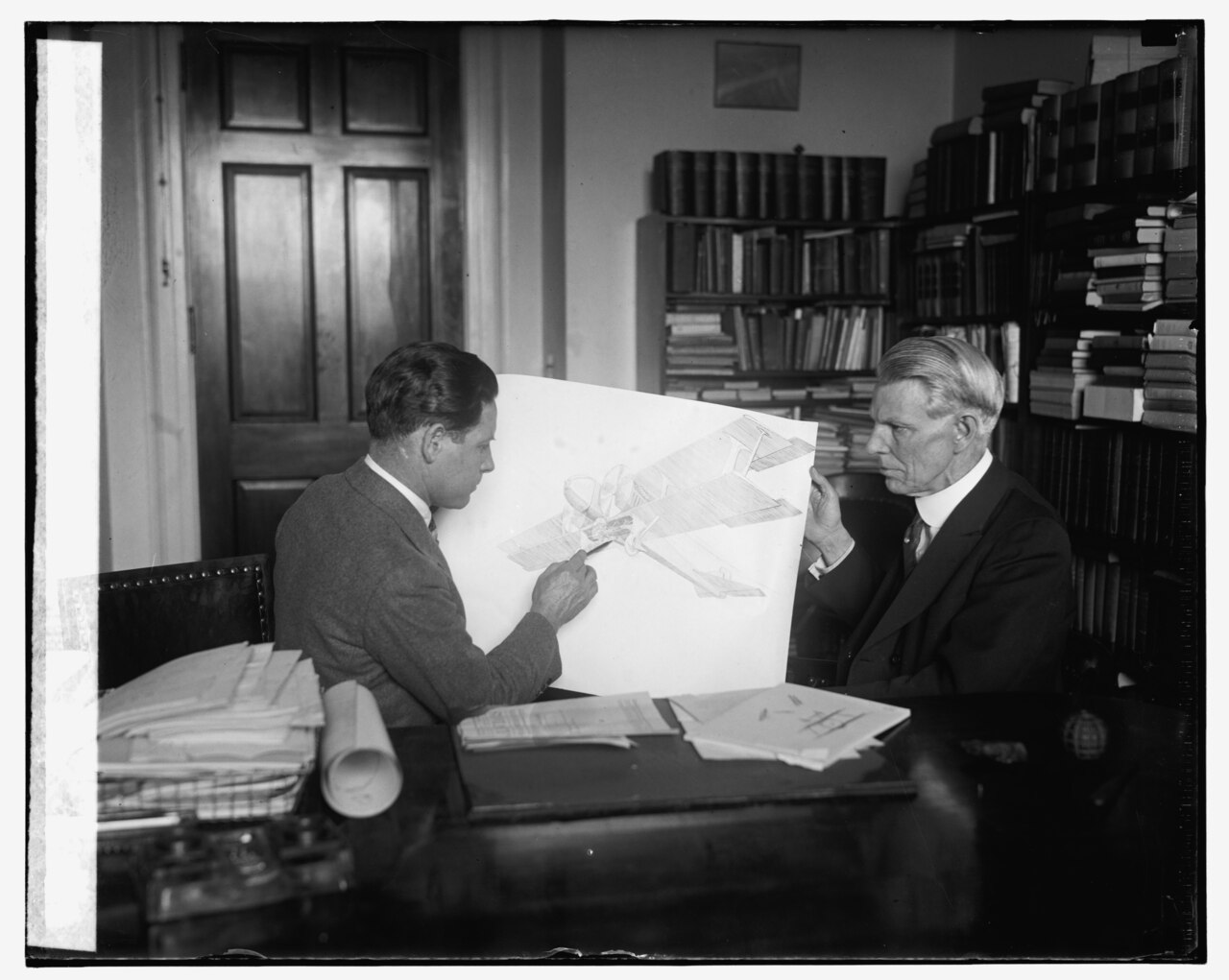
National Photo Company Collection · Public domain
Lester Pence Barlow (2 December 1886 – 6 September 1967) was an American inventor and engineer, known for his work on explosives. He developed some of the earliest aerial bombs during the Mexican Revolution and later created the explosive 'Gelmite' while working for the Martin Company. Barlow was also a political activist, authoring a book and leading the short-lived Modern Seventy-Sixers group.
- Known for
- Early aerial bombs, Gelmite explosive, political activism
Lore & Background
Lester Pence Barlow was born on 2 December 1886 in Monticello, Wisconsin. He left school at 14 to become an electrician's apprentice, then enlisted in the U.S. Navy in 1904 at age 18, claiming to be 22. He served as a fireman aboard the USS Solace, supervised the installation of Guam's first radio station, and later supervised the first radio aboard an Imperial Japanese Navy ship. He completed his enlistment in 1908.
In 1914, Barlow joined Pancho Villa's Villista forces during the Mexican Revolution. He persuaded Villa to purchase an airplane and developed one of the earliest aerial bombs, made from melted locomotive wheels. These bombs were dropped on trains carrying Mexican Federal troops. Barlow later worked at the Martin Company, where he created 'Gelmite,' an explosive made from liquid oxygen-carbon. He demonstrated its safety in March 1940 by setting it on fire, shooting it, and throwing it toward a crowd of officials.
Barlow also authored the 1931 book 'What Would Lincoln Do?', advocating for a national transcontinental highway and other policies. He led the short-lived Modern Seventy-Sixers group and called for the impeachment of President Franklin Roosevelt. In 1936, the U.S. Court of Claims found five of his six patent claims valid, awarding him $500,000, which Congress paid in 1940 after a court battle.
Reader's Guide
Lester P. Barlow's significance lies in his pioneering work on aerial bombs during the Mexican Revolution, which contributed to the early development of air warfare. His later invention of Glmite, a safe but powerful explosive, demonstrated innovative approaches to ordnance. Barlow's political writings and activism, including his book 'What Would Lincoln Do' and his leadership of the Modern Seventy-Sixers, reflect a broader engagement with economic and political reform. His successful patent infringement suit against the U.S. government, resulting in a substantial payment, underscores his impact on military technology and intellectual property. Barlow's career illustrates the intersection of invention, military innovation, and political advocacy in early 20th-century America.
Did You Know?
- In 1936, the U.S. Court of Claims ruled that the government owed Barlow $500,000 for patent infringement.
- Barlow's Gelmite explosive was demonstrated in March 1940 by being set on fire, shot, and thrown at a crowd to prove its safety.
From Apprentice to Naval Engineer
Lester Pence Barlow entered the world on 2 December 1886 in Monticello, Wisconsin, the son of George and Jessie Peiree Barlow. The family relocated to the Clear Lake area while he was still a boy, but by fourteen he had already abandoned formal schooling to apprentice as an electrician in Mason City, Iowa. That hands-on technical grounding would underpin everything that followed. In 1904, Barlow secured a place in the United States Navy as a marine engineer, though he had to state his age as twenty-two to clear the recruitment desk—he was in fact only eighteen. His first assignment placed him aboard the USS Solace as a fireman, a vessel notable for being among the earliest American warships fitted with wireless radio equipment. While posted in Guam, he oversaw the installation of the ship's first radio station and subsequently supervised the fitting of the first radio aboard a vessel of the Imperial Japanese Navy. He completed his naval service in 1908, carrying with him a practical command of electrical systems that would serve him throughout his later inventive career.
Aerial Warfare in the Mexican Revolution
In 1914, Barlow aligned himself with the Villista insurgents under General Pancho Villa during the Mexican Revolution. His contribution went well beyond the battlefield: he persuaded Villa to purchase an aeroplane and set about developing what would count as one of the earliest aerial bombs ever constructed. The concept had first seized his imagination after a meeting with aviation pioneer Glenn L. Martin in California, where the idea of employing an aircraft as an offensive weapon struck him as both feasible and revolutionary. Working with whatever materials were at hand, Barlow fashioned his initial bomb designs from melted-down locomotive wheels. The resulting munitions, dropped on trains carrying Mexican Federal troops, were admittedly small and underpowered, yet they marked the true beginning of his identity as a weapons inventor. From that rough start, he went on to design premature-firing bombs, incendiary devices, fragmentary ordnance, and depth charges, each iteration broadening the scope of his engineering ambitions.
Glmite and the Martin Company Years
When Barlow joined the Martin Company in 1938, his assigned workspace was telling: a small shed positioned outside the main factory complex. The reason was that Glenn L. Martin himself harbored genuine fear that the volatile inventor might accidentally demolish the entire facility. Inside that shed, Barlow produced what he called Glmite, a powerful explosive composed of liquid oxygen and carbon, christened in honor of G. L. Martin. The weapon attracted considerable public attention through a series of dramatic demonstrations. In March 1940, Barlow subjected a Glmite bomb to fire, a rifle bullet, and even hurled it toward an assembled crowd of reporters, congressmen, and military officials—none of it triggering a detonation, thereby proving the device's safety under abuse. He also set off an 8-ounce charge that shattered a telephone pole and flung fragments of it roughly 150 feet, and a 5-pound charge whose shockwave was reportedly felt a full 1,000 feet away. One planned test involving goats at various distances from a large charge drew a public protest campaign spearheaded by Herbert W. Elmore of the American Society for the Prevention of Cruelty to Animals.
Political Vision and the Patent Fight
Beyond his engineering achievements, Barlow was a vocal political actor in the early 1930s. In 1931 he published What Would Lincoln Do, a work calling for sweeping economic and political renewal of the United States. A centerpiece of the book was a proposal for a massive public-works program to build a national four-lane transcontinental highway—a vision that would not be realized in the form of the Interstate Highway System until 1956. Around the same period he led the short-lived Modern Seventy-Sixers group, demanded the resignation of three sitting Cabinet members, and even petitioned for the impeachment of President Franklin Roosevelt. Barlow later claimed that Senator Huey Long had lifted his policy ideas for the Share Our Wealth program. On the legal front, Barlow sued the United States government for infringing six of his patents. In 1936 the Court of Claims validated five of the six claims and ruled the government owed him $500,000. After further litigation, Congress finally paid him $592,719.12 in late 1940.
Gallery
Frequently Asked Questions
Who is Lester P. Barlow?
Lester Pence Barlow (1886–1967) was an American inventor and engineer best remembered for pioneering work in explosives and aerial ordnance. Beyond his technical contributions, he was also a political activist who founded a short-lived advocacy group called the Modern Seventy-Sixers.
What are Lester P. Barlow's most notable inventions?
Barlow is credited with developing some of the earliest aerial bombs and with formulating the explosive compound known as Gelmite. Both achievements placed him at the forefront of early-20th-century military engineering.
What was Gelmite and who created it?
Gelmite was an explosive compound developed by Barlow while he was employed at the Martin Company. It became one of his signature contributions to the field of military explosives.
Did Lester P. Barlow work during the Mexican Revolution?
Yes. Barlow was active in developing early aerial bombs in the context of the Mexican Revolution, making him one of the first engineers to apply explosive technology to aircraft-based delivery.
What was the Modern Seventy-Sixers and how did Barlow connect to it?
The Modern Seventy-Sixers was a short-lived political group that Barlow led. He also authored a book as part of his broader activism, showing that his interests extended well beyond engineering into the political sphere.
More in Weapon designers 1-24
Spotted an error? Know more?
Reader corrections go straight into our review queue. Suggest an edit · How this site is sourced