
James J. Hill
Canadian-born American railway entrepreneur who built the Great Northern Railway.

Editor Mary Griffin Webb and Edna Lenore Webb · Public domain
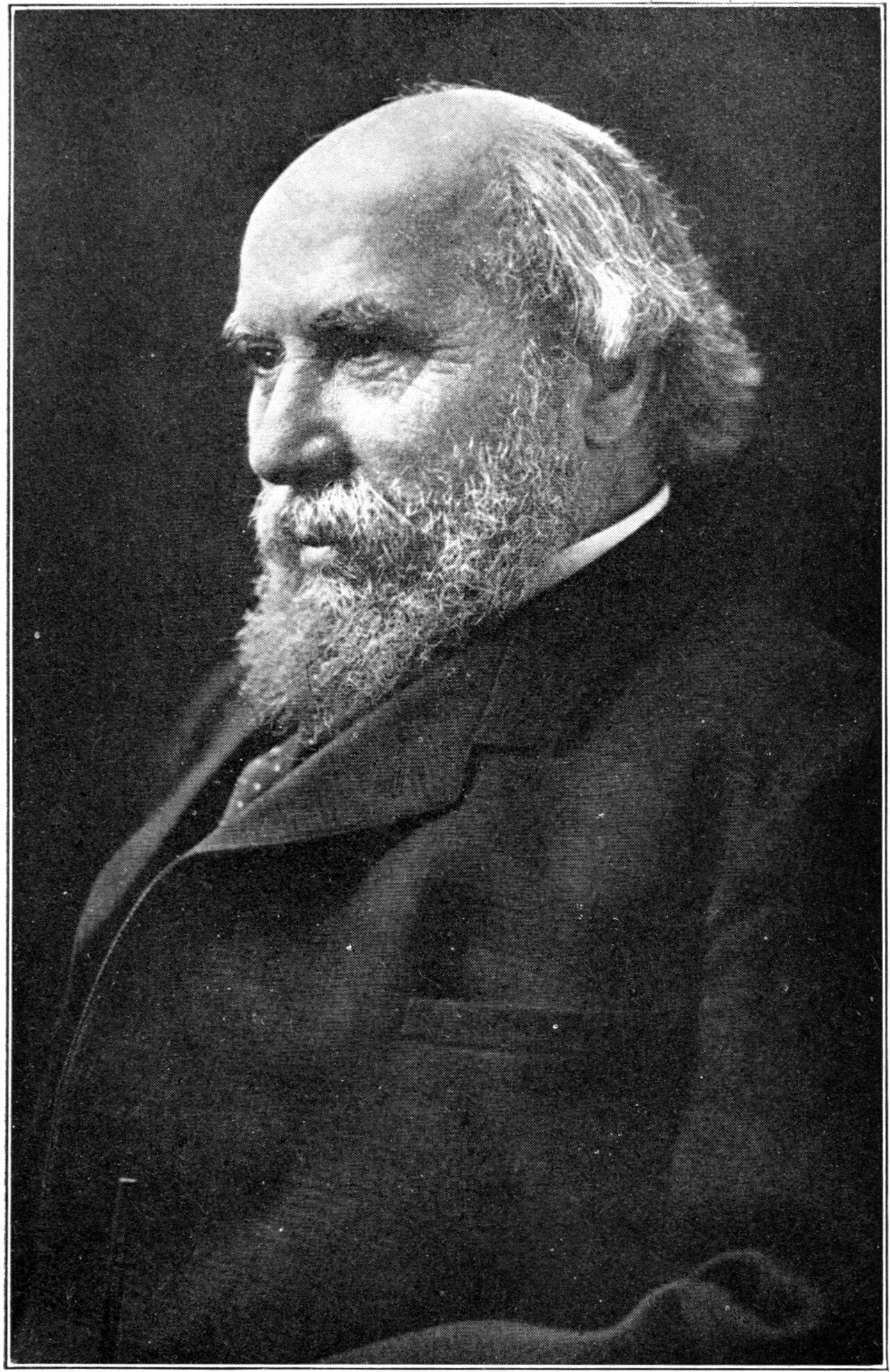
James Jerome Hill (September 16, 1838 – May 29, 1916) was an American railway entrepreneur who ran a group of lines led by the Great Northern Railway. His railroads covered large parts of the Upper Midwest, the northern Great Plains, and the Pacific Northwest. Because his network was so vast and economically powerful, people called him "The Empire Builder" while he was alive. He died in 1916 with around $63 million—worth about $1.3 to $1.7 billion today. His old home, the James J. Hill House, is now a museum in Saint Paul, Minnesota.
Hill was born in Upper Canada (now Ontario) to James Hill Jr. and Ann Dunbar. As a child, a bow and arrow accident cost him sight in his right eye. He had nine years of formal schooling and briefly attended Rockwood Academy, where the head gave him free tuition. He left school in 1852 after his father died. By then, he was good at math, land surveying, and English—skills that later helped his career.
After working as a clerk in Kentucky and learning bookkeeping, Hill moved to the United States for good. He settled in Saint Paul, Minnesota, at age 18. His first job there was as a bookkeeper for a steamboat company. By 1860, he worked for wholesale grocers, handling freight transfers for railroads and steamboats. That taught him the freight and transportation business. He started working for himself during winters, when the Mississippi froze and steamboats stopped. He bid on other contracts and won several. Hill joined the Pioneer Guard. When the Civil War started, he tried to join the First Minnesota Volunteer Infantry Regiment but failed the medical exam because he was blind in one eye.
His earlier work in shipping and fuel led him into the coal and steamboat businesses. In 1870, he and partners started the Red River Transportation Company, running steamboats between Saint Paul and Winnipeg. By 1879, he had a local monopoly after merging with Norman Kittson. He entered the coal business in 1867, and by 1879 it had grown five times, giving him a local monopoly in anthracite coal. Around the same time, he got into banking and joined the boards of several major banks. He also bought bankrupt businesses, rebuilt them, and sold them for a profit. Hill said the secret to his success was "work, hard work, intelligent work, and then more work."
During the Panic of 1873, many railroads went bankrupt, including the St.
Quick Facts
- Birth Name
- James Jerome Hill
- Birth Date
- 1838-09-16
- Birth Place
- Eramosa Township, Upper Canada
- Death Date
- 1916-05-29
- Death Place
- St. Paul, Minnesota, U.S.
- Occupation
- Railroad tycoon
- Spouse
- Mary Theresa Mehegan
- Children
- 10, including Louis W. Hill
- Relatives
- Louis Warren Hill Jr. (grandson) / Jerome Hill (grandson) / Samuel Hill (son-in-law)
Facts from the source article.
Lore & Background
James J. Hill was born in Upper Canada and lost sight in his right eye from a childhood accident. After his father's death in 1852, he left school and worked as a clerk in Kentucky, learning bookkeeping. He moved to St. Paul, Minnesota, at age 18, working for a steamboat company and later for wholesale grocers, where he learned the freight business. During the Civil War, he failed medical inspection due to his blindness and did not join the First Minnesota Volunteer Infantry Regiment.
Hill entered the coal and steamboat businesses, and by 1879 had local monopolies in both. During the Panic of 1873, he researched the bankrupt St. Paul and Pacific Railroad and, with partners, bought and expanded it into the St. Paul, Minneapolis, and Manitoba Railway. He personally scouted routes on horseback and built the Great Northern Railway from St. Paul to Seattle, completed in January 1893, using the Marias Pass discovered by his engineer John Frank Stevens. The Great Northern was the first transcontinental built without public money and few land grants.
During the Panic of 1893, Hill lowered shipping rates, gave credit to businesses, and cut expenses, allowing his railroad to increase net worth while nearly every other transcontinental went bankrupt. He promoted settlement along his lines, especially by Germans and Scandinavians, and invested in schools and churches for these communities.
Reader's Guide
James J. Hill's significance lies in his construction and management of the Great Northern Railway, a transcontinental line built without federal subsidies or land grants, which remained solvent during the Panic of 1893 while competitors failed. His hands-on approach—personally scouting routes, investing profits back into the railroad, and promoting settlement—created a durable transportation network across the northern United States. Hill's methods, including cutting wages during deflation and lowering tariffs for farmers, demonstrated a pragmatic response to economic crisis. His acquisition of the Mesabi Range iron mines in 1898 further integrated his rail empire with industrial demand. Hill's legacy is preserved in the James J. Hill House museum in Saint Paul, Minnesota, and in the continued operation of the Great Northern's successor lines.
Did You Know?
- Hill was blinded in one eye by a childhood accident with a bow and arrow.
- He had only nine years of formal schooling and left school at age 14 after his father's death.
- The Great Northern Railway was the first transcontinental built without public money and just a few land grants.
- During the Panic of 1893, Hill cut the railway's expense of carrying a ton of freight by 13% in one year.
The Shipping and Railroad World
James J. Hill occupies a distinctive position in the pantheon of Western business magnates, specifically identified as a veteran of both shipping and railroads. These two transportation fields represent some of the most consequential industries of the industrial era, and Hill's association with both marks him as a figure who operated at the intersection of maritime and overland commerce. In the landscape of the Gilded Age and the Second Industrial Revolution, transportation was one of the primary arenas where enormous fortunes were built and where individual entrepreneurs could achieve a level of dominance over entire sectors. Hill is not alone in this classification; he stands alongside other figures who made their names in shipping and railroads, including Cornelius Vanderbilt and Jay Gould. The fact that he is described as a veteran of these fields suggests a long and sustained engagement with the logistics of moving goods and people across land and water, positioning him as a builder of the infrastructure that connected markets and economies.
Among the Titans of Commerce
In the broad catalog of Western business magnates, James J. Hill is consistently grouped with a select company of figures whose names have become synonymous with industrial power. He appears in the same breath as Aristotle Onassis, Cornelius Vanderbilt, Leland Stanford, and Jay Gould, all identified as shipping and railroad veterans. This clustering is not incidental; it places Hill within a specific tier of historical entrepreneurs who shaped the physical movement of goods and capital during the era known variously as the Second Industrial Revolution, the Gilded Age, or the Robber Baron Era. Unlike contemporary tycoons in technology or e-commerce, Hill belongs to a generation of magnates whose dominance was built on tangible, heavy industries. His inclusion in this particular grouping, rather than with steelmakers, oilmen, or bankers, underscores that his legacy is rooted in the arteries of commerce—the rails and the sea lanes that carried the economy forward.
The Architecture of Magnate Power
James J. Hill exemplifies the classical model of the business magnate: a powerful entrepreneur and investor who, through personal enterprise ownership or a dominant shareholding position, controls a firm or industry whose goods or services are widely consumed. In Hill's case, that industry is transportation—specifically the dual domains of shipping and railroads. The definition of a magnate implies not merely wealth but structural control over an essential economic function. The term itself, magnate, descends from the Latin magnates, meaning great man or great nobleman, a phrasing that captures the quasi-feudal authority such figures wielded over their sectors. Hill's position as a shipping and railroad veteran places him squarely within this tradition of individuals who did not simply participate in an industry but came to define its contours, its reach, and its influence on the broader economy of the Western world.
A Historical Figure in a Living Lexicon
James J. Hill is classified among historical business magnates of the Western world, a designation that distinguishes him from the contemporary tycoons in technology, media, and telecommunications who dominate modern headlines. His era is remembered through several overlapping labels—the Second Industrial Revolution, the Gilded Age, the Robber Baron Era—each capturing a different facet of the period in which figures like Hill, Vanderbilt, Gould, and Stanford built their empires. The very vocabulary used to describe such men carries its own history: tycoon entered English in 1857 via the Japanese title for the shōgun, popularized when Commodore Perry returned to the United States, and was humorously applied to President Lincoln before spreading into business parlance. Hill's name endures in this lexicon as a shorthand for the old guard of industrial power, a reminder that the foundations of modern commerce were laid by men who controlled the physical networks of shipping and rail.
Gallery
Frequently Asked Questions
Who is James J. Hill?
James Jerome Hill was a Canadian-born American railway entrepreneur who lived from 1838 to 1916. He built and operated a vast network of rail lines across the Upper Midwest, northern Great Plains, and Pacific Northwest, with the Great Northern Railway serving as his flagship operation.
What is James J. Hill most famous for?
Hill is best known for constructing the Great Northern Railway, a transcontinental line that stretched across northern North America. Notably, he accomplished this without relying on any public funding, making it one of the few transcontinental railroads built entirely with private capital.
Why was James J. Hill nicknamed 'The Empire Builder'?
The nickname stuck because his rail network spanned enormous swaths of territory and wielded tremendous economic influence over the regions it connected. His dominance over so much of the northern continent's transportation and commerce led contemporaries to bestow that title on him during his lifetime.
How wealthy was James J. Hill at the time of his death?
Hill passed away in 1916 holding roughly $63 million in assets, a sum that translates to approximately $1.3 to $1.7 billion in today's dollars. That made him one of the wealthiest individuals in American history at the time.
What is the James J. Hill House?
The James J. Hill House is a preserved mansion in Saint Paul, Minnesota, that now operates as a museum. It was Hill's former residence and gives visitors a look into the domestic life of one of the Gilded Age's most powerful industrialists.
More in Tycoons And Industrialists 1-20
Spotted an error? Know more?
Reader corrections go straight into our review queue. Suggest an edit · How this site is sourced