
Hetty Green
The Queen of Wall Street who built a fortune through value investing and lending during panics.

international film service · Public domain
Henrietta "Hetty" Howland Robinson Green (November 21, 1834 – July 3, 1916) was an American businesswoman and financier who, during the Gilded Age, was called "the richest woman in America." People who knew her well admired her as the "Queen of Wall Street" because she freely lent money at fair interest rates to financiers and city governments during financial panics. Her strict discipline in those crises helped her build a fortune as a financier at a time when nearly all major financiers were men. A highly successful investor with a Wall Street office, she stood out as a woman in a male-dominated field. She refused to take part in New York City high society, flashy spending, or business partnerships. Seen as eccentric and blunt with the press, she was actually a pioneer of value investing. During the Panic of 1907, her willingness to make low-interest loans from her well-maintained cash reserves helped rescue Wall Street, New York City, and the U.S. economy when banks were failing. Still, in her widowhood, she was viewed as a strange miser, always dressed in black, and sometimes sensationally called the "Witch of Wall Street." Later, the Guinness Book of World Records even named her the "greatest miser" for a time. Common stories about her included refusing to buy expensive clothes or pay for hot water, and wearing a single dress until it wore out. More recent assessments see her as perhaps eccentric, but mostly out of step with the excesses of the Gilded Age wealthy and the expectations for women of her class.
**Early childhood**
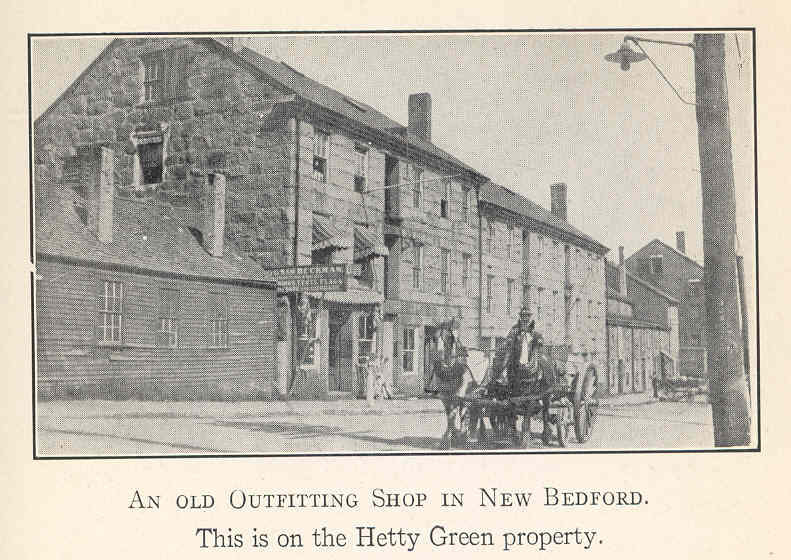
Henrietta ("Hetty") Howland Robinson was born in 1834 in New Bedford, Massachusetts, to Edward Mott Robinson and Abby Howland, the richest whaling family in the city. Her family were Quakers who owned a large whaling fleet and also profited from the China trade. She had a younger brother who died as an infant. At age two, Green was sent to live with her grandfather, Gideon Howland, and her Aunt Sylvia. She read stock quotations and commerce reports for her grandfather and picked up some of his business methods. At ten, she entered Eliza Wing's boarding school in Sandwich, Massachusetts. After Gideon's death, her father became head of the Isaac Howland whaling firm, and she began to copy his business practices. Because of Gideon's and her father's influence, and possibly because her mother was often ill, she was close to her father and was reading financial papers to him by age six. She learned to read ledgers and trade commodities. At thirteen, Green became the family bookkeeper. She went with her father to countinghouses, storerooms, commodities traders, and stockbrokers. In the evening, she read the news to him.
In her late teens, Green attended several boarding schools and finishing schools, including Friends Academy and Anna Cabot Lowell's finishing school. At the same time, she helped her father manage the family business. The main thread through this period was her open rejection of the social rules for women at the time, especially wealthy heiresses. She cared little about her appearance, preferring old clothes, and ignored the daily grooming that young women did. Her behavior frustrated her mother and Aunt Sylvia, who worried about the future of a wealthy heiress who felt more at home on New Bedford's docks than mingling with her social class. When Green turned 20, her Aunt Sylvia pushed her to find a husband. Reluctantly, she moved to New York to live with a cousin of her mother's, Henry Grinnell. In New York, she mixed with high society and attended many lavish balls but showed little interest in finding a husband. Instead, she spent much of her time eavesdropping on men discussing the latest Wall Street news. Her relatives were annoyed when she returned several months early to New Bedford with no wedding prospects. Her father was the only one who could not hide his delight when he learned that Green had spent only $200 of her $1,200 budget, investing the rest in high-quality bonds.
Within a few years of her return to New Bedford, Green's father left the whaling business and moved to New York City. His timing was good, as petroleum use soon wiped out demand for whale oil. Green spent the next six years traveling between New York City and New Bedford. In New York, she helped her father with new business and investments; in New Bedford, she pestered her Aunt Sylvia to make sure she stayed the sole beneficiary of her will. The constant fights over her aunt's will led to a long court battle that haunted Green for the rest of her life. Green's mother, Abby Robinson, died on February 21, 1860, but her $100,000 estate went to her husband, except for an $8,000 house for Green. While living in New York City, Hetty met her future husband, Edward Henry Green of Vermont. By age 44, Edward was a partner in Russell Sturgis & Company and had become a millionaire from his business in the Far East. Her father encouraged the marriage but with the clear condition that Edward would not inherit Hetty's money. The will stated it was to be "free from the debts, control or interference of any such husband." With Hetty's inheritance protected, her father supported the marriage, worried about his declining health and Hetty's ability to manage the family business without him.
- Known for
- Richest woman in America during the Gilded Age; low-rate lending during the Panic of 1907; value investing
Lore & Background
At the age of two, Green was sent to live with her grandfather, Gideon Howland, and her Aunt Sylvia. Green would read the stock quotations and commerce reports for her grandfather and picked up some of his business methods. She was reading financial papers to her father by the age of six. Her mother, Abby Robinson, died on February 21, 1860; Green was 25 years old at the time, turning 26 later that year.
Reader's Guide
Green followed a contrarian investing strategy, in her words: "I buy when things are low and nobody wants them. I keep them until they go up and people are crazy to get them. That is, I believe, the secret of all successful business." She invested the interest from her father's trust fund in Civil War bonds and railroad stocks. Her willingness to make low-rate loans during the Panic of 1907 helped bail out Wall Street, New York City, and the United States economy.
Did You Know?
- She was known as the "Queen of Wall Street" for lending freely at reasonable rates during financial panics.
- She was later called the "Witch of Wall Street" and was named the "greatest miser" by the Guinness Book of World Records.
- She read stock quotations for her grandfather starting at age two, and was reading financial papers to her father by age six.
Gallery
Frequently Asked Questions
Who is Hetty Green?
Henrietta 'Hetty' Howland Robinson Green (1834–1916) was an American financier and businesswoman who dominated lending circles during the Gilded Age. She is widely remembered as the wealthiest woman in America during that era.
How did Hetty Green build her fortune?
Green made her money primarily through high-interest lending, extending credit to city governments and individual financiers especially during financial panics. Her strict discipline in collecting debts and managing risk allowed her to accumulate enormous wealth in a field dominated by men.
Why was Hetty Green called the 'Queen of Wall Street'?
The nickname reflected the respect that bankers and financiers had for her sharp judgment and reliability as a lender during crises. Despite never maintaining a personal office on Wall Street, her influence over credit markets was so significant that peers gave her a royal title.
What role did Hetty Green play in the Panic of 1907?
During that financial crisis, Green lent money at high interest rates to governments and financiers who needed emergency liquidity. Her willingness to extend credit when others were pulling back cemented her reputation as a decisive force in American finance.
Why is Hetty Green important to the history of American industry?
She proved that a woman could build a vast financial empire through disciplined lending and risk management in a male-dominated industry. Her legacy as a value-focused investor and crisis lender makes her a landmark figure in Gilded Age economic history.
More in Tycoons And Industrialists 1-20
Spotted an error? Know more?
Reader corrections go straight into our review queue. Suggest an edit · How this site is sourced