
Jacob Schiff
German-born American banker who financed Japan's war against Tsarist Russia.

Adam Cuerden · Public domain
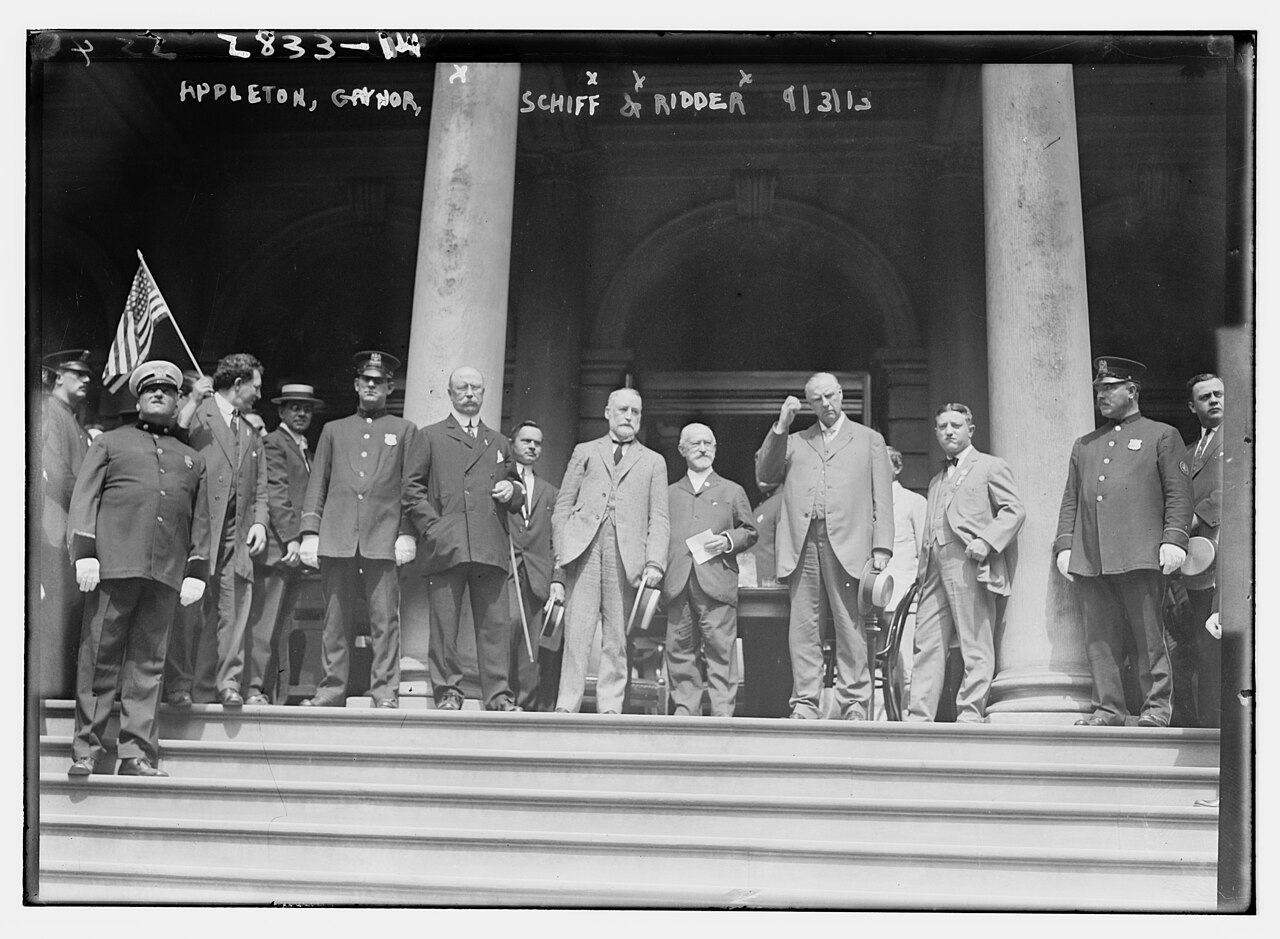
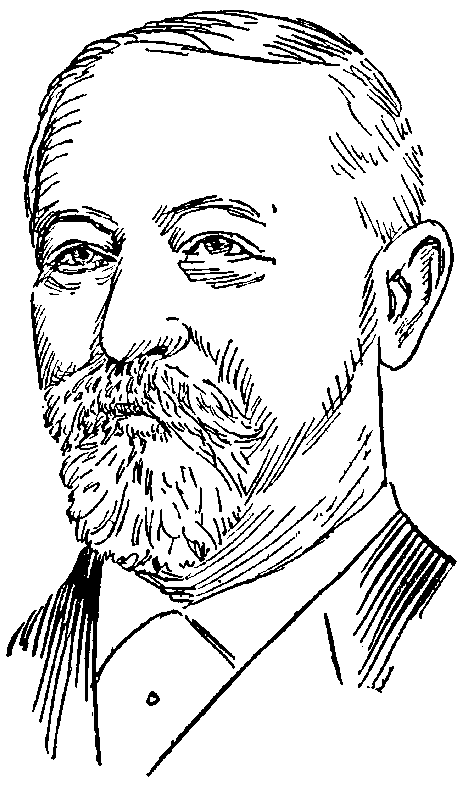
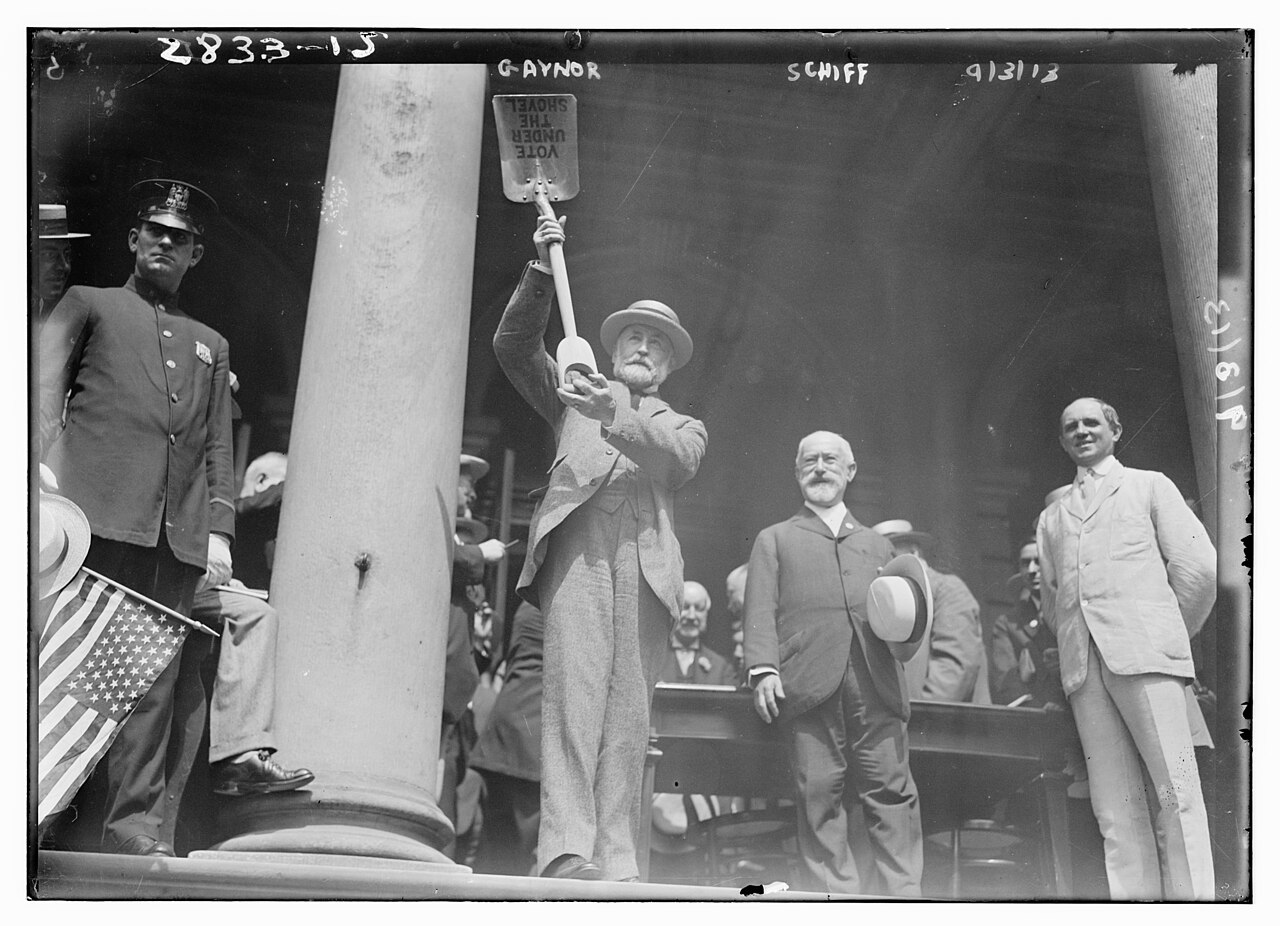
Jacob Henry Schiff was born Jakob Heinrich Schiff on January 10, 1847, in Frankfurt, Germany, and died on September 25, 1920. A Jewish German-born American banker, businessman, and philanthropist, he provided funding for the expansion of American railroads and for Japan’s military campaign against Tsarist Russia during the Russo-Japanese War. Operating from Wall Street, Schiff served as the leading Jewish figure from 1880 to 1920, a period later called the “Schiff era,” during which he addressed major Jewish concerns such as the suffering of Russian Jews, antisemitism in the United States and abroad, support for impoverished Jewish immigrants, and the emergence of Zionism.
Schiff was born in Frankfurt’s Judengasse to Moses and Clara Schiff, part of a distinguished Ashkenazi rabbinical family with roots in the city dating to 1370. An ancestor, David Tevele Schiff, served as chief rabbi in Great Britain and headed the London Synagogue from 1765 until his death. Another relative, Meir Ben Jacob Schiff, was a noted 14th-century Talmudic scholar. Moses Schiff worked as a broker for the Rothschilds. Jacob attended Frankfurt schools and began an apprenticeship in banking and brokerage in 1861. After the American Civil War ended in April 1865, he arrived in New York City on August 6, 1865. He became a broker on November 21, 1866, and joined Budge, Schiff & Company in 1867. He became a U.S. citizen in September 1870, though his biographer Cohen places this a year later. When Budge, Schiff & Company dissolved in 1872, Schiff planned to return to Germany. In 1873, he managed the Hamburg branch of the London & Hanseatic Bank, but returned to Frankfurt after his father’s death that year. In 1874, Abraham Kuhn of Kuhn, Loeb & Company invited him back to New York to join the firm, and soon Schiff was effectively running it.
Schiff joined Kuhn, Loeb & Company in 1875, bringing connections to Sir Ernest Cassel of London, Robert Fleming of Dundee, and Edouard Noetzlin of Banque de Paris et des Pays-Bas. On May 6, 1875, he married Therese Loeb, daughter of Solomon Loeb; they had a son, Mortimer L. Schiff, and a daughter, Frieda. In 1885, Schiff became head of Kuhn, Loeb & Company.
Quick Facts
- Birth Name
- Jakob Heinrich Schiff
- Birth Date
- 1847-01-10
- Birth Place
- Frankfurt, German Confederation
- Death Date
- 1920-09-25
- Death Place
- New York City, U.S.
- Occupation
- Banker and businessman
- Citizenship
- German (1847–1870) / American (1870–1920)
- Spouse
- Therese Loeb · 1875
- Children
- Frieda Schiff (1876–1958) / Mortimer L. Schiff (1877–1931)
- Office
- Senior Partner, Kuhn, Loeb & Co.
- Term Start
- 1885
- Term End
- September 25, 1920
Facts from the source article.
Lore & Background
Schiff was born in 1847 in the Judengasse in Frankfurt am Main, Germany, to Moses and Clara Schiff, members of a distinguished Ashkenazi Jewish rabbinical family. After the American Civil War ended in April 1865, Schiff came to the United States, arriving in New York City on August 6. He became a naturalized citizen in September 1870, though his modern biographer Cohen says this happened a year later. In 1874, Abraham Kuhn invited him to return to New York and join Kuhn, Loeb & Company; not long after joining, Schiff was in essence running the business.
Schiff's most famous financial action took place during the Russo-Japanese War (1904–1905). He met with Takahashi Korekiyo in Paris in April 1904 and agreed to extend loans to the Empire of Japan totaling $200 million through Kuhn, Loeb & Co. In recognition of his efforts, Schiff received the Order of the Rising Sun from Emperor Meiji, though he was not the first foreigner to be so honored.
Reader's Guide
Jacob Schiff's significance lies in his dual role as a financier and a Jewish communal leader during a transformative period in American and world history. As head of Kuhn, Loeb & Co., he helped finance major American railroads and corporations, and his $200 million loan to Japan during the Russo-Japanese War was a landmark in international finance, enabling a non-Western power to defeat a European empire. This loan was likely motivated in part by Schiff's desire to answer the antisemitic actions of the Russian Empire, particularly the Kishinev pogrom of 1903. Schiff forbade loans to Tsarist Russia due to its oppression of Jews, but after the Tsar's overthrow in 1917, he supported the provisional government; he then cut off loans to the Bolsheviks and funded anti-Bolshevist groups. His philanthropic legacy includes founding the Jewish Industrial Removal Office, supporting Hebrew Union College, the Jewish Theological Seminary, and the American Jewish Committee. Schiff's era shaped American Jewish institutional life and set a precedent for using financial power to address political and humanitarian concerns.
Did You Know?
- Schiff was the first foreigner to receive the Order of the Rising Sun in person from Emperor Meiji in the Imperial Palace.
- He forbade any funds from his loans from going to the Russian Empire due to the Tsarist regime's oppression of the Jewish people.
- Schiff founded the Jewish Industrial Removal Office, which relocated New York immigrant Jews to the Western United States.
- He was a founder of the Continental Bank of New York in August 1870.
A Neighborhood Defined by Power and Wealth
The Upper East Side, situated in Manhattan, New York City, carries a reputation that stretches back generations. It is a neighborhood where the most affluent, influential, and powerful families and individuals have long made their homes. This tradition of concentrated wealth and social prominence is not a recent development but rather a deeply rooted characteristic of the area. From industrialists and financiers to artists and politicians, the neighborhood has served as a backdrop for some of the most consequential figures in American and global history. The streets of the Upper East Side have witnessed the rise of banking dynasties, the creative output of world-renowned artists, and the political maneuvering of those who shaped national policy. It is a place where the boundaries between business, culture, and public life blur, creating an ecosystem in which the powerful and the creative coexist in close proximity.
The Business and Financial Elite
The Upper East Side has been home to an extraordinary concentration of business leaders and financial figures. Among the most prominent are names like Michael Bloomberg, the billionaire philanthropist and former mayor of New York City, and Jamie Dimon, a major figure in banking. The neighborhood has also been associated with hedge fund managers such as Louis Bacon, Leon Black, and Israel Englander, as well as investors like Bernard Baruch, the legendary financier. The Bronfman family—Charles, Edgar Sr., Edgar Jr., and Matthew—represents a multigenerational presence in the business world, combining entrepreneurship with philanthropy. Other notable business figures include Eli Broad, the entrepreneur, and Andrew Carnegie, the industrialist whose name became synonymous with steel and giving. The area has also been linked to figures in real estate development, insurance, and the sugar trade, reflecting the diversity of industries that have found their center of gravity in this Manhattan neighborhood.
Arts, Culture, and the Creative World
Beyond its business and political associations, the Upper East Side has been a home to a remarkable array of creative and cultural figures. In music, Leonard Bernstein, the composer and conductor, called the area home, as did Plácido Domingo, the celebrated tenor and arts administrator, and his wife Marta Domingo, an opera soprano and stage director. The neighborhood has also been associated with actors and performers of great renown, including Sean Connery, Montgomery Clift, Yul Brynner, and the multi-talented George M. Cohan, who worked as an entertainer, playwright, composer, and dancer. In the visual arts, Marc Chagall, the renowned painter, and George Condo, the contemporary artist, have connections to the area. Writers and authors such as Truman Capote, the novelist, and Joan Didion, the acclaimed author, have also been associated with the Upper East Side. The neighborhood thus serves as a crossroads where the performing arts, literature, and visual culture converge alongside its more commercial identity.
Old Money, New Generations
The Upper East Side is deeply intertwined with the story of America's oldest and most storied families. The Astor name appears repeatedly across generations: Caroline Schermerhorn Astor, the socialite of the nineteenth century; John Jacob Astor IV, the businessman and real estate builder who tragically perished aboard the RMS Titanic when he chose to remain on the sinking ship; Vincent Astor, the philanthropist; and Brooke Astor, the widow and philanthropist who lived to the age of 105. The neighborhood has also been home to other prominent old-money figures, including Jules Bache, the banker, and Henry J. Duveen, the art dealer. Heirs like I. Townsend Burden and Irving Brokaw, the figure skater who became the first American to compete in an Olympic winter sport, represent the continuation of family legacies into new fields. The neighborhood thus functions as a living archive of American wealth, where the stories of past dynasties echo through the lives of their descendants.
Gallery
Frequently Asked Questions
Who is Jacob Schiff?
Jacob Schiff was a German-born American banker, businessman, and philanthropist who led the Wall Street firm Kuhn, Loeb & Co. He is widely regarded as the most prominent Jewish figure in American finance from roughly 1880 to 1920, a span later nicknamed the 'Schiff era.'
What was Jacob Schiff's primary role in the financial world?
Schiff operated as a major Wall Street banker who helped fund the expansion of American railroad networks. He also managed the international banking operations of Kuhn, Loeb & Co., giving him significant influence over global capital flows in the late nineteenth and early twentieth centuries.
What is Jacob Schiff most famous for?
He is best known for arranging the financing that enabled Japan to wage war against Tsarist Russia during the Russo-Japanese War of 1904–1905. This act made him a pivotal figure in early 20th-century geopolitics and cemented his legacy in banking history.
Why is Jacob Schiff important to Jewish history?
During the period historians call the 'Schiff era,' he championed causes such as alleviating the plight of Jews suffering under Russian rule and combating antisemitism in the United States. His philanthropy and public advocacy set a new standard for Jewish communal leadership in America.
When was Jacob Schiff born and when did he die?
He was born Jakob Heinrich Schiff on January 10, 1847, in Frankfurt, Germany, and passed away on September 25, 1920. His life spanned nearly four decades of transformative change in both American finance and Jewish communal life.
More in Tycoons And Industrialists 1-20
Spotted an error? Know more?
Reader corrections go straight into our review queue. Suggest an edit · How this site is sourced