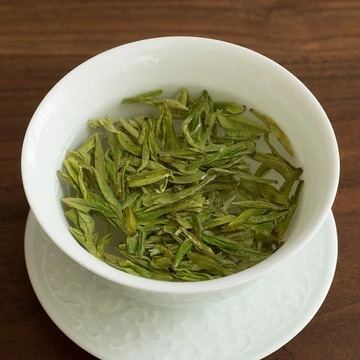
Sencha
Japan's most popular green tea, infused from whole leaves.

Sencha (煎茶; literally 'infused tea') is a Japanese green tea (緑茶, ryokucha) made by steeping whole, processed tea leaves in hot water. This differs from matcha, a powdered green tea that is whisked into water, leaf and all. Sencha is Japan's most popular tea, accounting for roughly 80% of the country's tea production.
Among Japanese green teas prepared by infusion, sencha is set apart from varieties like gyokuro (which is shaded for a longer period) and bancha (harvested later in the season). Its flavor varies by season and growing region. The most prized is shincha, or 'new tea,' from the year's first harvest. During winter, tea plants store nutrients, and the tender spring leaves that emerge are rich in these compounds. The shincha season runs from early April to late May, specifically the 88th day after Setsubun (around February 4), a traditional start of spring in Japan. Drinking sencha at this time is believed to bring good health for the year.
The ideal brewed sencha has a greenish-golden color. Water temperature greatly affects its taste: cooler water yields a mellow flavor, while hotter water produces more astringency. Some varieties, when steeped, expand and resemble leafy greens in smell, appearance, and taste.
Japanese green tea production differs from Chinese methods. Chinese green teas are pan-fired, but Japanese sencha is first steamed for 15 to 20 seconds to prevent oxidation. The leaves are then rolled, shaped, and dried, giving them their characteristic thin cylindrical form. Finally, they are sorted by quality. This steaming step gives Japanese green tea a more vegetal, grassy (sometimes seaweed-like) flavor, a greener infusion, and slightly more bitterness than Chinese-style green teas.
**Caffeine content:** Sencha contains about 20 to 30 milligrams of caffeine per cup, though this varies with brewing temperature, time, and leaf-to-water ratio (higher temperatures extract more caffeine). Dry leaf measurements show superior sencha at 31.01 mg/g and deep-steamed sencha at 26.70 mg/g. When brewed, superior sencha (6g in 170mL water at 70°C for 1 minute) yields 305.30 mg/L, while deep-steamed sencha (6g in 260mL water at 90°C for 1 minute) yields 373.70 mg/L.
**Types of Sencha:** - **Jō Sencha (上煎茶):** Superior sencha. - **Tokujō Sencha (特上煎茶):** Extra superior sencha. - **Hachijūhachiya Sencha (八十八夜煎茶):** Harvested 88 days after the start of spring (risshun). - **Kabuse Sencha or kabusecha (かぶせ茶):** Shaded for several days (fewer than gyokuro) to increase amino acids like theanine, producing a milder flavor and subtler color. Special nets (kabuse) are hung over the plants. - **Asamushi (浅蒸し):** Lightly steamed. - **Chumushi (中蒸し):** Steamed for 30–90 seconds. - **Fukamushi (深蒸し) or Fukamushicha:** Deeply steamed for 1–2 minutes. - **Shincha (新茶) or ichibancha (一番茶):** First-picked tea of the year, known for its fresh aroma and sweetness. It is distinct from nibancha (second-picked) and sanbancha (third-picked). - **Karigane sencha (雁が音):** Includes stems and other plant parts along with leaves, possibly from gyokuro or sencha plants. - **Matcha sencha:** A blend of sencha with matcha powder.
**Senchadō (煎茶道):** The formal art of enjoying sencha, typically involving high-grade gyokuro.
**See also:** Baisao (regarded as the first sencha master), Japanese tea, Tea culture in Japan.
- type
- Japanese green tea
- production_share
- about 80 percent of tea produced in Japan
- caffeine_per_cup
- 20 to 30 milligrams
- steaming_time
- 15 to 20 seconds
- ideal_color
- greenish golden
- harvest_season
- early April to late May (shincha)
Lore & Background
Sencha is distinguished from other Japanese green teas such as gyokuro by its shorter or absent shading period, and from bancha by its earlier harvest. The flavour depends on season and place; shincha, or 'new tea' from the first flush, is considered the most delicious. The shincha season runs from early April to late May, specifically the 88th day after Setsubun, which usually falls around February 4. The tea production process for sencha differs from Chinese green teas: Japanese green tea is first steamed for 15 to 20 seconds to prevent oxidization, then rolled, shaped, and dried, creating a thin cylindrical shape. This steaming imparts a more vegetal, grassy flavour and a greener colour compared to Chinese-style green teas.
Reader's Guide
Sencha is the most popular tea in Japan, representing about 80 percent of the country's tea production. Its significance lies in its widespread daily consumption and its role in Japanese tea culture, including the formal art of senchadō (煎茶道 'Way of Sencha'), which generally involves the high-grade gyokuro class. The flavour of sencha varies with brewing temperature: relatively temperate water yields a mellow taste, while hot water produces a more astringent one. The initial steaming step distinguishes Japanese green teas from Chinese pan-fired teas, giving sencha a vegetal, sometimes seaweed-like flavour. Caffeine content ranges from 20 to 30 milligrams per cup, varying with brewing temperature, time, and tea-to-water ratio. Types include superior sencha (Jō Sencha), extra superior sencha (Tokujō Sencha), shaded kabusecha, and deeply steamed fukamushicha. Shincha, the first-picked tea of the year, is prized for its fresh aroma and sweetness.
Did You Know?
- Sencha represents about 80 percent of the tea produced in Japan.
- The ideal colour of sencha beverage is a greenish golden colour.
- Japanese green tea is steamed for 15 to 20 seconds, unlike Chinese green teas which are pan-fired.
- Shincha, or 'new tea', is harvested from early April to late May, specifically the 88th day after Setsubun.
Frequently Asked Questions
What exactly is Sencha and how is it made?
Sencha is a Japanese green tea brewed by steeping whole, processed leaves in hot water rather than whisking a powder into liquid like matcha. The name itself simply means 'infused tea,' reflecting that straightforward preparation method.
How dominant is Sencha in Japan's tea market?
It accounts for roughly 80 percent of all tea produced in the country, which is why you'll find it in virtually every household and café. No other variety comes close to that share of production.
What are the key brewing parameters for a good cup of Sencha?
Steep the leaves for only 15 to 20 seconds in hot water, and you're aiming for a clear, greenish-golden liquor. Over-steeping past that window tends to pull out bitterness and dull the fresh character.
How much caffeine should I expect in a serving of Sencha?
A typical cup delivers somewhere between 20 and 30 milligrams of caffeine, making it noticeably lighter than a standard cup of coffee. It's enough for a gentle lift without the jolt.
What is 'shincha' and when can I get it?
Shincha refers to the very first harvest of the season, picked from early April through late May. Fans treat it as a short, highly anticipated window because those early leaves carry the brightest, most delicate flavor of the year.
More in Tea 1-15
Spotted an error? Know more?
This is a living reference — every entry is fact-audited, and reader corrections feed straight into our audit queue. Suggest an edit · See this site's audit record