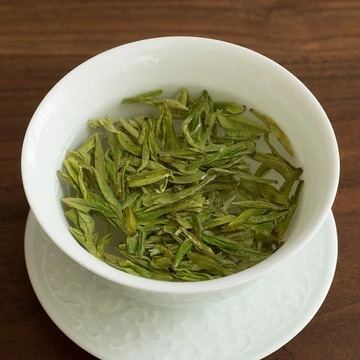
Assam tea
A malty black tea from Assam, India, often used in breakfast blends.

Assam tea is a black tea that takes its name from the Indian state where it’s produced. It comes specifically from the *Camellia sinensis* var. *assamica* plant. The region’s early attempts to grow Chinese tea varieties in Assam soil failed. Today, most Assam tea is cultivated at or near sea level. It’s prized for its full body, briskness, malty flavor, and strong, bright color. Teas made from Assam leaves—or blends that include them—are commonly sold as “breakfast” teas. Irish breakfast tea, for instance, is a maltier, stronger blend made from small Assam leaves.
Assam is the world’s largest tea-growing region by output. It lies on both sides of the Brahmaputra River, bordering Bhutan, Bangladesh, Myanmar, and close to China. The area gets heavy rainfall—during the monsoon, up to 250 to 300 mm (10 to 12 inches) can fall in a single day. Daytime temperatures reach about 36 °C (96.8 °F), creating a hot, humid, greenhouse-like climate. This tropical weather gives Assam tea its signature malty taste. While Assam usually refers to the distinctive black teas from the region, smaller amounts of green and white teas are also produced there, each with their own unique qualities.
Historically, Assam was the second region in the world to produce tea commercially, after southern China. These are the only two places with native tea plants. The Assam tea bush was introduced to Europe through Scottish adventurer Robert Bruce, who reportedly came across it growing wild in 1823 while trading in the area. Local chief Maniram Dewan directed him to the Singpho leader Bessa Gam. Bruce saw the Singpho people brewing tea from the bush’s leaves and arranged with local chiefs to get samples of leaves and seeds for scientific study. He died shortly after, before the plant could be classified. In the early 1830s, his brother Charles sent some leaves to the Calcutta botanical gardens for examination. There, the plant was identified as a variety of tea—*Camellia sinensis* var. *assamica*—distinct from the Chinese version (*Camellia sinensis* var. *sinensis*). The indigenous Assam tea plant was first mentioned by historian Samuel Baidon in his 1877 book *Tea in Assam*.
During a trade expedition through Assam with the Singpho in 1823, Robert Bruce was introduced to a plant the Singpho and Khamti people used for beverages and food. Through his brother Charles, who was in Sadiya, samples were sent to botanist Nathaniel Wallich, who mistakenly identified it as *Camellia kissi*. More than a decade later, after Francis Jenkins and Andrew Charlton responded to the British East India Company’s Tea Committee request to explore tea sources outside China, the Singpho plant was finally recognized as the same species as Chinese *Camellia sinensis*. In 1836, the Tea Committee sent a team—including Charles Bruce, Wallich, William Griffith, and John McClelland—to study the plant in its natural habitat around Sadiya. It was cultivated in the company’s experimental garden, and the first batch was shipped to London in 1838, auctioned in January 1839. Though it sold well, the batch lacked the fragrance of Chinese tea (which had been selectively cultivated for centuries) and had a dullness attributed to inexperienced processing.
That same year, two companies formed to develop Assam tea: the Assam Tea Association in London and the Bengal Tea Association in Kolkata, which quickly merged into the Assam Company. Despite early support from figures like Maniram Dewan and British land reforms like the Waste Lands Act (which cleared and privatized land for farming), the Assam Company struggled and was forced to reorganize in 1847. Although cheap labor was available—including tea-makers smuggled from China, indentured Indians, and famine refugees—Assam was then a sparsely populated, hot, humid, and undeveloped area, and many workers died of disease. Despite poor results, British investment continued, establishing more tea gardens like the Jorehaut Tea Company near Jorhat in the 1860s. By 1870, however, 56 of the 60 tea companies operating in Assam had gone bankrupt. Industrial mechanization in the 1870s finally made companies profitable: heated withering tables and steam-powered rolling machines allowed more plucked leaves to be dried without rotting in the humid climate. This created a need for grading, so the British adapted existing tea-leaf grading systems to sort their products. The Indian Tea Districts Association was founded in London in 1879 and in Kolkata in 1881 (as the Indian Tea Association) to organize and advance these interests. By 1888, tea imported from India finally surpassed that from China.
Today, most operating tea estates in Assam are members of the Assam Branch of the Indian Tea Association (ABITA), the oldest and most prominent tea-producer body in India. Processing fresh tea leaves involves between two and seven steps; adding or skipping any step yields a different type of tea. All procedures are carried out in climate-controlled facilities to prevent spoilage from excess moisture and temperature changes. Withering is the wilting of fresh green tea leaves.
- type
- Black tea
- region
- Assam, India
- plant_species
- Camellia sinensis var. assamica
- known_for
- Body, briskness, malty flavour, strong bright colour
Lore & Background
Bruce reportedly found the plant growing 'wild' in Assam while trading in the region. Maniram Dewan directed him to the local Singpho chief Bessa Gam. Bruce noticed local people (the Singhpos) brewing tea from the leaves of the bush and arranged with the local chiefs to provide him with samples of the leaves and seeds, which he planned to have scientifically examined. Robert Bruce died shortly thereafter, without having seen the plant properly classified. It was not until the early 1830s that Robert's brother, Charles, arranged for a few leaves from the Assam tea bush to be sent to the botanical gardens in Calcutta for proper examination. There, the plant was finally identified as a variety of tea, or Camellia sinensis var assamica, but different from the Chinese version (Camellia sinensis var. sinensis).
Reader's Guide
Assam tea holds significance as the second commercial tea production region after southern China, and one of only two regions in the world with native tea plants. The state of Assam is the world's largest tea-growing region by production, lying on either side of the Brahmaputra River. Its tropical climate, with high rainfall and extreme humidity, contributes to Assam tea's unique malty taste. Though Assam generally denotes distinctive black teas, the region also produces smaller quantities of green and white teas. Most currently operating tea estates in Assam are members of the Assam Branch of the Indian Tea Association (ABITA), the oldest and most prominent body of tea producers in India.
Did You Know?
- Assam tea is made from the plant Camellia sinensis var. assamica, a variety distinct from the Chinese Camellia sinensis var. sinensis.
- Assam is the world's largest tea-growing region by production, lying on either side of the Brahmaputra River.
Frequently Asked Questions
Who is Assam tea?
Assam tea is a black tea produced in the Assam region of India, made from the Camellia sinensis var. assamica plant. It is one of the most widely consumed black teas in the world.
What are Assam tea's powers/role?
Assam tea is prized for its bold body, brisk character, malty flavour, and deep, bright colour. It serves as a key ingredient in popular breakfast blends like Irish breakfast tea, where small-sized leaves are used.
How does Assam tea's story end?
Assam tea remains a staple of the global tea market today, still cultivated largely at or near sea level in its home region. Its strong, robust profile continues to anchor countless commercial blends worldwide.
What species does Assam tea come from?
Assam tea is produced exclusively from Camellia sinensis var. assamica, a distinct variety of the tea plant. This sets it apart from teas made from the more common C. sinensis var. sinensis.
More in Tea 1-15
Spotted an error? Know more?
This is a living reference — every entry is fact-audited, and reader corrections feed straight into our audit queue. Suggest an edit · See this site's audit record