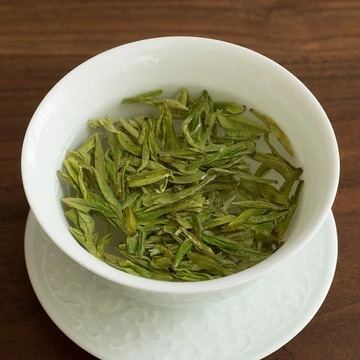
Matcha
Finely ground shade-grown green tea powder from Japan.

Matcha is a finely ground powder made from green tea leaves that are grown in the shade before processing. This shading technique gives matcha its vivid green color and strong umami taste, which comes from the amino acid theanine. The powder is typically stirred into hot water and consumed as a suspension.
The practice of drinking powdered tea began in China during the Tang dynasty, when tea leaves were pounded, milled, and shaped into cakes. By the Song dynasty, tea was steamed, dried, and ground into a fine powder, then whisked with hot water in a bowl. Zen Buddhist monks traveling between China and Japan brought this method to Japan around the late 12th century. While the practice eventually faded in China, it continued to develop in Japan.
During the 16th century, Japanese tea farmers in the Muromachi period created shading methods to produce tencha—the specific tea leaves used for grinding into matcha. This innovation led to the modern form of matcha, with its bright green color and rich umami, and also influenced the development of other Japanese tea styles like sencha and gyokuro. For centuries, matcha was almost exclusively produced in Japan, but today it is also made in countries such as China and South Korea. In the 21st century, to meet growing global demand, China invited Japanese experts for technical guidance, imported necessary equipment, and began large-scale production in Guizhou Province in 2018. Although Japan still produces the highest-quality matcha, Chinese matcha has improved rapidly and is now used in the food industry at competitive prices.
The traditional Japanese tea ceremony, known as chanoyu or sadō/chadō, centers on preparing, serving, and drinking matcha as a hot tea, and is considered a meditative and spiritual practice.
Matcha is also used to flavor and color foods like mochi, soba noodles, green tea ice cream, matcha lattes, and various Japanese wagashi sweets. For these purposes, cheaper matcha made with color additives—rather than expensive shade-grown leaves—is often used.
Strict definitions of matcha are provided by the International Organization for Standardization (ISO 20715:2023) and the Japanese food labeling standard from the Japan Tea Central Public Interest Incorporated Association. Both require that matcha be made from *Camellia sinensis* var. *sinensis* (Chinese small-leaf tea), grown in the shade, steamed and dried without rolling, and ground into a fine powder. The Japanese standard specifies that the leaves must be shaded for two to three weeks before harvest using materials like yoshizu, komo, or cheesecloth. After steaming and drying without rolling, the leaves are called tencha. ISO allows matcha to be made from tender leaves, buds, or shoots, while the Japanese standard permits only leaves.
Inexpensive green tea powder called hunmatsucha, made from non-shade-grown leaves crushed into a powder, is sometimes sold as "matcha" even though it does not meet these definitions. This cheaper alternative is used to flavor and color foods.
- field
- Tea production and preparation
- origin
- China and Japan
- known_for
- Bright green color, strong umami flavor, use in tea ceremony and food flavoring
- key_innovation
- Shade-growing technique developed in Japan during the Muromachi period
Lore & Background
Powdered tea originated in China during the Tang dynasty, where tea leaves were pounded and milled into fine powder before being shaped into cakes. The Classic of Tea by Lu Yu documented steeping powdered tea in hot water. During the Song dynasty, whisks and bowls appeared for frothing powdered tea, and Zen Buddhist monks from Japan encountered this practice in Chinese temples.
Reader's Guide
Matcha's significance lies in its unique production and cultural role. During the Muromachi period, Japanese farmers developed shading techniques to produce tencha, the leaves used for matcha, giving it vivid green color and rich umami flavor from theanine. This innovation distinguished modern matcha from earlier powdered teas and contributed to new Japanese tea styles like sencha and gyokuro. The traditional Japanese tea ceremony centers on matcha preparation and embodies meditative practice. While Japan produces the finest matcha, Chinese matcha quality has improved for food processing at competitive prices. Strict definitions by ISO and Japanese standards require matcha to be made from shade-grown Camellia sinensis var. sinensis, steamed and dried without rolling, and ground to fine powder. Inexpensive non-shade-grown powdered tea is sometimes sold as matcha but does not meet these definitions.
Did You Know?
- Matcha's characteristic bright green color and strong umami flavor come from shade-growing the tea leaves.
- During the Song dynasty, the ideal color of tea was considered white, not green or brown.
- Inexpensive green tea powder made from non-shade-grown leaves is sometimes sold as matcha but does not meet official definitions.
Frequently Asked Questions
What is Matcha?
Matcha is a vibrant green powder produced by grinding shade-grown tea leaves into a fine consistency. It is prized for its intense umami taste and is used both as a whisked beverage and as a flavoring ingredient across many dishes.
Where did Matcha originate?
Matcha's roots trace back to powdered tea traditions in China, which Zen Buddhist monks carried to Japan during the premodern era. Over subsequent centuries the practice was refined in Japan into the preparation method recognized today.
What is Matcha's key innovation?
The shade-growing technique, perfected in Japan during the Muromachi period, is what truly sets Matcha apart from ordinary green tea. Covering the plants with cloth or mesh for several weeks before harvest boosts chlorophyll and amino-acid levels, producing Matcha's signature color and flavor.
What role does Matcha play in the Japanese tea ceremony?
Matcha sits at the center of the traditional Japanese tea ceremony, where it is whisked into hot water as part of a meditative, spiritual ritual. Every step—from measuring the powder to the final sip—is designed to cultivate mindfulness and presence.
More in Tea 1-15
Spotted an error? Know more?
This is a living reference — every entry is fact-audited, and reader corrections feed straight into our audit queue. Suggest an edit · See this site's audit record