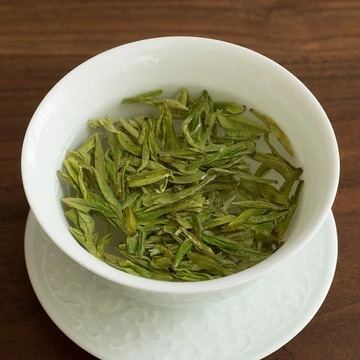
Rooibos
Caffeine-free herbal infusion from South Africa's Fynbos.

**Rooibos** (pronounced ROY-boss), also known by its scientific name *Aspalathus linearis*, is a plant from the Fabaceae family that resembles a broom and grows naturally in South Africa’s Fynbos region. Its leaves are used to produce a caffeine-free herbal drink that has been enjoyed in Southern Africa for many generations. Around the early 2000s, rooibos started gaining popularity internationally, likely because of its earthy taste and smell, which are similar to yerba mate or tobacco.
Outside of Southern Africa, it is often called bush tea, red tea, or redbush tea—especially in Great Britain. The name “rooibos” comes from Afrikaans, where *rooi bos* means “red bush.” This name is legally protected in South Africa and has protected designation of origin status in the European Union.
Rooibos was once classified under the genus *Psoralea*, but following research by Dahlgren in 1980, it is now considered part of *Aspalathus*. The species name *linearis*, given by Burman in 1759, refers to the plant’s linear growth pattern and needle-like leaves.
**Production and Processing**
Rooibos is typically grown in the Cederberg, a small mountainous area in the West Coast District of South Africa’s Western Cape province. Most leaves go through an oxidation process, which gives them their characteristic reddish-brown color and enhances the flavor. A green, unoxidised version is also made, but it requires a more demanding production process—similar to how green tea is made—making it more expensive. Green rooibos has a malty, slightly grassy taste that differs from the traditional red variety.
**Cultivation**
Rooibos is farmed exclusively on about 60,000 hectares (150,000 acres) in the Cederberg region, roughly 155 miles (249 kilometers) north of Cape Town. The industry is a major employer during the summer harvest months. Workers cut the initially green bushes, then lay them in the sun to dry, which turns the leaves a dark red. After processing and sterilization, the rooibos is ready for local markets or export.
**Use**
Rooibos is commonly brewed as a tisane by steeping the leaves in hot water, much like black tea. It can be drunk plain or flavored with milk, lemon, sugar, or honey. It is also served as lattes, cappuccinos, or iced tea.
**Chemical Composition**
Fresh rooibos leaves contain high levels of ascorbic acid (vitamin C). The tea itself has no caffeine and low tannin levels compared to black or green tea. It contains polyphenols such as flavanols, flavones, flavanones, dihydrochalcones, and nothofagin. Processed leaves and stems also contain benzoic and cinnamic acids.
**Grading**
Rooibos grades are mainly determined by the ratio of needle or leaf to stem content. A higher leaf content produces a darker liquor, richer flavor, and less “dusty” aftertaste. High-grade rooibos is exported and rarely reaches local markets. Major consumers include the European Union, especially Germany, where it is used to create flavored blends for loose-leaf tea.
**History**
Three species from the Borboniae group of *Aspalathus*—*A. angustifolia*, *A. cordata*, and *A. crenata*—were once used as tea. These plants have simple, rigid leaves with spine-tipped ends, earning them the common name “stekeltee.” The earliest known record of *Aspalathus* being used as a tea source comes from Carl Peter Thunberg, who wrote in July 1772 at Paarl that country people made tea from the leaves of *Borbonia cordata*. This anecdote is sometimes mistakenly linked to rooibos tea (*Aspalathus linearis*).
Archaeological evidence suggests *Aspalathus linearis* may have been used thousands of years ago, but that does not mean rooibos tea was made in precolonial times. The traditional method of harvesting and processing rooibos for infusion or decoction could have partly originated before colonialism, but it does not necessarily follow that the San and Khoikhoi used this method to prepare a beverage they drank for pleasure.
The earliest ethnobotanical records of rooibos tea date to the late 19th century. Several authors have assumed the tea originated with the local inhabitants of the Cederberg. It appears to be a traditional drink of Khoi-descended people in that area (as well as “poor whites”), but this tradition cannot be traced back further than the last quarter of the 19th century. Traditionally, locals would climb mountains to cut the fine needle-like leaves from wild rooibos plants, roll the bunches into hessian bags, and bring them down steep slopes using donkeys. The tea was processed by beating the material on a flat rock with a heavy wooden pole, club, or large hammer.
In 1904, South African businessman Benjamin Ginsberg—often called the father of the rooibos industry—conducted experiments at Rondegat Farm and successfully cured rooibos. He simulated the traditional Chinese method of making Keemun by fermenting the tea in barrels, drawing inspiration from his Jewish family’s custom of brewing tea and herbal infusions with a samovar. The main challenge for commercial cultivation was that farmers could not germinate rooibos seeds, which were hard to find and impossible to germinate commercially.
By the late 1920s, growing demand for the tea had created supply problems for wild rooibos plants. To address this, Pieter le Fras Nortier, a district surgeon in Clanwilliam and an avid naturalist, proposed developing a cultivated variety to be raised on suitable land. He worked on cultivation with farmers Oloff Bergh and William Riordan, encouraged by Benjamin Ginsberg. Bergh harvested a large amount of seed from the wild, which led to the first successful commercial plantings.
- Scientific name
- Aspalathus linearis
- Family
- Fabaceae
- Native region
- South Africa's Fynbos biome (Cederberg, Western Cape)
- Key compounds
- Polyphenols, ascorbic acid, benzoic and cinnamic acids
- Caffeine content
- None
- Protected status
- Protected designation of origin in the EU
- Key historical figure
- Pieter le Fras Nortier (father of the rooibos tea industry)
Lore & Background
The earliest record of the use of Aspalathus as a source of tea was that of Carl Peter Thunberg, who wrote about the use of A. Archaeological records suggest that Aspalathus linearis could have been used thousands of years ago, but that does not imply rooibos tea was made in precolonial times. The earliest available ethnobotanical records of rooibos tea originate in the late 19th century.
Reader's Guide
Rooibos is significant as a traditional South African beverage that gained international popularity after the early 2000s. The industry was transformed by Pieter le Fras Nortier, who developed a cultivated variety in the 1920s and 1930s after solving seed germination problems with scarification. Nortier's work enabled rooibos to become an iconic national beverage and a globalised commodity, with major consumers including the EU, particularly Germany. The plant's leaves are typically oxidized to produce the characteristic reddish-brown colour, though unoxidised green rooibos is also produced at higher cost. Rooibos contains no caffeine and has low tannin levels compared to black or green tea.
Did You Know?
- Rooibos is also called bush tea, red tea, or redbush tea, predominantly in Great Britain.
- The name rooibos is Afrikaans deriving from 'rooi bos', meaning 'red bush'.
- Rooibos seeds require scarification before planting in acidic, sandy soil.
- The high-grade rooibos is exported and does not reach local markets.
Frequently Asked Questions
What is Rooibos?
Rooibos is a caffeine-free herbal infusion brewed from the leaves of Aspalathus linearis, a broom-shaped plant in the Fabaceae family. Its Afrikaans name simply means 'red bush,' a nod to the rusty colour of the dried leaves.
Where does Rooibos grow?
It is native to the Fynbos biome of South Africa, particularly the Cederberg area in the Western Cape. Southern African communities have been steeping its leaves for generations, though it only reached wider global shelves around the early 2000s.
Does Rooibos have caffeine?
No — it contains zero caffeine, which is why it's a go-to evening drink or a swap for people sensitive to stimulants. Traditional black and green teas, by contrast, all carry some caffeine.
What does Rooibos taste like?
Fans describe an earthy, slightly sweet flavour with an aroma that reminds them of yerba mate or even tobacco. Polyphenols, benzoic acid, and cinnamic acid are the main compounds behind that signature profile.
Why is Rooibos considered special?
It carries a Protected Designation of Origin in the EU, so genuine rooibos must come from its home region in South Africa. It is also naturally rich in ascorbic acid and polyphenols while remaining completely caffeine-free.
More in Tea 1-15
Spotted an error? Know more?
This is a living reference — every entry is fact-audited, and reader corrections feed straight into our audit queue. Suggest an edit · See this site's audit record