Elephantiasis
Condition of massive limb swelling from lymphatic obstruction.
Last updated

Wikimedia Commons · CC BY 4.0
Elephantiasis is a medical condition characterized by the enlargement and hardening of limbs or body parts due to tissue swelling (edema). It involves edema, hypertrophy, and fibrosis of skin and subcutaneous tissues resulting from obstruction of lymphatic vessels (lymphedema), and may affect the genitalia. The term is often used in reference to symptoms caused by parasitic worm infections but can refer to a variety of diseases that swell parts of the body to exceptionally massive proportions.

Lore & Background
Elephantiasis presents with edema, hypertrophy, and fibrosis of skin and subcutaneous tissues due to obstruction of lymphatic vessels. It may affect the genitalia. The term is often used for symptoms caused by parasitic worm infections, such as lymphatic filariasis caused by Wuchereria bancrofti, affecting over 120 million people mostly in Africa and Southeast Asia. Other causes include elephantiasis nostras from chronic lymphangitis, nonfilarial elephantiasis (podoconiosis), leishmaniasis, grade 3 lymphedema in breast cancer patients, genital elephantiasis from lymphogranuloma venereum, and Proteus syndrome, a genetic disorder possibly experienced by Joseph Merrick, the so-called Elephant Man.
Clinical Presentation and Defining Features
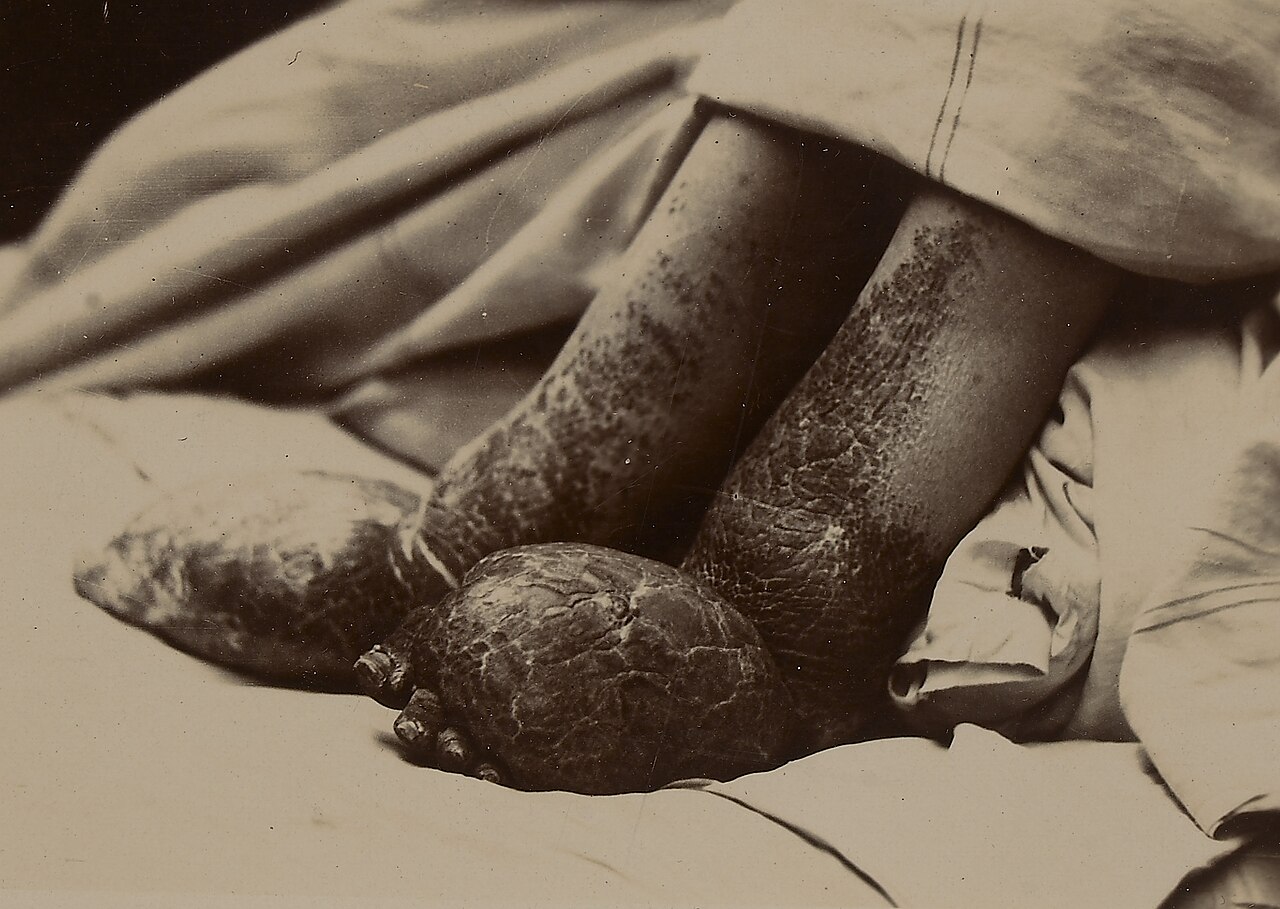
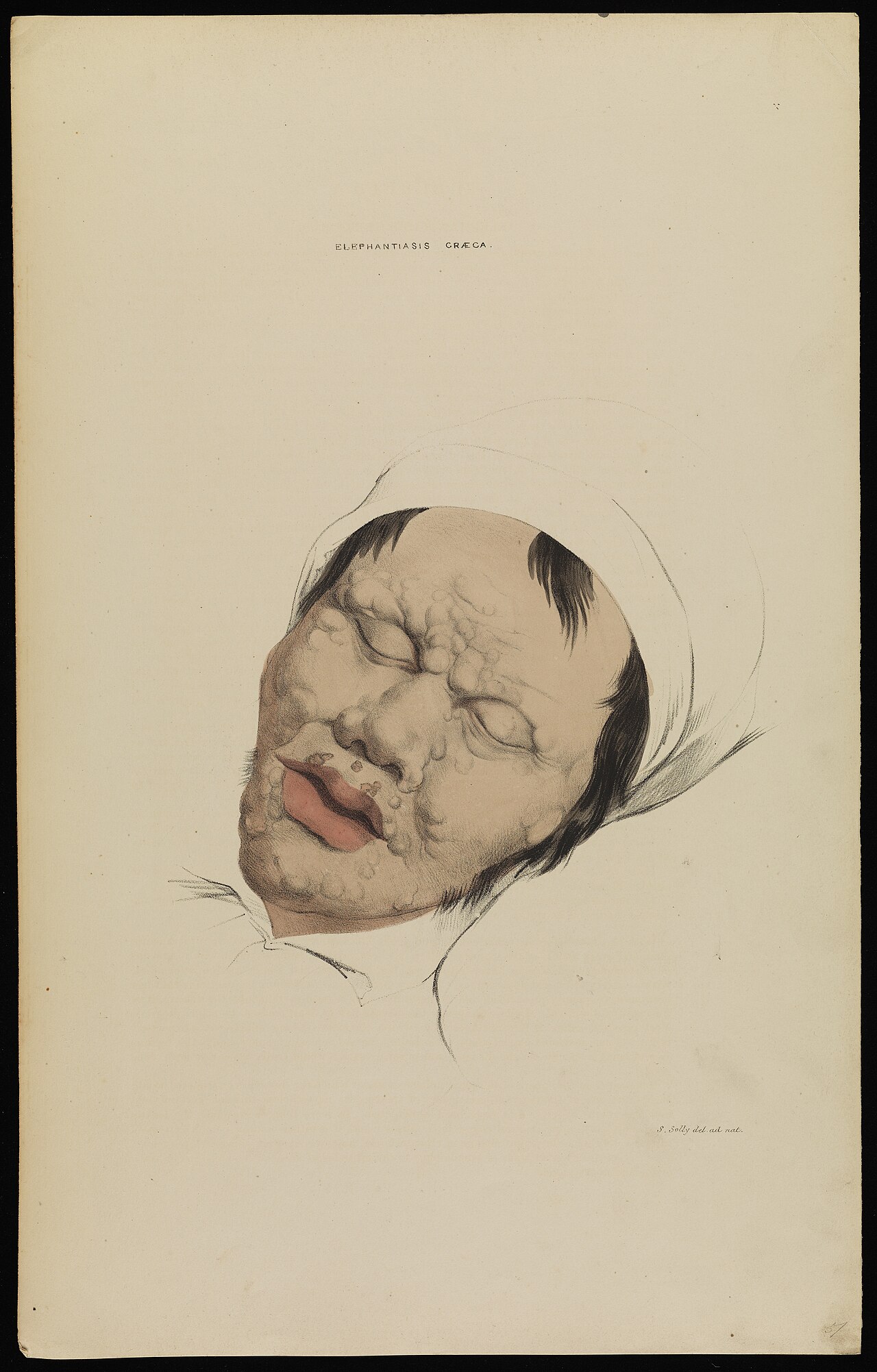
Elephantiasis—frequently and incorrectly referred to as elephantitis—is a condition marked by the dramatic enlargement and hardening of limbs or other body regions. At its core, the disorder involves a triad of pathological changes: edema (fluid accumulation), hypertrophy (tissue overgrowth), and fibrosis (scar-like thickening) affecting both the skin and the underlying subcutaneous tissues. These changes arise from the obstruction of lymphatic vessels, a process known as lymphedema, which prevents normal fluid drainage and leads to progressive swelling.

The condition may involve the genitalia as well as extremities, and in its most extreme manifestations, it can swell affected body parts to exceptionally massive proportions. While the term is most commonly associated with parasitic worm infections, it actually encompasses a wide range of diseases and conditions that produce this characteristic pattern of progressive, disfiguring tissue enlargement. The result is a body part that becomes rigid, thickened, and dramatically larger than its counterpart, fundamentally altering the affected individual's physical form and daily function.
The Parasitic Driver and Global Scale
The most widely recognized form of elephantiasis is lymphatic filariasis, historically called elephantiasis tropica. This variant is triggered by parasitic nematode worms that invade and obstruct the lymphatic system. The species most frequently implicated is Wuchereria bancrofti, though a number of other nematode worms can produce the same devastating effect on lymphatic drainage.
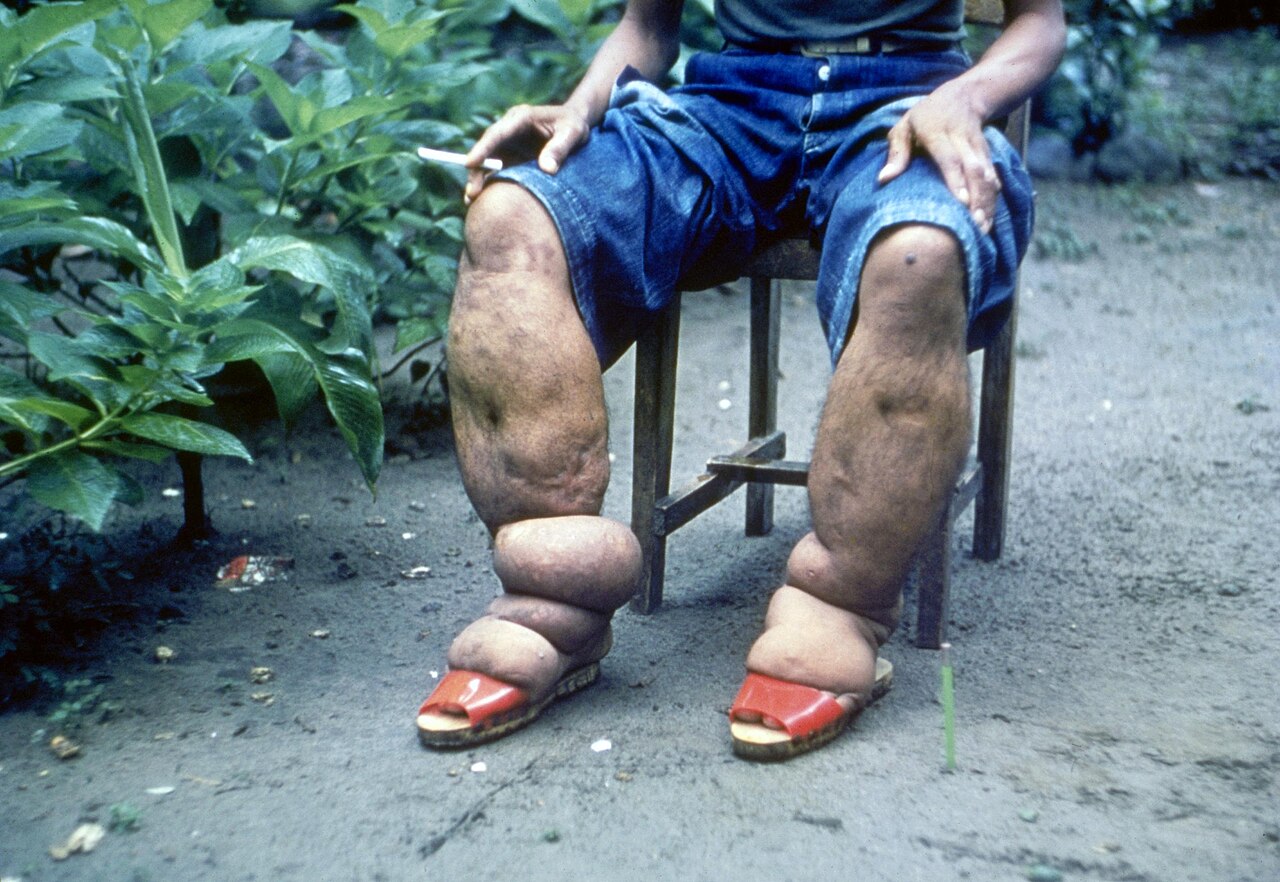
The human toll is staggering: more than 120 million people are affected by this condition, and the overwhelming majority reside in Africa and Southeast Asia. Because of this dominant association, the word elephantiasis is most often invoked in medical and public-health discussions to describe the symptoms of parasitic worm infection rather than the broader category of lymphatic obstruction. The sheer scale of the problem makes lymphatic filariasis one of the most significant parasitic diseases affecting human populations, imposing profound physical and social burdens on those whose limbs or genitalia become progressively enlarged and fibrosed as the worms damage the delicate lymphatic network.
A Mosaic of Underlying Causes
Far from being a single disease, elephantiasis is an umbrella term covering a strikingly diverse set of etiologies. Elephantiasis nostras arises from longstanding chronic lymphangitis, while podoconiosis—sometimes called nonfilarial elephantiasis—is an immune disease that damages lymph vessels without any parasitic involvement. Leishmaniasis can also produce the same pattern of tissue swelling. In the context of breast cancer, Grade 3 lymphedema may present with elephantiasis-like changes, and genital elephantiasis can result from lymphogranuloma venereum.
On the genetic side, Proteus syndrome, a hereditary disorder, is another recognized cause. Other contributing factors include repeated streptococcal infections, surgical removal of lymph nodes (lymphadenectomy), hereditary birth defects affecting the lymphatic system, and pretibial myxedema. Notably, the rare Klippel–Trénaunay syndrome can initially be misdiagnosed as elephantiasis, underscoring how easily different pathologies can masquerade as one another when the end result is the same dramatic enlargement of body parts.
Echoes in History and Cultural Memory
Elephantiasis has left a deep imprint on human history and cultural memory. The condition most famously associated with a real individual is Proteus syndrome, the genetic disorder best known as the condition possibly experienced by Joseph Merrick, the so-called Elephant Man.
Looking even further back, elephantiasis may have been the skin condition suffered by the Biblical character Job, linking the disease to one of the oldest narratives of human suffering. In modern medicine, the diagnostic challenge persists: the rare Klippel–Trénaunay syndrome can initially be misdiagnosed as elephantiasis, reminding clinicians that the outward appearance of massive tissue swelling does not always point to a single underlying cause. The persistent misnaming of the condition as elephantitis further illustrates how popular language can obscure the precise clinical reality, blending the dramatic visual impact of the disease with imprecise terminology that has endured for generations and continues to appear in everyday usage.
Reader's Guide
Elephantiasis is significant as a term covering multiple diseases that cause severe lymphedema and tissue swelling. Its most widespread form, lymphatic filariasis, impacts over 120 million people in Africa and Southeast Asia.
The condition's historical and cultural resonance includes its possible identification with the skin condition of the Biblical character Job and its association with Joseph Merrick. Understanding elephantiasis requires distinguishing its various causes, from parasitic infections to genetic disorders like Proteus syndrome, and recognizing that misdiagnosis can occur with conditions such as Klippel–Trénaunay syndrome. The condition highlights the importance of lymphatic system health and the impact of parasitic diseases in tropical regions.
More in Symptoms and signs: Skin and subcutaneous tissue
Sources
Compiled from Wikipedia and the sources listed below. Text from Wikipedia is available under CC BY-SA 4.0; this entry is adapted from it.
- Wikipedia: Elephantiasis (CC BY-SA 4.0).
- Word definitions: the Codexery glossary, each quoted from its Wikipedia article.
Spotted an error? Know more?
Reader corrections go straight into our review queue. Suggest an edit · How this site is sourced