The Incredible Hulk (1994 video game)
A side-scrolling action game featuring the Hulk's fight against the Leader.
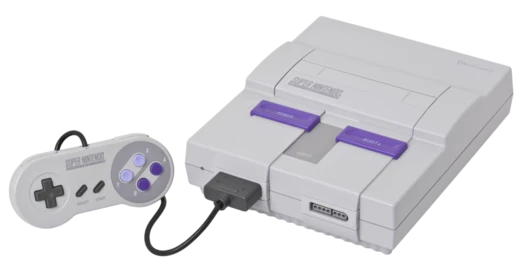
The Incredible Hulk is a 1994 side-scrolling action game for the SNES and other platforms, developed by Probe Software and published by U.S. Gold. Based on the Marvel Comics superhero, it blends platforming and beat 'em up elements as the Hulk battles the Leader's world domination plot. The game was notable for its scenario created by two Mean Machines journalists and its 18-month development period.
Quick Facts
- Developer
- Probe Software
- Publisher
- U.S. Gold
- Platforms
- Mega Drive
- Master System
- Game Gear
- SNES
- Genre
- Action, beat 'em up
- Modes
- Single-player
- Producer
- Terry Haynes; Gary Liddon (GG, MS)
- Designer
- Nick Baynes
- Programmer
- Dave Collins (MD)
- Keith Burkhill (GG, MS)
- Dan Phillips (SNES)
Facts from the source article.
Gameplay
The Incredible Hulk is a side-scrolling action game with platforming and beat 'em up elements. The player controls the Hulk, who searches for the Leader while defeating his troops. The Hulk has four states—Hulk, Super-Hulk, Hulk-Out, and Bruce Banner—determined by his Gamma level, which also serves as health. Starting in Super-Hulk mode, taking damage reduces Gamma; below 40% he becomes regular Hulk, and below 5% he transforms into Banner, who has only a two-shot gun and dies from any hit. The game has five levels with Gamma capsules: normal capsules raise Gamma to 70% or restore Banner to Hulk, while Mega capsules enable Hulk-Out mode for increased power. Transformation capsules let the Hulk become Banner without losing Gamma, allowing access to smaller areas. Each level ends with a boss encounter under a time limit, extendable by collecting time coins. The Abomination appears as a mini-boss. Extra lives and three hidden continue coins are found in rooms accessible only to Banner or in Hulk-Out mode. Difficulty can be set to Easy, Medium, or Arcade.
Plot
The Leader begins a bid for world domination, building a fortress in a savage forest, manufacturing robot battalions, and genetically engineering mutants to patrol his fortress. He enlists four of the Hulk's arch-rivals: Rhino, Absorbing Man, Abomination, and Tyrannus. The Hulk clears troops from the city and defeats Rhino at a construction site. Seeking solitude in a forest glade, he falls into Tyrannus's underground labyrinth and defeats him. The Hulk then infiltrates the Leader's fortress, defeats Absorbing Man, and confronts the Leader, who teleports him to the lair's interior where mutant soldiers are produced. After destroying the lair's bio-mechanical brain, the Hulk breaks into the inner sanctum and confronts the Leader again. The ending varies by difficulty: in Easy, the Leader scoffs; in Normal, the Leader triggers self-destruct and escapes in an escape pod, with the Hulk escaping before the explosion; in Arcade, the Hulk throws rubble at the escape pod, sending it crashing, and stands triumphantly.
Development and release
In the summer of 1992, U.S. Gold brought in Mean Machines writers Richard Leadbetter and Julian Rignall to develop a Hulk video game concept. They settled on a premise involving destroying tanks, performing huge jumps, and engaging in chaotic combat. Marvel Comics, however, vetoed the idea of killing human characters, so the final game featured robotic enemies instead. Probe Software started development in December 1992. Level design was handled by Nick Baynes, with Eric Bailey creating the graphics. Anthony Rosbottom contributed extra graphics for the Game Gear version. Matt Furniss composed the music for the Sega versions, and Steve Collett adapted it for the SNES. The game was shown at the Summer 1993 Consumer Electronics Show when it was only five percent finished. Originally planned for a Christmas 1993 release, it was delayed to February 1994. The entire development took 18 months. The Sega versions launched in Europe on July 22, 1994, and in North America the same month. The SNES version came out in Europe in September 1994 and in North America the following month. The instruction manual includes a comic called "Revenge of the Leader," written by Christian Cooper, penciled by Scott Benefiel, inked by Jason Rodriguez, and lettered by Jon Babcock. Glenn Fabry illustrated the cover art.
Reception
The Incredible Hulk received mixed reviews. Critics praised the variety of fighting moves but found controls slow and imprecise, with timing jumps cited as difficult. Computer and Video Games called the combat tedious. Diehard GameFan reviewers and Andy Dyer of Mega commended hidden rooms and switches for balanced gameplay and level challenge, though one opined that extra mechanics would have made the game great. GamePro's Scary Larry considered level design repetitive and noted the game could be finished in an evening. Nintendo Power criticized the lack of challenge but complimented accessibility. Electronic Gaming Monthly complained of unavoidable enemy attacks, exacerbated by a lack of defensive techniques. Enemy variety was said to be lacking, though bosses were considered imaginative. Some reviewers felt the game was unoriginal and lacked special features of newer titles. The SNES version had no extra features and ran slightly slower than the Mega Drive version. Mean Machines Sega's Steve Merrett criticized deviations from source material, such as the Hulk needing several hits to destroy things and Banner seeking capsules despite his search for a cure, dismissing the game as a dull platformer. Angus Swan of the same publication called it a complete non-event and a pathetic production-line platform beat 'em up, comparing it unfavorably to Sunsoft's Superman game.
More in Super Nintendo Entertainment System Game Library
Spotted an error? Know more?
Reader corrections go straight into our review queue. Suggest an edit · How this site is sourced