Terminator 2: Judgment Day (arcade game)
A light gun shooter based on the 1991 film.
Terminator 2: Judgment Day is a 1991 light gun shooter arcade game based on the film of the same name, developed and published by Midway. It features digitized graphics and voice performances from several actors who reprised their roles from the movie. The game was a commercial success in arcades and was later ported to home platforms by Acclaim Entertainment under the title T2: The Arcade Game.
Quick Facts
- Director
- George Petro; Jack Haeger
- Producer
- Neil Nicastro; Ken Fedesna
- Designer
- Jack E. Haeger
- Tim Coman
- John Vogel
- Programmer
- George Petro
- Warren Davis
- William F. Dabelstein, Jr.
- Todd R. Allen
- Series
- Terminator
- Platforms
- Arcade
- Game Boy
- Genesis/Mega Drive
- MS-DOS
- Game Gear
- Master System
- Amiga
- Super NES
- Genre
- Light gun shooter
- Modes
- Single-player, multiplayer
Facts from the source article.
Did You Know?
- In 2021, Arcade1Up announced a 3/4 scale replica of the T2 arcade cabinet that runs the original arcade version and includes a behind-the-scenes documentary.
- The Arcade1Up cabinet uses Sinden technology, where a small camera in the guns tracks a white border surrounding the screen.
Plot
The game's plot mirrors the film Terminator 2: Judgment Day. Players control a T-800 cyborg that has been captured and reprogrammed by the human resistance. In the year 2029, this T-800 fights alongside the resistance against Skynet. The T-800 and John Connor break into Skynet's main base, destroy its central processor, and then use the time travel device to send the T-800 back to John's childhood. Its mission is to stop the T-1000, a more advanced Terminator already sent back by Skynet. In the past, John, his mother Sarah, and the T-800 attack Cyberdyne Systems to stop Skynet from ever being built. The T-1000 chases them using a police helicopter and a liquid nitrogen truck. The T-800 can freeze the T-1000 with liquid nitrogen, shattering it, but the T-1000 quickly thaws and reforms. Finally, the T-800 must prevent the T-1000 from killing John and blast it into a vat of molten steel. The game has two possible endings. If the player destroys all equipment during the Cyberdyne raid, Judgment Day is prevented. If not, the research continues and Judgment Day still threatens the future.
Gameplay
Up to two players take control of a T-800 cyborg on a mission to protect John and Sarah Connor and resistance fighters from Skynet. The action unfolds from a first-person viewpoint across seven stages. The first four stages occur during the 2029 war between humans and machines, while the final three shift to John’s childhood in the 1990s.
Stage one has players crossing a battlefield to reach a hideout for human refugees. In stage two, they travel through the hideout, defending refugees against Terminators and other attackers. Stage three involves fending off Terminators and hunter-killer aircraft while John drives a pickup truck to the main Skynet facility; a bonus is awarded for finishing this stage on the first try. Stage four requires invading the facility and destroying its main computer, which sends the player’s character back in time.
Stage five takes place in the Cyberdyne research lab, where players must destroy as much equipment as possible while employees and SWAT officers fight back. If all equipment is destroyed, a large bonus is earned and the better of the game’s two endings is unlocked. Stage six has players fighting the T-1000 as it attacks the SWAT van carrying Sarah and John to a steel mill, using a police helicopter and a tanker truck. Stage seven involves shooting holes in the tanker to douse the T-1000 in liquid nitrogen until it freezes solid, then fighting off SWAT officers as John flees through the mill, and finally knocking the T-1000 into a vat of molten steel to destroy it before it can kill John.
If John is killed during stages three, six, or seven, the player suffers a large health penalty and must replay that stage from the beginning. The primary weapon is a machine gun that fires automatically as long as the trigger is held. A button on the side fires a secondary weapon—missiles in the 2029 stages, shotgun shells in the 1990s stages. Gun ammunition is unlimited, but an on-screen power gauge decreases with extended shooting, slowing the rate of fire; the gauge slowly refills when the trigger is released. Health and weapon power-ups, as well as secondary ammunition, appear throughout the game. At the end of every stage except the sixth, bonus points are awarded based on the number and type of enemies destroyed and damage inflicted, but points are lost for each human casualty in the first and second stages.
Ports
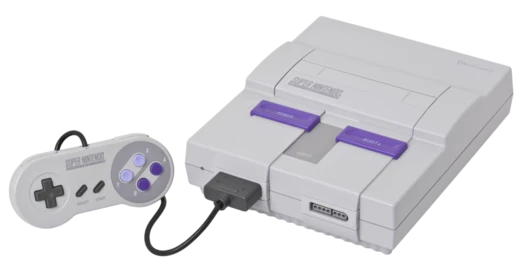
The arcade game was ported to the Mega Drive/Genesis, Super NES, Master System, and Game Boy with reduced visual quality. Because the Mega Drive/Genesis and Master System lacked the hardware for scaling, the developers redrew many images at various sizes. The Game Boy version avoided this issue by having enemies appear from the screen's sides or top, and it borrowed some music from the arcade game Narc. The MS-DOS version closely matched the arcade in graphics and speed, but it was very hard to run because it needed 580K of the 640K conventional memory, often requiring a boot disk or memory adjustments. To avoid confusion with the platform game, the title was changed to T2: The Arcade Game. The Super NES release works with the Super Scope and Super NES Mouse as well as the standard controller. Other ports with lower graphics include the Amiga and Game Gear. In North America, it was one of the few games that supported the Mega Drive/Genesis Menacer, but the Master System did not support the Light Phaser, only a joypad.
Reception
In the United States, the game topped the RePlay chart for upright arcade cabinets in December 1991 and remained at the top through April 1992. It also topped the overall US Play Meter arcade chart in April 1992, briefly displacing Street Fighter II as the top-earning arcade video game in the US for a month. In Japan, Game Machine listed Terminator 2: Judgment Day as the second most successful upright arcade unit in their February 1, 1992 issue. GamePro commented that the SNES version's graphics closely match the arcade version, praised the digitized voices and fun gameplay, and concluded it is probably the only good excuse for getting a Super Scope, though they noted the SNES Mouse is the best control option. Electronic Gaming Monthly rated the SNES version a good conversion but complained it was too difficult, giving it a 6.8 out of 10. Complex ranked it the 18th best arcade game of the 1990s. Brad Cook of AllGame gave the arcade version three and a half stars out of five and noted its difficulty. Brett Alan Weiss of AllGame gave the SNES version three and a half stars, writing that the biggest drawback is the controls without a Super Scope or mouse, and called it a faithfully recreated game that is about as good as could be expected from the 16-bit SNES. Steve Bradley of Amiga Format gave the Amiga version a 73 percent rating, calling it a faithful conversion and a fast, furious, and frantic shoot-em-up. CU Amiga gave the Amiga version a 90 percent rating, calling it a pixel-perfect recreation of the arcade experience with graphics miles better than the Mega Drive conversion, and noted it was easier than the arcade version due to different speed levels.
Frequently Asked Questions
Who directed Terminator 2: Judgment Day (arcade game)?
Terminator 2: Judgment Day was directed by George Petro and Jack Haeger.
Who designed Terminator 2: Judgment Day (arcade game)?
Terminator 2: Judgment Day was designed by Jack E. Haeger, Tim Coman and John Vogel.
More in Super Nintendo Entertainment System Game Library
Spotted an error? Know more?
Reader corrections go straight into our review queue. Suggest an edit · How this site is sourced