SimAnt
A simulation of ant colony life and territorial struggle.
SimAnt: The Electronic Ant Colony, Maxis’ third title, arrived in 1991 as a life simulation about ant behavior. Will Wright designed it, and in 1992 it won Best Simulation Game at the Codie awards. A 1993 re-release placed it in the SimClassics Volume 1 bundle, and a 1996 Maxis Collector Series version added Windows 95 support and new box art.
Quick Facts
- Publisher
- Maxis
- Designer
- Justin McCormick; Will Wright
- Series
- Sim
- Genre
- Life simulation
- Modes
- Single player
- Platforms
- Mac
- MS-DOS
- Windows 3.x
- Amiga
- FM Towns
- PC-98
- X68000
- Super NES
Facts from the source article.
Did You Know?
- The game was reviewed in Dragon #178 by Patricia Hartley and Kirk Lesser, who gave it 5 out of 5 stars.
- Computer Gaming World stated that players seeking a non-linear, unconventional and provocative strategy simulation will hit paydirt with SimAnt.
Gameplay
SimAnt simulates an ant colony, inspired by E. O. Wilson's study of ant colonies. The game offers three modes: Quick Game, Full Game, and Experimental Game. The Super NES version adds eight scenarios where the goal is to eliminate enemy red ants in various locales with different hazards. The player controls a single yellow ant in a colony of black ants in a suburban backyard, battling against red ants. The ultimate goal is to spread throughout the garden, into the house, and drive out the red ants and human owners, differing from other Sim games that had no victory conditions. In Quick Game, the player establishes a black ant colony in a small yard patch shown top-down, while underground colonies appear in side view. The player can switch control to any black ant by double-clicking or using the Exchange command. The yellow ant influences other ants by leaving pheromone trails to food or enemy colonies, can order ants to follow, dig tunnels, and expand the colony. The yellow ant can pick up food and pebbles, receive regurgitated food via trophallaxis, and attack enemies. Groups of ants can kill spiders, caterpillars, and antlions. Natural hazards include human footsteps, electrical outlets, bug spray, spiders, antlions, lawnmowers, and rain that washes away pheromone trails and floods nests.
Development
SimAnt was developed by Maxis and designed and programmed by co-founder Will Wright alongside his high school friend Justin McCormick, each doing about half the code and design. Total production time was less than a year due to round-the-clock effort; Wright focused on the simulation core during the day while McCormick handled front-end programming at night, meeting twice daily. It was Wright's third simulation title after SimCity and SimEarth. Wright described SimAnt as a slight overreaction to the seriousness of SimEarth, wanting something non-intimidating, lighthearted, and fun. He was intrigued by social insects and created the game after no computer simulation of an ant farm appeared. The game was largely based on the research of Harvard biologist E. O. Wilson, specifically his 1990 textbook The Ants, written with Bert Hölldobler. Wright considered Wilson the premier myrmecologist and found his explorations of emergence—where individual ants performing basic tasks collectively accomplish complex goals—particularly interesting.
Release
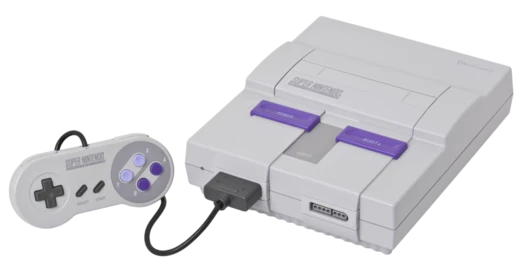
SimAnt first scurried onto North American shelves in November 1991, a joint effort between Maxis and Broderbund. Players could command their colonies on Mac, MS-DOS, Windows 3.x, and Amiga systems. The Mac version offered both monochrome and color play, while the Amiga port let users switch between low and high resolution graphics. Ocean Software handled the European release in 1992. In Japan, Imagineer brought the game to Mac in November 1991, then expanded to FM Towns, PC-98, X68000, and Super Famicom in February 1993. That Super Famicom version, built by Tomcat System, packed eight extra scenarios, unique visuals and music, and worked with the Super NES Mouse. Maxis localized it for the North American Super NES in November 1993. The PC original resurfaced on the SimClassics Volume 1 disc in September 1994, bundled with SimCity and SimLife, and later as a standalone in the Maxis Collector's Series in 1996. A planned enhanced CD-ROM edition, canceled, would have featured Super VGA graphics, digital sound, 20 minutes of full-motion video, and a guide avatar named SimAntha.
Legacy
SimAnt achieved middling sales, selling over 50,000 copies by February 1992. Designer Will Wright stated in 1994 that he considered the game his biggest disappointment up to that point, feeling he failed to convey how cool ants are. In a 1996 postmortem, Wright considered SimAnt effectively educational yet too simple and lacking the creativity of SimCity. The lower complexity connected best with children, specifically boys aged ten to thirteen, and misgauging the core audience was a lesson Wright learned. He said in 2003 he would like to remake SimAnt with a more immersive first-person perspective. Wright stated that working on SimAnt helped inspire The Sims, using ant pheromone trails as a model for the wants and needs of Sims. The crowdfunded real-time strategy game Empires of the Undergrowth, released for early access on Steam in 2024, is considered a spiritual successor to SimAnt.
More in Super Nintendo Entertainment System Game Library
Spotted an error? Know more?
Reader corrections go straight into our review queue. Suggest an edit · How this site is sourced