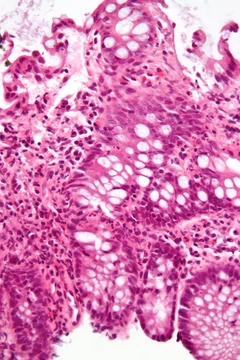
IgG4-related ophthalmic disease
Steroid-responsive orbital inflammation from systemic IgG4-related disease.
IgG4-related ophthalmic disease (IgG4-ROD) is the recommended term for orbital manifestations of the systemic condition IgG4-related disease, characterized by lymphocytic and plasma cell infiltration with subsequent fibrosis. It can involve one or more orbital structures, including the lacrimal glands, extraocular muscles, and nerves. A prompt response to steroid therapy is typical unless significant fibrosis has already occurred.
Quick Facts
- Field
- Ophthalmology
Facts from the source article.
Did You Know?
- Infraorbital nerve enlargement (IONE) is considered a particularly suspicious sign of IgG4-ROD, defined as the infraorbital nerve diameter being greater than the optic nerve diameter in the coronal plane.
- IONE seems to occur only when inflammation is in direct contact with the infraorbital canal.
Symptoms and signs
Lacrimal gland involvement may cause upper eyelid swelling or proptosis if severe. Other orbital masses or inflammation can lead to visual disturbance (blurred vision, double vision, visual field impairment), restricted eye movements, pain, discomfort, numbness in the supraorbital or infraorbital nerve distributions, or proptosis. IgG4-related ophthalmic disease accounts for about 25% of all cases of proptosis, eyelid swelling, and other orbital swelling features.
More in Steroid-responsive Inflammatory Conditions
Spotted an error? Know more?
Reader corrections go straight into our review queue. Suggest an edit · How this site is sourced