
Autoimmune pancreatitis
A rare pancreatitis that mimics cancer but responds to steroids.

Hellerhoff · CC BY-SA 4.0
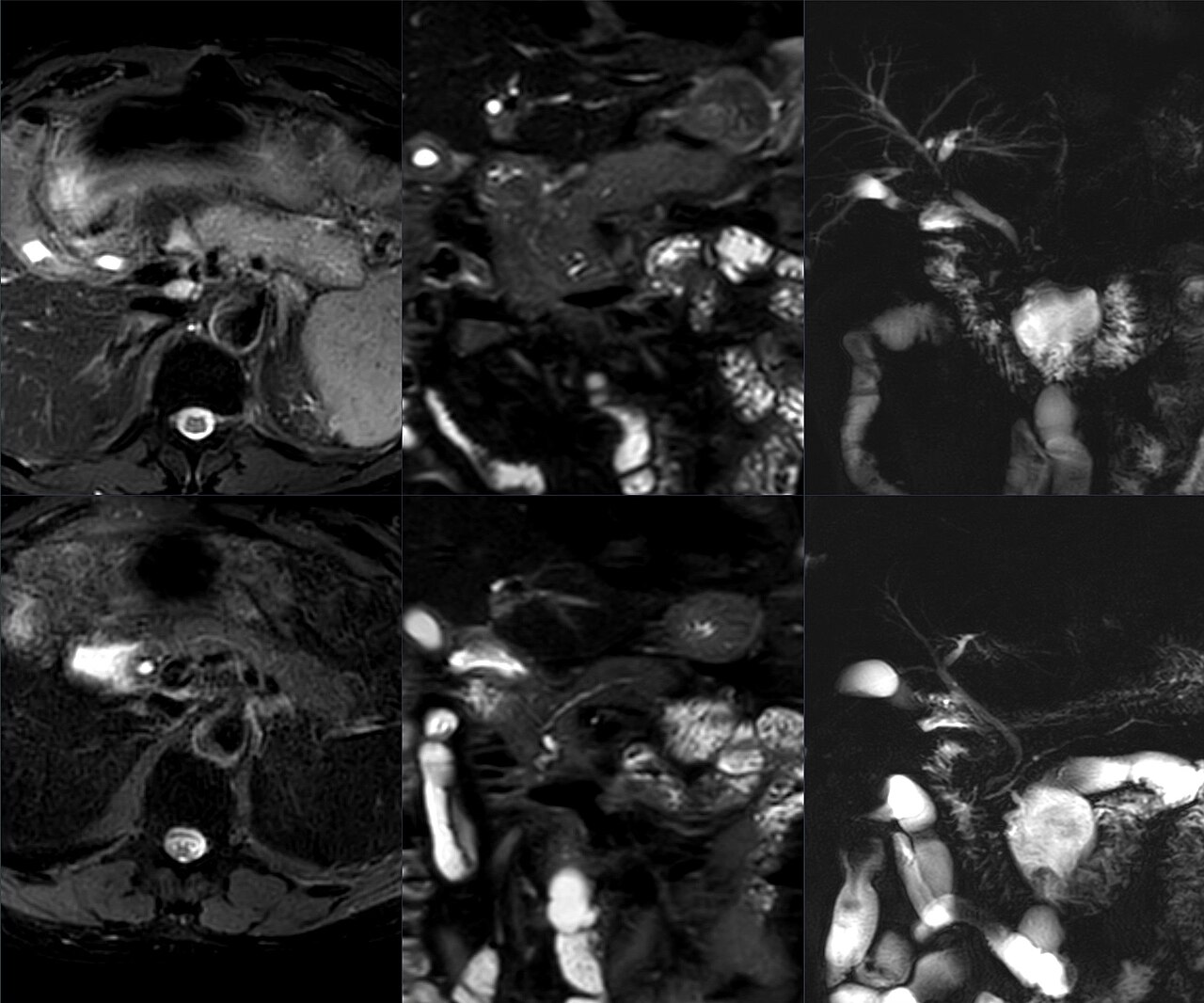
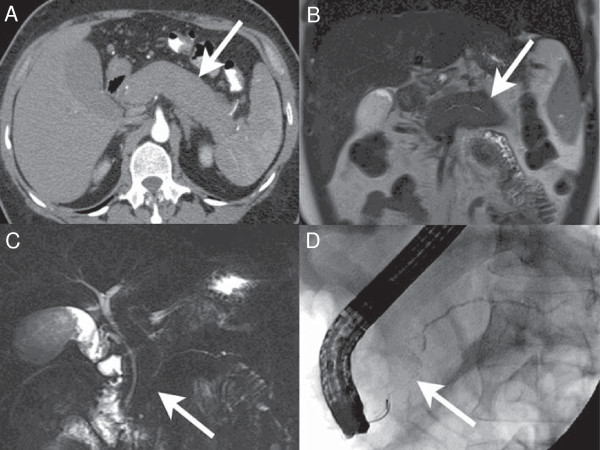
Autoimmune pancreatitis (AIP) is a form of chronic pancreatitis that doctors are spotting more often. It’s tricky because it looks a lot like pancreatic cancer, but unlike cancer, it gets better with corticosteroids like prednisone. Even though AIP is rare, it creates a real dilemma: the disease often shows up as a mass that’s impossible to tell apart from pancreatic cancer—a much more common and dangerous illness. Because of this fear of missing a malignancy, some patients end up having pancreatic surgery, which carries serious risks of death and complications. That’s not the right move, though, since AIP responds well to immunosuppressive drugs. There are two main types: Type 1 and Type 2, each with its own pattern.
Type 1 AIP is now seen as part of IgG4-related disease. It tends to hit older people and has a high chance of coming back. This type can also affect the bile ducts in the liver, salivary glands, kidneys, and lymph nodes. Type 2 AIP seems to stay in the pancreas, but about one-third of people with it also have inflammatory bowel disease. When AIP shows up with another autoimmune condition, it’s sometimes called “secondary” or “syndromic” AIP. Importantly, AIP doesn’t shorten a person’s lifespan.
**Signs and symptoms** AIP can cause a mix of symptoms involving the pancreas, bile ducts, and other body systems. About two-thirds of patients have either painless jaundice from a blocked bile duct or a mass in the head of the pancreas, which mimics cancer. So, a careful workup to rule out cancer is essential when AIP is suspected.
Type 1 AIP usually appears in men aged 60 to 70 with painless jaundice. Imaging might show a pancreatic mass or a diffusely enlarged pancreas. Narrowing of the pancreatic duct (strictures) can happen. Rarely, Type 1 AIP starts as acute pancreatitis. At least half the time, Type 1 AIP comes with signs of IgG4-related disease elsewhere. The most common systemic issue is cholangitis, seen in up to 80% of Type 1 cases. Other possible problems include inflammation in the salivary glands (chronic sclerosing sialadenitis), lung scarring (pulmonary fibrosis) and nodules, scarring in the chest cavity (mediastinal fibrosis) or behind the abdomen (retroperitoneal fibrosis), and kidney inflammation (tubulointerstitial nephritis).
- Field
- Gastroenterology, Immunology
- Known for
- Chronic pancreatitis mimicking pancreatic cancer, responsive to steroids; Type 1 associated with IgG4-related disease
- Types
- Type 1 and Type 2
- Typical presentation
- Painless jaundice in 60–70-year-old males (Type 1)
- Treatment
- Corticosteroids (prednisone)
Lore & Background
Autoimmune pancreatitis may cause a variety of symptoms, including pancreatic and biliary manifestations as well as systemic effects. Two-thirds of patients present with either painless jaundice due to bile duct obstruction or a mass in the head of the pancreas, mimicking carcinoma. Type 1 AIP typically presents in a 60–70-year-old male with painless jaundice, and imaging may reveal a mass or diffuse pancreatic enlargement. Type 2 AIP seems to affect only the pancreas, though about one-third of people with Type 2 have associated inflammatory bowel disease. AIP does not affect long-term survival.
Reader's Guide
Autoimmune pancreatitis is significant because it represents a treatable cause of chronic pancreatitis that is frequently misdiagnosed as pancreatic cancer, leading to unnecessary pancreatic resections with substantial morbidity and mortality. The International Consensus Diagnostic Criteria emphasize five cardinal features: imaging appearance of pancreatic parenchyma and duct, serum IgG4 level, other organ involvement with IgG4-related disease, pancreatic histology, and response to steroid therapy. Histopathologic examination reveals lymphoplasmacytic infiltrate of CD4- or CD8-positive lymphocytes and IgG4-positive plasma cells, with interstitial fibrosis and acinar cell atrophy in later stages. The development of IgG4 antibodies recognizing an epitope on pancreatic acinar cells is considered an important factor in pathophysiology, though the exact auto-antigens remain obscure. Improved diagnosis awaits identification of these antigens, which would allow early differentiation from pancreatic cancer and potentially prevention.
Did You Know?
- Two-thirds of AIP patients present with painless jaundice or a mass in the head of the pancreas, mimicking carcinoma.
- Type 1 AIP is now regarded as a manifestation of IgG4-related disease, which may also affect bile ducts, salivary glands, kidneys, and lymph nodes.
- Up to 23% of patients undergoing pancreatic resection for suspected malignancy are ultimately found to have benign disease, often AIP.
Gallery
Frequently Asked Questions
Who is Autoimmune Pancreatitis?
AIP is a rare, chronic form of pancreatitis that sits at the intersection of gastroenterology and immunology. It exists in two flavors—Type 1, tied to IgG4-related disease, and Type 2—and classically shows up as painless jaundice in men in their sixties and seventies.
What is AIP's signature power?
Its defining superpower is dramatic shrinkage under corticosteroid therapy, most commonly prednisone. That steroid responsiveness is the single most important clue that separates AIP from its dangerous look-alike, pancreatic cancer.
Who is AIP's arch-nemesis?
Pancreatic cancer is the condition AIP most perilously imitates, because both can present as an indistinguishable pancreatic mass on imaging. The fear of missing a malignancy can push clinicians toward high-risk pancreatic surgery that the patient never actually needed.
How does AIP's story typically begin?
The classic opening scene is a 60- to 70-year-old male walking in with painless jaundice and a suspicious pancreatic mass. Type 1 favors that older-male demographic, while Type 2 can present in a somewhat different pattern.
Why is AIP important in the broader medical canon?
Getting the diagnosis wrong in either direction carries real harm: mistaking AIP for cancer exposes patients to unnecessary surgery and its attendant mortality risk, while missing AIP delays a condition that is actually manageable with steroids. Recognizing it early spares patients surgical trauma and connects them to a treatable, steroid-responsive path.
More in Steroid-responsive inflammatory conditions 1-24
Spotted an error? Know more?
Reader corrections go straight into our review queue. Suggest an edit · How this site is sourced