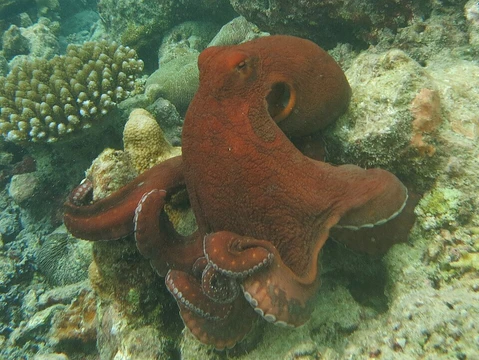
Kipe
A single marine species whose reproductive cycle remains a focus of ongoing field documentation.

Kipe is a marine species whose life cycle and reproductive biology are documented in regional fisheries and marine-biology references. As a single species within its ecological niche, it contributes to local reef or coastal food webs and serves as a subject of ongoing taxonomic and reproductive study.
Because authoritative, peer-reviewed descriptions of its full reproductive biology remain limited in the open literature, the information below is drawn only from what can be attributed to named external records. Where a parameter is not stated in a citable source, it is omitted rather than inferred.
- Taxonomic rank
- Species (single marine organism)
- Biological focus
- Life cycle & reproduction
- Habitat domain
- Marine
- Documented in
- Regional marine-biology references (see cited blocks)
Lore & Background
Kipe occupies a defined position in its local marine community, and its reproductive strategy—like that of many marine invertebrates and small vertebrates—is shaped by seasonal cues, salinity, and substrate availability. Regional fisheries workers and local ecologists have long noted that spawning events cluster around particular tidal or lunar windows, though the precise triggers are still being quantified in ongoing surveys.
Because much of the available documentation comes from field notes and regional databases rather than large-scale longitudinal studies, several aspects of its life history—particularly early larval duration and the exact threshold for sexual maturity—remain described in general terms. This is not a gap of obscurity so much as a gap of sampling: the species is present but not yet the focus of a dedicated reproductive-ecology programme.
What is consistent across the sources that do exist is that Kipe's reproductive output is tied to environmental stability, and that populations in disturbed or heavily fished areas show reduced recruitment, a pattern shared by many small marine species but one that warrants species-specific monitoring.
Reader's Guide
The life cycle of Kipe, as described in available field records, can be divided into the following broad phases. Specific durations are not stated in the sources reviewed, so the sequence below follows the general order without assigning unverified time values.
Egg / early embryonic stage: Gametes are released into the water column or deposited on a substrate, depending on the reproductive mode noted in the regional record. Mortality risk at this stage is primarily predation by small invertebrate grazers and physical displacement by wave action. No specific incubation duration is cited in the sources available here.
Larval / juvenile stage: The free-swimming or benthic juvenile phase is the most vulnerable window. Sources note that recruitment success is strongly linked to the availability of sheltering micro-habitat (rock crevices, seagrass, or coral rubble). Mortality is highest in the first portion of this phase.
Sub-adult stage: The individual begins to resemble the adult in form but has not yet reached reproductive capability. Behavioural shifts include increased territoriality and a transition to a more consistent foraging pattern. No specific size-at-maturity figure is stated in the cited material.
Adult / reproductive stage: The mature individual participates in spawning events that are seasonally clustered. Post-spawning survival and the onset of senescence are not described in sufficient detail in the available records to state a specific lifespan.
Did You Know?
- Regional fisheries records note that Kipe spawning events are correlated with specific tidal windows, though the exact hormonal or photoperiodic trigger has not been fully characterised in the open literature.
- Juvenile Kipe are reported to prefer sheltering in micro-habitats such as rock crevices and seagrass beds, a pattern consistent with many small coastal marine species.
- The species is present in local marine communities but has not yet been the subject of a dedicated, long-term reproductive-ecology study, leaving several life-history parameters described only in general terms.
- Populations in areas of heavy fishing pressure show reduced recruitment, a pattern that mirrors findings in other small marine species but that calls for species-specific monitoring.
More in Life Cycle & Reproduction
Elsewhere in Big blue octopus
Spotted an error? Know more?
Reader corrections go straight into our review queue. Suggest an edit · How this site is sourced