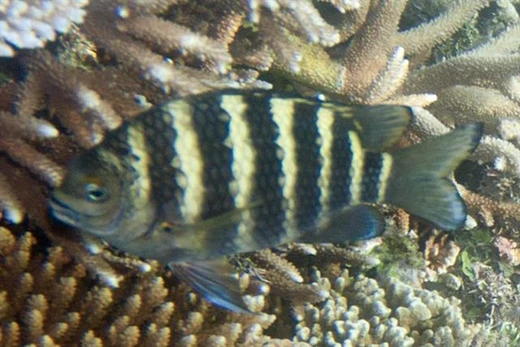
Banded sergeant (Abudefduf septemfasciatus)
Source-cited species reference: taxonomy from WoRMS, biology from FishBase, occurrence map from GBIF, conservation from IUCN Red List.

Susan Prior · CC BY 4.0
Banded sergeant (Abudefduf septemfasciatus) is a marine species in the family Pomacentridae (Chordata › Teleostei › Ovalentaria incertae sedis), recorded in the World Register of Marine Species as Abudefduf septemfasciatus (Cuvier, 1830) under AphiaID 212878.
- Scientific name
- Abudefduf septemfasciatus
- Authority
- (Cuvier, 1830)
- Family
- Pomacentridae
- Order
- Ovalentaria incertae sedis
- Maximum length
- 23 cm
- Depth range
- 0–20 m
- Habitat zone
- reef-associated
- Iucn red list
- Least Concern
- Gbif occurrence records
- 1,600
Taxonomic Identity and Physical Profile
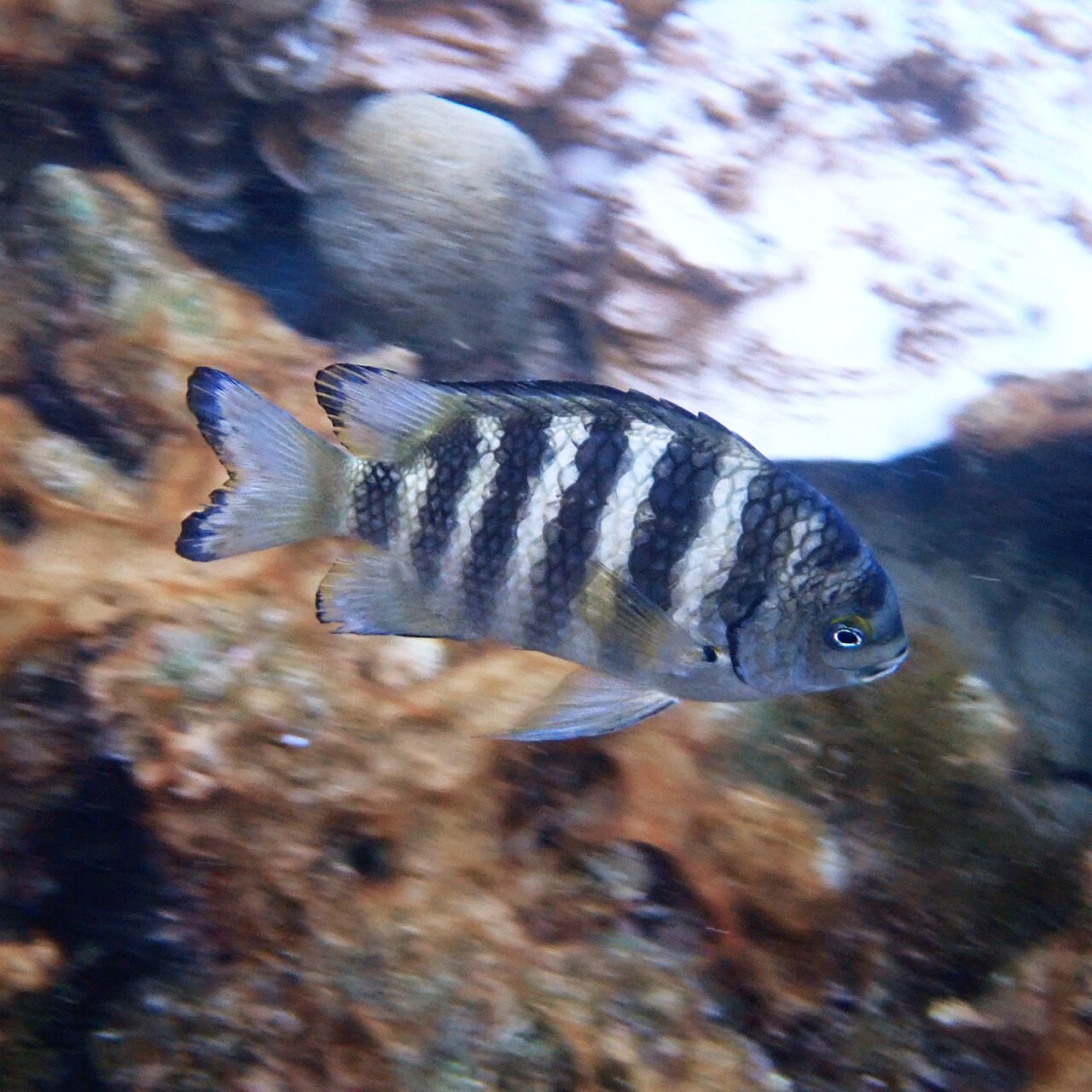
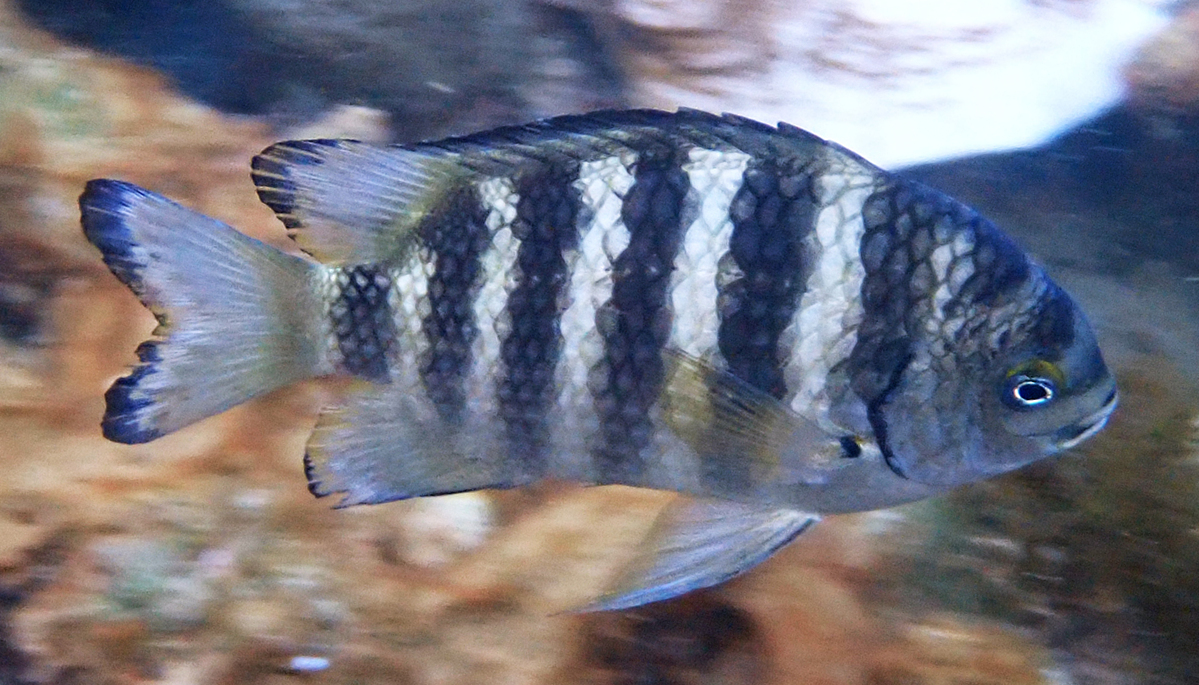
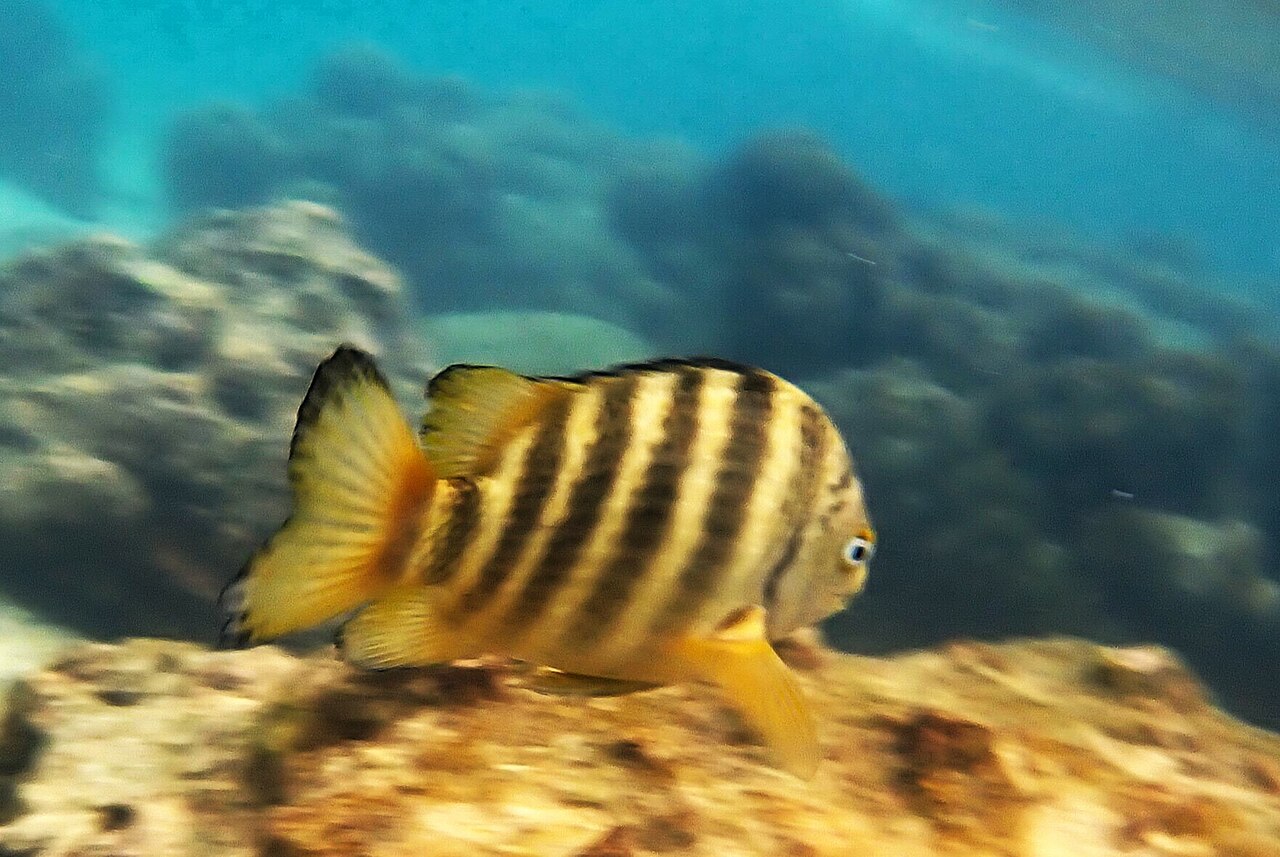
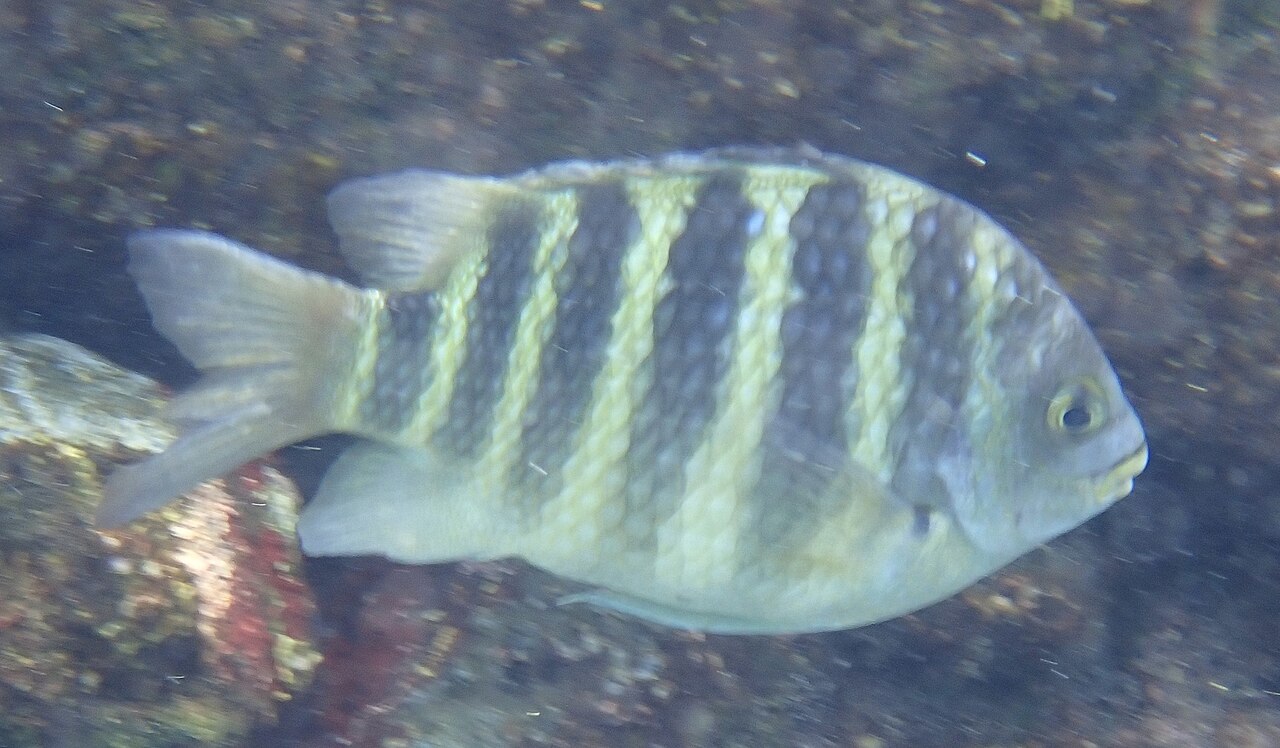
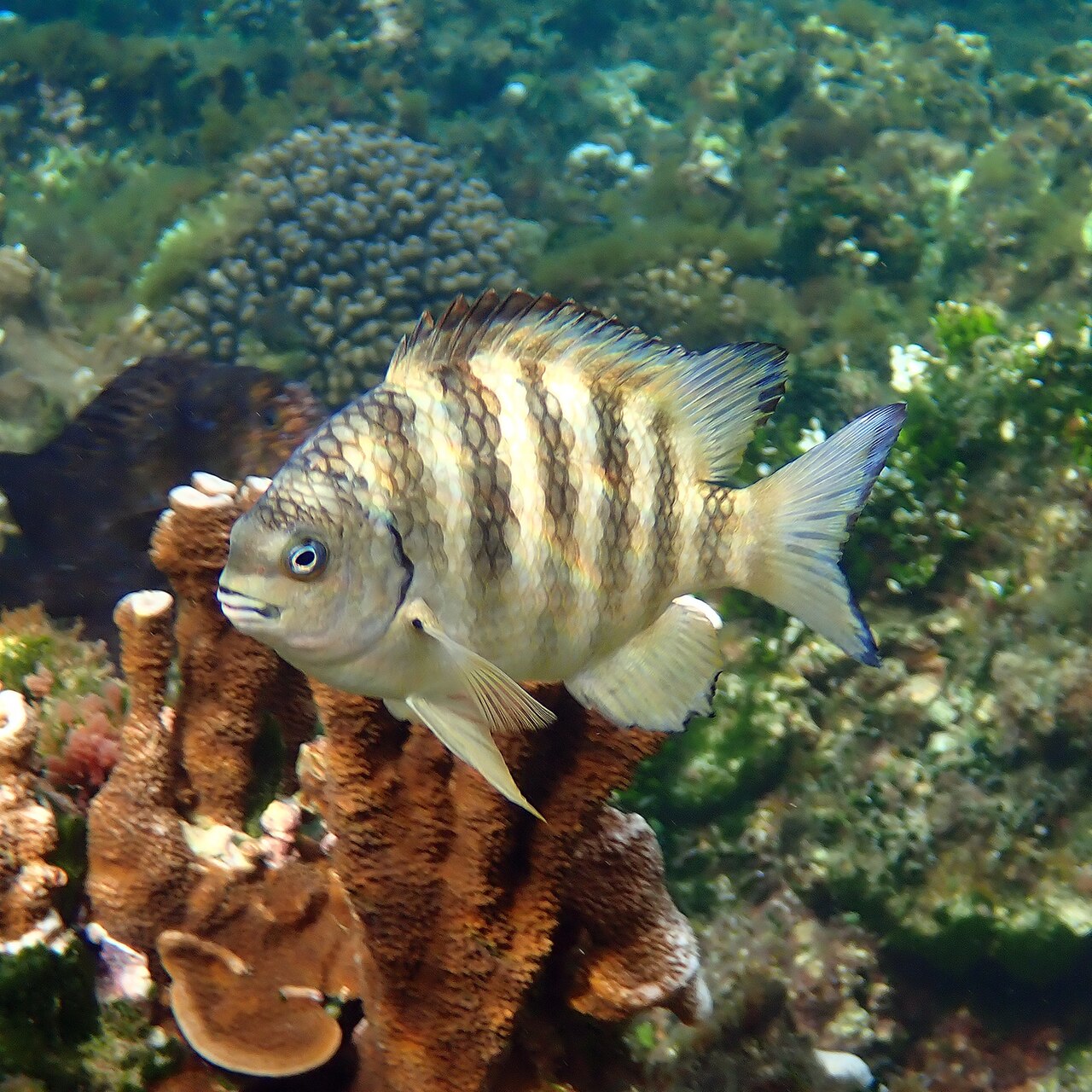
The banded sergeant, scientifically designated Abudefduf septemfasciatus, belongs to the damselfish group within the family Pomacentridae. This classification places it among the most recognizable reef-dwelling fish families in tropical waters. The species epithet hints at its banded coloration, while the common name reflects its somewhat elongated, disciplined body shape compared to rounder damselfish relatives. Adults of this species can grow to a total length of approximately 23 centimeters, roughly 9.1 inches, making it one of the larger members of the Abudefduf genus. As a non-migratory marine species, the banded sergeant commits itself to a particular reef or lagoon system throughout its life, relying on the structural complexity of coral formations for shelter and foraging opportunities. Its size and territorial disposition give it a commanding presence among the smaller fish that share its shallow-water habitat, establishing it as a notable figure in the ecological community of Indo-Pacific coral ecosystems.
Habitat and Feeding Ecology
The banded sergeant occupies a very specific ecological niche in the shallow waters of the Indo-Pacific. It is a non-migratory marine fish that remains closely tied to lagoons and coral reef environments, typically found at depths ranging from the surface down to about 3 meters. This shallow-water preference means it lives in well-lit zones where photosynthetic organisms thrive, which directly supports its diet. The species is highly territorial, defending a specific patch of reef or lagoon floor against intruders of its own kind. Its feeding strategy centers on benthic algae growing on the substrate, along with a variety of small invertebrates found in the reef's lower layers. This combination of algal grazing and invertebrate consumption positions the banded sergeant as both a grazer and a small predator within its ecosystem. Its territorial nature and sedentary lifestyle mean that each individual maintains a relatively fixed home range, making it a predictable and persistent member of the reef community.
Reproductive Strategy and Pair Bonding
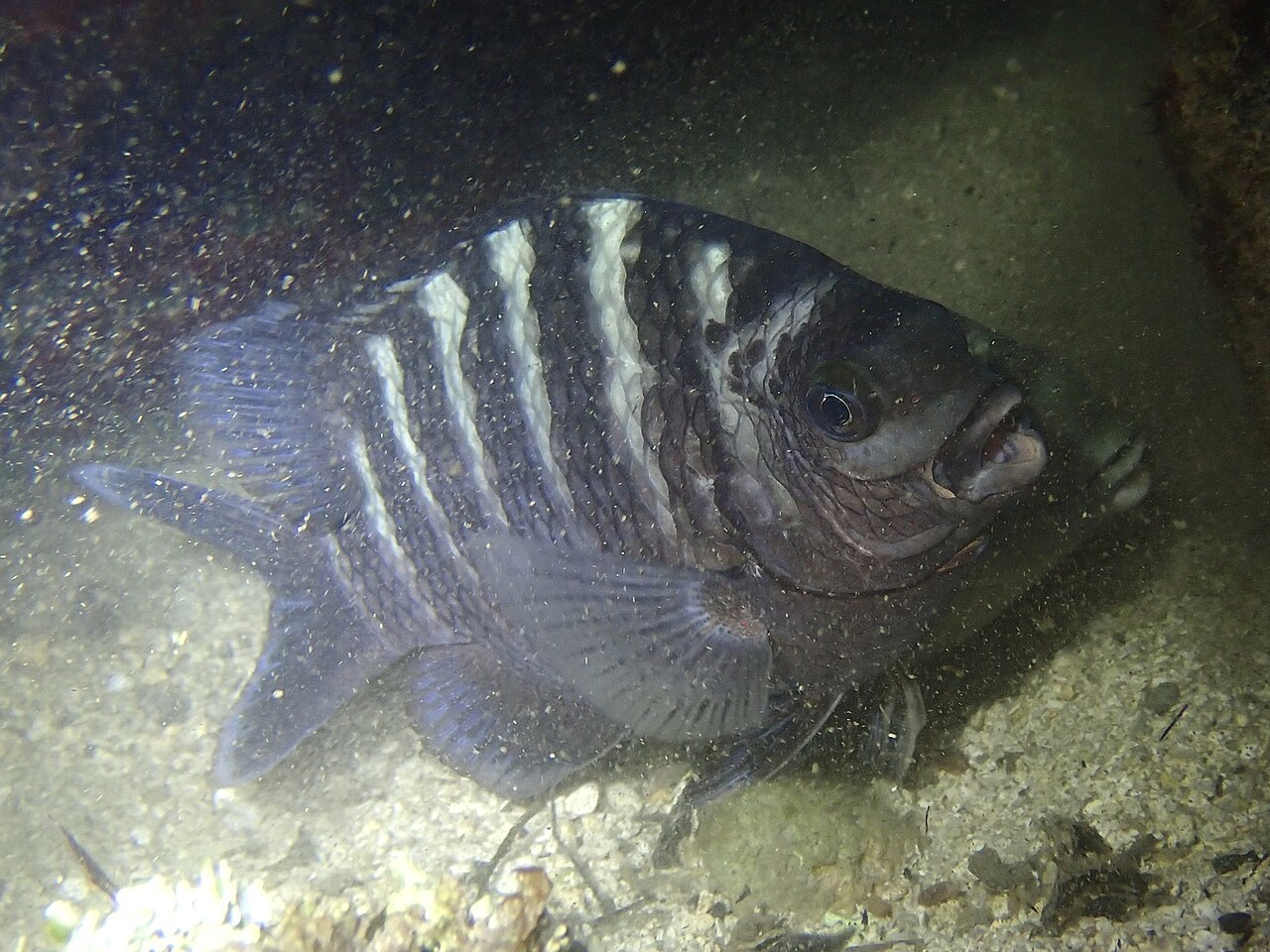
Reproduction in the banded sergeant follows an oviparous pattern, meaning the species produces free-laying eggs rather than giving birth to live young. What makes its breeding biology particularly notable is the formation of distinct pairs during the reproductive period. Unlike some damselfish that spawn in loose aggregations, Abudefduf septemfasciatus individuals commit to a specific partner for the breeding event, creating a temporary but defined social unit. The male takes on the primary parental role after spawning: he is responsible for guarding the clutch of eggs against predators and, crucially, aerating them by fanning water over the developing embryos. This aeration behavior ensures that the eggs receive adequate oxygen as they develop, a task requiring sustained, attentive effort over the incubation period. The pair-bonding strategy, combined with dedicated male care, represents a reproductive investment that distinguishes the banded sergeant from more casual spawners in its family and likely increases offspring survival in the predator-rich environment of shallow coral reefs.
Indo-Pacific Geographic Range
The banded sergeant enjoys one of the broadest distributions among damselfish, spanning a vast arc of the Indo-Pacific Ocean. Its range extends from the coastal waters of East Africa eastward all the way to the remote Line and Tuamotu Islands in the central Pacific. To the north, populations are found as far as the southern waters of Japan, while to the south, the species reaches the southern reaches of the Great Barrier Reef off Australia. This extensive distribution, from warm African shores to the fringes of the Pacific, reflects the species' adaptability to a wide variety of lagoon and coral reef conditions across tropical and subtropical latitudes. Despite this broad range, the banded sergeant remains a non-migratory species; individuals do not travel long distances between these regions but instead settle into local reef systems. The consistency of its habitat preference, shallow lagoons and reef flats at 0 to 3 meters depth, across such a geographically dispersed range suggests a strong evolutionary specialization for this particular ecological zone, making it a reliable indicator of healthy shallow reef environments throughout the Indo-Pacific.
Gallery
Frequently Asked Questions
What is the Banded sergeant (Abudefduf septemfasciatus)?
It is a small marine damselfish in the family Pomacentridae, originally described by Cuvier in 1830. The species is officially catalogued in the World Register of Marine Species under AphiaID 212878.
How big does the Banded sergeant (Abudefduf septemfasciatus) grow?
Adults can reach a maximum total length of roughly 23 centimeters. That places it in the modest size range typical of many reef-dwelling damselfishes.
Where does the Banded sergeant (Abudefduf septemfasciatus) live?
It occupies shallow marine habitats, generally between the surface and about 20 meters depth. Geographical occurrence records for the species are compiled in the GBIF database.
How is the Banded sergeant (Abudefduf septemfasciatus) classified taxonomically?
It sits within the order Ovalentaria (incertae sedis) of the class Teleostei and belongs to the damselfish family Pomacentridae. Its full taxonomic authority is listed as Cuvier, 1830, per WoRMS.
Why is the Banded sergeant (Abudefduf septemfasciatus) of interest to fish enthusiasts?
It is a well-documented reef species whose biology is profiled on FishBase and whose conservation status is tracked by the IUCN Red List. For hobbyists and marine-biology fans, it serves as a classic example of the banded Abudefduf damselfish genus.
Related in Banded sergeant
Links follow this subject's own source article.
Elsewhere in Banded sergeant
Spotted an error? Know more?
Reader corrections go straight into our review queue. Suggest an edit · How this site is sourced