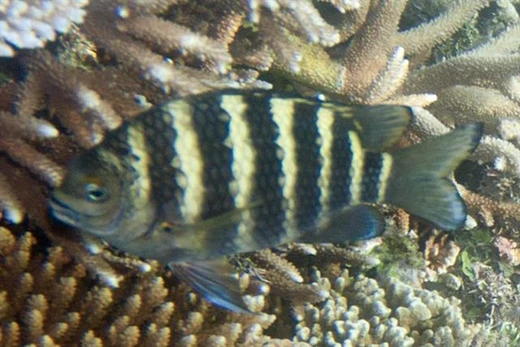
Where Banded sergeant has been recorded
GBIF occurrence records for Abudefduf septemfasciatus, mapped and tabulated by country.

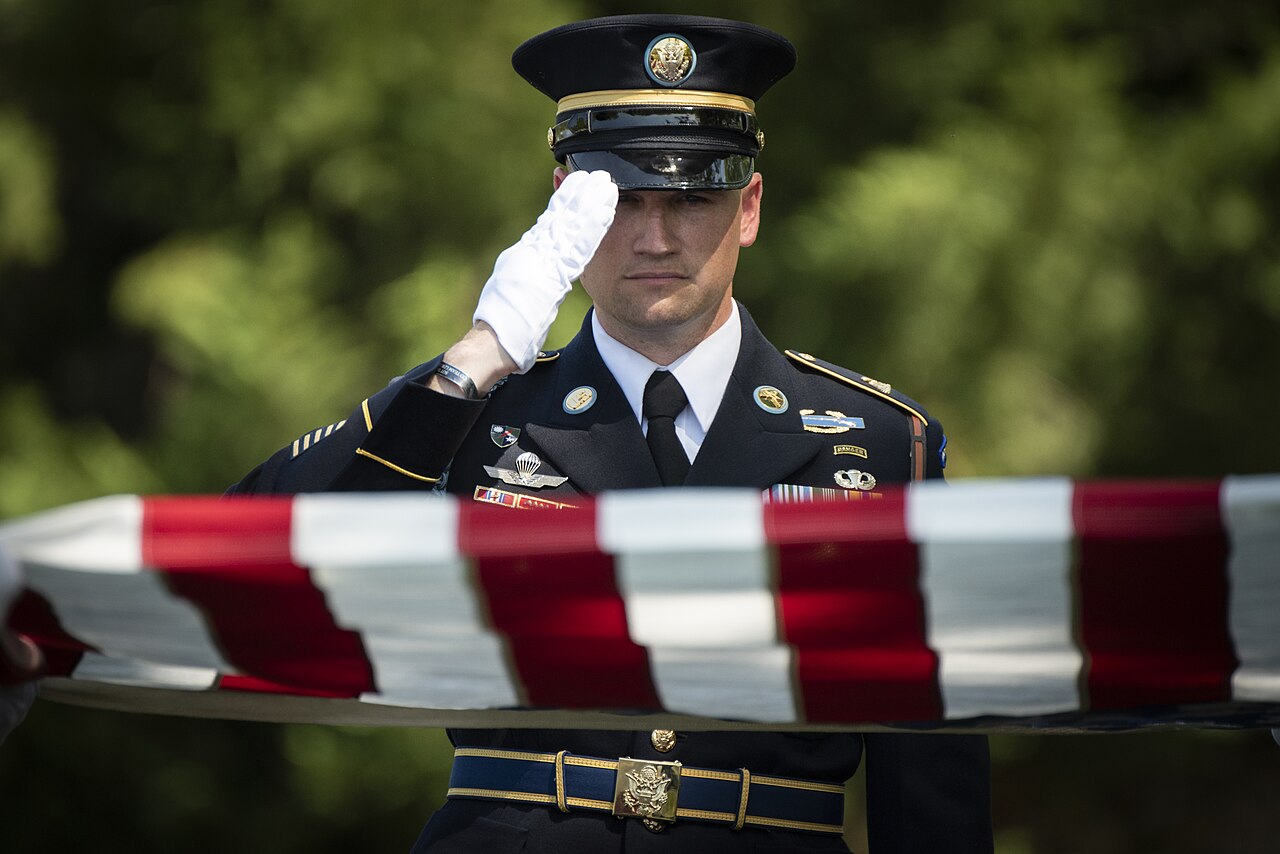
Arlington National Cemetery · Public domain
1,600 georeferenced occurrence records with coordinates are published for Abudefduf septemfasciatus through GBIF, from 56 countries or marine areas. This page maps those records and lists where they come from. Occurrence records reflect where people have looked as well as where the species lives, so well-surveyed coastlines are over-represented.
- Georeferenced records
- 1,600
- Countries / areas
- 56
- Mapped locations
- 335
- Records sampled for the map
- 1,600
- Inland records omitted
- 43
- Gbif taxonkey
- 2398628
The Spark and the Studio
By the close of August 1966, the Beatles had made the decisive choice to abandon live touring permanently, and the group spent the following three months pursuing separate creative paths. It was during a November return flight to London that Paul McCartney struck upon the image of an Edwardian military band, a notion that would become the seed of the entire project. Recording sessions opened on 24 November at EMI Studios, where the band worked without the crushing deadline that had governed earlier records. The initial compositions drew heavily on memories of their own youth. However, EMI's commercial pressure forced the band to carve out "Strawberry Fields Forever" and "Penny Lane" as a double A-side single in February 1967, removing both tracks from the planned LP. The overarching concept of a fictional band performing as a whole only crystallised after the title track itself had already been recorded, meaning the unifying narrative was retrofitted onto material that already existed. By 21 April, all recording was complete, and what had begun as a single song idea had grown into something far more ambitious.
Sound, Texture, and the Studio as Instrument
The album represented a deliberate escalation of the studio techniques the Beatles had already explored on Revolver the previous year. Working with producer George Martin and engineer Geoff Emerick, the band treated the recording room itself as a compositional tool, layering sound effects and tape manipulation across multiple tracks. Songs like "Lucy in the Sky with Diamonds," "Being for the Benefit of Mr. Kite!," and "A Day in the Life" showcase how far the group pushed these methods, blending orchestral swells with electronic distortion and circus-calliope textures. Stylistically, the record drew from an extraordinarily wide palette: vaudeville, music hall, circus music, avant-garde composition, Western classical traditions, and Indian classical forms all find a place within its running time. Musicologists have identified it as one of the earliest art rock LPs and a direct progenitor of progressive rock, while also crediting it with advancing the roles of sound composition, extended musical form, and psychedelic imagery in popular recording. The visual identity was equally radical: pop artists Peter Blake and Jann Haworth designed a cover that placed the four Beatles before a tableau of celebrities and historical figures, treating the sleeve as a work of graphic art in its own right.
Cultural Legitimisation and Enduring Legacy
The release of Sgt. Pepper in May 1967 is widely regarded as the moment popular music achieved full cultural legitimisation, recognised at last as a genuine art form rather than mere entertainment. It heralded the album era and the 1967 Summer of Love, and its association with the era's youth culture—fashion, mysticism, drugs, and a broad sense of optimism—made it a touchstone for an entire generation. Commercially, it was a phenomenon: 27 weeks at number one on the UK Record Retailer chart and 15 weeks atop the US Billboard Top LPs chart, with more than 32 million copies sold worldwide by 2011. In 1968 it collected four Grammy Awards, including Album of the Year, the first rock LP ever to receive that distinction. In 2003 the Library of Congress inducted it into the National Recording Registry for its cultural, historical, and aesthetic significance. It has topped numerous critics' and listeners' all-time polls, including those in Rolling Stone, the book All Time Top 1000 Albums, and the UK's Music of the Millennium survey. As of 2018 it remained the UK's best-selling studio album, and a remixed, expanded edition appeared in 2017.
The Break That Made the Album Possible
The freedom that produced Sgt. Pepper was born of exhaustion and conflict. By late 1965 the Beatles were deeply weary of performing live; John Lennon dismissed their concerts as "bloody tribal rites," suggesting four waxworks would suffice. The June 1966 tour compounded their frustration: in Hamburg they received an anonymous death threat, in Japan 35,000 police were mobilised to guard them in armoured vehicles, and in the Philippines they were manhandled by angry citizens. Their final US tour in August 1966, shadowed by the "more popular than Jesus" controversy, brought reduced ticket sales and subpar shows, and not a single Revolver song was attempted because the arrangements were impossible to reproduce on stage. Back in England, breakup rumours swirled; George Harrison told manager Brian Epstein he was leaving, only to be persuaded to stay on the promise of no further tours. The three-month break that followed allowed Harrison to study sitar and Hindu philosophy in India with Ravi Shankar, McCartney to work on a film soundtrack and holiday in Kenya, and Lennon to act in How I Won the War and attend art exhibitions where he met Yoko Ono. This period of individual exploration fed into the album's creative ferment.
Gallery
Frequently Asked Questions
How many georeferenced occurrence records exist for the Banded sergeant?
GBIF currently hosts 1,600 georeferenced records with coordinates for Abudefduf septemfasciatus. These are all sampled and mapped on the distribution page, with 43 inland records excluded from the display.
In how many countries or marine areas has the Banded sergeant been recorded?
The species has documented occurrences across 56 countries or marine areas. The map visualizes 335 distinct mapped locations drawn from those 1,600 records.
Why do some coastlines show far more Banded sergeant records than others?
Occurrence records reflect not just where the fish actually lives but also where researchers and divers have looked. Well-surveyed coastlines naturally accumulate more data points, so they appear over-represented compared to less-studied regions.
Where can fans access the full Banded sergeant distribution dataset?
All 1,600 georeferenced records are published openly through GBIF under taxon key 2398628. The fan encyclopedia page maps and tabulates those records by country for easier browsing.
Are there any Banded sergeant records that don't appear on the distribution map?
Yes—43 inland records were omitted from the mapped display because they fall outside the expected marine range. The remaining 1,600 coastal and marine records are all included in the map and country-by-country tables.
Related in Banded sergeant
Links follow this subject's own source article.
Elsewhere in Banded sergeant
Spotted an error? Know more?
Reader corrections go straight into our review queue. Suggest an edit · How this site is sourced