
Jurassic World Evolution 3
Build and manage a Jurassic World park with juvenile dinosaurs.

Wikimedia Commons · Public domain
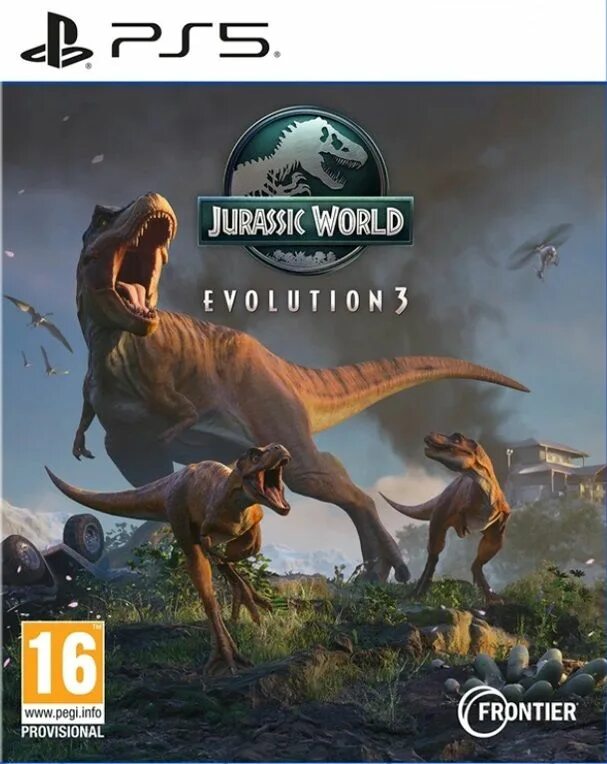
Jurassic World Evolution 3 is a construction and management simulation game from Frontier Developments. It follows *Jurassic World Evolution 2* and launched on PlayStation 5, Windows, and Xbox Series X/S. Players build and run a Jurassic World–themed prehistoric park, with 99 prehistoric animal species available. Of those, 92 have separate female, male, and juvenile models.
The game expands park-building tools, letting players reshape terrain extensively and place modular scenery items, similar to Frontier’s *Planet Zoo* and *Planet Coaster*. Parks, custom buildings, and enclosures can be shared through the Frontier Workshop. A sandbox mode lets players create parks using any campaign map, plus several maps returning from *Jurassic World Evolution 2*. New to sandbox is the ability to generate a custom island, adjusting its shape, elevation, and geographic features. Challenge mode offers scenarios across campaign maps, where players meet conditions to earn rewards.
The campaign mode takes place across ten locations, including Indonesia, Japan, and Hawaii. Jeff Goldblum reprises his role as Dr. Ian Malcolm. Set after *Jurassic World Dominion*, the player works as a supervisor for the Dinosaur Integration Network (DIN), rehabilitating dinosaurs in global conservation facilities. A group called Extinction Now—who believe dinosaurs should stay extinct—sabotages progress.
With gender variants, animals can breed, lay eggs, and raise juveniles. Players place a nesting area in an enclosure with a male and female of the same species. Juveniles may inherit behavioral or cosmetic genetic traits from either parent. Some species require a specific gender ratio for social comfort; for example, herd animals often need at least one male. Environmental needs now include pasture, barren, arid, and wetland coverage, alongside trees, plants, and water. On Xbox Series X/S and PlayStation 5, a complexity meter caps building once a limit is reached, increasing with animals, fences, buildings, and building pieces.
Frontier announced the game in May 2024, with a first trailer in June 2025. It released on October 21, 2025. The Deluxe Edition adds four animals: Protoceratops, Guanlong, Thanatosdrakon, and Concavenator. Pre-orders included the “Badlands Set,” with items inspired by the original *Jurassic Park* dig site.
Quick Facts
- Title
- Jurassic World Evolution 3
- Developer
- Frontier Developments
- Director
- Andrew Fletcher
- Producer
- Poppy Billett · Valentina Goward
- Designer
- Mike Evans
- Programmer
- Andy Scott
- Artist
- Jonathan Bottone
- Writer
- Ian Bousher
- Composer
- Joanna Pena
- Series
- Jurassic Park
- Platforms
- PlayStation 5 · Windows · Xbox Series X/S
- Released
- 21 October 2025
Facts from the source article.
Lore & Background
The game introduces juvenile dinosaurs, which may have different needs compared to their adult counterparts. Animals are able to breed, lay eggs, and raise offspring by placing a compatible nesting area in an enclosure containing both a male and a female of the same species. Juvenile dinosaurs may inherit genetic traits from either parent, either behavioral or cosmetic. Environmental needs have been updated, requiring certain amounts of pasture, barren, arid, or wetland area in addition to tree, plant, and water coverage. A number of species also require a certain gender ratio to maintain social comfort.
The game features a broader suite of park creation tools, allowing players to modify terrain extensively and place modular scenery items, similar to Frontier's other games like Planet Zoo and Planet Coaster. Parks, custom buildings, and enclosures can be shared with other players using Frontier Workshop. On Xbox Series X/S and PlayStation 5, a complexity meter caps how much the player can build once the limit is reached, increased by introducing animals and placing fences, buildings, and building pieces.
The campaign mode is set in 10 locations such as Indonesia, Japan, and Hawaii, and takes place after the events of the film Jurassic World Dominion. The player takes the role of a supervisor for the Dinosaur Integration Network (DIN), aiming to rehabilitate and care for dinosaurs in different conservation facilities. A group called Extinction Now, who believe dinosaurs should remain extinct, halts and sabotages the player's progress. Jeff Goldblum reprises his role as Dr. Ian Malcolm in the campaign mode.
Reader's Guide
Jurassic World Evolution 3 received generally favorable reviews from critics, with OpenCritic reporting that 90% of critics recommended the game. Many critics praised the improvements to the gameplay formula and considered it the best in the series. Shacknews thought the game brought the series to its full potential, commending the addition of juvenile dinosaurs and improvements to customization options. Critics also praised the increased depth given to the animals, along with the graphics and visuals. VideoGamer wrote that the dinosaurs seem more believable and realistic, acting as part of a living ecosystem with families grouped together. TheGamer lauded the visual design and behaviors, calling them 'gorgeous and endlessly fascinating to watch' and stating the game was 'the most beautiful the series has ever looked'. Polygon described the graphics as 'stunning' and praised the amount of visual detail visible up close. A more mixed review from TechRadar called managing animal comfort 'a bit of a chore' and discouraged buying the game if players did not enjoy micromanagement, but was overall positive, deeming the game a satisfying evolution of the series. The game sold more than 500,000 units within two weeks of its release and was nominated for Best Sim/Strategy Game at The Game Awards 2025.
Breeding, Genetics & Environmental Design
Jurassic World Evolution 3 overhauls how players interact with their dinosaur populations by introducing distinct male, female, and juvenile variants for 92 of its 99 total species. This gender system unlocks a full breeding cycle: players must house a compatible male and female of the same species within an enclosure that contains a dedicated nesting area. Once conditions are met, the pair can lay eggs and raise juveniles, each of which may inherit behavioral or cosmetic genetic traits from either parent. Social dynamics also matter, as several herd species require a minimum gender ratio—such as at least one male among a group—to reach maximum happiness. Beyond social needs, the environmental comfort system has expanded significantly. In addition to the familiar tree, plant, and water coverage metrics, animal well-being now depends on the presence of specific terrain types, including pasture, barren, arid, and wetland zones. On console platforms, a complexity meter further shapes park design by capping how many animals, fences, buildings, and building pieces a player can place before hitting a performance ceiling.
Campaign Narrative & Storytelling
Set in the aftermath of the Jurassic World Dominion film, the campaign places the player in the role of a supervisor for the Dinosaur Integration Network, a global organization tasked with the rehabilitation and care of dinosaurs across conservation facilities in ten distinct locations, including Indonesia, Japan, and Hawaii. Jeff Goldblum returns to voice his iconic character Dr. Ian Malcolm, lending narrative gravitas to the story. The central conflict comes from Extinction Now, a radical group that believes dinosaurs should never have been brought back from extinction. Throughout the campaign, this faction actively halts and sabotages the player's conservation efforts in various ways, creating persistent narrative tension. Outside the campaign, a challenge mode lets players select scenarios set across campaign maps and satisfy specific conditions to earn performance-based rewards. The sandbox mode provides creative freedom, allowing players to build on any campaign map or generate a fully custom island by adjusting its shape, elevation, and geographical features. Parks, custom buildings, and enclosures can be shared with the community through Frontier Workshop.
Post-Launch Content & Expansion Pipeline
Frontier Developments committed to a robust post-launch content strategy, beginning with a stream of free species updates. Kentrosaurus arrived in November, followed by Majungasaurus in January, Cryolophosaurus in February, and Amargasaurus in March. After an unexplained gap in April and May, Dracorex and Liopleurodon—both originally planned for those months—were released together on June 1, 2026, alongside Cearadactylus. July brought Torosaurus and Minmi, the latter a carryover DLC animal from the previous title, while Elasmosaurus and Carcharodontosaurus (in both its original and a redesigned form) followed in August and September. Paid expansions layered on top of this cadence. The Wetlands Pack, released December 9, added Austroraptor, Hypsilophodon, and Irritator, plus a return of Deinocheirus. The Rebirth Expansion (June 16) tied into the 2025 film, introducing Aquilops, Titanosaurus, and the fictional mutants Mutadon and Distortus rex, along with film-accurate model variants for T. rex, Spinosaurus, Quetzalcoatlus, and Mosasaurus, and a brand-new campaign set in the early 2010s. The Crocodilia Coast Pack (August 11) contributed Deinosuchus, Postosuchus, Desmatosuchus, Shonisaurus, and Styxosaurus, while the Prehistoric East Pack (September 29) delivered Nanshiungosaurus, Gobisaurus, Yangchuanosaurus, Sinosauropteryx, and Tarbosaurus.
Release, Editions & New Species
Announced by Frontier Developments in May 2024, Jurassic World Evolution 3 revealed its first trailer in June 2025 before launching on PlayStation 5, Microsoft Windows, and Xbox Series X/S on October 21, 2025. The base game ships with 99 prehistoric species when including the Wetlands Pack and Deluxe Edition content, dropping to 92 without those additions. Five species make their debut in the series: Lokiceratops, Ornithomimus, Caiuajara, Psittacosaurus, and Patagotitan. Deinonychus, while present in earlier entries, received a redesigned appearance featuring feathers alongside its traditional scaled look. The Deluxe Edition grants four additional animals—Protoceratops, Guanlong, Thanatosdrakon, and Concavenator—while pre-order bonuses included the Badlands Set, a collection of items inspired by the dig site from the original Jurassic Park film. The game also features a broader suite of park creation tools, enabling extensive terrain modification and placement of modular scenery items in a style reminiscent of Frontier's Planet Zoo and Planet Coaster titles.
Gallery


Frequently Asked Questions
Who developed and published Jurassic World Evolution 3?
Frontier Developments handles both the development and publishing roles for this title. It serves as the third entry in their Jurassic World Evolution park-simulation series.
How many prehistoric species can I encounter in Jurassic World Evolution 3?
The base game offers 99 distinct prehistoric animal species to house and display. Of that total, 92 come with separate female, male, and juvenile visual models.
What new park-building tools does Jurassic World Evolution 3 introduce?
Players can reshape terrain far more extensively than in previous entries and scatter modular scenery pieces across their park. The system borrows design language from Frontier's Planet Zoo and Planet Coaster titles.
How did critics receive Jurassic World Evolution 3?
Metacritic aggregates the reviews as generally favorable. It builds directly on the park-management formula established by Jurassic World Evolution 2 while adding the expanded species roster and terrain tools.
More in Simulation Games 1-20
Spotted an error? Know more?
Reader corrections go straight into our review queue. Suggest an edit · How this site is sourced