Shotgun
A smoothbore firearm firing shot or slug for close-range use.

Ivan Radic · CC BY 2.0
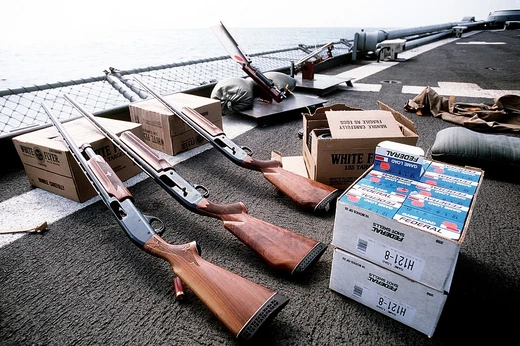
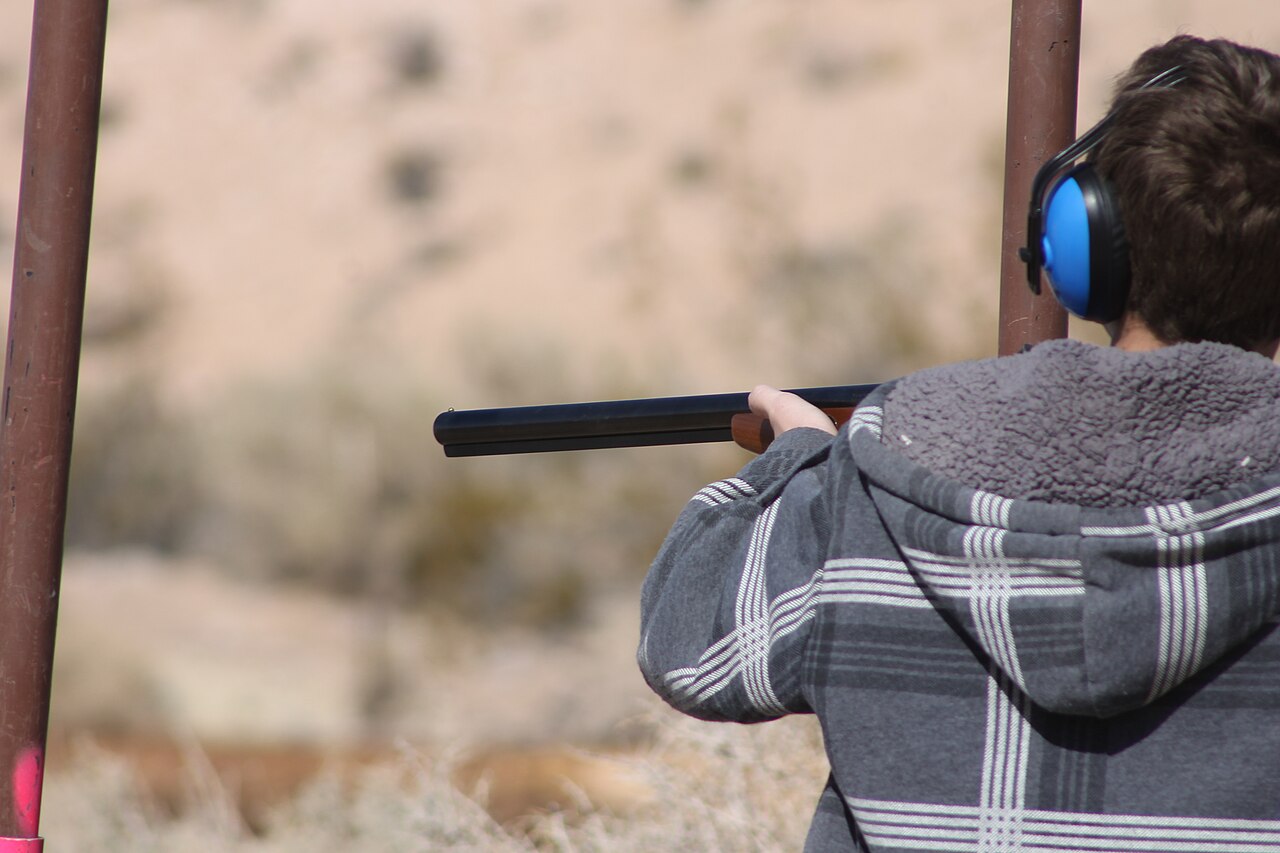
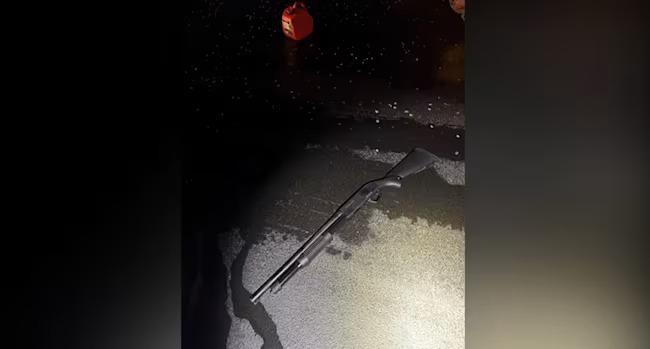
A shotgun, also known as a scattergun, peppergun, or historically as a fowling piece, is a long-barreled firearm designed to shoot a straight-walled cartridge called a shotshell. It discharges either numerous small spherical projectiles known as shot or a single solid projectile called a slug. Shotguns are most commonly smoothbore, meaning their barrels lack rifling, though rifled barrels for sabot slugs are also available. They are notable for their use in hunting, law enforcement, military close-quarters combat, and sports such as skeet and trap shooting.
- Common gauges
- 12-gauge (18.53 mm) and 20-gauge (15.63 mm)
- Caliber range
- 5.5 mm (.22 inch) to 5 cm (2.0 in)
- Earliest recorded use of term 'shotgun'
- 1776 in Kentucky
- Example historical musket bore
- 19 mm (.75 inch) for the Brown Bess
- Typical barrel length for early fowling
- up to 6 ft (1.8 m)
Lore & Background
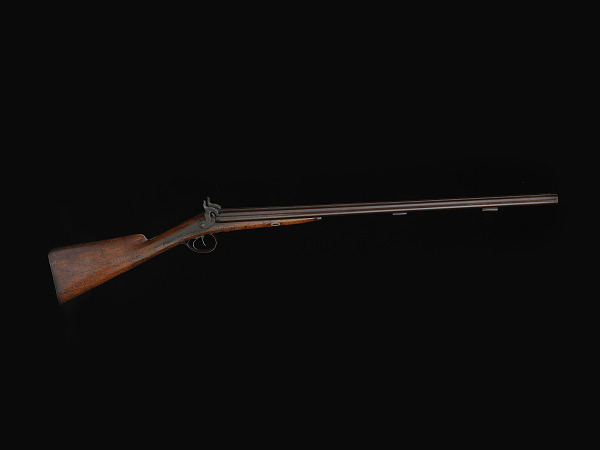
Most early firearms, such as the blunderbuss, arquebus, and musket, had large-diameter smoothbore barrels and could fire shot as well as solid balls. A firearm intended for wing shooting of birds was known as a fowling piece, first appearing in 16th-century Europe. By the early 17th century, fowling piece barrels were extended as long as 6 ft to increase accuracy. The first recorded use of the term 'shotgun' was in 1776 in Kentucky, noted as part of the 'Frontier Language of the West' by James Fenimore Cooper.
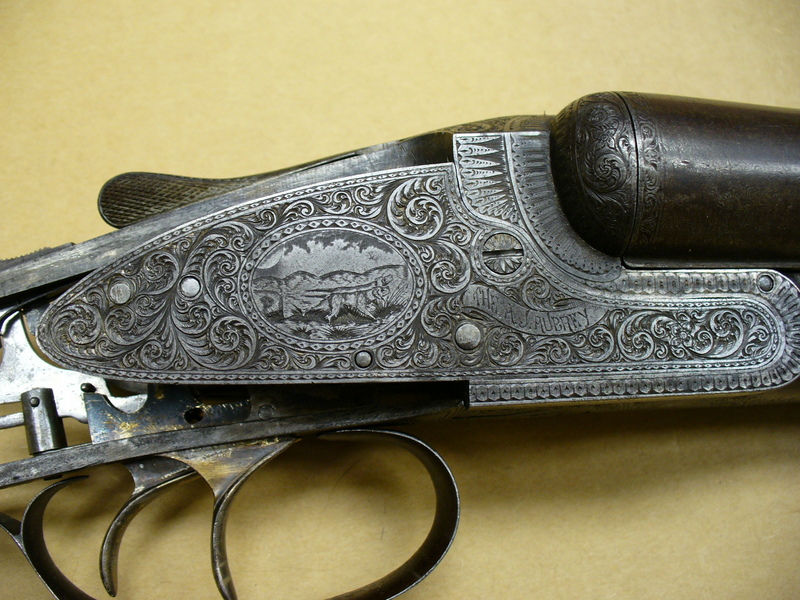
During the 19th century, shotguns were mainly employed by cavalry units, favored for their moving target effectiveness and devastating close-range firepower. Both sides of the American Civil War used shotguns, and U.S. cavalry used them extensively during the Indian Wars. The shotgun also became a symbol of the American Old West, used by guards and lawmen. The term 'riding shotgun' originated from private guards, called express messengers or shotgun messengers, who rode with the weapon for defense against bandits. The double-barreled shotgun has changed little since the development of the boxlock action in 1875.
Reader's Guide
The shotgun has a long history of use in civilian, law enforcement, and military applications. Its smoothbore barrel generates less resistance, allowing greater propellant loads for heavier projectiles without as much risk of overpressure, and it is easier to clean. The shot pellets scatter upon leaving the barrel, producing a cluster of impact points, which makes hitting fast-moving targets easier than with single-projectile firearms. This scatter also means muzzle energy is divided among pellets, reducing individual penetrative kinetic energy. In hunting, this makes shotguns useful for fast-flying birds and small to medium game without overpenetration. In military and law enforcement contexts, the shotgun serves as a door breaching tool, a crowd control weapon, and a close-quarters defensive weapon. In modern conflicts such as the Russia-Ukraine war, shotguns have been found effective for repelling and shooting down enemy drones due to pellet spread. Shotguns are also used in target-shooting sports like skeet, trap, and sporting clays, which involve flying clay disks called 'clay pigeons' launched by a device called a 'trap'.
Did You Know?
- The term 'riding shotgun' comes from private guards who rode with a shotgun for defense against bandits.
- The first recorded use of the word 'shotgun' was in 1776 in Kentucky.
- Shotguns have been used to shoot down enemy drones in the Russia-Ukraine war.
- The double-barreled shotgun has changed little since the boxlock action was developed in 1875.
Engineering & Ballistics
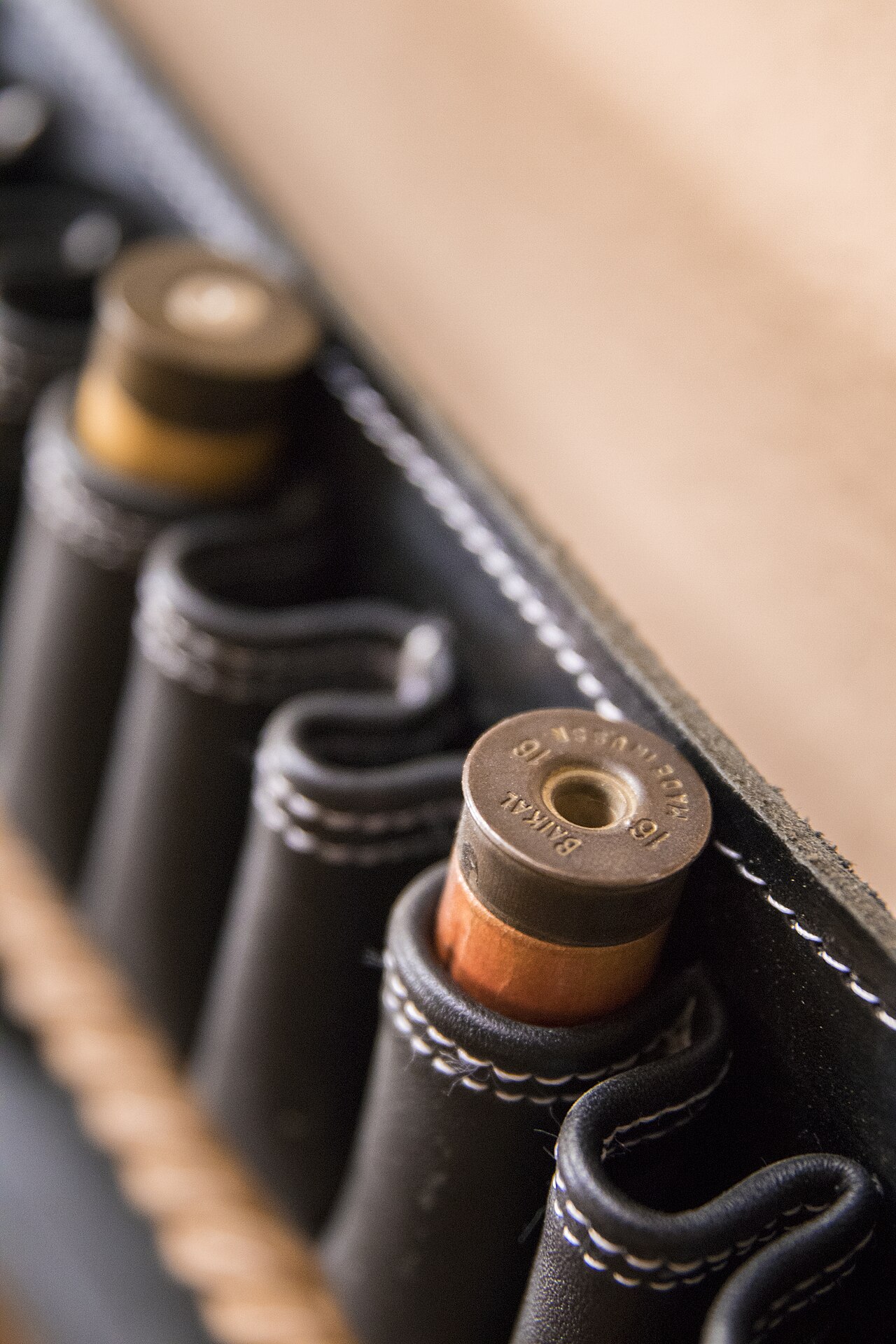
A shotgun's defining engineering choice is its smoothbore barrel, which lacks the rifling found inside most modern firearms. This design reduces internal resistance, permitting heavier propellant charges without the same overpressure risks, and makes the barrel far simpler to clean. The cartridge itself, called a shotshell, houses either a spread of small spherical pellets or a single solid slug. In the pellet configuration, a wadding pad inside the shell propels the shot forward, and the pellets scatter the moment they exit the muzzle. A choke, a constriction at the barrel's end, regulates how widely that pattern opens. Because the total muzzle energy is split across dozens or hundreds of pellets, each individual projectile carries relatively little penetrative force. The pellets also lack spin stabilization and have an aerodynamically imperfect shape, so they decelerate rapidly from drag. The practical result is a weapon with a short effective range but a dense, wide impact cluster at close distance, exactly the profile that suits fast, agile targets while minimizing the danger of a stray round reaching a distant bystander.
A Long Lineage
The shotgun did not appear fully formed. Its roots stretch back to sixteenth-century Europe, where a firearm built specifically for wing shooting was called a fowling piece. Early examples featured barrels stretched to as much as six feet to squeeze out a modicum of accuracy. The British Brown Bess musket, in service from 1722 to 1838, carried a 19-millimetre smoothbore barrel roughly comparable to a modern 10-gauge, and stood 157 centimetres tall. Colonial records from Plymouth Colony document fowling pieces capped at 137 centimetres, shorter than a typical musket. The very word "shotgun" first surfaces in 1776 Kentucky correspondence tied to Fort Boonesborough, later catalogued in the Lyman Draper Collection at the University of Wisconsin. James Fenimore Cooper noted the term as part of the frontier vernacular of the American West. As rifled, smaller-bore firearms took over long-range military roles in the late nineteenth century, the shotgun gradually separated into its own category. The double-barreled shotgun, anchored by the boxlock action introduced in 1875, has changed very little since, and today it remains the preferred platform for competitive clay shooting and many hunters, with specialty makers like Krieghoff and Perazzi crafting high-end examples.
From Trenches to Drone Defense
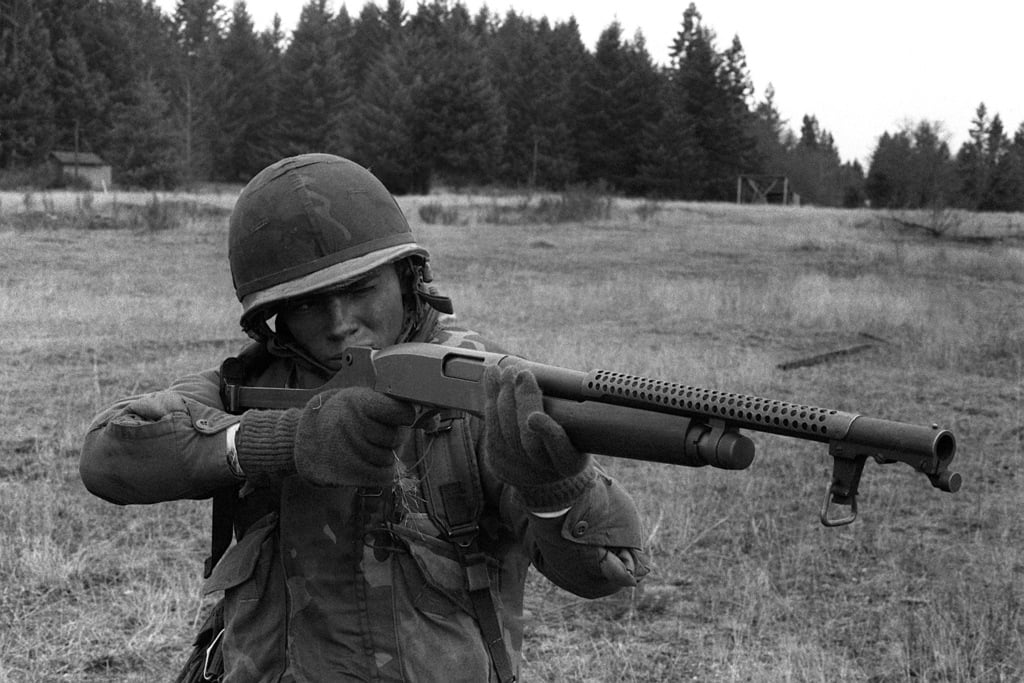
Shotguns occupied a niche in warfare for centuries before being largely displaced. Cavalry units in the early-to-mid nineteenth century favoured them for their ease of handling on the move and their reliable stopping power at short range, and coachmen carried them for personal protection. Then breechloading rifles with spin-stabilized bullets rendered them nearly obsolete on the battlefield. That changed in the First World War, when American troops pressed the pump-action Winchester Model 1897 into trench fighting with notable success, proving the shotgun's value in tight, close-quarters engagements. Since then the weapon has served in a spectrum of defensive and law-enforcement roles: breaching doors, controlling crowds, and providing a blunt-force option where a single high-velocity round would be excessive. In asymmetric conflicts, insurgents have turned to shotguns simply because they are widely owned civilian weapons. The most recent and striking application emerged in the Russia-Ukraine war, where the shotgun's pellet spread proved remarkably effective at intercepting and downing small enemy drones, a task far harder for firearms that fire a single projectile at a fast, manoeuvring target.
The Sport of Clay and Wing
Beyond hunting and combat, the shotgun is the undisputed instrument of several target-shooting disciplines. Skeet, trap, and sporting clays all revolve around clay pigeons, small discs launched in varied arcs by a dedicated machine called a trap. The shooter must track a fast, unpredictable target and deliver a well-timed pattern of shot to shatter it. The double-barreled shotgun has become the standard choice in these sports, a status it has held since the boxlock action was perfected in 1875. Modern refinements such as interchangeable chokes and subgauge inserts give competitors fine-grained control over pattern density and recoil, making the same platform adaptable across different event formats. Wing shooting has long carried an air of prestige, and that reputation has drawn in specialist gunsmiths. Firms like Krieghoff and Perazzi build elaborate, hand-finished double-barreled shotguns that blend competitive performance with the aesthetic tradition of fine firearms. Whether the target is a live bird in the field or a clay disc arcing overhead, the shotgun's wide, forgiving pellet cloud remains the ideal tool for hitting something that is small, fast, and constantly changing direction.
Gallery
Frequently Asked Questions
What exactly is a shotgun?
A shotgun is a long-barreled firearm built to fire straight-walled shotshells, either scattering a cluster of tiny round pellets or propelling a single solid slug. Most models feature a smoothbore barrel with no rifling grooves, though rifled variants exist for sabot slugs.
What are the most common shotgun gauges?
12-gauge (18.53 mm) and 20-gauge (15.63 mm) are the two gauges you'll see most often in the field and at the range. Across all shotguns, bore sizes range from 5.5 mm (.22 inch) up to 5 cm (2.0 inches).
What's the difference between shot and a slug?
Shot is a spread of numerous small spherical pellets designed to cover a wide area at close range, while a slug is one dense solid projectile meant for longer reach and deeper penetration. Both travel inside the same straight-walled shotshell casing.
When was the word 'shotgun' first used?
The term 'shotgun' first appears in the historical record in 1776, in Kentucky. Prior to that, people referred to these guns by names like fowling piece, scattergun, or peppergun.
What are shotguns mainly used for?
Shotguns are staples of hunting, law enforcement, and military close-quarters combat, and they anchor competitive sports such as skeet and trap shooting. Their smoothbore spread and close-range effectiveness make them the go-to choice in those roles.
More in Shotguns 1-24
Spotted an error? Know more?
Reader corrections go straight into our review queue. Suggest an edit · How this site is sourced