Punt gun
An oversized shotgun mounted on a punt for commercial waterfowl hunting.

Sydney Harold Smith (or collaborators on his behalf) · Public domain
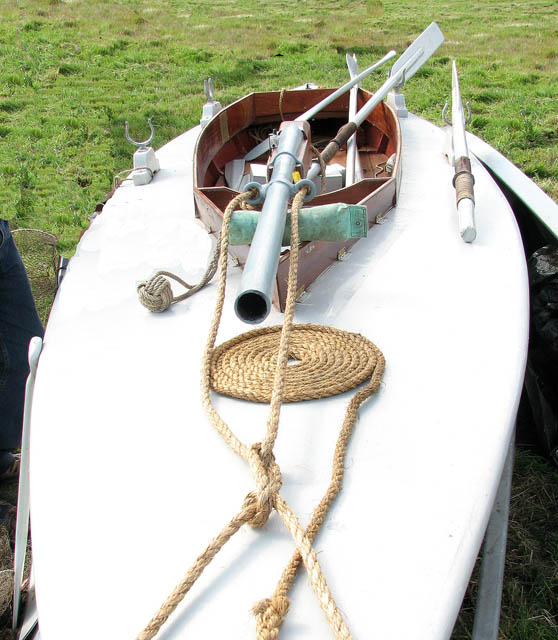
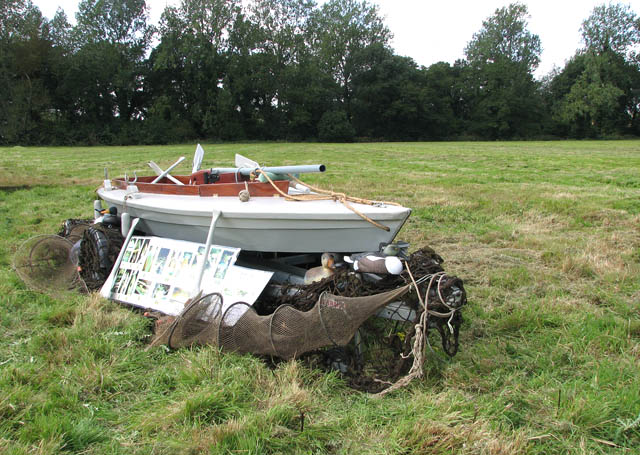
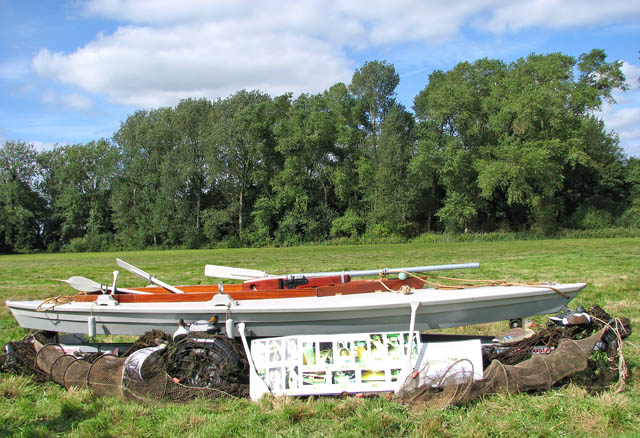
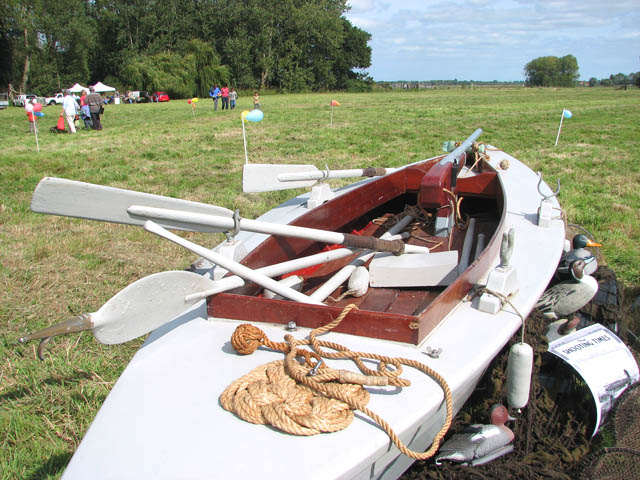
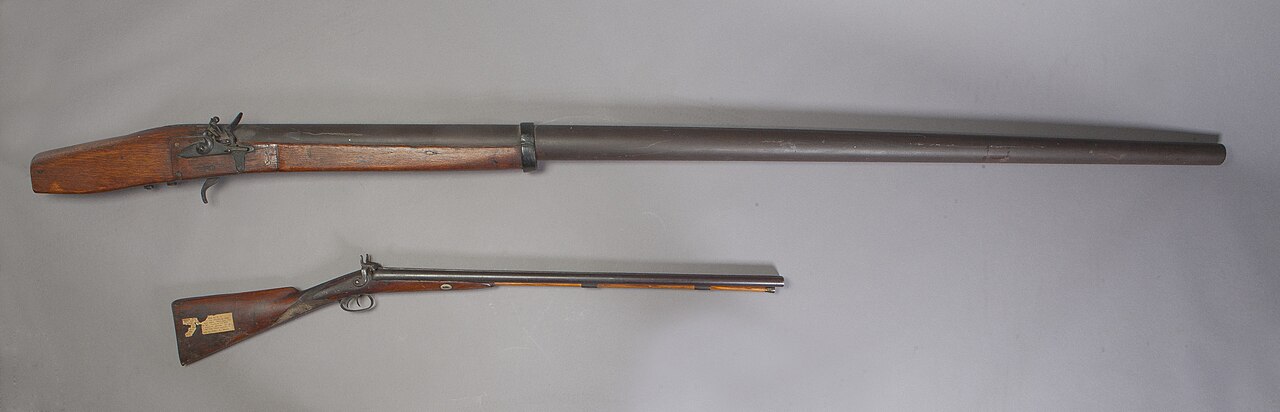
A punt gun is an oversized shotgun, dating from the 1800s and early 1900s, that was used to harvest large numbers of waterfowl for commercial sale. These weapons are far too big to fire from the shoulder or even carry alone, but unlike artillery, a single person can aim and fire one from a mount—usually a small boat called a punt. Early models often look like giant versions of the shoulder-fired guns of the era, with a full-length wooden stock and a normal-sized shoulder stock. Later versions, especially more modern ones, usually drop the full-length stock and instead have mounting hardware that allows the gun to be attached to a pintle.
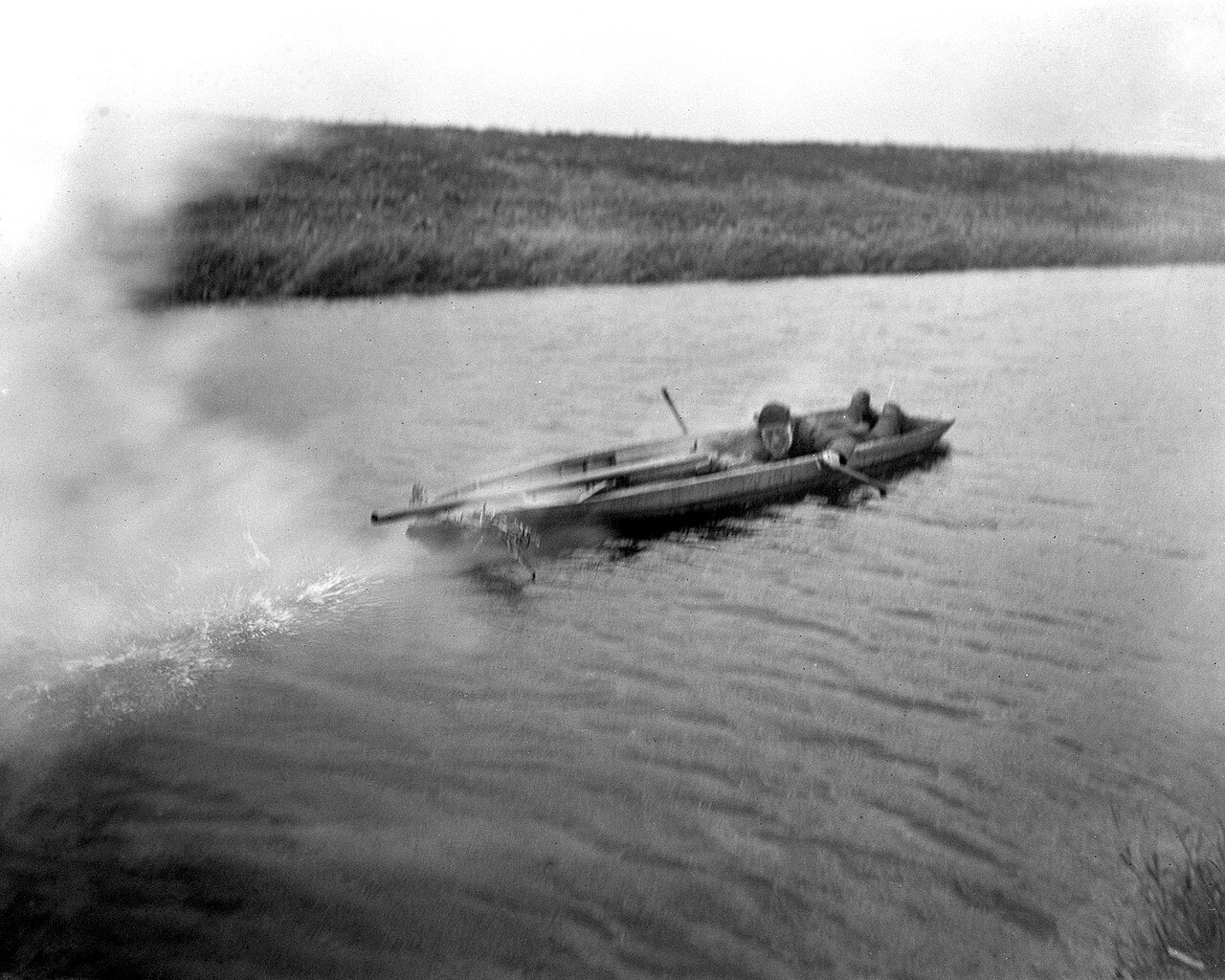
These guns were typically custom-made and varied a lot, but their bore diameters could exceed 2 inches (51 mm), and they could fire over a pound (about 0.45 kg) of shot in a single load. With an effective range of roughly 50 yards (46 meters), one shot could kill more than 50 waterfowl resting on the water. They were too heavy to hold, and the recoil was so severe that they had to be mounted directly on the punts used for hunting—hence the name. Hunters would quietly pole or row their punts into position near a flock, aiming the whole boat since the gun was fixed to it. The guns were so powerful and the punts so small that firing often shoved the boat backward several inches or more. The heavy recoil frequently injured the hunter lying behind the gun to fire it; broken teeth and powder burns to the face were common. To improve efficiency, hunters sometimes worked in fleets of up to about ten punts.
Punt guns were usually muzzle-loaded, with a lock similar to the muskets or rifles of the day, including flintlock, percussion, and more modern types. By the 1890s, Holland & Holland offered custom-order models that used breech loading and standardized shotgun shells in brass or combined paper and brass base. Double-barreled versions also existed, typically in the smaller 8-gauge loadings. Most surviving examples are work-guns with little decoration, and many that appear at modern auctions show signs of repair or upgrades, such as converting a flintlock action to a percussion system or refinishing by rebluing.
In the United States, this hunting method depleted wild waterfowl stocks, and by the 1860s most states had banned it.
Quick Facts
- Is Ranged
- yes
Facts from the source article.
Lore & Background
Punt guns were usually custom-designed and varied widely. They were typically muzzle-loaded with a lock similar to muskets or rifles of the day, including flintlock, percussion, and more modern types. Holland & Holland offered models using breech loading and standardized shotgun shells in both brass and combined paper and brass base in the 1890s via custom order. Double-barrelled models also existed, typically in the smaller 8-gauge loadings. In most cases, these guns were work-guns with little additional adornment in surviving examples. Many appearing in modern auctions have signs of being repaired or upgraded in some fashion, such as upgrading a flintlock action to a more modern percussion system or refinishing by rebluing the piece.
Hunters would maneuver their punts quietly into line and range of the flock using poles or oars to avoid startling them. Generally, the gun was fixed to the punt; thus the hunter would manoeuvre the entire boat in order to aim the gun. The guns were sufficiently powerful, and the punts sufficiently small, that firing the gun often propelled the punt backwards several inches or more. The powerful recoil of punt guns frequently caused injury to the hunter who lay behind the gun to discharge the weapon; broken teeth and powder burns to the face were not uncommon. To improve efficiency, hunters could work in fleets of up to around ten punts.
In the United States, this practice depleted stocks of wild waterfowl and by the 1860s most states had banned the practice. The Lacey Act of 1900 banned the transport of wild game across state lines, and the practice of market hunting was outlawed by a series of federal laws in 1918. While use and possession of punt guns is still legal in the United States, Federal regulations prohibit their use in migratory waterfowl hunting. In the United Kingdom, a 1995 survey showed fewer than 50 active punt guns still in use. The Wildlife and Countryside Act 1981 limits punt guns in England and Wales, and in Scotland, to a bore diameter of 1.75 inches (44 mm) that fired a load of projectiles weighing 1.125 pounds (510 g).
Reader's Guide
Punt guns represent a significant chapter in the history of waterfowl hunting and wildlife conservation. Their development for commercial harvesting operations led to the depletion of wild waterfowl stocks, which in turn prompted early conservation efforts. In the United States, most states had banned the practice by the 1860s, and federal laws such as the Lacey Act of 1900 and a series of laws in 1918 outlawed market hunting. Despite these bans, enforcement was often lax, as seen on the Chesapeake Bay where state and county legislation in the late 19th century was prompted by a decline in waterfowl stocks and the rise of shooting clubs. A notable sting operation in 1882 on Spesutie Island involved Pinkerton detectives infiltrating a community of commercial hunters to target the suspected ringleader George Washington "Uncle Wash" Barnes, though clandestine big gun hunting persisted for decades, only partially checked by state and federal authorities. Not until the 1940s were the last of the punt guns seized or surrendered and donated to local museums in Maryland and Virginia. The legacy of punt guns is also reflected in their continued ceremonial use, such as the punt gun salute at Cowbit, Lincolnshire, England, held every Coronation and Jubilee since Queen Victoria's Diamond Jubilee in 1897, and their appearance in fiction, including works by Desmond Bagley and James A. Michener, as well as the film Tremors 4: The Legend Begins.
Did You Know?
- A single shot from a punt gun could kill over 50 waterfowl resting on the water's surface.
- The powerful recoil of punt guns frequently caused broken teeth and powder burns to the hunter's face.
- In 1882, Pinkerton detectives infiltrated a community of commercial hunters on Spesutie Island to arrest poacher George Washington 'Uncle Wash' Barnes.
- Since Queen Victoria's Diamond Jubilee in 1897, a punt gun salute has been held every Coronation and Jubilee over Cowbit Wash in Lincolnshire, England.
Gallery
Frequently Asked Questions
What is a punt gun?
A punt gun is an enormous shotgun from the 1800s and early 1900s built to slaughter large flocks of waterfowl for commercial sale. It was far too massive to carry or shoulder-fire, so it was bolted to a small flat-bottomed boat called a punt.
How powerful was a punt gun?
These guns featured bores exceeding two inches and could hurl over a pound of shot in a single blast. At their effective range of roughly fifty yards, one discharge could take down more than fifty birds at once.
How did a hunter actually fire a punt gun?
Rather than shouldering the weapon like a normal shotgun, a single operator aimed and discharged it from a fixed mount on the punt. One person could manage the entire aiming and firing process without needing a crew.
Why were punt guns outlawed?
UK law capped shotgun bores at 1.75 inches and shot loads at 1.125 pounds, both limits well below what a punt gun exceeded. The sheer scale of slaughter they enabled made them a target for wildlife-protection legislation.
How did punt gun design change over time?
Early examples resembled giant shoulder-fired shotguns with full-length wooden stocks. Later models abandoned the traditional stock entirely in favor of purpose-built mounting hardware that bolted the barrel directly to the punt frame.
More in Shotguns 1-24
Spotted an error? Know more?
Reader corrections go straight into our review queue. Suggest an edit · How this site is sourced