Blunderbuss
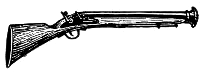
A short-range, large-caliber smoothbore firearm with a flared muzzle.

Wikimedia Commons · CC0
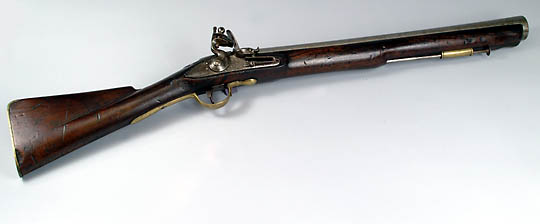
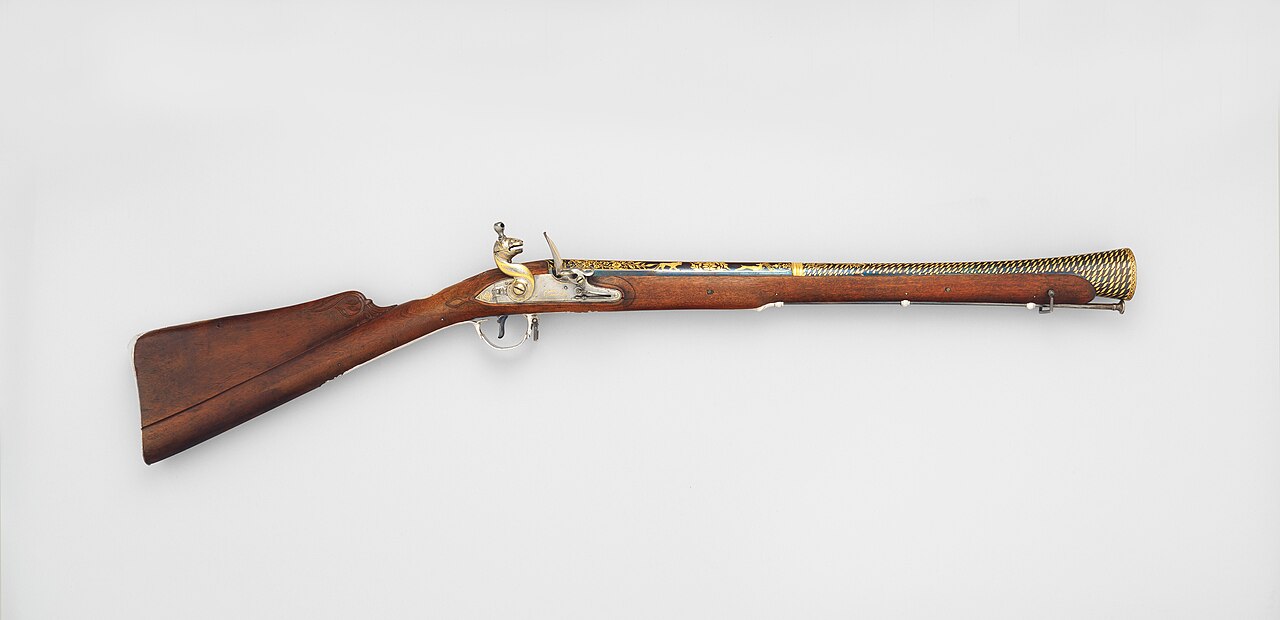
The blunderbuss is a muzzle-loading firearm with a short, large-caliber, smoothbore barrel and a flared muzzle, produced from the seventeenth to the mid-nineteenth century. It is considered an early predecessor of the modern shotgun, effective at short range but lacking accuracy over longer distances.
- Origin
- Dutch, from donderbus (donder 'thunder' + bus 'container')
- Barrel length
- Typically under 60 cm (2 ft)
- Projectile diameter
- Usually .25 in (6.4 mm) to .35 in (8.9 mm)
- Period of use
- 17th to mid-19th century
- Common ammunition
- A dozen or so lead balls, slugs, or improvised loads such as nails, rocks, glass, or bundle shot
Lore & Background
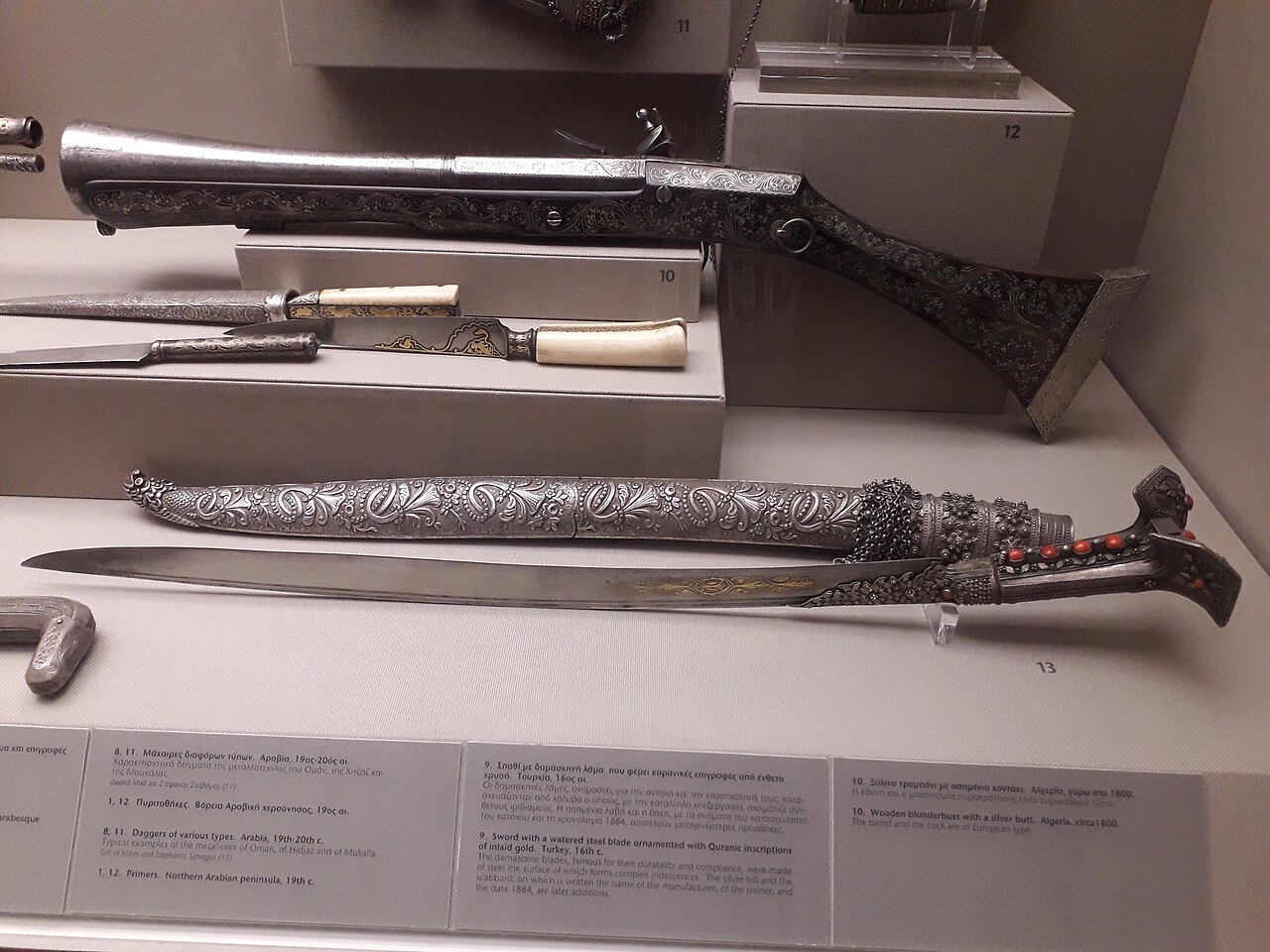
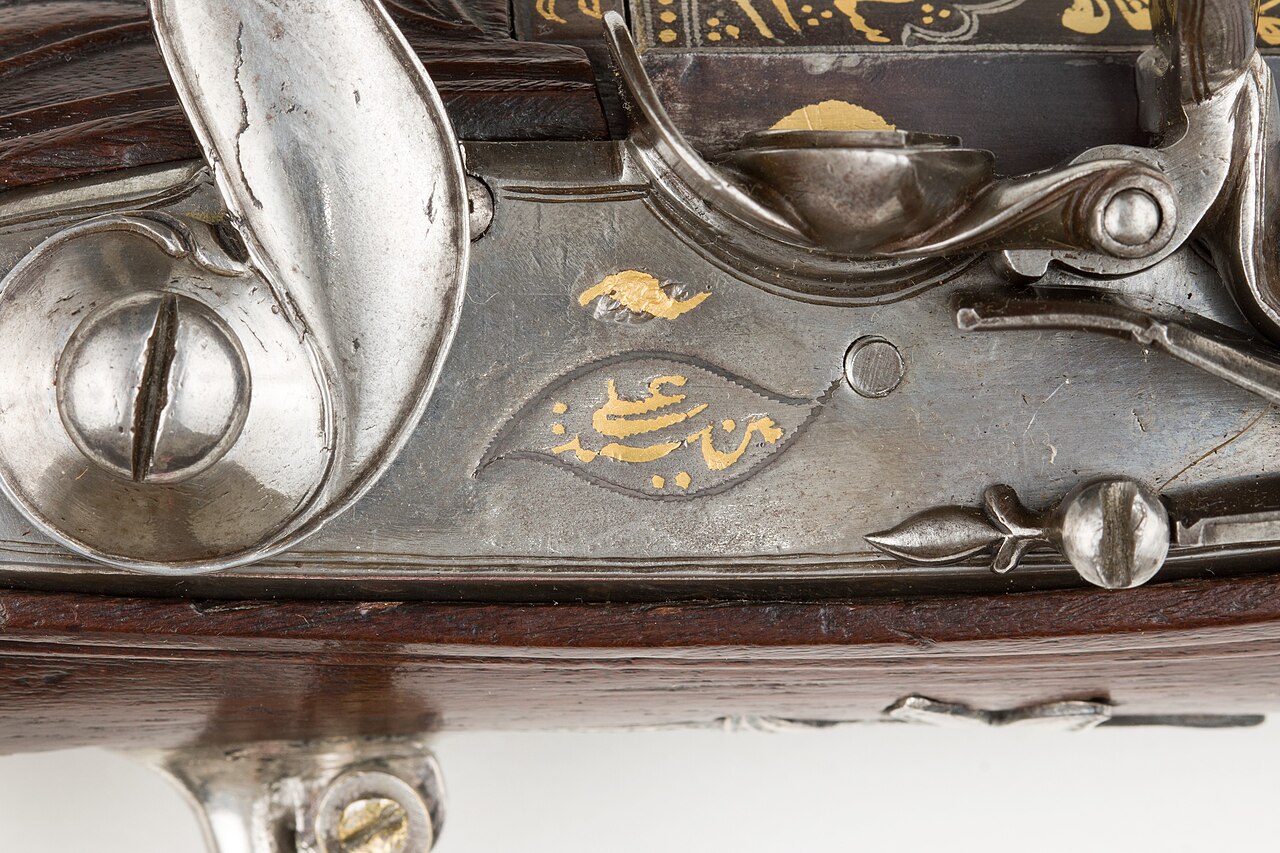
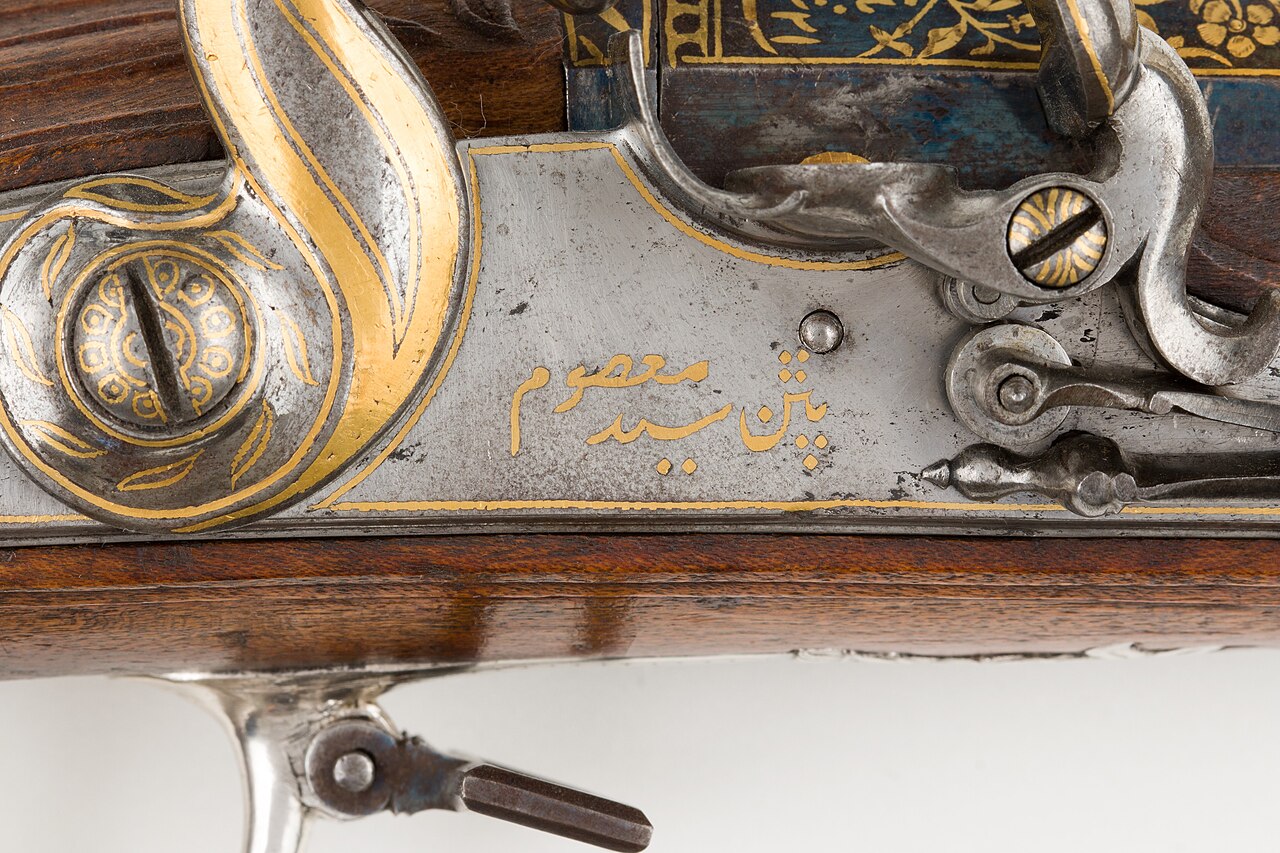
The blunderbuss emerged in the mid-16th century, with early examples being matchlock or wheellock firearms. A 1556 book published in Frankfurt described a gun fitting the blunderbuss design. The weapon spread from Germany to Holland by the late 1500s, and a patent was granted in 1598 to Henrick Theilmans of the Netherlands for a type called the 'Donderbus.' The flintlock mechanism became common in the mid-1600s, and the blunderbuss saw widespread use in the Ottoman Empire and the Middle East.
The blunderbuss reached its height during the Golden Age of Piracy (mid-17th to mid-18th century), favored for close-quarters combat aboard ships. It was often mounted on railings or gunwales via a swivel, used to rake enemy decks with buckshot, and was effective for repelling boarders. The flared muzzle aided reloading in chaotic conditions such as rocking ships or wet decks. In 18th-century England, it became a common defensive weapon for coachmen against highwaymen, earning the name 'coach gun.' Wealthy individuals carried blunderbusses for protection, and some civilian models featured a hinged bayonet.
A handgun version called a dragon was used by cavalry, and the term 'dragoon' derived from this weapon. The dragon's barrel was around 28 cm (11 in), compared to about 41 cm (16 in) for a typical blunderbuss. Barrels were made of steel or brass. The flared muzzle aided reloading but did not spread the shot; modern experiments showed increased spread from a flared barrel, though the methodology has been questioned.
Reader's Guide
The blunderbuss holds significance as an early form of shotgun, serving roles that later shotguns would fill. Its design—short barrel, large bore, and flared muzzle—made it ideal for close-quarters combat on ships and coaches, where rapid reloading and a wide shot pattern were advantageous. The weapon's association with pirates and coachmen has cemented its place in popular culture, though myths persist, such as its incorrect depiction as a common arm of early American Pilgrims. The blunderbuss declined after the invention of the double-barrel flintlock shotgun in 1790 and the percussion cap in the 1820s. By the mid-1850s, paper cartridges allowed faster loading of percussion cap shotguns, and by 1870, short, inexpensive double-barreled shotguns and centerfire metallic cartridges rendered the blunderbuss obsolete. Most surviving examples date from 1750 to 1830, many owned by the English aristocracy and often ornately decorated, making them highly sought after by collectors.
Did You Know?
- The term 'blunderbuss' comes from the Dutch 'donderbus,' meaning 'thunder container.'
- A handgun version of the blunderbuss was called a dragon, from which the term 'dragoon' is derived.
- The blunderbuss was commonly mounted on ship railings via a swivel for use against enemy crews.
- Despite popular depictions, there is no evidence that Pilgrims used blunderbusses.
Gallery
Frequently Asked Questions
What is a Blunderbuss?
The Blunderbuss is a short-barreled, large-caliber smoothbore muzzle-loader distinguished by its wide, flared muzzle. It is widely regarded as one of the earliest ancestors of the modern shotgun.
Where does the name 'Blunderbuss' come from?
The term traces back to the Dutch word donderbus, combining donder (thunder) with bus (container or vessel). The English form evolved from that Dutch root over the following centuries.
What kind of ammunition did a Blunderbuss fire?
Shooters typically loaded it with a small cluster of lead balls, a single slug, or improvised payloads like nails, stones, or shattered glass. Its wide bore—usually between .25 and .35 inches—made it well suited for these varied loads.
How effective was a Blunderbuss at range?
It was a powerful option at very close distances but became highly inaccurate beyond just a few yards. Its short barrel, typically under two feet, and smoothbore design limited its reach significantly.
During what era was the Blunderbuss most common?
The firearm saw widespread use from the 1600s through the mid-1800s, after which it was gradually replaced by more accurate, longer-barreled weapons. It was especially popular with sailors, guards, and home defenders.
More in Shotguns 1-24
Spotted an error? Know more?
Reader corrections go straight into our review queue. Suggest an edit · How this site is sourced