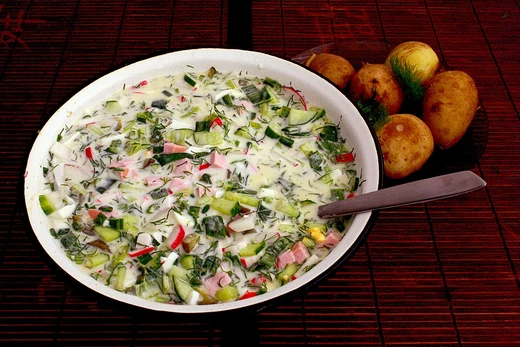
Mordovian cuisine
Traditional cuisine of the Mordovians, featuring fish and grains.

Mordovian cuisine is the traditional food of the Mordovian people, who reside in Mordovia and nearby regions. The dishes are shaped by the area’s geography, culture, and climate, with fish playing a central role.
Because the Volga Finns settled along rivers where fishing was easy, fish was a staple. It was eaten raw, frozen, dried, salted, or boiled. Ingredients like fish liver, eggs, and milt were also used in cooking.
Meat and poultry were stewed, baked, or boiled. Frying methods existed in Finno-Ugric traditions long before the 19th century. Beef, mutton, and pork were preserved by drying—pre-boiled meat was dried in an oven or under the sun—or by freezing. Fat skimmed from broth was saved for cooking. Horsemeat was consumed historically, but there is no evidence of a widespread shift from general consumption to exclusive ritual use.
Farms grew cabbage, cucumbers, potatoes, garlic, carrots, beans, beets, turnips, radishes, and pumpkins. In summer and fall, fresh fruit was eaten in abundance. Pickled cucumbers were used in recipes. Instead of spices, herbs like watercress, horseradish, onion, cow parsnip, horsetail, nettle, and wild goutweed flavored the food.
Mushrooms were a key ingredient, prepared by boiling, salting, frying, souring, or drying.
Grains held a special place. The Finno-Ugric peoples commonly used wheat, barley, spelt, and rye. Ritual meals were tied to the agricultural calendar, family events, and holidays. Millet porridge, for instance, appeared at weddings, christenings, and funerals, and there was a special “baba’s porridge” (female porridge) made on a bride’s last day at home.
Pancakes, called pachat, were a favorite. They were made from rye, wheat, millet, or pea flour. Mordovians liked them thick, sometimes adding boiled potatoes to the dough, and served them with milk and honey. The Erzya people call them panžakaj.
- field
- Cuisine
- nationality
- Mordovian (Finno-Ugric)
- known_for
- Fish dishes, thick pancakes (pachat), ritual porridges, use of wild herbs and mushrooms
Lore & Background
Mordovian cuisine is rooted in the lifestyle of the Volga Finns, who settled along riversides convenient for fishing. Fish was a staple, eaten raw, frozen, dried, salty, or boiled, and fish liver, eggs, and milt were used as ingredients. Meat was stewed, baked, or boiled; frying methods existed in Finno-Ugric traditions long before the 19th century. Horsemeat was consumed historically, but there is no evidence of a widespread shift from general consumption to exclusive ritual use.
Reader's Guide
Mordovian cuisine is significant for its reflection of Finno-Ugric traditions and adaptation to local resources. The heavy reliance on fish, wild herbs, and mushrooms, along with preservation methods like drying and freezing, highlights a sustainable approach to food. Grains such as wheat, barley, spelt, and rye were central, with millet porridge playing a role in rituals like weddings and funerals. Thick pancakes called pachat, made from rye, wheat, millet, or pea flour and often containing boiled potatoes, were a favorite dish. The cuisine's legacy lies in its preservation of ancient cooking techniques and its integration of natural ingredients without heavy spices, using herbs like nettle and horseradish instead.
Did You Know?
- Fish was eaten raw, frozen, dried, salty, and boiled.
- Frying methods existed in Finno-Ugric traditions long before the 19th century.
- Millet porridge was used in rituals such as weddings, christenings, and funerals.
- Pancakes called pachat were made from rye, wheat, millet, or pea flour and often included boiled potatoes.
More in Russian cuisine 1-24
Spotted an error? Know more?
This is a living reference — every entry is fact-audited, and reader corrections feed straight into our audit queue. Suggest an edit · See this site's audit record