Allium fistulosum
A hollow-leaved perennial onion native to China.

Allium fistulosum, known as Welsh onion, bunching onion, Japanese bunching onion, stone leek, rock onion, and spring onion, is a species of perennial plant often considered a kind of scallion. It is native to China, cultivated in many places, and naturalized in scattered locations throughout Eurasia and North America. The species is similar in taste and odor to the common onion (Allium cepa) but does not develop bulbs, and its leaves and scapes are hollow.
- species
- Allium fistulosum
- common_names
- Welsh onion, bunching onion, Japanese bunching onion, stone leek, rock onion, spring onion
- native_region
- China
- naturalized_regions
- Eurasia and North America
- culinary_use
- Asian cuisine, especially East Asia and Southeast Asia
- key_characteristic
- Does not develop bulbs; hollow leaves and scapes
Quick Facts
- Taxon
- Allium fistulosum
- Parent
- Allium subg. Cepa
Facts from the source article.
Lore & Background
Allium fistulosum has been historically known as the cibol, and in Cornwall as chibols, in Scotland as sybows or sybies. The common name 'Welsh onion' does not refer to Wales; it derives from a near-obsolete botanical use of 'Welsh' meaning 'foreign, non-native,' as the species is native to China. The plant may also be called stone-leek or rock onion, and names like green onion, salad onion, and spring onion are ambiguous, as they may refer to any young green onion stalk from various Allium species.
Reader's Guide
Allium fistulosum is significant as a staple ingredient in East Asian and Southeast Asian cuisines, particularly in China, Japan, Taiwan, and Korea. In China, it is used in scallion pancakes, as a garnish, and mixed with meat in shumai dumplings or pearl meatballs. In Japan, it is used in miso soup, negimaki, and as a sliced garnish on teriyaki or takoyaki. In Korea, larger varieties called daepa are used in broths, pickles, and fried chicken, while thinner silpa is used as a garnish or in seasoned dishes. The plant is also used in Russia for spring salads, in Jamaica as escallion in combination with thyme and Scotch bonnet pepper, and in Argentina for empanadas and locro. Its ability to multiply by forming perennial evergreen clumps and its use as an ornamental plant add to its legacy. Hybrids with common onion (tree onions) exist, and larger varieties resemble leeks while smaller ones resemble chives.
Did You Know?
- The common name 'Welsh onion' derives from a near-obsolete use of 'Welsh' meaning 'foreign, non-native,' not from Wales.
- Allium fistulosum does not develop bulbs, and its leaves and scapes are hollow.
- In Korea, common onions are called yangpa, meaning 'Western scallion,' while A. fistulosum is called pa.
- The Jamaican name 'escallion' is probably a variant of 'scallion.'
Botanical Identity & Growth Habits
Allium fistulosum is a perennial species within the onion family that occupies a distinctive niche among its relatives. Unlike the common onion (Allium cepa), it never forms a bulb; instead, its leaves and flowering stalks are characteristically hollow, a trait captured in the Latin epithet fistulosum, meaning "hollow." The plant multiplies by forming dense, evergreen clumps that persist year after year, making it a reliable perennial in the garden. Taste and aroma closely mirror those of the common onion, and hybrids between the two species, sometimes called tree onions, do exist. Morphologically the species spans a range: larger cultivars such as the Japanese negi take on a leek-like appearance, while smaller types resemble chives. Beyond the kitchen, A. fistulosum is occasionally planted in bunches purely as an ornamental, adding texture and color to garden beds.
A Tangle of Names
The most widely recognized English name for this plant, "Welsh onion," is a complete misnomer. The species is neither native to Wales nor a staple of Welsh cooking; the green Allium traditionally associated with Wales is the leek (A. ampeloprasum), the country's national vegetable. The term "Welsh" here traces back to a near-obsolete botanical convention in which the word signified "foreign" or "non-native," a nod to the plant's true origin in China. Over centuries the species accumulated a bewildering array of local labels: historically called cibol, it appears as chibols in Cornwall and as sybows or sybies in Scotland. Other English appellations include stone leek, rock onion, bunching onion, long green onion, and Japanese bunching onion. The labels "green onion," "salad onion," and "spring onion" are particularly slippery, since they can equally describe young stalks of the common onion or other Allium species, making precise identification from a name alone nearly impossible.
The Heart of East Asian Cooking
In East and Southeast Asian kitchens, A. fistulosum is far more than a garnish; it is a foundational flavor agent. In China, it stars in scallion pancakes, gets folded into shumai dumplings and pearl meatballs, and tops countless dishes as a fresh finishing touch. Japan calls it negi, or more specifically naganegi meaning "long onion," and it is indispensable in miso soup, negimaki beef-and-scallion rolls, and as a sliced topping for teriyaki and takoyaki. Although common onions arrived in East Asia only in the nineteenth century, the hollow-stalked variety remains the more popular and widespread choice. Korea offers the most granular vocabulary: daepa for the leek-like larger type, silpa for the thin early variety, and jjokpa for the closely related A. × wakegi. Daepa's white base builds broths and infused oils, while silpa's green ribbons bundle parboiled rolls or season namul. Dishes range from pickled scallions and scallion dumplings to pa-sanjeok skewers and padak, a fried chicken crowned with shredded raw daepa.
A Global Kitchen Staple
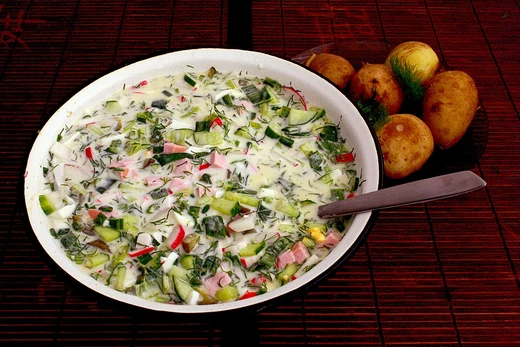
Outside East Asia, the plant's culinary footprint is broader than many Western cooks realize. In Russia, tender green leaves are harvested in spring and tossed into fresh salads. In Jamaica, the vegetable is known as escallion, a likely phonetic drift from "scallion," and is a core component of the island's seasoning blend alongside thyme, Scotch bonnet pepper, garlic, and allspice; dried escallion spice mixes are even sold commercially, and leek is sometimes suggested as a salad substitute. In Argentina, it features in empanadas and locro, two of the country's most beloved traditional preparations. In the broader Western world, A. fistulosum is most often encountered simply as a scallion or salad onion, a role that underplays its versatility. Native to China, the species has been cultivated across so many regions that it has naturalized in scattered locations throughout Eurasia and North America, weaving itself into local food cultures far from its origin.
Frequently Asked Questions
What is Allium fistulosum?
It is a perennial onion species that goes by several common names, including Welsh onion, bunching onion, and spring onion. It is often grouped with scallions but is technically its own distinct species.
Where does Allium fistulosum originally come from?
This hollow-stemmed perennial traces its roots to China, where it has been cultivated for a long time. It has since spread and become naturalized in scattered locations across Eurasia and North America.
How does Allium fistulosum differ from a common onion?
The key distinction is that it never develops the round bulb characteristic of Allium cepa. Instead, its leaves and flowering scapes remain hollow, though the taste and aroma are quite similar to a regular onion.
What role does Allium fistulosum play in the kitchen?
It is a staple aromatic in East and Southeast Asian cooking, where the crisp hollow stalks are chopped into stir-fries, soups, and garnishes. Its mild oniony flavor and light texture make it a versatile fresh ingredient.
Why is Allium fistulosum notable among onion species?
As a perennial that skips bulb formation entirely, it offers a different growing and harvesting profile compared to the annual common onion. Its long cultivation history in China and widespread naturalization make it a globally recognized and distinct member of the onion family.
More in Russian cuisine 1-24
Spotted an error? Know more?
This is a living reference — every entry is fact-audited, and reader corrections feed straight into our audit queue. Suggest an edit · See this site's audit record