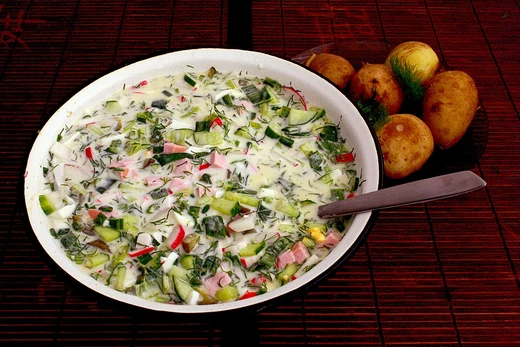
Koryo-saram cuisine
Koryo-saram cuisine blends Korean roots with Soviet influences.

Koryo-saram are ethnic Koreans from the former Soviet Union, and their cuisine is a unique offshoot of Korean cooking shaped by the various countries they’ve lived in. This food tradition is separate from that of Sakhalin Koreans, another Korean community in the former Soviet Union with its own culinary identity. While dishes like morkovcha have become a common sight in grocery stores across the former Soviet Union, the cuisine remains almost entirely unknown in South Korea—a fact that sometimes surprises visitors from Russia.
The cuisine is most closely tied to the cooking of the Hamgyong provinces, now in North Korea, since many Koryo-saram trace their roots there. Many dishes are adaptations of Korean recipes using locally available ingredients. For instance, pork is common in Korea but scarce in Koryo-saram cuisine in Uzbekistan due to Islamic dietary restrictions. Seafood, also popular in Korea, is absent among inland Koryo-saram. The food was further adjusted for non-Korean customers, often by using less pepper.
Koryo-saram also eat typical foods from their current regions. Many Korean Ukrainians who move to South Korea for work miss Ukrainian food and prefer their own dishes over South Korean ones. A restaurant like Cafe Lily in New York City, run by Uzbeki Koreans, serves Central Asian food alongside Koryo-saram cuisine. The cuisine is so different from South Korean food—partly because it comes from areas now in North Korea—that some Koryo-saram, such as academic German Kim, find many South Korean dishes unfamiliar or even unpleasant. Some Russians are reportedly taken aback when they visit South Korea and discover morkovcha is virtually unheard of there.
Koryo-saram have also woven Korean spices into other dishes, and several of their creations have become widely popular across the former Soviet Union. Morkovcha, for example, is sold pre-made in many grocery stores.
- field
- Cuisine
- known_for
- Distinct Korean-influenced cuisine popular in the former Soviet Union
- nationality
- Koryo-saram (ethnic Koreans of the former Soviet Union)
- related_cuisine
- Most closely related to Hamgyong provinces cuisine (now North Korea)
Lore & Background
Koryo-saram cuisine is most closely related to that of the Hamgyong provinces, now in North Korea, because many Koryo-saram are descended from people from that area. Many dishes are adaptations of Korean dishes using ingredients available to them. For example, pork is absent in Uzbekistan due to Islamic dietary restrictions, and seafood is not consumed by inland Koryo-saram. The cuisine was also adjusted to suit local non-Korean customers, notably by reducing the amount of pepper used.
Reader's Guide
Koryo-saram cuisine holds significance as a unique culinary tradition that evolved from Korean roots through adaptation to life in the former Soviet Union. It is considered so distinct from South Korean cuisine—partly because it descends from areas now in North Korea—that some Koryo-saram find many South Korean dishes unfamiliar and even unpleasant. Some Russians are reportedly surprised when they visit South Korea and find that morkovcha is virtually unknown there. The cuisine has achieved widespread popularity across the former Soviet Union, with morkovcha available pre-made in many grocery stores. Koryo-saram also consume food typical to their region, and some restaurants, like Cafe Lily in New York City, serve Central Asian cuisine alongside Koryo-saram dishes. The cuisine's legacy includes incorporating Korean spices into other dishes.
Did You Know?
- Morkovcha is widely available in grocery stores throughout the former Soviet Union but is virtually unknown in South Korea.
- Koryo-saram cuisine is most closely related to the cuisine of the Hamgyong provinces, now in North Korea.
- In Uzbekistan, pork is absent from Koryo-saram cuisine due to Islamic dietary restrictions.
- Some Russians are reportedly surprised to find that morkovcha is unknown in South Korea.
More in Russian cuisine 1-24
Spotted an error? Know more?
This is a living reference — every entry is fact-audited, and reader corrections feed straight into our audit queue. Suggest an edit · See this site's audit record