Kanagawa Prefecture
Historic seat of the Kamakura shogunate and modern commercial hub.

Dick Thomas Johnson from Tokyo, Japan · via Wikipedia: Kanagawa Prefecture · CC BY 2.0
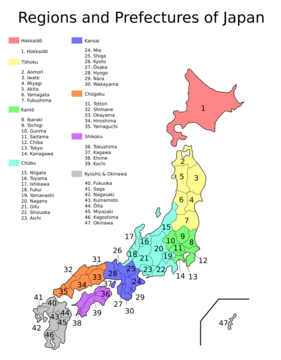
Kanagawa Prefecture is a prefecture of Japan located in the Kantō region of Honshu, forming part of the Greater Tokyo Area. It is the second-most populous prefecture in Japan, with Yokohama as its capital and largest city, and was the political and economic center of Japan during the Kamakura period when Kamakura served as the de facto capital.
Quick Facts
- Native Name
- ja · 神奈川県
- Settlement Type
- Prefecture
- Blank Emblem Type
- Symbol
Facts from the source article.
Lore & Background
Kanagawa Prefecture has archaeological sites dating to the Jōmon period (around 400 BCE). About 3,000 years ago, Mount Hakone erupted, forming Lake Ashi in the western area. The imperial dynasty is believed to have ruled the area from the 5th century onward, though its plains were sparsely inhabited in ancient times. During the medieval period, Kanagawa was part of the provinces of Sagami and Musashi, and Kamakura became the capital of Japan under the Kamakura shogunate from 1185 to 1333.
In the Edo period, the western part of Sagami Province was governed by the daimyō of Odawara Castle, while the eastern part was directly controlled by the Tokugawa shogunate in Edo. Commodore Matthew Perry landed in Kanagawa in 1853 and 1854, leading to the Convention of Kanagawa that opened Japanese ports to the United States. Yokohama's deep-water port opened to foreign traders in 1859 and grew into Japan's largest trading port, while Yokosuka developed as a naval port.
The 1923 Great Kantō earthquake, with its epicenter beneath Izu Ōshima in Sagami Bay, devastated Yokohama and surrounding areas, causing widespread damage and thousands of deaths. During World War II, Yokohama, Kawasaki, and other cities were heavily damaged by U.S. bombing in 1945. After the war, General Douglas MacArthur landed in Kanagawa, and U.S. military bases remain in the prefecture.
Reader's Guide
Kanagawa Prefecture holds a unique position in Japanese history as both the medieval political center during the Kamakura period and a modern gateway to international trade. Its significance stems from its role as the seat of Japan's first shogunate, which established Kamakura as the de facto capital from 1185 to 1333, shaping the country's feudal governance. The prefecture's coastal location on Tokyo Bay and Sagami Bay made it a focal point for foreign contact, from Commodore Perry's arrival in the 1850s to the opening of Yokohama as a major trading port. Today, Kanagawa is an integral part of the Greater Tokyo Area, the world's most populous metropolitan region, with Yokohama serving as a major commercial hub. Its legacy includes the preservation of historical sites in Kamakura and Hakone, which remain popular tourist destinations, and the continued presence of U.S. military installations such as Yokosuka Naval Base. The prefecture's rapid post-war urbanization transformed it from the 15th most populous prefecture in 1945 to the second most populous by 2006, reflecting its central role in Japan's modern economic development.
Did You Know?
- Kanagawa Prefecture is the second-most populous prefecture in Japan, with a population of 9,221,129 as of April 2022.
- Kamakura, located in Kanagawa, was the de facto capital of Japan during the Kamakura period (1185–1333).
- The 1923 Great Kantō earthquake devastated Yokohama and caused over 2,000 deaths in Kamakura alone.
- Yokosuka Naval Base in Kanagawa serves as headquarters for the U.S. 7th Fleet and the Japan Maritime Self-Defense Force.
More in Prefectures Of Japan 1-24
Spotted an error? Know more?
Reader corrections go straight into our review queue. Suggest an edit · How this site is sourced