Kagoshima Prefecture
Southern Kyushu prefecture with volcanic landscapes and rich food culture.

via Wikipedia: Kagoshima Prefecture · see source
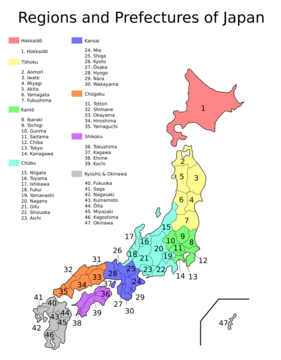
Kagoshima Prefecture sits at the southwestern tip of Kyushu, stretching across both the main island and the Ryukyu Islands. With a population of roughly 1.53 million as of early 2025, it covers about 9,187 square kilometers. Its capital, Kagoshima City, is also its largest urban center. To the north lies Kumamoto Prefecture, while Miyazaki Prefecture borders it to the northeast.
Historically, this region formed the heart of the Satsuma Domain, a powerful feudal territory governed from Kagoshima Castle. During the Edo period and the Meiji Restoration, Satsuma was one of Japan’s most influential domains. The prefecture’s territory corresponds to the old provinces of Ōsumi and Satsuma, plus the northern part of the Ryukyu Islands (the Satsunan chain). Key figures from this area include Saigō Takamori, a central leader in the Meiji Restoration, and Admiral Tōgō Heihachirō, whose naval career was tied to Kagoshima’s role as a major base during 20th-century wars.
More recent events include the 2001 sinking of a North Korean spy ship by the Coast Guard—later salvaged and displayed in Tokyo—and the 1978 abduction of an office clerk from a local beach by North Korean agents, a case that came to light only under the Koizumi administration.
The population is primarily Japanese and Ryukyuan, the latter concentrated in the Amami Islands.
Geographically, the prefecture is defined by two large peninsulas—Satsuma and Ōsumi—that flank Kagoshima Bay. This bay, also called Kinkowan, is a prominent feature. Beyond the mainland, a chain of islands stretches southwest for hundreds of kilometers, with the Amami Islands being the most significant. The prefecture is bordered by the East China Sea to the west, Okinawa to the south, and Kumamoto and Miyazaki to the north and east. Its coastline, including the 28 islands, is extensive. Historically, this location made it a gateway to Japan. While Kyushu as a whole has about 13 million people, Kagoshima’s population is under 2 million.
Volcanic activity is a constant presence. Sakurajima, one of Japan’s most active volcanoes, rises from Kagoshima Bay opposite the capital. It emits a steady stream of smoke and ash, with minor eruptions occurring almost daily. On active days, residents in Kagoshima City often carry umbrellas to shield themselves from falling ash. Major eruptions include the 1914 event, which deposited enough material to permanently connect the island to the mainland, and a smaller one in 1960. The volcanic soil supports record-sized daikon radishes, roughly the size of a basketball. Beaches around the bay are often covered in smooth pumice stones. Near the spa town of Ibusuki, a crater lake at the southwestern tip is home to a rare species of giant eel.
As of March 2019, 13% of the prefecture’s land was designated as Natural Parks. These include the Amami Guntō, Kirishima-Kinkowan, Unzen-Amakusa, and Yakushima National Parks; the Koshikishima and Nichinan Kaigan Quasi-National Parks; and several prefectural parks such as Akune, Bōnoma, Fukiagehama, Imutaike, Ōsumi Nanbu, Sendaigawa Ryūiki, Takakumayama, and Tokara Rettō.
The economy is heavily concentrated around Kagoshima City and its surroundings, which correspond to the old Satsuma Province. The eastern part, former Ōsumi Province, remains mostly rural and is experiencing population decline. Agriculture is a strong foundation, with key exports including green tea, sweet potatoes, radishes, Pongee rice, Satsuma ware pottery, Berkshire pork (kurobuta), and local Black Wagyu beef. Kagoshima is Japan’s top producer of both beef and pork. It also leads in unagi eel production and ranks second only to Shizuoka in bonito flakes. The Japan Aerospace Exploration Agency (JAXA) operates facilities here, including the country’s main launch site on Tanegashima and the Uchinoura Space Center. As of 2018, the prefecture’s gross domestic product was about 5,548.7 trillion yen, with a workforce of roughly 791,000 people.
The prefecture contains nineteen cities, including Kagoshima, Kirishima, Kanoya, Satsumasendai, Makurazaki, Amami, and Tarumizu. Administrative districts organize the remaining towns and villages.
Culturally, Kagoshima boasts a distinctive food scene. Warm weather and varied environments support agriculture and aquaculture. Local restaurants often feature Satsuma Province cuisine. Popular dishes include sweet potato preparations, kibinago sashimi (silver-striped herring), buri amberjack, kampachi yellowtail, and “Black Label” products like kuro-ushi Wagyu beef, kuro-buta pork, and kuro-Satsuma jidori chicken (sometimes served raw as chicken sashimi). Smoked eel, keihan, and miki—a fermented rice milk drink from the Amami Islands—are also common. Satsuma-age, a deep-fried fish cake, comes in many varieties and is a local staple.
- Population
- 1,527,019 (1 February 2025)
- Area
- 9,187 km² (3,547 sq mi)
- Capital
- Kagoshima
- Region
- Kyushu and Ryukyu Islands
- Notable for
- Satsuma Domain, Meiji Restoration, Sakurajima volcano, shōchū production
Verified Timeline
Lore & Background
Kagoshima Prefecture corresponds to the ancient Japanese provinces Ōsumi and Satsuma, including the northern part of the Ryukyu Islands (Satsunan). This region played a key role in the Meiji Restoration (Saigō Takamori), and the city of Kagoshima was an important naval base during Japan's 20th century wars and the home of admiral Tōgō Heihachirō. More recent incidents are the sinking of a North Korean spy ship (100 ton class) in 2001 by the Coast Guard, which was later salvaged and exhibited in Tokyo, and the abduction of an office clerk from a Kagoshima beach in 1978 by agents from the same country. This became known only recently under the Koizumi administration.
Reader's Guide
Kagoshima Prefecture is located at the southwest tip of Kyushu on the Satsuma Peninsula and Ōsumi Peninsula, and includes a chain of islands stretching further to the southwest, the most important group being the Amami Islands. It has a bay called Kagoshima Bay (Kinkowan), sandwiched by the two peninsulas. The prefecture boasts a chain of active and dormant volcanoes, including Sakurajima, one of Japan's most active volcanoes. Major eruptions occurred in 1914, when the island mountain spilled enough material to become permanently connected to the mainland, and a lesser eruption in 1960. The prefecture has strong agricultural roots, producing Japan's largest volume of unagi eels and being the largest beef-producing and pork-producing prefecture in Japan. The Japan Aerospace Exploration Agency (JAXA) has several facilities within the prefecture, including the country's main launch facility on Tanegashima and the Uchinoura Space Center. The two main ethnic groups of Kagoshima Prefecture are the Japanese and the Ryukyuans (Amami Islands).
Did You Know?
- Kagoshima Prefecture is the largest beef-producing and pork-producing prefecture in Japan.
- Sakurajima's 1914 eruption spilled enough material to permanently connect the island mountain to the mainland.
- The prefecture is officially recognized by the World Trade Organization as the home of shōchū, with over 113 distilleries producing about 1,500 brands.
- Japan's main space launch facility is located on Tanegashima, part of Kagoshima Prefecture.
- The abduction of an office clerk from a Kagoshima beach in 1978 by North Korean agents became known only recently under the Koizumi administration.
More in Prefectures Of Japan 1-24
Related in Prefectures Of Japan
Links follow this subject's own source article.
Spotted an error? Know more?
This is a living reference — every entry is fact-audited, and reader corrections feed straight into our audit queue. Suggest an edit · See this site's audit record