Hokkaido
Northernmost Japanese island, former Ainu homeland, now a prefecture.

663highland · via Wikipedia: Hokkaido · CC BY 2.5
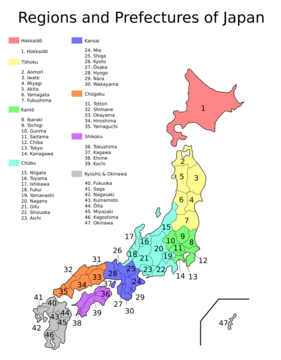
Hokkaido is the second-largest and northernmost of Japan's four main islands, forming its own prefecture. Historically known as Ezo, Ezochi, and Ezogashima, it was primarily inhabited by the Ainu people before Japanese colonization. The island's strategic position in the northern Pacific, separated from Honshu by the Tsugaru Strait and connected by the Seikan Tunnel, has shaped its role as a distinct region with a colder climate and significant agricultural output.
Quick Facts
- Blank Emblem Type
- Symbol
- Anthem
- Hikari afurete, Mukashi no mukashi and Hokkai bayashi
Facts from the source article.
Lore & Background
Hokkaido was formerly known as Ezo, Ezochi, and Ezogashima. Although Japanese settlers ruled the southern tip of the island since the 16th century, Hokkaido was primarily inhabited by the Ainu people. In 1869, following the Meiji Restoration, the entire island was annexed, colonized, and renamed Hokkaido by Japan. Japanese settlers dispossessed the Ainu of their land and forced them to assimilate. In the 21st century, the Ainu are almost totally assimilated into Japanese society, leading to the near-erasure of their cultural practices, traditions and language.
During the Jōmon period, the local culture flourished in Hokkaido beginning over 15,000 years ago. About 2,000 years ago, the island was colonized by Yayoi people, shifting much of the population toward agriculture. The Ebetsu Kofun Cluster, dating from the 8th to 9th centuries, provides evidence of Yamato people and trade between Hokkaido and Honshu before feudal Japan. During the Nara and Heian periods, people in Hokkaido conducted trade with Dewa Province. From the feudal period, the people in Hokkaido began to be called Ezo.
During the Muromachi period, the Japanese established a settlement at the south of the Oshima Peninsula. In 1457, Takeda Nobuhiro killed the Ainu leader Koshamain and defeated the opposition. Nobuhiro's descendants became the rulers of the Matsumae-han, which was granted exclusive trading rights with the Ainu. The Matsumae family's economy relied upon trade with the Ainu. There were numerous revolts by the Ainu against feudal rule, the last large-scale resistance being Shakushain's revolt in 1669–1672. In 1789, the Menashi–Kunashir rebellion was crushed.
Reader's Guide
Hokkaido's significance lies in its transformation from the Ainu homeland of Ezochi to a fully integrated Japanese prefecture, a process that involved colonization, renaming, and the near-erasure of Ainu culture. The Meiji government's decision in 1869 to rename the island Hokkaido, a compromise between proposals like Kaihokudō and Hokkaidō, marked a deliberate break from the past. The name itself may derive from the Ainu word 'Kai,' influenced by the Sino-Japanese reading of characters historically used for Ainu peoples. In 1947, Hokkaido became a full-fledged prefecture, with its government calling itself the 'Hokkaido Government.'
As an agricultural breadbasket despite its harsh winters, Hokkaido plays a vital economic role. Its position near Russia's Sakhalin and the Kuril Islands—the four southernmost of which are claimed by Japan—gives it geopolitical importance. The legacy of Ainu dispossession has led to modern indigenous rights movements advocating for an Ainu-language name, with phrases like 'aynu mosir' (land of the humans) and 'yaun mosir' (onshore land) being proposed, though their original referents differ from the large geographical entity of Hokkaido. The island's history reflects broader patterns of Japanese state expansion and the assimilation of indigenous peoples.
Did You Know?
- Hokkaido was formerly known as Ezo, Ezochi, and Ezogashima before being renamed in 1869.
- The Tsugaru Strait separates Hokkaido from Honshu, and the two islands are connected by railway via the Seikan Tunnel.
- The Ainu phrase 'aynu mosir' means 'land of the humans' and is a preferred choice among Japanese activists for a potential Ainu-language name for Hokkaido.
- The last large-scale Ainu resistance against feudal rule was Shakushain's revolt in 1669–1672.
More in Prefectures Of Japan 1-24
Spotted an error? Know more?
Reader corrections go straight into our review queue. Suggest an edit · How this site is sourced