Susan Blackmore
British sceptic, writer, and memetics researcher.
Susan Jane Blackmore, born 29 July 1951, is a British visiting professor at the University of Plymouth who works as a writer, lecturer, sceptic, and broadcaster. Her research focuses on memetics, parapsychology, and consciousness, and she is most recognised for The Meme Machine. She has authored or contributed to more than 40 books and 60 academic papers, and writes for The Guardian.
Quick Facts
- Birth name
- Susan Jane Blackmore
- Born
- 29 July 1951
- Birthplace
- London, England, U.K.
- Education
- St Hilda's College, Oxford; University of Surrey
- Occupation
- Freelance writer
- lecturer
- broadcaster
- Spouse
- Tom Troscianko (1977–2009); Adam Hart-Davis (2010)
- Children
- 2
Facts from the source article.
Career
Blackmore graduated from St Hilda's College, Oxford, in 1973 with a BA (Hons) in psychology and physiology. She earned an MSc in environmental psychology from the University of Surrey in 1974, and a PhD in parapsychology from the same university in 1980, with a thesis titled "Extrasensory Perception as a Cognitive Process." During the 1980s, she conducted psychokinesis experiments to test whether her baby daughter, Emily, could influence a random number generator; these experiments were mentioned in the book accompanying the TV series Arthur C. Clarke's World of Strange Powers. She taught at the University of the West of England in Bristol until 2001. Her attitude toward parapsychology and the paranormal shifted from belief to scepticism over time. In 1987, she wrote about an out-of-body experience (OBE) she had shortly after beginning to run the Oxford University Society for Psychical Research (OUSPR). The experience lasted about three hours and included sensations of astral projection, flying, and a mystical experience. She found the doctrine of astral projection intellectually unsatisfactory but could not dismiss the experience as imagination. In a 2000 New Scientist article, she wrote that the OBE had convinced her of psychic phenomena, but careful experiments later led her to find no psychic phenomena—only wishful thinking, self-deception, experimental error, and occasionally fraud. She is a Fellow of the Committee for Skeptical Inquiry and received the CSICOP Distinguished Skeptic Award in 1991.
Memetics and religious culture
Blackmore has contributed to memetics, building on the term meme coined by Richard Dawkins in The Selfish Gene. In his foreword to her book The Meme Machine (1999), Dawkins wrote that she had given the theory of the meme its best shot. Her treatment insists memes are true evolutionary replicators, a second replicator subject to the Darwinian algorithm. She predicted that imitation serves as the cultural replicator and that unique neural structures in humans facilitate it; this has received support from research on mirror neurons and differences between humans and simian ancestors. At the February 2008 TED conference, she introduced temes, memes that live in technological artifacts rather than the human mind. She has written critically about religion, stating that all kinds of infectious memes thrive in religions despite being false, including ideas of a creator god, virgin births, subservience of women, and transubstantiation, backed by faith and untestable rewards and punishments.
Personal life
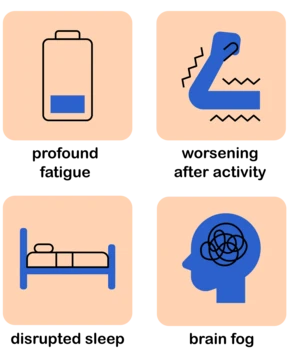
Blackmore is an advocate of secular spirituality, an atheist, a humanist, and a practitioner of Zen, though she identifies as "not a Buddhist" due to her unwillingness to accept dogma. She is a patron of Humanists UK and an honorary associate of the National Secular Society. On 15 September 2010, she signed an open letter in The Guardian opposing Pope Benedict XVI's state visit to the UK. She considers herself an illusionist regarding consciousness, believing phenomenal consciousness is an "illusion" and "grand delusion." She married Tom Troscianko in 1977 and divorced in 2009; they had two children, Emily and Jolyon. She is now married to writer Adam Hart-Davis. She endured a bout of chronic fatigue syndrome in 1995.
Publications
Blackmore's publications include Consciousness: An Introduction (4th ed., 2024, with E. Troscianko), Seeing Myself: the new science of out-of-body experiences (2018), Consciousness: A Very Short Introduction (2nd ed., 2017), and Zen and the Art of Consciousness (2011). She has also authored multiple editions of Consciousness: An Introduction, published by Routledge and Hodder Education.
Frequently Asked Questions
When and where was Susan Blackmore born?
Susan Blackmore was born on 29 July 1951 in London, England, U.K.
What does Susan Blackmore do?
Susan Blackmore is a Freelance writer, lecturer and broadcaster.
More in People with Myalgic Encephalomyelitis/chronic Fatigue Syndrome
Spotted an error? Know more?
Reader corrections go straight into our review queue. Suggest an edit · How this site is sourced