Susanna Clarke
English author of Jonathan Strange & Mr Norrell and Piranesi.
She published her second novel, Piranesi, in September 2020.[1]
Quick Facts
- Birth name
- Susanna Mary Clarke
- Born
- 1 November 1959
- Birthplace
- Nottingham, England
- Occupation
- Novelist
- Education
- St. Hilda's College, Oxford
- Genre
- Fantasy, alternate history
- Notable works
- Jonathan Strange & Mr Norrell
- The Ladies of Grace Adieu and Other Stories
- Piranesi
- Partner
- Colin Greenland
Facts from the source article.
Key facts and history
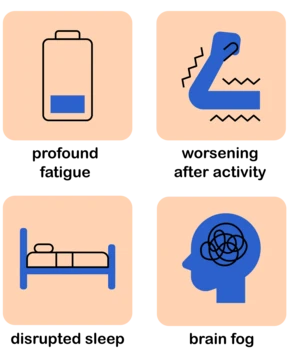
In 1993 she attended a writing class taught by Colin Greenland and Geoff Ryman, and wrote her first story as a requirement for the class.[2] Greenland sent her story "The Ladies of Grace Adieu" to Neil Gaiman, who showed it to Patrick Nielsen Hayden, who bought it for his anthology Starlight 1 (1996).[2] She suffered from chronic fatigue syndrome, which slowed progress on her next book.[3] Clarke, the eldest child of a Methodist minister, entered the world on 1 November 1959 in Nottingham, England.[4]
While employed at Simon & Schuster in Cambridge editing cookbooks, Clarke devoted her free time over the next ten years to writing Jonathan Strange and Mr Norrell.[5][6] Released in September 2004, the novel climbed to the third spot on the New York Times best-seller list.[7][8] A volume of eight fairy tales, The Ladies of Grace Adieu and Other Stories, was released by Clarke in 2006.[9] Bloomsbury brought out Clarke's second novel, Piranesi, on 15 September 2020.[1]
What the research sources say
Hoyle writes that four of the collection's stories are about women and magic, offering "a uniquely feminine perspective on the career of Jonathan Strange"[10] A Guardian article by Flood reports that Clarke's debut sold 4 million copies.[11] The Salon review by Miller states that Clarke's novel is about "a certain literary voice, the eminently civilized voice of early 19th century social comedy"[12] A Slate review by Shulman calls the novel "original, mesmerizing, with uncompromising literary integrity".[13]
Hendrix's Village Voice review characterizes Jonathan Strange and Mr Norrell as "a Dickens pastiche marinated in early-19th-century British literature".[14]
References
- Wikipedia, "Susanna Clarke" (CC BY-SA 4.0), which cites: "Book Deals: Week of September 30, 2019", Publishers Weekly, 27 September 2019; Flood, "Jonathan Strange and Mr Norrell author to return after 16-year gap", The Guardian, 30 September 2019 (we also read that source) en.wikipedia.org
- "The Three Susanna Clarkes", April 2005. facts only, no text reused. locusmag.com
- Wikipedia, "Susanna Clarke" (CC BY-SA 4.0), which cites: "About Jonathan Strange and Mr Norrell", JonathanStrange.com; Jordan, "Susanna Clarke: 'I was cut off from the world, bound in one place by illness'", The Guardian, 20 September 2020; Silver, "An Interview of Susanna Clarke, Part 1", sfsite.com, October 2004; "Susanna Clarke responds to your questions...", The Friends of English Magic, 10 January 2007; Goodwin, "An Interview with Susanna Clarke", Bookslut; "Susanna Clarke cancels book tour", Adweek, 18 August 2006 (original not read by us) en.wikipedia.org
- Wikipedia, "Susanna Clarke" (CC BY-SA 4.0), which cites: Alter, "Susanna Clarke Wrote a Hit Novel Set in a Magical Realm. Then She Disappeared.", The New York Times, October 25, 2024; Dewey, "Guide to Literary Masters and Their Works", Great Neck Publishing, 2007; "The Three Susanna Clarkes", April 2005; Dewey, "Guide to Literary Masters and Their Works", Great Neck Publishing, 2007; Stade, "Encyclopedia of British Writers, 1800 to the Present", Infobase, 12 May 2010, p. 110; "Susanna Clarke (Autor) - Bücher" (we also read that source) en.wikipedia.org
- Wikipedia, "Susanna Clarke" (CC BY-SA 4.0), which cites: "Susanna Clarke", Bloomsbury.com; "Susanna Clarke", Bloomsbury.com; "The Three Susanna Clarkes", April 2005 (we also read that source) en.wikipedia.org
- Wikipedia, "Susanna Clarke" (CC BY-SA 4.0), which cites: Grossman, "Ten years — but Susanna's book is worth the wait", The Daily Telegraph, 7 October 2004; Hodgman, "Susanna Clarke's Magic Book", 1 August 2004 (original not read by us) en.wikipedia.org
- Wikipedia, "Susanna Clarke" (CC BY-SA 4.0), which cites: Hodgman, "Susanna Clarke's Magic Book", 1 August 2004; Dawtrey, "'Strange' casts pic spell", 19 September 2004 (original not read by us) en.wikipedia.org
- Wikipedia, "Susanna Clarke" (CC BY-SA 4.0), which cites: Linskey, "Stranger than Fiction — After 10 years of writing, Susanna Clarke has found overnight success, and perhaps a bit of the old Potter magic, with her debut novel", The Baltimore Sun, 29 September 2004; Dawtrey, "'Strange' casts pic spell", 19 September 2004; "Best Sellers", The New York Times, 16 January 2005 (original not read by us) en.wikipedia.org
- Wikipedia, "Susanna Clarke" (CC BY-SA 4.0), which cites: Zipp, "All the faerie young ladies", 31 October 2006; Luscombe, "You'll believe in magic", The Globe and Mail, 23 December 2006; Morrissy, "Flitting into the world of Faerie", The Irish Times, 21 October 2006; Montgomery, "Stitches in time", The Guardian, 8 September 2007; Collins-Hughes, "Clarke's protagonist seen in less flattering light in 'Ladies'", Chicago Tribune, 10 November 2006; Collins-Hughes, "Clarke's protagonist seen in less flattering light in 'Ladies'", Chicago Tribune, 10 November 2006 (original not read by us) en.wikipedia.org
- Hoyle, "Review: 'The Ladies of Grace Adieu' by Susanna Clarke", 20 November 2006. facts only, no text reused. strangehorizons.com
- Flood, "Jonathan Strange and Mr Norrell author to return after 16-year gap", The Guardian, 30 September 2019. facts only, no text reused. theguardian.com
- Miller, "When Harry Potter met Jane Austen", Salon, 4 September 2004. facts only, no text reused. salon.com
- Shulman, "Fantasy for Grown-ups", Slate, 16 September 2004. facts only, no text reused. slate.com
- Hendrix, "Do You Believe in Magic?", The Village Voice, 24 August 2004. facts only, no text reused. villagevoice.com
Each numbered sentence above was checked against the source it cites before publication. Sentences citing Wikipedia adapt text from the English Wikipedia article Susanna Clarke (contributors), used under CC BY-SA 4.0; this entry is available under the same licence. Other sources were used for facts only; no text or images are copied from them.
More in People with Myalgic Encephalomyelitis/chronic Fatigue Syndrome
Spotted an error? Know more?
Reader corrections go straight into our review queue. Suggest an edit · How this site is sourced