Scattering
Physical processes where radiation or particles deflect from straight paths.
Scattering encompasses a wide range of physical processes in which moving particles or radiation—such as light or sound—are forced to deviate from a straight trajectory or are blocked by localized non-uniformities in the propagation medium, including particles, matter, interfaces, and radiation itself. This definition also covers deviations of reflected radiation from the angle predicted by the law of reflection, with such scattered reflections termed diffuse, while unscattered ones are called specular. Originally confined to light scattering, the concept dates back at least to Isaac Newton in the 17th century. As other ray-like phenomena were discovered, the term expanded; William Herschel referred to the scattering of "heat rays" in 1800, and John Tyndall noted the connection between light and acoustic scattering in the 1870s. By the late 19th century, scattering of cathode rays and X-rays was observed, and with the discovery of subatomic particles and quantum theory in the 20th century, the same mathematical frameworks applied to light were recognized for many other phenomena. Scattering can result from particle-particle collisions between molecules, atoms, electrons, photons, and other particles, with examples including cosmic ray scattering in the upper atmosphere, particle collisions in accelerators, electron scattering in fluorescent lamps, and neutron scattering in nuclear reactors. Non-uniformities causing scattering—scatterers or scattering centers—include particles, bubbles, droplets, density fluctuations in fluids, crystallites, defects, surface roughness, cells, and textile fibers. Scattering theory describes these effects for almost any propagating wave or moving particle. Significant areas include radar sensing, medical ultrasound, semiconductor wafer inspection, polymerization monitoring, acoustic tiling, free-space communications, and computer-generated imagery. Particle-particle scattering theory is crucial in particle physics, atomic and molecular physics, nuclear physics, and astrophysics, with fundamental particle interactions described by the S-Matrix, introduced by John Archibald Wheeler and Werner Heisenberg. Scattering is quantified using concepts such as scattering cross section, attenuation coefficients, bidirectional scattering distribution function, S-matrices, and mean free path.
- field
- Physics
- known_for
- Describing deflection of particles or radiation by non-uniformities; foundation of scattering theory
- key_concepts
- Scattering cross section, attenuation coefficients, bidirectional scattering distribution function, S-matrices, mean free path
Lore & Background
Scattering describes the deflection of moving particles or radiation—such as light or sound—from a straight path due to localized non-uniformities in the propagation medium. These non-uniformities, known as scatterers or scattering centers, include particles, bubbles, droplets, density fluctuations in fluids, crystallites in polycrystalline solids, defects in monocrystalline solids, surface roughness, cells in organisms, and textile fibers. The term originally applied only to light scattering, with Isaac Newton referencing it in the 17th century. By 1800, William Herschel extended the concept to "heat rays," and in the 1870s, John Tyndall linked light scattering to acoustic scattering. Later in the 19th century, scattering of cathode rays and X-rays was observed. With the 20th-century discovery of subatomic particles and quantum theory, the same mathematical frameworks used for light were applied to particle collisions, including cosmic ray scattering in the upper atmosphere, electron scattering in fluorescent lamps, and neutron scattering in nuclear reactors. Scattering can be single, where radiation interacts with one center and appears random, or multiple, where many interactions average into a deterministic diffusion-like process, as seen in light passing through thick fog. Coherent backscattering, an enhancement of backscattering from multiply scattered coherent radiation, is attributed to weak localization. Key quantification concepts include scattering cross section, attenuation coefficients, bidirectional scattering distribution function, S-matrices, and mean free path.
Reader's Guide
Scattering is significant because it provides a unified mathematical framework for understanding how waves and particles interact with obstacles and non-uniformities. This framework is essential in diverse fields: radar sensing, medical ultrasound, semiconductor wafer inspection, polymerization process monitoring, acoustic tiling, free-space communications, and computer-generated imagery. In particle physics, the quantum interaction and scattering of fundamental particles is described by the Scattering Matrix (S-Matrix), introduced by John Archibald Wheeler and Werner Heisenberg. The distinction between single and multiple scattering is crucial: single scattering is often treated as random, while multiple scattering can be modeled deterministically via diffusion theory. Scattering theory also addresses both direct problems (determining scattered flux from scatterer characteristics) and inverse problems (determining object characteristics from scattered data). The attenuation of a beam due to scattering follows an exponential decay law, quantified by interaction coefficients and mean free path.
Did You Know?
- The term scattering originally referred only to light scattering, dating back at least to Isaac Newton in the 17th century.
- John Tyndall noted the connection between light scattering and acoustic scattering in the 1870s.
- Multiple scattering can often be modeled well with diffusion theory, and the terms multiple scattering and diffusion are interchangeable in many contexts.
- Coherent backscattering, an enhancement of backscattering when coherent radiation is multiply scattered by a random medium, is usually attributed to weak localization.
Frequently Asked Questions
Who is Scattering?
Scattering is the family of physical processes in which particles or radiation get deflected off their original straight-line path when they encounter localized irregularities in the medium they are traveling through. It ranges from a single photon bouncing off one atom to a beam of neutrons diffusing through a dense lattice of nuclei.
What are Scattering's powers and role?
Scattering's core toolkit includes the scattering cross section (a probability measure for a deflection event), attenuation coefficients that quantify beam weakening, and the bidirectional scattering distribution function that maps where outgoing radiation is directed. In quantum mechanics the S-matrix acts as the master operator encoding every possible in-to-out transition.
How does Scattering's story end?
In a single-scattering event the outcome is a well-defined deflection angle and energy shift, whereas in multiple-scattering regimes the trajectory becomes effectively random and is modeled as a diffusion process governed by the mean free path. In both cases the final state is fully fixed by conservation of energy, momentum, and angular momentum.
Why is Scattering important?
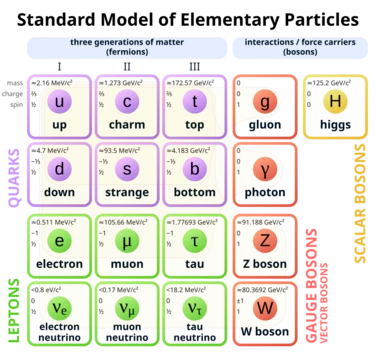
Scattering theory underpins technologies from radar and medical imaging to the high-energy experiments at colliders such as the LHC, where cross-section measurements reveal the internal structure of quarks and the Higgs boson. Without it we would have no quantitative method for inferring the properties of matter from the particles we fire at it.
What are Scattering's key relationships?
Scattering is tightly coupled to the S-matrix formalism, to the mean-free-path concept in dense media, and to quantum field theory, where interaction vertices are essentially scattering amplitudes. It also bridges into nuclear physics through reaction cross sections that tell us how compound nuclei form and subsequently decay.
More in Particle And Nuclear Physics 1-24
Spotted an error? Know more?
This is a living reference — every entry is fact-audited, and reader corrections feed straight into our audit queue. Suggest an edit · See this site's audit record